

Set a Trap

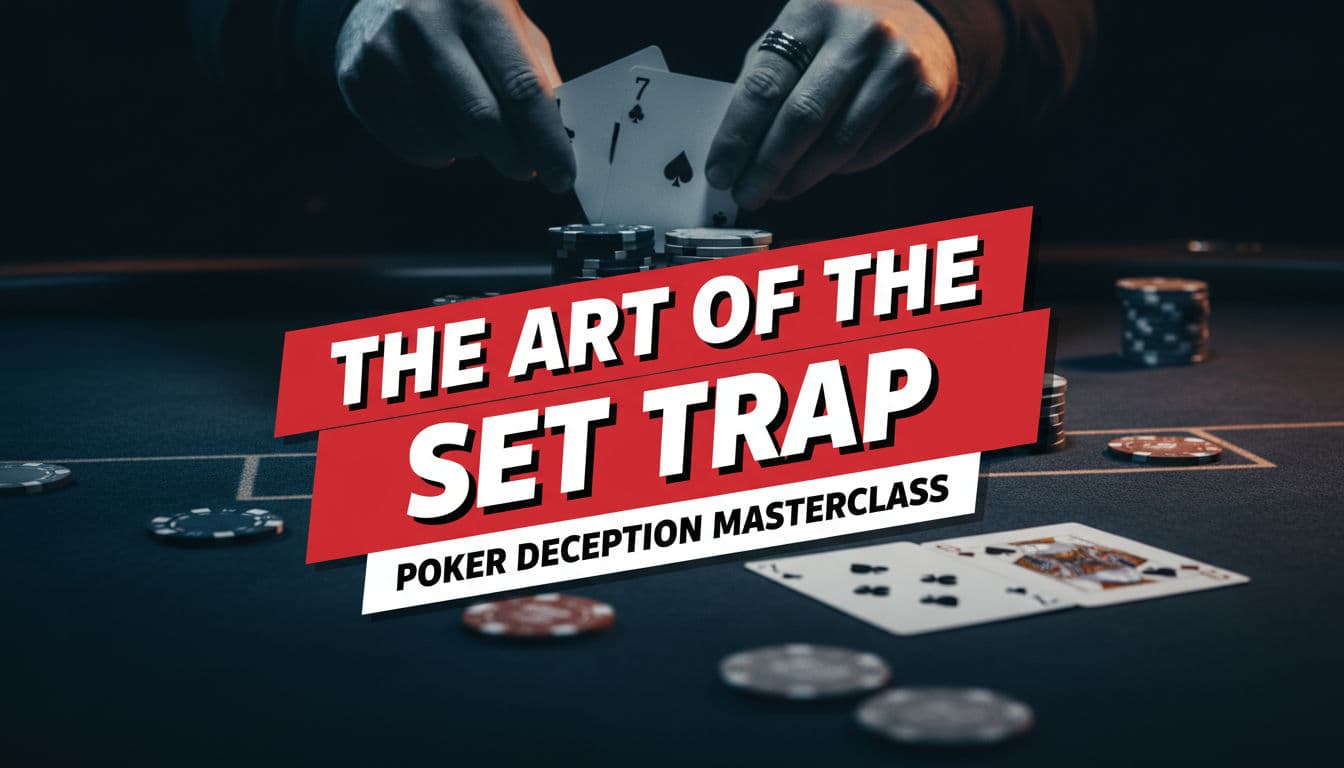
In the complex world of poker strategy, mastering the art of deception is paramount to consistently outmaneuvering opponents. Among the most potent tools in a seasoned player's arsenal is the "set trap" – a sophisticated slow playing poker maneuver designed to extract maximum value from unsuspecting rivals. This strategy hinges on hitting a powerful three-of-a-kind (a "set") and then intentionally underrepresenting its strength to lure opponents into committing more chips.
Unlike overt aggressive play, the set trap thrives on subtlety and patience. It's not merely about catching a big hand; it's about engineering a situation where your opponents are compelled to build the pot for you, often with weaker holdings. Understanding when, where, and against whom to deploy this tactic is crucial, transforming a simple flopped set into a monumental profit opportunity. Dive into this expert guide to unlock the secrets of the set trap, its strategic nuances, and how to integrate it effectively into your poker game.
What is a 'Set Trap Poker'?
A set trap poker occurs when a player flops a three-of-a-kind (a "set") with a pocket pair, and instead of betting aggressively, chooses to play the hand passively to conceal its true strength. The primary goal is to induce a larger bet from an opponent who might hold a strong, but inferior, hand like an overpair or top pair with a strong kicker, or even to encourage bluffs. By checking or calling, the set trapper creates a perception of weakness, hoping to encourage opponents to invest more chips into the pot, believing they have the best hand or can bluff the passive player off theirs.
The Mechanics of Executing a Set Trap
Successfully executing a set trap requires a keen understanding of board texture, opponent tendencies, and pot dynamics. Here's a breakdown of the typical sequence:
Pre-flop: You hold a pocket pair (e.g., 7-7) and call a raise or open a pot. This helps set up the trap by not signaling immense strength immediately.
Flop: You hit your set (e.g., Flop is K-7-2). This is where the trap is set. Instead of leading out or check-raising, you typically check to the aggressor or call a bet. The idea is to appear passive or weak.
Turn & River: If the board doesn't get too scary (e.g., no flush or straight completes that could beat your set), you continue to play passively (check/call) or choose a spot to spring the trap with a bet. The goal is to let your opponent build the pot with their own action.
The core principle is to avoid alerting your opponents to your monster hand prematurely. You want them to make a significant investment before they realize they're drawing dead or severely behind.
Executing a perfect set trap requires practice and a solid bankroll; you can find the best bonus codes here to boost your balance before trying these deceptive lines at the tables.
When to Deploy the Set Trap Strategy
While powerful, the set trap strategy isn't universally applicable. It's most effective under specific conditions where the board texture and opponent tendencies align perfectly for a slow-play.
Opponent Tendencies
Aggressive Players: Ideal for players who are prone to c-betting frequently, bluffing often, or value betting thin. They are more likely to put money in the pot for you.
Players Who Don't Fold Easily: Opponents who are "sticky" with top pair or overpairs are excellent targets, as they will often pay off multiple streets.
Board Texture
Dry Boards: Boards with few draw possibilities (e.g., K-7-2 rainbow) are often excellent for set trapping. Your hand is less likely to be outdrawn, and opponents with strong top pairs feel safer betting.
Connected/Wet Boards (with caution): While riskier, a set trap on a wet board (e.g., J-T-9 with two spades) can be devastating if your set is high enough and you correctly identify that your opponent is on a draw they intend to push. However, the risk of getting outdrawn increases significantly.
Stack Sizes & Position
Deep Stacks: Set trapping is more profitable with deep stacks, as it allows for multiple streets of value. Shallow stacks might necessitate more immediate aggression.
In Position: Being in position often gives you more information and control over the pot size, making it easier to execute a multi-street trap.
Common Pitfalls and Risks of Set Trapping
Despite its potential, the set trap carries inherent risks that can turn a monster hand into a missed opportunity or worse:
Missing Value: Sometimes, opponents will check back, and you miss out on value that an immediate bet might have generated.
Getting Outdrawn: On draw-heavy boards, slow playing poker can give opponents free cards or favorable odds to hit their flush or straight, turning your nuts into a second-best hand.
Facing Aggression You Can't Handle: If an opponent bets large, you might be forced to make a tough call with little information, especially out of position.
Not Getting Paid: Some opponents will correctly fold if they sense danger, or they simply won't have a strong enough hand to pay off your trap.
A successful set trap is a delicate balance between maximizing value and mitigating risk. Players must constantly assess the board, their opponents, and the potential for danger.
Defending Against the Set Trap
Identifying when you might be falling into a set trap is crucial for self-preservation:
Passive Play from Pre-flop Raisers: If a player who raised pre-flop and was likely to c-bet checks on a dry board where you hit an overpair, it could be a warning sign.
Unusual Bet Sizing: Be wary of small, non-threatening bets from players who previously played aggressively, or large bets after a passive line.
Board Texture Awareness: If you have an overpair on a board where many sets are possible (e.g., T-8-4, and your opponent called pre-flop with a small pair), proceed with caution.
In conclusion, the set trap is a sophisticated poker maneuver that, when executed correctly, can significantly boost your win rate. It demands patience, keen observation, and an analytical approach to the game. By understanding its mechanics, recognizing optimal deployment scenarios, and being aware of its inherent risks, you can effectively integrate this powerful deception into your poker strategy and consistently gain an edge at the tables.
| Pros | Cons |
|---|---|
The primary advantage of a set trap is the potential to extract significantly more chips from opponents who might have strong but inferior hands (e.g., overpairs) or are prone to bluffing, by camouflaging the true strength of your hand. | The most significant drawback is the risk of missing out on potential value if opponents check behind on multiple streets or fold to a small bet, resulting in a smaller pot than if you had played aggressively. |
By sometimes playing strong hands passively, you diversify your range of actions, making you less predictable. This makes it harder for observant opponents to put you on a hand based solely on your betting patterns. | On dynamic or draw-heavy boards, slow-playing a set can give opponents free cards or better odds to hit a stronger hand (flush, straight, higher set), potentially costing you the pot or reducing your equity. |
A passive line can often invite aggressive opponents to bluff, especially on later streets, believing you are weak or on a draw that missed, leading them to commit more chips into your powerful hand. | Out of position, a set trap can become challenging to manage, as you act first and might face large bets, making it harder to control the pot size or realize your equity without clear information. |
Related Poker Terms
6-Max
9-Max (Full Ring)
A-Game
ABC Poker
Bankroll
Bet Size
Bet Sizing
Blocker
Bluff
Bluff Catcher
Board
Bubble Factor
Button
Call
Check-Call
Check-fold
Check-Raise
Click-Back
Donkament
Double Barrel
First in
Gap Concept
GTO
Gutshot
Hot Streak
HUD
Image
Insta-Call
Isolation
Kicker
Leak
Limp
Limp-Fold
Limp-Raise
Middle Pair
Min-raise
Monotone
Monster
Multi-Way Pot
Nit
Nuts
One-Way Straight
Online Poker
Online Poker Strategies
Open Limp
Out of Line
Over the top
Over-Limp
Overblind
Overcall
Overcard
Overpair
Pat
Peel
Play Behind
Polarized
Pot Control
Potting Out
Preflop
Premium Hands
Probe Bet
Proposing Bets
Push or Fold
Put Down
Quads
Quartered
Quitting Time
Quorum
Ragged
Range
Range Advantage
Razz
Reverse Implied Odds
Rolled Up
Royal Flush
Runner Runner
Running Good
Sandbagging
Satellite
Sit and Go (SNG)
Slow Play
Smooth Call
Snap Call
Snapped Off
Soft Seat
Solid
Steal
Suited
Suited Gappers
Tank
Total air
Trap
Two-Gapper
Under the Gun (UTG)
Underpair
Value
Value Bet
Villain
Weak Ace
Window Card
Best Online Poker Bonus Codes


About the Editor

Bence Mitykó is a Somuchpoker poker writer, covering poker news and strategy. He spent four years playing poker professionally, primarily focusing on Heads-Up Sit & Go games, experience that continues to shape his understanding of poker strategy, online poker dynamics, and the wider poker industry.


