

Overpair

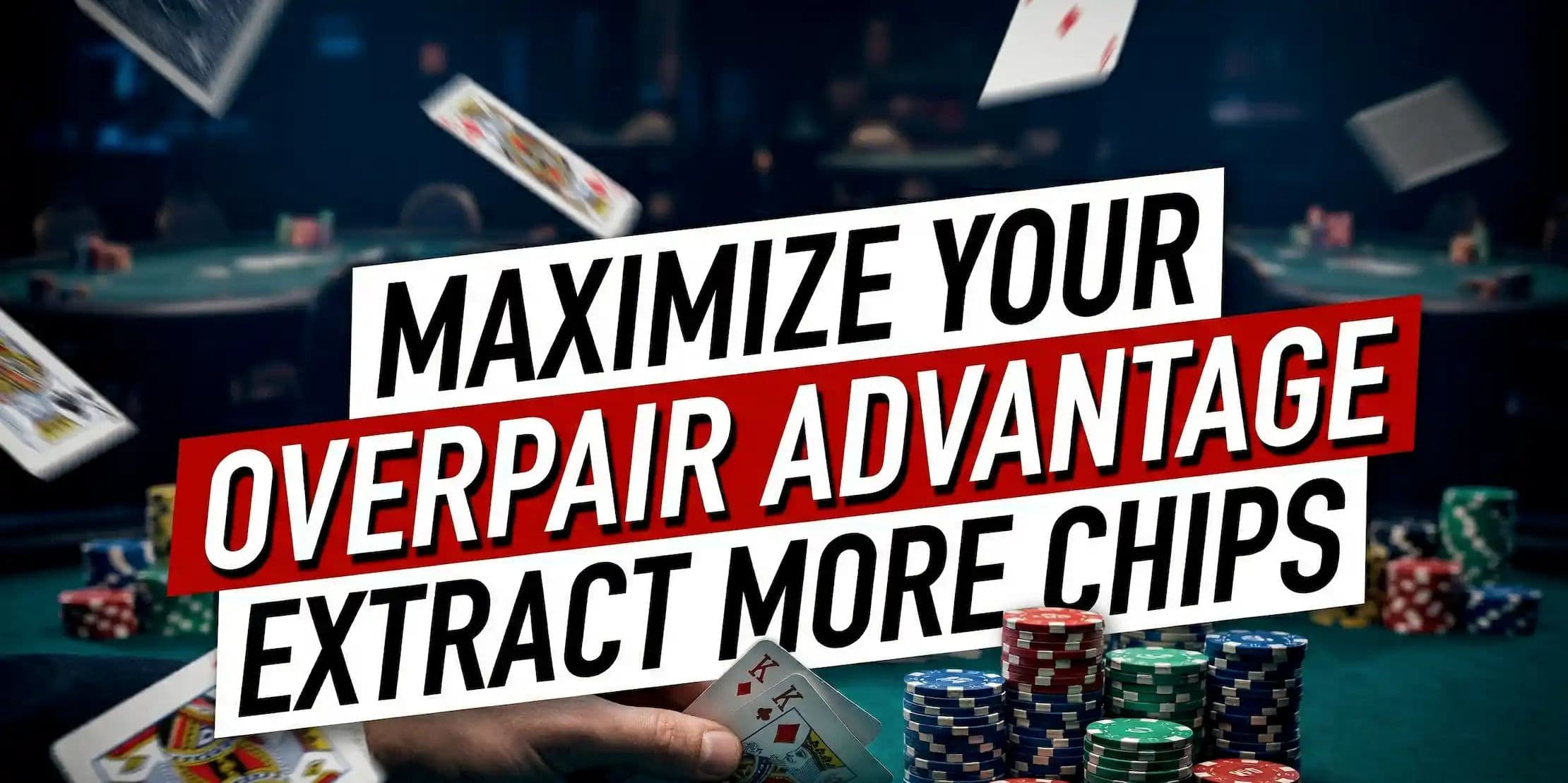
In poker, an overpair is a straightforward yet powerful hand where your pocket pair is higher than any card on the flop. For instance, holding pocket Queens on a Jack-high flop gives you an overpair. While it's often the best hand at that moment, its strength is not absolute. Successfully playing an overpair involves extracting maximum value from weaker hands while navigating potential dangers from draws or hidden stronger hands like sets.
What Exactly is an Overpair in Poker?
The concept of a high pocket pair is fundamental in community card games like Texas Hold'em. Simply put, you have an overpair when the two cards in your hand form a pair, and both are of a higher rank than the highest card on the board after the flop. It's a strong position to be in, but one that requires careful thought.
Let's look at a clear example:
Your Hand: K♦ K♣
The Flop: J♠ 8♥ 3♣
In this scenario, your pocket Kings are an overpair because your King is higher than the Jack, which is the highest card on the board. You are in a dominant position against hands like top pair (e.g., A-J) or smaller pocket pairs (e.g., 9-9).
However, if the flop were different:
Your Hand: Q♦ Q♣
The Flop: A♠ T♥ 5♣
Here, you do not hold one. The Ace on the flop is higher than your Queens, meaning you only have the second-best possible pair. This is a much more vulnerable situation.
The Strategic Value of an Overpair
This specific holding is a premium hand on the flop, but it's still just one pair. The primary goal when you hit it is to build the pot and get value from opponents holding weaker hands. Players with top pair, middle pair, or strong drawing hands are your primary customers. Aggressive betting is usually the correct approach.
By betting, you force your opponents to make a decision. You charge them for trying to draw to a better hand, and you get value from pairs they can't fold. Slow-playing is often a mistake, as it gives free cards that can beat you.
How to Play an Overpair: Key Factors to Consider
Your post-flop strategy should not be one-size-fits-all. It must adapt to several critical factors at the table.
1. Board Texture
The community cards are the most important piece of information you have. The texture of the board dictates how you should proceed.
Board Type | Example | Strategy |
Dry & Uncoordinated | K♠ 7♥ 2♣ | Bet aggressively for value. There are very few draws that can beat you. This is the ideal situation for your overpair. |
Wet & Coordinated | T♥ 9♥ 6♠ | Bet, but with more caution. This board offers many straight and flush draws. Your goal is to get value while being prepared to slow down if you face heavy resistance. |
Monotone | Q♦ 8♦ 3♦ | Proceed with extreme caution. Any opponent with a single diamond has a flush draw, and anyone with two diamonds already has you beaten. Pot control becomes critical. |
2. Opponent Tendencies
Understanding who you're up against is crucial. A loose-aggressive player might be bluffing or overvaluing a weak top pair, making them a great target for value bets. Conversely, if a very tight, conservative player starts raising you on a scary board, you should take it as a serious warning sign that your hand may no longer be the best.
3. Position and Stack Sizes
Playing in position (acting last) gives you a significant advantage. You can see how your opponent reacts to the board before you commit any more chips. When you are out of position, it's harder to control the size of the pot, and you must act on less information. Additionally, with deep stacks, you have to be more careful, as mistakes can be more costly. With shorter stacks, you might be more willing to commit all your chips with a strong holding like pocket Aces or Kings.
Common Mistakes to Avoid With an Overpair
Knowing how to play these premium pairs also means knowing what not to do. Here are two common pitfalls:
Getting Too Attached: Don't fall in love with your hand. If the board gets scarier on the turn and river (e.g., a third card of the same suit appears) and your opponent gets aggressive, you must be able to re-evaluate and potentially fold.
Missing Value Through Slow-Playing: The most frequent error is not betting strongly enough. By checking or betting too small, you let opponents with drawing hands see the next card cheaply, which is the last thing you want when you likely have the best hand.
Mastering the overpair is a key step in becoming a better Texas Hold'em player. It's a hand that balances strength with vulnerability, rewarding players who can accurately assess the board, their opponents, and the situation to make the most profitable decision.
Ready to put your knowledge into practice? Understanding the theory behind playing an overpair is just the first step; true mastery comes from real-world experience. Jump into the action at one of our highly recommended, safe online poker rooms today and start extracting maximum value from your premium hands!
| Pros | Cons |
|---|---|
An overpair is very often the best hand on the flop, putting you in a commanding position to win the pot early. | As a one-pair hand, an overpair is susceptible to being outdrawn by opponents chasing straights or flushes on the turn or river. |
It's an ideal hand for getting value from opponents with weaker holdings like top pair, middle pair, or smaller pocket pairs. | It can be difficult to know when you are beaten by a hidden, stronger hand like a set (three-of-a-kind) or two pair. |
Related Poker Terms
6-Max
9-Max (Full Ring)
A-Game
ABC Poker
Bankroll
Bet Size
Bet Sizing
Blocker
Bluff
Bluff Catcher
Board
Bubble Factor
Button
Call
Check-Call
Check-fold
Check-Raise
Click-Back
Donkament
Double Barrel
First in
Gap Concept
GTO
Gutshot
Hot Streak
HUD
Image
Insta-Call
Isolation
Kicker
Leak
Limp
Limp-Fold
Limp-Raise
Middle Pair
Min-raise
Monotone
Monster
Multi-Way Pot
Nit
Nuts
One-Way Straight
Online Poker
Online Poker Strategies
Open Limp
Out of Line
Over the top
Over-Limp
Overblind
Overcall
Overcard
Overpair
Pat
Peel
Play Behind
Polarized
Pot Control
Potting Out
Preflop
Premium Hands
Probe Bet
Proposing Bets
Push or Fold
Put Down
Quads
Quartered
Quitting Time
Quorum
Ragged
Range
Range Advantage
Razz
Reverse Implied Odds
Rolled Up
Royal Flush
Runner Runner
Running Good
Sandbagging
Satellite
Sit and Go (SNG)
Slow Play
Smooth Call
Snap Call
Snapped Off
Soft Seat
Solid
Steal
Suited
Suited Gappers
Tank
Total air
Trap
Two-Gapper
Under the Gun (UTG)
Underpair
Value
Value Bet
Villain
Weak Ace
Window Card
Best Online Poker Bonus Codes


About the Editor

Bence Mitykó is a Somuchpoker poker writer, covering poker news and strategy. He spent four years playing poker professionally, primarily focusing on Heads-Up Sit & Go games, experience that continues to shape his understanding of poker strategy, online poker dynamics, and the wider poker industry.


