

Bluff Catcher

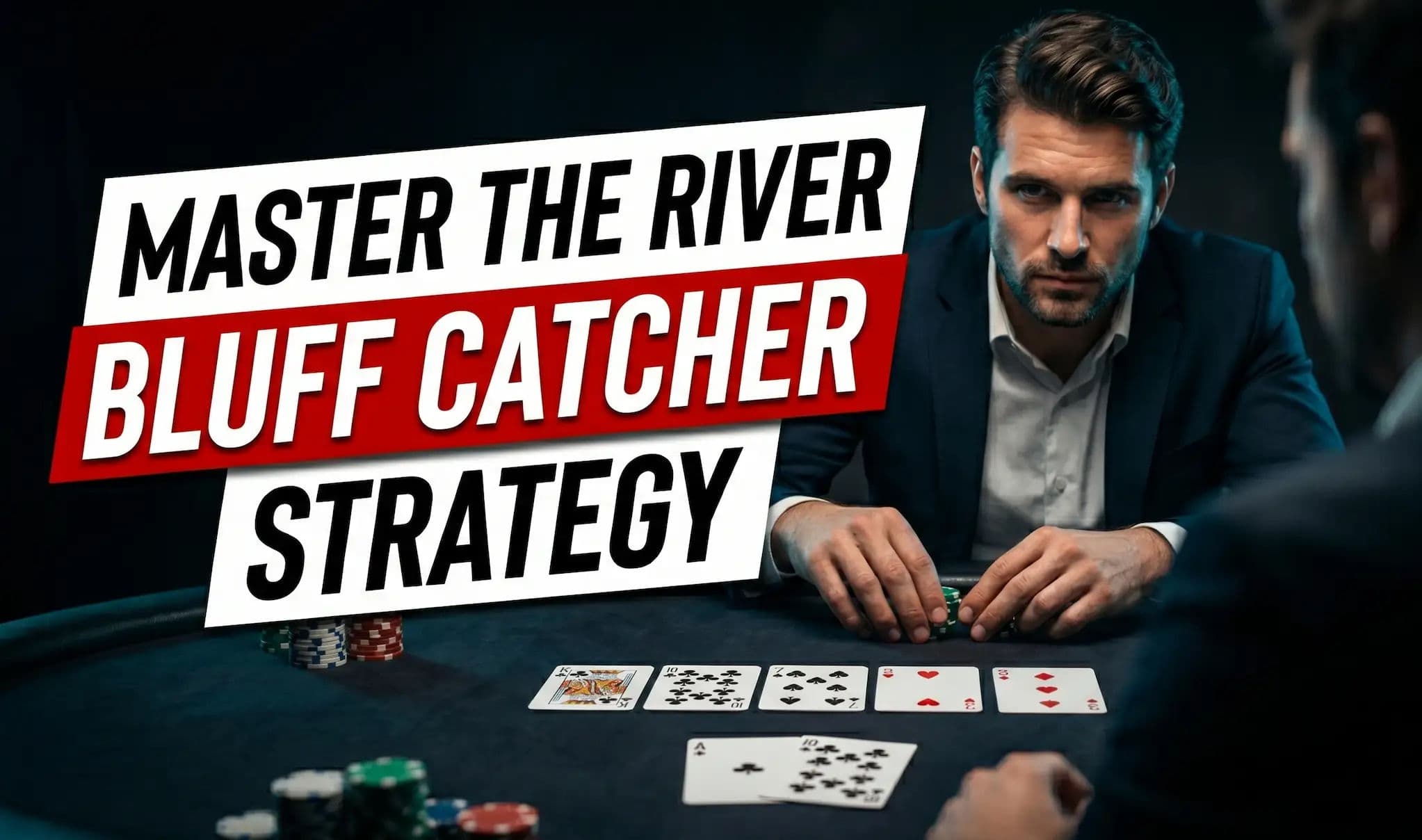
In poker, a bluff catcher is a hand that has showdown value but is only strong enough to beat a bluff. It will lose to almost any hand your opponent is betting for value. Making a correct call with a bluff catcher is an advanced play that relies heavily on understanding your opponent, the board texture, and the pot odds being offered.
Understanding the Bluff Catcher in Poker
At its core, a bluff catcher is a specific type of marginal hand. Its defining characteristic isn't its absolute strength, but its relative strength against an opponent's potential range of hands. When you're holding a bluff catcher, you're making a calculated decision that your opponent is more likely to be bluffing than holding a legitimate value hand. You're not calling because you think you have the best hand; you're calling because you believe your opponent has nothing.
For example, imagine you hold A♦️10♦️ on a board of 10♣️ 7♠️ 2❤️ K♣️ 3♠️. Your opponent, who has been playing aggressively, makes a large bet on the river. Your pair of tens is a classic bluff catcher. It will lose to any King, any set, or any two-pair combination. However, it will beat any missed draw (like a flush draw or straight draw) or a complete air-ball bluff. Your decision to call hinges entirely on whether you believe they are bluffing.
The Strategic Importance of Bluff Catching
Successfully using a bluff catcher is what separates intermediate players from advanced ones. It's a defense mechanism against hyper-aggressive opponents who try to run you over. If you only call river bets with very strong hands, you become highly predictable and easy to exploit. By incorporating bluff catching into your game, you force opponents to think twice before trying to push you off a pot.
Making a thin call with a marginal hand on the river is one of the toughest, yet most rewarding, plays in No-Limit Hold'em. It requires a deep analysis of the situation and confidence in your read.
Key Factors for a Successful Bluff Catch
Deciding to call with a bluff catcher isn't a gut feeling; it's an analytical process. Several critical factors must be considered to make it a profitable play in the long run.
1. Opponent Tendencies
This is the most important piece of the puzzle. Are you playing against a tight, passive player (a 'nit') who only bets the river with the nuts? If so, bluff catching is a terrible idea. Conversely, if you're up against a Loose-Aggressive (LAG) player known for firing multiple barrels as a bluff, your bluff catcher becomes much more valuable. Your read on the player is paramount.
2. Pot Odds
Poker is a game of math. Pot odds tell you how often you need to be correct for a call to be profitable. If the pot is $200 and your opponent bets $100, the total pot is now $300. You have to call $100 to win $300, giving you 3-to-1 pot odds. This means you only need to win the pot more than 25% of the time for the call to be profitable. Analyzing your opponent's range and determining if they are bluffing more than 25% of the time is the key calculation.
3. Board Texture and Ranges
The community cards heavily influence ranges. On a very coordinated, 'wet' board (e.g., Q♠️ J♠️ 9❤️ 10♠️), there are many possible straights and flushes. A single pair becomes a much weaker bluff catcher here. On a disconnected, 'dry' board (e.g., K♦️ 8♣️ 2♠️ 5❤️ 9♣️), there are fewer obvious strong hands. This makes it more likely that an opponent is bluffing, increasing the value of your bluff catching hands.
Bluff Catcher vs. Value Hand
It's crucial to understand the distinction between a hand you're calling with for value and a pure bluff catcher. The intent is completely different.
Feature | Bluff Catcher | Value Hand |
|---|---|---|
Primary Goal | To beat a bluff. | To get called by a worse hand. |
Strength vs. Opponent's Value Range | Loses to nearly all of it. | Beats most or all of it. |
Strength vs. Opponent's Bluffing Range | Beats all of it. | Beats all of it. |
Example on K-8-2-5-9 board | A hand like pocket nines (99) or top pair with a weak kicker (KQ). | A hand like a set (88) or two pair. |
Ready to Catch Some Bluffs? Putting your bluff-catching skills to the test requires playing against real opponents in a safe environment. Choose from our curated list of the best online poker sites to find the most secure platforms with games suited for all levels. Don't forget to use the welcome bonus code SMPBONUS during registration to instantly boost your bankroll.
Common Mistakes to Avoid
While powerful, bluff catching is a double-edged sword. Avoid these common pitfalls:
Calling Too Wide: Becoming a 'calling station' who can't fold any pair. You must still be selective.
Ignoring Player Type: Trying to bluff catch a rock is lighting money on fire.
Emotional Decisions: Don't call just because you're frustrated or want to 'see their hand'. Every call must be based on logic and analysis.
| Pros | Cons |
|---|---|
Bluff catching is the primary tool to counteract hyper-aggressive opponents, preventing them from running over the table. | If your read is wrong, you will lose the pot almost 100% of the time, often leading to significant losses. |
It allows you to win pots with marginal holdings where you would have otherwise been pushed out by a bluff. | This is not a beginner's move. It demands excellent hand-reading skills and a deep understanding of your opponent's strategy. |
A successful bluff catch provides valuable information about an opponent's tendencies and willingness to bluff in certain spots. | Attempting to bluff catch a tight, passive player who only bets with very strong hands is a recipe for disaster. |
Related Poker Terms
6-Max
9-Max (Full Ring)
A-Game
ABC Poker
Bankroll
Bet Size
Bet Sizing
Blocker
Bluff
Bluff Catcher
Board
Bubble Factor
Button
Call
Check-Call
Check-fold
Check-Raise
Click-Back
Donkament
Double Barrel
First in
Gap Concept
GTO
Gutshot
Hot Streak
HUD
Image
Insta-Call
Isolation
Kicker
Leak
Limp
Limp-Fold
Limp-Raise
Middle Pair
Min-raise
Monotone
Monster
Multi-Way Pot
Nit
Nuts
One-Way Straight
Online Poker
Online Poker Strategies
Open Limp
Out of Line
Over the top
Over-Limp
Overblind
Overcall
Overcard
Overpair
Pat
Peel
Play Behind
Polarized
Pot Control
Potting Out
Preflop
Premium Hands
Probe Bet
Proposing Bets
Push or Fold
Put Down
Quads
Quartered
Quitting Time
Quorum
Ragged
Range
Range Advantage
Razz
Reverse Implied Odds
Rolled Up
Royal Flush
Runner Runner
Running Good
Sandbagging
Satellite
Sit and Go (SNG)
Slow Play
Smooth Call
Snap Call
Snapped Off
Soft Seat
Solid
Steal
Suited
Suited Gappers
Tank
Total air
Trap
Two-Gapper
Under the Gun (UTG)
Underpair
Value
Value Bet
Villain
Weak Ace
Window Card
Best Online Poker Bonus Codes


About the Editor

Bence Mitykó is a Somuchpoker poker writer, covering poker news and strategy. He spent four years playing poker professionally, primarily focusing on Heads-Up Sit & Go games, experience that continues to shape his understanding of poker strategy, online poker dynamics, and the wider poker industry.


