Over the top

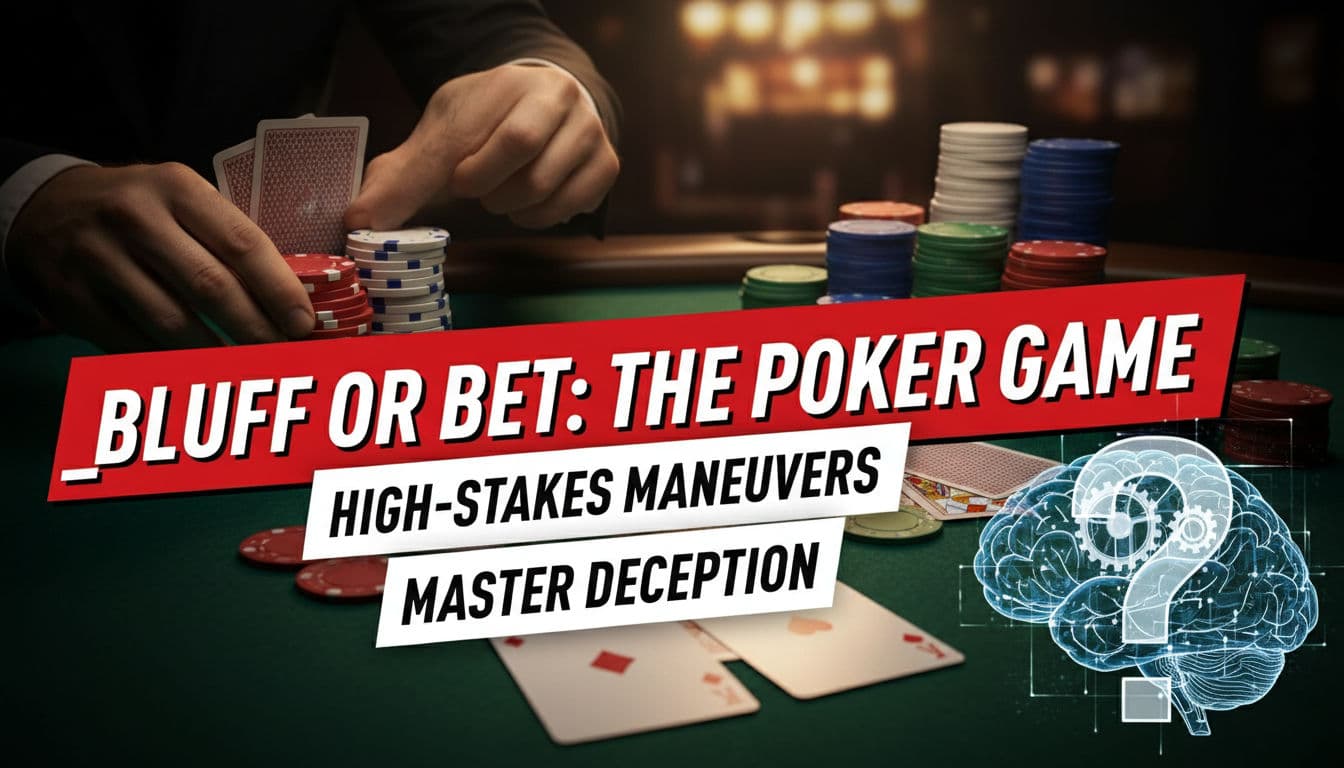
The phrase "over-the-top" in poker holds a fascinating dual significance, referring not only to a precise, often aggressive, betting maneuver but also to a broader spectrum of exaggerated behaviors designed to mislead opponents. This comprehensive guide will dissect both interpretations, revealing how players leverage these tactics to gain an edge at the felt. From the calculated re-raise that asserts dominance to the theatrical performance intended to conceal or project strength, understanding "over-the-top" play is crucial for both executing advanced strategies and effectively deciphering your adversaries' intentions.
Mastering Over the Top in Poker: Strategy and Deception
The over the top play in poker is more nuanced than it initially appears, encapsulating both a fundamental strategic betting action and a sophisticated psychological tactic aimed at deception. For aspiring and seasoned poker players alike , a deep understanding of these distinct yet interconnected meanings is paramount for navigating the complex dynamics of the game.
The Over-the-Top Bet: A Strategic Power Play
At its most fundamental level, 'over-the-top' refers to a raise or re-raise that significantly exceeds the preceding bet. When a player makes an initial bet, and a subsequent player 'comes over-the-top' they are not merely calling; they are escalating the pot and putting significant pressure on their opponents. Deploying an effective poker raise strategy is a staple of aggressive poker and can be deployed in various scenarios:
Pre-flop Aggression: Imagine an early position player opens with a standard raise. A player in late position coming 'over-the-top' with a much larger 3-bet (or even a 4-bet) immediately signals immense strength or a strong desire to steal the pot. This often forces weaker hands to fold and isolates the original raiser.
Post-flop Value Extraction: On the flop, if an opponent makes a continuation bet, an over-the-top raise can serve multiple purposes. With a strong hand, it’s a direct method to build the pot and extract maximum value. Against a weaker hand, it pressures them to pay a high price to see another card or fold, potentially denying their equity.
Bluffing and Semi-bluffing: The over-the-top bet is also a potent tool for bluffing techniques in poker. By representing a very strong hand, an aggressive raise can convince opponents to fold superior holdings. A semi-bluff, on the other hand, uses an over-the-top raise with a drawing hand, combining the pot-building potential of a draw with the immediate fold equity of a bluff.
Effective execution of an over-the-top bet requires careful consideration of stack sizes, opponent tendencies, and table image. A well-timed, appropriately sized over-the-top raise can be devastatingly effective, while a poorly executed one can lead to significant losses.
The Over-the-Top Performance: Psychological Warfare at the Felt
Beyond its specific betting context, 'over-the-top' behavior extends to exaggerated physical or verbal actions designed to mislead opponents. This is where poker deception transcends pure mathematics and delves into the realm of psychology and 'poker tells'.
Projecting Strength (Bluffing): Players might act overly confident, engage in excessive chatter about their 'monster hand,' or even try to intimidatingly stare down opponents. The goal is to convince others they hold an unbeatable hand, thereby inducing folds when they are, in fact, bluffing with air. This theatrical display is an attempt to create a narrative that justifies a large bet through careful poker tells analysis.
Feigning Weakness (Value Betting): Conversely, a player might feign weakness to induce calls from opponents. This could involve sighing, acting hesitant before making a bet, or appearing disinterested in the pot. The objective here is to make opponents believe they can pick off a weak player or bluff them, enticing them to commit chips to a pot they are destined to lose.
This type of behavioral deception, often referred to as 'speech play' or 'acting' is most prevalent in live poker where physical tells and direct interaction are possible. While subtle tells are common, over-the-top behavior is a deliberate, conscious effort to manipulate perceptions.
Differentiating Between Strategic Bet and Behavioral Bluff
The challenge for any poker player is to discern the true OTT poker meaning in a specific context-whether an opponent's action is a genuine declaration of strength or a calculated performance. Key indicators include:
Bet Sizing: Is the bet size unusually large for the situation, or consistent with a typical strong hand play?
Previous Actions: Has the opponent shown similar exaggerated behavior before, and what was their hand then?
Table Image: Is the player known for aggressive bluffs or cautious play?
Timing: Does the betting action or physical behavior seem forced or natural?
Opponent Reads: The ability to perform a poker tells analysis and psychological cues is crucial for interpreting over-the-top performances.
Mastering the Dual Nature of Over-the-Top Play
Ultimately, mastering over the top in poker involves more than just understanding its definitions; it requires strategic integration into your overall game. As a bet, it's a powerful weapon for controlling the pot and asserting dominance. As a behavioral tactic, it's a psychological tool to misdirect and manipulate. Players who can effectively deploy both facets while applying a nuanced poker betting strategy will undoubtedly gain a significant advantage at the poker table, transforming complex situations into profitable opportunities. The key lies in balancing aggression with calculated risk and an unwavering focus on opponent analysis.
| Pros | Cons |
|---|---|
An over-the-top bet with a strong hand can rapidly inflate the pot, maximizing value extracted from opponents with weaker holdings. | Large over-the-top bets or bluffs mean significant chip losses if the opponent calls with a stronger hand or accurately reads the deception. |
Aggressive over-the-top bluffs or semi-bluffs can compel opponents to fold superior or drawing hands, securing the pot without a showdown. | Opponents might misinterpret your over-the-top bet or behavior, leading them to call with hands you intended to fold, or re-raise aggressively. |
Consistently employing OTT tactics can establish an aggressive table image, making future bets (both value and bluff) more credible. | An opponent can counter an over-the-top move with an even larger re-raise or an all-in, putting immense pressure back on the original aggressor. |
Forces drawing hands to pay a high price or fold, preventing them from realizing their equity cheaply. | Exaggerated or 'over-the-top' behavior can unintentionally provide obvious tells to observant opponents, exposing your true hand strength. |
Related Poker Terms
6-Max
9-Max (Full Ring)
A-Game
ABC Poker
Bankroll
Bet Size
Bet Sizing
Blocker
Bluff
Bluff Catcher
Board
Bubble Factor
Button
Call
Check-Call
Check-fold
Check-Raise
Click-Back
Donkament
Double Barrel
First in
Gap Concept
GTO
Gutshot
Hot Streak
HUD
Image
Insta-Call
Isolation
Kicker
Leak
Limp
Limp-Fold
Limp-Raise
Middle Pair
Min-raise
Monotone
Monster
Multi-Way Pot
Nit
Nuts
One-Way Straight
Online Poker
Online Poker Strategies
Open Limp
Out of Line
Over the top
Over-Limp
Overblind
Overcall
Overcard
Overpair
Pat
Peel
Play Behind
Polarized
Pot Control
Potting Out
Preflop
Premium Hands
Probe Bet
Proposing Bets
Push or Fold
Put Down
Quads
Quartered
Quitting Time
Quorum
Ragged
Range
Range Advantage
Razz
Reverse Implied Odds
Rolled Up
Royal Flush
Runner Runner
Running Good
Sandbagging
Satellite
Sit and Go (SNG)
Slow Play
Smooth Call
Snap Call
Snapped Off
Soft Seat
Solid
Steal
Suited
Suited Gappers
Tank
Total air
Trap
Two-Gapper
Under the Gun (UTG)
Underpair
Value
Value Bet
Villain
Weak Ace
Window Card