

Solid

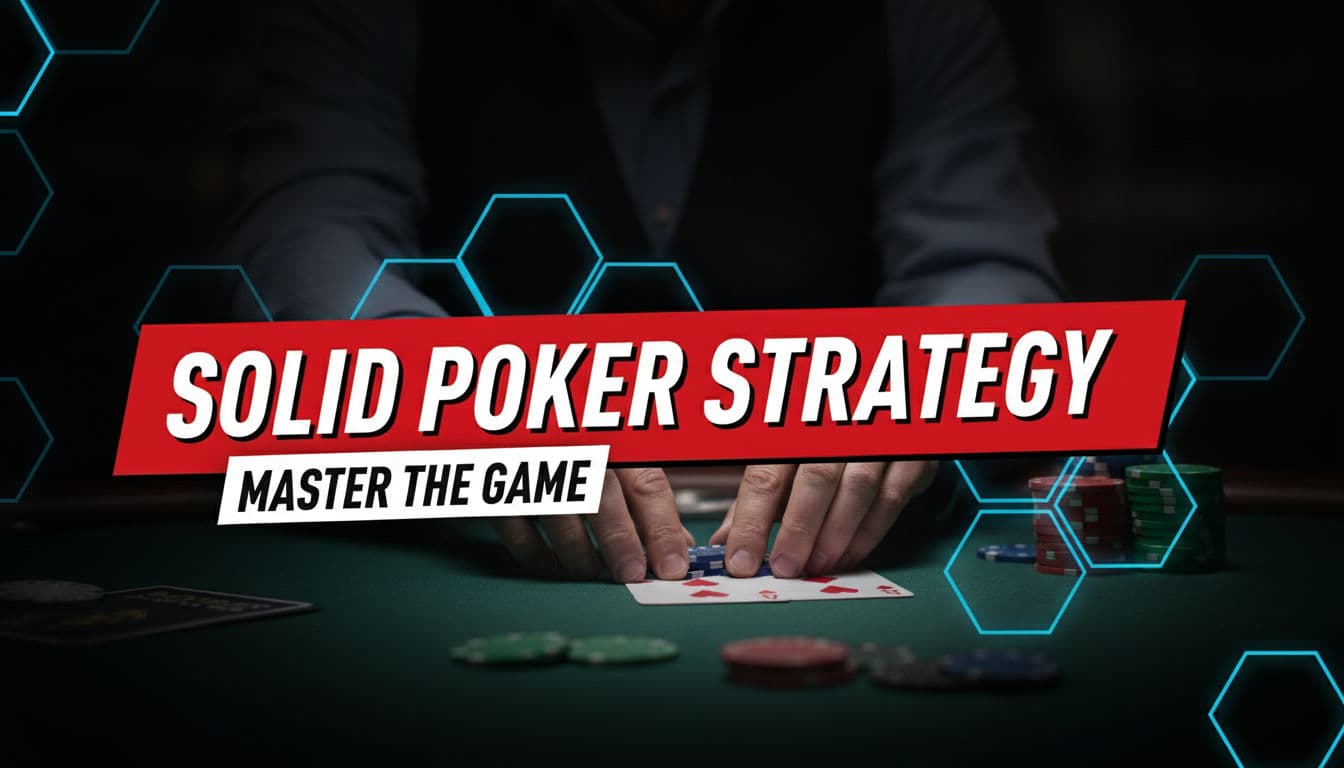
In the dynamic world of poker, where fortunes can shift with a single card, the concept of a "solid" poker player stands as a beacon of reliability and sustained success. This isn't merely about winning a single pot or tournament; it's about consistently making optimal decisions rooted in a deep understanding of logic, probability, and human psychology. A truly solid player navigates the intricate tapestry of the game with a disciplined strategy, meticulously minimizing losses while strategically maximizing profits over the long haul. They are the architects of their own success, building it hand by hand through calculated risk management and an unwavering commitment to a methodical approach.
The Foundational Pillars of a Solid Poker Player
At its core, solid poker play is an analytical pursuit. It's an approach that eschews impulsive decisions in favor of reasoned judgment, guided by the twin pillars of logic and probability. Every action, from pre-flop hand selection to river bet sizing, is a deliberate calculation. Solid players continuously assess pot odds, implied odds, and opponent ranges, making choices that offer the highest expected value (EV) in the long run. This isn't gambling; it's a probabilistic endeavor, where understanding the mathematical underpinnings of the game is paramount. This poker strategy guide outlines the fundamental principles that define disciplined, long-term winning players.
Furthermore, risk management and unwavering discipline form the bedrock of this playing style. A solid player recognizes that poker is a game of variance, but also understands that intelligent risk mitigation is key to weathering inevitable downswings. They avoid gratuitous bluffs and don't chase longshot draws against overwhelming odds. Instead, they conserve their chips, playing conservatively when the situation dictates, and only commit significant capital when their statistical edge is clear. This disciplined strategy is not about being passive, but about being selective and precise, ensuring that every significant investment has a robust justification.
Core Characteristics of an Expert Solid Player
Strategic Decision-Making
Their poker decision making process is rooted in probability, position, and opponent profiling. The hallmark of a solid poker player is their consistent ability to make logical, low-risk decisions. They are not chasing the thrill of the gamble but rather the consistent accumulation of equity. This involves a meticulous evaluation of table dynamics, stack sizes, position, and opponent tendencies before committing chips. Every bet, raise, or fold is a deliberate move within a broader strategic framework designed for long-term profitability. This approach is essential for consistent poker winning over thousands of hands.
Hand Selection Discipline
Solid players exhibit remarkable discipline in their hand selection. They understand that not every hand is playable and resist the urge to get involved with marginal holdings, especially out of position. Their philosophy leans towards playing fewer, stronger hands, thereby increasing their chances of winning at showdown or forcing opponents to fold. When they do enter a pot, it’s usually with a hand that has strong equity and potential for improvement.
Opponent Analysis
A crucial skill for any solid player is the ability to effectively read opponents. This goes beyond superficial tells; it involves deep psychological analysis. They meticulously observe betting patterns, timing tells, body language, and previous showdowns to construct accurate ranges for their adversaries. Understanding player psychology – identifying loose-aggressive (LAGs), tight-passive (TAGs), or recreational players – allows them to exploit specific weaknesses and tailor their strategy accordingly.
Mastering Mathematical Odds
Mastery of poker math separates emotional players from long-term winners. Solid players base a significant portion of their decisions on mathematical odds and probabilities. They can quickly calculate pot odds to determine if calling a bet is profitable in the long run, and they understand implied odds when considering drawing hands. This quantitative approach removes emotion from the decision-making process, replacing it with objective, verifiable data.
Adaptability: The Art of "Changing Gears"
While often associated with a tight-aggressive (TAG) foundation, solid players are far from one-dimensional. They possess the critical ability to "change gears" – adapting their play style based on the table, opponents, and stage of the game. This means they can transition from conservative to aggressive, or from a tight range to a slightly looser one, to exploit specific circumstances or keep opponents guessing. This flexibility is a core principle of advanced poker strategy, helping prevent predictability and exploitation.
Fundamental Game Knowledge
Above all, solid players possess an encyclopedic knowledge of the game's fundamentals. This includes understanding position, stack-to-pot ratios (SPR), equity calculations, bluffing theory, and optimal bet sizing. These foundational principles are not just memorized; they are internalized and applied instinctively, forming the bedrock upon which more advanced strategies are built.
Building a Winning Table Image
The consistent, disciplined play of a solid poker player naturally cultivates a positive table image. Opponents quickly learn that when a solid player enters a pot or shows aggression, they likely hold a strong hand. This reputation becomes a powerful tool, allowing the solid player to exert pressure, steal blinds more effectively, and extract maximum value when they do have premium holdings. This psychological edge, earned through consistent, intelligent play, significantly enhances their long-term profitability.
Players aiming to become a truly solid poker player often refine their edge in competitive online environments , where consistent hand volume accelerates strategic growth and decision-making discipline.
Solid Play in Different Formats: Cash Games vs. Tournaments
While the core principles remain constant, solid play adapts to the format. In cash games, where deep stacks and ongoing play are common, solid players focus on grinding out consistent small edges, managing their bankroll meticulously. In tournaments, the strategy shifts to account for escalating blinds, ICM (Independent Chip Model) considerations, and the importance of survival in early and middle stages. A solid tournament player avoids unnecessary coin flips and risky spots, preserving chips until the later stages where their strategic acumen can truly shine.
Ultimately, becoming a solid poker player is a journey of continuous learning, self-discipline, and analytical rigor. It's a commitment to a methodical mindset that prioritizes long-term success over short-term thrills, leading to a consistently profitable and rewarding poker experience.
| Pros | Cons |
|---|---|
By minimizing unnecessary risks and making mathematically sound decisions, solid players are highly likely to achieve steady profits over time, mitigating the impact of variance. | If overly rigid, their tight style can become predictable to astute opponents, who may fold strong hands against their aggression or steal blinds against their passivity. |
Their disciplined play builds a reputation for only playing strong hands, which earns respect from opponents and allows them to bluff effectively or get paid off more often with premium holdings. | A conservative approach means sometimes passing on marginal but potentially high-reward situations that a more aggressive player might exploit, though this is by design. |
The methodical approach naturally reduces emotional decision-making and extreme swings, fostering a more stable mental game and preventing tilt. | Solid play often involves long periods of folding and waiting for premium hands or optimal spots, which can be challenging for players who prefer constant action. |
Related Poker Terms
6-Max
9-Max (Full Ring)
A-Game
ABC Poker
Bankroll
Bet Size
Bet Sizing
Blocker
Bluff
Bluff Catcher
Board
Bubble Factor
Button
Call
Check-Call
Check-fold
Check-Raise
Click-Back
Donkament
Double Barrel
First in
Gap Concept
GTO
Gutshot
Hot Streak
HUD
Image
Insta-Call
Isolation
Kicker
Leak
Limp
Limp-Fold
Limp-Raise
Middle Pair
Min-raise
Monotone
Monster
Multi-Way Pot
Nit
Nuts
One-Way Straight
Online Poker
Online Poker Strategies
Open Limp
Out of Line
Over the top
Over-Limp
Overblind
Overcall
Overcard
Overpair
Pat
Peel
Play Behind
Polarized
Pot Control
Potting Out
Preflop
Premium Hands
Probe Bet
Proposing Bets
Push or Fold
Put Down
Quads
Quartered
Quitting Time
Quorum
Ragged
Range
Range Advantage
Razz
Reverse Implied Odds
Rolled Up
Royal Flush
Runner Runner
Running Good
Sandbagging
Satellite
Sit and Go (SNG)
Slow Play
Smooth Call
Snap Call
Snapped Off
Soft Seat
Solid
Steal
Suited
Suited Gappers
Tank
Total air
Trap
Two-Gapper
Under the Gun (UTG)
Underpair
Value
Value Bet
Villain
Weak Ace
Window Card
Best Online Poker Bonus Codes


About the Editor

Bence Mitykó is a Somuchpoker poker writer, covering poker news and strategy. He spent four years playing poker professionally, primarily focusing on Heads-Up Sit & Go games, experience that continues to shape his understanding of poker strategy, online poker dynamics, and the wider poker industry.


