

Call

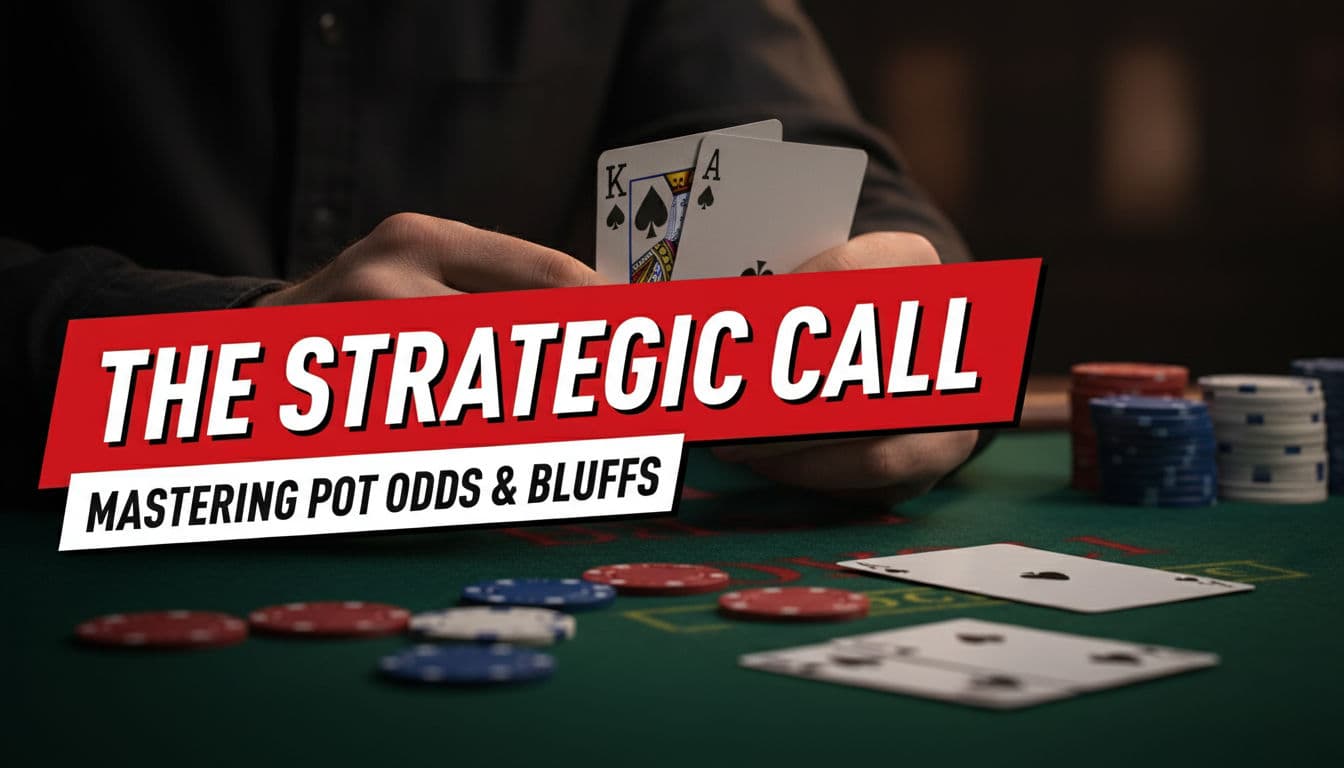
In the intricate world of poker, the action of 'calling' transcends its simple definition of matching a preceding wager. While seemingly straightforward, a well-timed and strategically informed call can be one of the most powerful plays in a player's arsenal. It represents a critical juncture where a player decides to continue in a hand without escalating the stakes, a decision laden with implications regarding hand strength, opponent assessment, and future street potential. Understanding the multifaceted nature of calling is paramount for any player aiming to move beyond basic participation and into sophisticated strategic play.
This guide will dissect the concept of 'calling' from an expert perspective, moving beyond its mechanical execution to explore the analytical frameworks and psychological considerations that underpin optimal calling decisions. We will delve into how factors like pot odds, implied odds, perceived opponent ranges, and table dynamics intricately weave into the fabric of every successful call, transforming a passive action into a potent strategic weapon.
Poker Call Strategy: The Fundamental Action of "Calling" in Poker
Developing a solid poker call strategy is essential because, at its core, a 'call' in poker is the act of contributing an amount of chips to the pot precisely equal to the immediately preceding bet or raise. This action signifies a player's intent to remain involved in the current hand, electing not to fold nor to increase the current betting pressure. It's a foundational element of poker, alongside betting, raising, and folding, and mastering its nuances is crucial for strategic success.
Practical Illustrations of a Call
To clarify exactly how to call in poker, consider these common practical scenarios:
Matching a Bet: If Player A places a bet of $10, and Player B opts to 'call', Player B will also place $10 into the communal pot, signifying their continuation in the hand at the current stake level.
Matching a Raise: Should Player A bet $5, and Player B raises to $15, a subsequent Player C who 'calls' would contribute $15 to the pot, thereby matching Player B's raise and agreeing to the higher stakes.
The decision to call is rarely made in isolation; it is a complex interplay of various factors that demand careful consideration.
Strategic Pillars Influencing the Decision to Call
An expert poker player employs a rigorous analytical process and follows essential poker calling tips before making a call, factoring in several critical components:
Hand Strength and Equity: The primary consideration is conducting a thorough poker hand analysis to determine the inherent strength of one's own hand. A call with a strong, made hand aims to extract value or keep weaker hands in. With a drawing hand (e.g., flush draw, straight draw), a call assesses the pot odds and implied odds to determine if the potential reward justifies the risk of missing the draw.
Pot Odds and Implied Odds: Calculating pot odds represents the ratio of the current pot size to the cost of making a call. Favorable pot odds often dictate calling with drawing hands. Implied odds consider the potential future value a hand might generate if it improves, adding another layer of complexity, particularly when facing smaller bets.
Opponent Profiling and Reads: Developing accurate poker opponent reads and understanding an opponent's betting patterns, tendencies, and perceived hand range is paramount. Calling a tight player's bet carries different implications than calling an aggressive, loose player's bet. A call can be used to gather more information or exploit a perceived weakness.
Positional Advantage: Mastering poker position play at the table significantly influences your calling strategy. Calling in late position allows a player to observe more action before making their decision, granting a significant informational advantage that can justify calls with a wider range of hands.
Advanced Strategic Interpretations of a Call
Beyond its basic definition, the call serves several crucial purposes in advanced poker strategy:
The Information Value of a Call: An immediate call on the flop or turn can sometimes signal a medium-strength hand, a weak draw, or even a pure bluff. Conversely, a delayed call, or a 'tank call,' might suggest a stronger, more considered hand or a player wrestling with a marginal decision. Opponents constantly analyze the speed and timing of calls for tells.
Slow-Playing and Trapping: One potent use of the call is the poker slow play maneuver. With a very strong hand, a player might opt to call rather than raise, aiming to conceal their hand's true strength and entice opponents to commit more chips on later streets. This transforms a seemingly passive action into an aggressive trapping mechanism.
Call-Bluffing and Inducing Actions: In specific situations, a call can be part of a 'call-bluff' strategy. This involves calling on an earlier street with a marginal hand, intending to bluff on a later street if the board or opponent's action seems favorable. It requires excellent timing and a deep understanding of opponent psychology.
Calling Stations: A Double-Edged Sword: Players known as 'calling stations' frequently call bets regardless of hand strength. While this trait can be exploitable by value betting strong hands, it also complicates bluffing attempts, as these players are less likely to fold. Understanding when an opponent is a calling station can heavily influence your own calling (or betting) strategy.
Psychological Ramifications and Table Dynamics
The act of calling also has profound psychological effects on both the caller and their opponents, shaping table dynamics:
Impact on Opponent Perception: Consistent calls can establish a player's image as cautious or passive, which can be exploited later with well-timed raises or bluffs. Conversely, a carefully selected call, particularly against an aggressive player, can convey confidence and strength.
Maintaining Table Image: A player's calling frequency contributes to their overall table image. Maintaining a balanced calling range, where you sometimes call with strong hands and sometimes with draws or marginal hands, prevents opponents from easily reading your intentions.
Decision Fatigue and Discipline: Making optimal calling decisions requires discipline and mental fortitude. Over-calling, especially with marginal hands, leads to decision fatigue and leaks in a player's game. Expert players recognize the importance of strategic folding alongside strategic calling.
Ultimately, the 'call' in poker is a nuanced action that demands a holistic understanding of poker game theory, psychology, and risk assessment. It's not merely about matching chips, but about making an informed, strategic choice that positions a player for maximum long-term profitability and competitive advantage.
If you are ready to play in real games, maximize your profitability from day one by using our best bonus codes to boost your starting bankroll, and hit the tables with an immediate advantage.
| Pros | Cons |
|---|---|
Calling allows you to see subsequent community cards (flop, turn, river) without committing more chips than necessary, providing valuable information about your hand's potential and your opponents' actions. | Calling with a strong hand when a raise would extract more chips from a weaker opponent means you leave money on the table, failing to maximize value. |
By calling instead of raising, you keep the pot smaller, which can be advantageous when playing drawing hands with unfavorable implied odds or when trying to control variance. | Calling instead of raising allows opponents with drawing hands to see the next card at a lower cost, potentially allowing them to hit their hand and beat yours. |
Calling with a very strong hand can mask its true strength, enticing opponents to continue betting into the pot on later streets, thereby maximizing your value. | Frequent calling, particularly with marginal hands, can make you appear as a 'calling station', encouraging aggressive opponents to bluff more often and pressure you off hands. |
Related Poker Terms
6-Max
9-Max (Full Ring)
A-Game
ABC Poker
Bankroll
Bet Size
Bet Sizing
Blocker
Bluff
Bluff Catcher
Board
Bubble Factor
Button
Call
Check-Call
Check-fold
Check-Raise
Click-Back
Donkament
Double Barrel
First in
Gap Concept
GTO
Gutshot
Hot Streak
HUD
Image
Insta-Call
Isolation
Kicker
Leak
Limp
Limp-Fold
Limp-Raise
Middle Pair
Min-raise
Monotone
Monster
Multi-Way Pot
Nit
Nuts
One-Way Straight
Online Poker
Online Poker Strategies
Open Limp
Out of Line
Over the top
Over-Limp
Overblind
Overcall
Overcard
Overpair
Pat
Peel
Play Behind
Polarized
Pot Control
Potting Out
Preflop
Premium Hands
Probe Bet
Proposing Bets
Push or Fold
Put Down
Quads
Quartered
Quitting Time
Quorum
Ragged
Range
Range Advantage
Razz
Reverse Implied Odds
Rolled Up
Royal Flush
Runner Runner
Running Good
Sandbagging
Satellite
Sit and Go (SNG)
Slow Play
Smooth Call
Snap Call
Snapped Off
Soft Seat
Solid
Steal
Suited
Suited Gappers
Tank
Total air
Trap
Two-Gapper
Under the Gun (UTG)
Underpair
Value
Value Bet
Villain
Weak Ace
Window Card
Best Online Poker Bonus Codes


About the Editor

Bence Mitykó is a Somuchpoker poker writer, covering poker news and strategy. He spent four years playing poker professionally, primarily focusing on Heads-Up Sit & Go games, experience that continues to shape his understanding of poker strategy, online poker dynamics, and the wider poker industry.


