Street

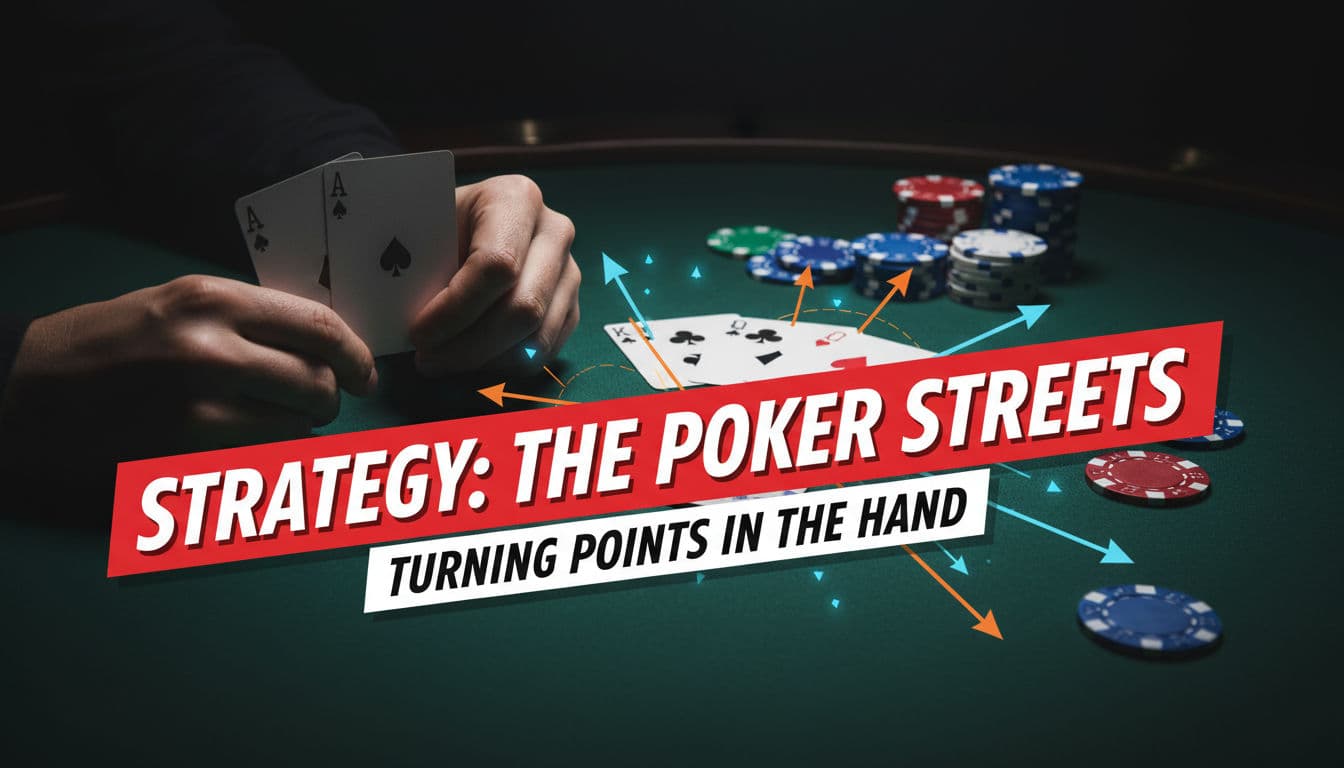
The concept of a "street" in poker is far more than a mere colloquialism; it represents a fundamental structural element that dictates the flow of information, the evolution of hand equities, and the strategic decisions players must continually adapt to. Each street marks a distinct phase where new cards are unveiled, irrevocably altering the game's landscape and demanding a dynamic approach to betting, calling, and folding. Understanding these critical junctures is paramount for any player aiming to master the intricacies of poker strategy, especially in the most popular variants like Texas Hold'em and Seven-Card Stud.
Defining the Poker Streets: A Strategic Turning Point
In the lexicon of poker, a "street" precisely delineates a discrete stage within a hand where new cards are introduced into play. For those wondering what are poker streets, these moments are critical junctures that fundamentally reshape the tactical environment. Unlike a "betting round" which refers to the sequence of wagers that follows a new card revelation, poker streets specifically signify the act of dealing or exposing those crucial new cards. This process forces players to reassess their hand strength, their opponents' probable holdings, and the optimal path forward. Each street represents a major shift in the available data, making them the primary markers of a hand's progression.
Streets in Community Card Games: Texas Hold'em and Omaha
The vast majority of modern poker players are familiar with community card games, where a set of shared cards forms part of every player's hand. In variants such as Texas Hold'em and Pot-Limit Omaha, there are four primary texas holdem streets that govern the progression of a hand:
1. The Pre-flop: Initial Assessments and Hand Selection
This initial street occurs immediately after each player receives their private "hole cards" - two in Texas Hold'em, four in Omaha - but before any community cards are visible. A solid pre-flop strategy is foundational, centered on crucial decisions about hand selection, positional advantage, and initial betting. Players evaluate their starting hand's potential, considering factors like pair strength, suitedness, and connectivity. Aggressive play at this stage can seize initiative, while cautious play can minimize losses with weaker holdings. This street sets the stage for all subsequent action in the hand.
2. The Flop: Three Cards, Exponential Possibilities
The flop poker stage represents the second street and is arguably the most impactful in terms of information revelation. Here, three community cards are dealt face-up simultaneously, dramatically transforming the board texture and players' hand equities. A strong pre-flop hand might suddenly become vulnerable on a coordinated board, or a speculative hand might connect perfectly. Players must instantly analyze how their hole cards interact with the flop to form strong hands or draws. This street often sees the first significant post-flop betting, testing players' ability to read the board and their opponents' actions.
3. The Turn: The Fourth Street of Escalation
Also known as "fourth street" the turn poker street introduces a single, additional community card to the board. This revelation further refines hand possibilities and often significantly increases the pot size and strategic pressure. Draws might complete, or new draws might emerge. It is a critical point for assessing pot odds and implied odds for drawing hands, as well as making difficult decisions about continuing with marginal holdings. Players who were strong on the flop might find their position weakened, while others might suddenly have the absolute nuts. It's a street where courage and calculated aggression often pay dividends.
4. The River: The Final Street and Showdown Decisions
The river poker street, or "fifth street" is the final community card dealt, completing the five-card board. With all cards now exposed, players have their absolute best five-card hand. This street is where the highest stakes decisions are made: value betting for maximum profit, bluffing to take down the pot uncontested, or making hero calls. Understanding opponent tendencies and the story told by previous betting rounds becomes paramount. The river often culminates in a showdown, making precise hand reading and strategic execution crucial to success.
Streets in Stud Games: A Different Information Flow
Stud poker variants, such as Seven-Card Stud, organize their stud poker streets differently due to their unique card distribution. Instead of community cards, players receive a mix of face-down (hole) and face-up (door) cards, with new cards dealt individually to each active player on subsequent streets. This structure creates a unique poker information flow throughout the hand:
Third Street: Players receive two hole cards and one up-card, initiating the first betting round.
Fourth Street: Each active player receives a second up-card, visible to all.
Fifth Street: Another up-card is dealt to active players, significantly increasing potential hand strength and revealing more information.
Sixth Street: The penultimate up-card is dealt, further solidifying potential hands and intensifying betting.
Seventh Street (The River): The final card is dealt face-down to each active player, providing one last opportunity to improve their hand before the final betting round and potential showdown.
In stud games, the strategic focus shifts heavily towards observing opponents' exposed cards and calculating their likely holdings.
Distinguishing "Street" from "Betting Round" for Tactical Precision
While often conflated in casual conversation, the terms "street" and "betting round" possess distinct meanings vital for accurate poker analysis. A "street" exclusively refers to the moment new cards are dealt or revealed, fundamentally altering the strategic landscape across all poker game stages. Conversely, a "betting round" encompasses the sequence of actions (bet, call, raise, fold) that follows the completion of a street.
For instance, after the flop (a street), there is a subsequent betting round where players act. This distinction is crucial for precise strategic communication, as it clearly separates the act of information revelation from the subsequent financial and tactical engagement. Mastering the dynamics of each street is a hallmark of an expert player. Each new card dealt isn't just a random occurrence; it's a strategic inflection point requiring careful consideration and adaptive play to navigate successfully.
| Pros | Cons |
|---|---|
A clear understanding of each street's purpose and impact allows players to tailor their strategy, from pre-flop hand selection to river bluffing, for optimal results. | The multi-stage nature of poker, with distinct actions and strategic considerations for each street, can be overwhelming for novice players. |
Each new card revealed on a street provides vital information, enabling players to more accurately deduce opponents' potential holdings and adjust their own play accordingly. | As the board changes with each street, players must continuously re-evaluate their hand equity and strategic position, demanding dynamic and flexible decision-making. |
Related Poker Terms
6-Max
9-Max (Full Ring)
A-Game
ABC Poker
Bankroll
Bet Size
Bet Sizing
Blocker
Bluff
Bluff Catcher
Board
Bubble Factor
Button
Call
Check-Call
Check-fold
Check-Raise
Click-Back
Donkament
Double Barrel
First in
Gap Concept
GTO
Gutshot
Hot Streak
HUD
Image
Insta-Call
Isolation
Kicker
Leak
Limp
Limp-Fold
Limp-Raise
Middle Pair
Min-raise
Monotone
Monster
Multi-Way Pot
Nit
Nuts
One-Way Straight
Online Poker
Online Poker Strategies
Open Limp
Out of Line
Over the top
Over-Limp
Overblind
Overcall
Overcard
Overpair
Pat
Peel
Play Behind
Polarized
Pot Control
Potting Out
Preflop
Premium Hands
Probe Bet
Proposing Bets
Push or Fold
Put Down
Quads
Quartered
Quitting Time
Quorum
Ragged
Range
Range Advantage
Razz
Reverse Implied Odds
Rolled Up
Royal Flush
Runner Runner
Running Good
Sandbagging
Satellite
Sit and Go (SNG)
Slow Play
Smooth Call
Snap Call
Snapped Off
Soft Seat
Solid
Steal
Suited
Suited Gappers
Tank
Total air
Trap
Two-Gapper
Under the Gun (UTG)
Underpair
Value
Value Bet
Villain
Weak Ace
Window Card