

Sandbagging

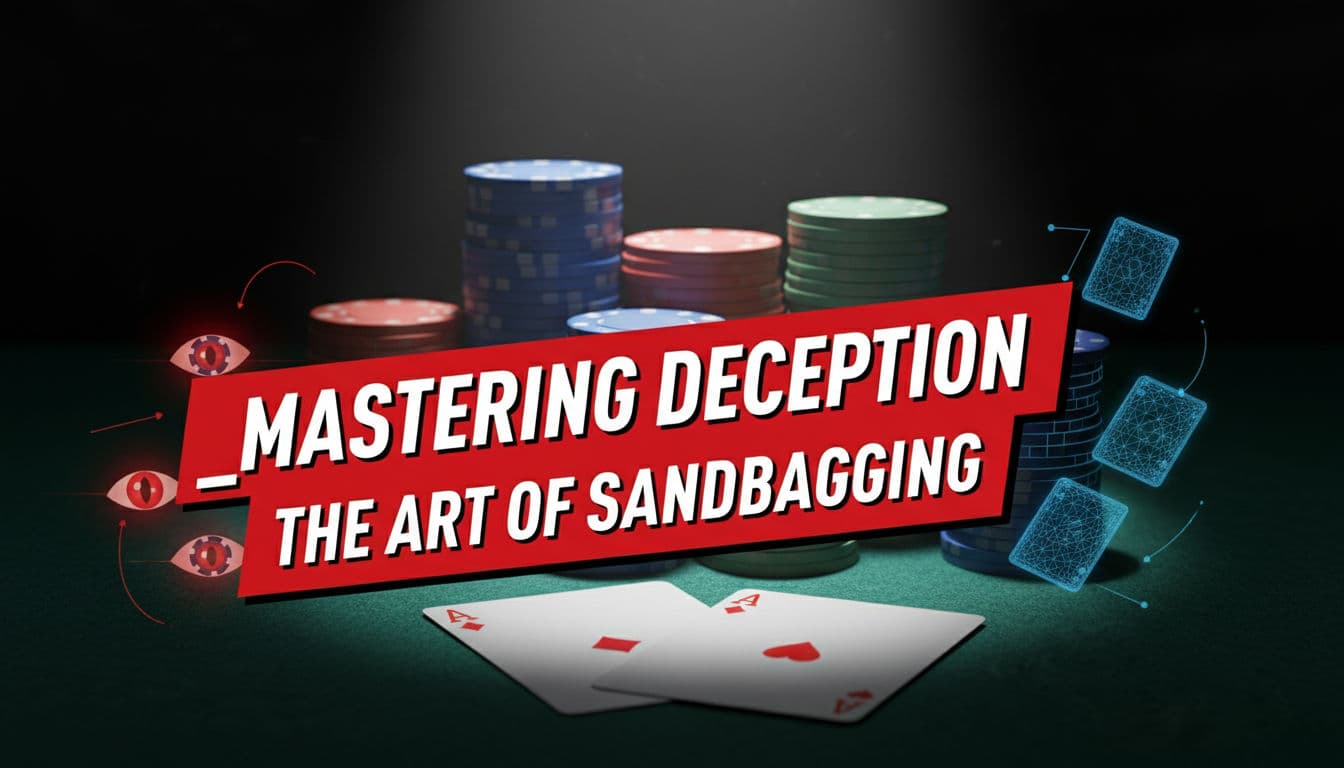
In the high-stakes arena of poker, where information is power and strategic deception is paramount, a nuanced maneuver known as "sandbagging" serves as a potent weapon for the astute player. This isn't merely a passive act of slow playing; rather, it's a meticulously calculated strategy to mask the immense strength of a premium hand. By intentionally checking or calling when holding a powerhouse, players aim to lure opponents into committing more chips, provoke ill-timed bluffs, or perfectly set the stage for a devastating check-raise. Mastering this delicate balance of concealment and aggression can unlock significantly larger pots, but a misstep can prove costly, highlighting the importance of precise application.
The Art of Sandbagging Poker: A Masterclass in Deception
In the complex world of poker strategy, where information is power and deception is currency, a seasoned player often seeks ways to maximize value from their strongest hands. Among these tactics, "sandbagging" stands out as a sophisticated maneuver. Far from simply checking and hoping, sandbagging is a deliberate act of feigning weakness with an exceptionally powerful hand, aiming to manipulate opponents into committing more chips into the pot than they otherwise would.
What Exactly is Sandbagging poker?
At its core, sandbagging is a form of slow playing, but with a distinct, often more aggressive, objective. While slow playing generally means checking or calling with a strong hand to keep weaker hands in the pot, sandbagging specifically implies holding back and just calling (or checking) when you possess a monster hand. The primary motivations are threefold:
Disguising Strength: By not betting immediately, you avoid signaling the true power of your hand, making it harder for perceptive opponents to fold.
Provoking Bluffs: A perceived weak player or board can encourage opponents, especially aggressive ones, to attempt bluffs, walking straight into your trap.
Setting Up a Check-Raise Poker Strategy: This is perhaps the most potent application. Checking early in the betting round, often from out of position, allows an opponent to bet, giving you the opportunity to re-raise significantly, building a large pot and putting immense pressure on them.
The Strategic Rationale Behind Sandbagging
The allure of sandbagging lies in its potential to extract maximum value. When you flop a set or hit the nuts, simply betting out can often scare away weaker hands, limiting the pot's growth. By contrast, a well-executed sandbag allows you to:
Induce Action and Build the Pot
Imagine you've flopped the absolute nuts – say, a straight on a dry board. If you bet big, opponents without much will likely fold. However, if you check, an opponent with top pair or a strong draw might bet, thinking they have the best hand or can push you off yours. This initial bet becomes your gateway to a larger pot, either through a call or a check-raise.
Leverage Positional Advantage
While sandbagging can be effective from any position, its impact is amplified when you act out of position. Checking the aggressor when you have a monster hand creates a dynamic where they are forced to make a decision without full information. If they bet, you gain the opportunity for a check-raise, which can be devastating, particularly when coupled with future street action.
Exploit Opponent Tendencies
Against loose-aggressive (LAG) players who love to bluff, sandbagging can be a goldmine. These players are often keen to take down pots with continuation bets or by barreling multiple streets. By checking your monster, you're essentially laying out bait for them to commit their chips with inferior holdings or pure air.
Mastering these deceptive lines takes time and repetition; the best way to sharpen your check-raise poker strategy is to test it in real-game scenarios on the world's best online poker platforms .
When to Deploy the Sandbagging poker
Effective sandbagging isn't a blanket strategy; it requires careful consideration of several factors:
Board Texture: Ideal boards are often dry, uncoordinated, or present limited drawing possibilities. If the board is wet (many draws), sandbagging can be risky as it gives free cards to potential winners. However, a less obvious draw board where you hold the nut flush/straight can be good for slow-playing.
Opponent Type: Sandbagging works best against aggressive players who are likely to bet when checked to, or against loose callers who will pay off subsequent bets. It's less effective against tight, passive players who won't contribute much to the pot.
Hand Strength: You should only sandbag with hands that are genuinely strong – usually the nuts or very close to it. This minimizes the risk of being outdrawn if you allow free cards.
Table Dynamics: Consider your table image. If you've been playing aggressively, a sudden check might be seen as weakness, inviting bluffs. If you've been tight, it might be interpreted as a strong hand setting a trap.
The Risks and Drawbacks of Sandbagging
Despite its potential, sandbagging carries significant risks:
Missing Value: The most common pitfall is failing to extract maximum value. If opponents check back when you sandbag, you miss a betting street and potentially a large chunk of the pot.
Allowing Free Cards: On drawing-heavy boards, sandbagging can be catastrophic. Giving opponents free cards can allow them to hit their draws and beat your once-dominant hand.
Misinterpretation by Opponents: While aiming to induce bluffs in poker, some opponents might simply perceive your check as genuine weakness and fold to future bets, or worse, outplay you on later streets if your hand isn't fully disguised.
Pot Control Issues: In multi-way pots, sandbagging can sometimes lead to uncontrolled pot growth, especially if multiple players are also slow-playing or bluffing.
Conclusion
Sandbagging poker is an advanced poker tactic that, when applied judiciously, can dramatically increase your winnings. It's an act of calculated deception, designed to entice action and maximize value from your strongest holdings. However, it demands a deep understanding of board texture, opponent psychology, and positional dynamics. Like any powerful tool, it must be wielded with precision and caution, lest it backfire and lead to regrettable losses. Master this art, and you'll add a formidable weapon to your poker arsenal, capable of turning good hands into truly great profits.
| Pros | Cons |
|---|---|
By masking hand strength, sandbagging encourages opponents to commit more chips into the pot, leading to larger winnings when successful. | If opponents check back or fold prematurely, you might miss out on potential bets and fail to extract maximum value from your premium hand. |
Feigning weakness can entice aggressive or less experienced players to bluff into your strong hand, allowing you to call or check-raise for additional value. | On drawing-heavy boards, checking can give opponents a free card, potentially allowing them to hit their draw and beat your strong hand. |
Sandbagging, especially when out of position, creates opportunities for a devastating check-raise, putting immense pressure on opponents and building significant pots. | Your attempt to induce action might be genuinely perceived as weakness, causing opponents to fold to future bets or aggressively bet you off the pot if your disguise is too convincing. |
Related Poker Terms
6-Max
9-Max (Full Ring)
A-Game
ABC Poker
Bankroll
Bet Size
Bet Sizing
Blocker
Bluff
Bluff Catcher
Board
Bubble Factor
Button
Call
Check-Call
Check-fold
Check-Raise
Click-Back
Donkament
Double Barrel
First in
Gap Concept
GTO
Gutshot
Hot Streak
HUD
Image
Insta-Call
Isolation
Kicker
Leak
Limp
Limp-Fold
Limp-Raise
Middle Pair
Min-raise
Monotone
Monster
Multi-Way Pot
Nit
Nuts
One-Way Straight
Online Poker
Online Poker Strategies
Open Limp
Out of Line
Over the top
Over-Limp
Overblind
Overcall
Overcard
Overpair
Pat
Peel
Play Behind
Polarized
Pot Control
Potting Out
Preflop
Premium Hands
Probe Bet
Proposing Bets
Push or Fold
Put Down
Quads
Quartered
Quitting Time
Quorum
Ragged
Range
Range Advantage
Razz
Reverse Implied Odds
Rolled Up
Royal Flush
Runner Runner
Running Good
Sandbagging
Satellite
Sit and Go (SNG)
Slow Play
Smooth Call
Snap Call
Snapped Off
Soft Seat
Solid
Steal
Suited
Suited Gappers
Tank
Total air
Trap
Two-Gapper
Under the Gun (UTG)
Underpair
Value
Value Bet
Villain
Weak Ace
Window Card
Best Online Poker Bonus Codes


About the Editor

Bence Mitykó is a Somuchpoker poker writer, covering poker news and strategy. He spent four years playing poker professionally, primarily focusing on Heads-Up Sit & Go games, experience that continues to shape his understanding of poker strategy, online poker dynamics, and the wider poker industry.


