

First in

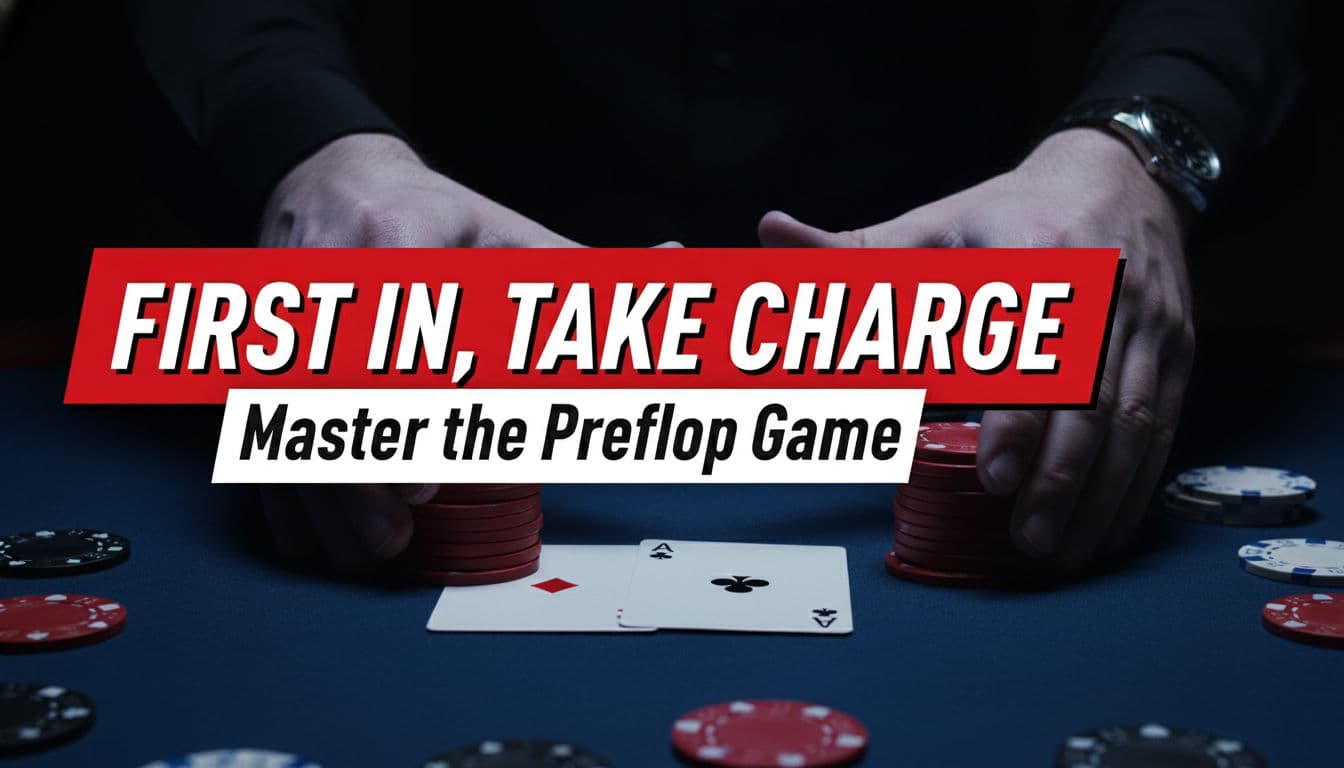
In poker, being 'first in' refers to being the first player to voluntarily put chips into an unopened pot before the flop. This action is almost always executed with a raise, known as an 'open-raise'. Understanding when and how to be first in is a cornerstone of modern, aggressive poker strategy, allowing you to seize control of the hand, steal blinds, and put your opponents on the defensive from the very beginning.
Understanding the 'First In Poker' Concept
What does it mean to be 'first in' in poker? It's a simple but powerful concept that separates passive players from aggressive winners. Being first in means you are the very first player to voluntarily put chips into the pot before the flop, not counting the forced blind bets. This move, which should almost always be a raise, is called an open-raise and is the foundation of a strong preflop strategy.
When you are the first to enter the pot, you immediately take the initiative. This preflop aggression gives you two primary ways to win the hand: you can force all your opponents to fold right away, winning the blinds and antes uncontested, or you can proceed to future streets with a perceived stronger range, giving you more credibility to bluff later on.
The Strategic Importance of an Open-Raise
The act of being first in with a raise is fundamental to winning at poker. Passive play, like limping (just calling the big blind), invites multiple players into the pot and makes it much harder to win. An aggressive open-raise, however, achieves several key objectives:
Seizing Initiative: You become the aggressor and dictate the flow of the hand. Your opponents are forced to react to you.
Narrowing the Field: A raise often forces players with marginal hands to fold, isolating one or two opponents and making your post-flop decisions easier.
Stealing Blinds: Especially from late position, a primary goal of being first in is simply to win the blinds and antes without a fight. These small, consistent wins are crucial for your long-term success.
Building a Bigger Pot: When you have a premium hand, raising allows you to build a larger pot from the start, maximizing your potential winnings.
Applying a disciplined preflop strategy is highly effective when playing in the right online poker games. You can explore our curated list of the best online poker sites to find the most profitable platforms and secure top-tier welcome packages to boost your starting bankroll.
How Position Dictates Your 'First In' Strategy
Your position at the table is the most critical factor in deciding which hands to play when facing an unopened pot. A hand that is an easy open-raise from the button might be an instant fold from under the gun.
Early Position (UTG)
When you're in an early position, you have the entire table left to act behind you. The risk of being re-raised (3-bet) or called by multiple players is very high. Therefore, your 'first in' range must be extremely tight and strong. You should only be opening with premium pairs, strong broadway cards like AK and AQ, and perhaps some top-tier suited connectors.
Middle Position
As you move to middle position, you can start to expand your open-raising range slightly. With fewer players left to act, the danger is reduced. You can begin to add more speculative hands like medium pairs, suited aces, and a wider array of suited connectors to your 'first in poker' strategy.
Late Position (Cutoff & Button)
This is where the real power lies. From the cutoff and especially the button, you have a massive positional advantage. When the action folds to you here, you can profitably open-raise with a very wide range of hands. The primary goal is often to attack the blinds. Since you will be the last to act on every post-flop street, you can play many more hands effectively.
Being the first in from late position is not just about the cards you hold; it's about leveraging your positional advantage to apply maximum pressure and steal uncontested pots.
Common Mistakes to Avoid
Mastering the 'first in' concept also means avoiding common pitfalls. The most significant error is limping. Entering the pot by just calling the big blind is a passive move that signals weakness and surrenders all the benefits of raising. Another mistake is inconsistent raise sizing, which can give away the strength of your hand. A standard open-raise of 2x to 3x the big blind with your entire range is a solid, balanced approach.
Ultimately, a disciplined and aggressive 'first in' strategy is non-negotiable for success in modern poker. By understanding how your position affects your hand selection and consistently applying pressure with an open-raise, you take control of the game and put yourself on the path to profitability.
| Pros | Cons |
|---|---|
Being the first player to raise allows you to take control of the hand, becoming the aggressor and putting opponents on the defensive. | An effective 'first in' strategy is highly dependent on position. Opening too wide from early position can lead to difficult and unprofitable situations. |
An open-raise frequently forces the blinds and other players to fold, allowing you to win the pot preflop without seeing a flop. | If your open-raising range is too wide or predictable, observant and aggressive opponents can exploit you by frequently re-raising (3-betting). |
Consistently being the preflop aggressor builds an image of a strong, confident player, making your bluffs more credible. |
Related Poker Terms
6-Max
9-Max (Full Ring)
A-Game
ABC Poker
Bankroll
Bet Size
Bet Sizing
Blocker
Bluff
Bluff Catcher
Board
Bubble Factor
Button
Call
Check-Call
Check-fold
Check-Raise
Click-Back
Donkament
Double Barrel
First in
Gap Concept
GTO
Gutshot
Hot Streak
HUD
Image
Insta-Call
Isolation
Kicker
Leak
Limp
Limp-Fold
Limp-Raise
Middle Pair
Min-raise
Monotone
Monster
Multi-Way Pot
Nit
Nuts
One-Way Straight
Online Poker
Online Poker Strategies
Open Limp
Out of Line
Over the top
Over-Limp
Overblind
Overcall
Overcard
Overpair
Pat
Peel
Play Behind
Polarized
Pot Control
Potting Out
Preflop
Premium Hands
Probe Bet
Proposing Bets
Push or Fold
Put Down
Quads
Quartered
Quitting Time
Quorum
Ragged
Range
Range Advantage
Razz
Reverse Implied Odds
Rolled Up
Royal Flush
Runner Runner
Running Good
Sandbagging
Satellite
Sit and Go (SNG)
Slow Play
Smooth Call
Snap Call
Snapped Off
Soft Seat
Solid
Steal
Suited
Suited Gappers
Tank
Total air
Trap
Two-Gapper
Under the Gun (UTG)
Underpair
Value
Value Bet
Villain
Weak Ace
Window Card
Best Online Poker Bonus Codes


About the Editor

Bence Mitykó is a Somuchpoker poker writer, covering poker news and strategy. He spent four years playing poker professionally, primarily focusing on Heads-Up Sit & Go games, experience that continues to shape his understanding of poker strategy, online poker dynamics, and the wider poker industry.


