

Two-Gapper

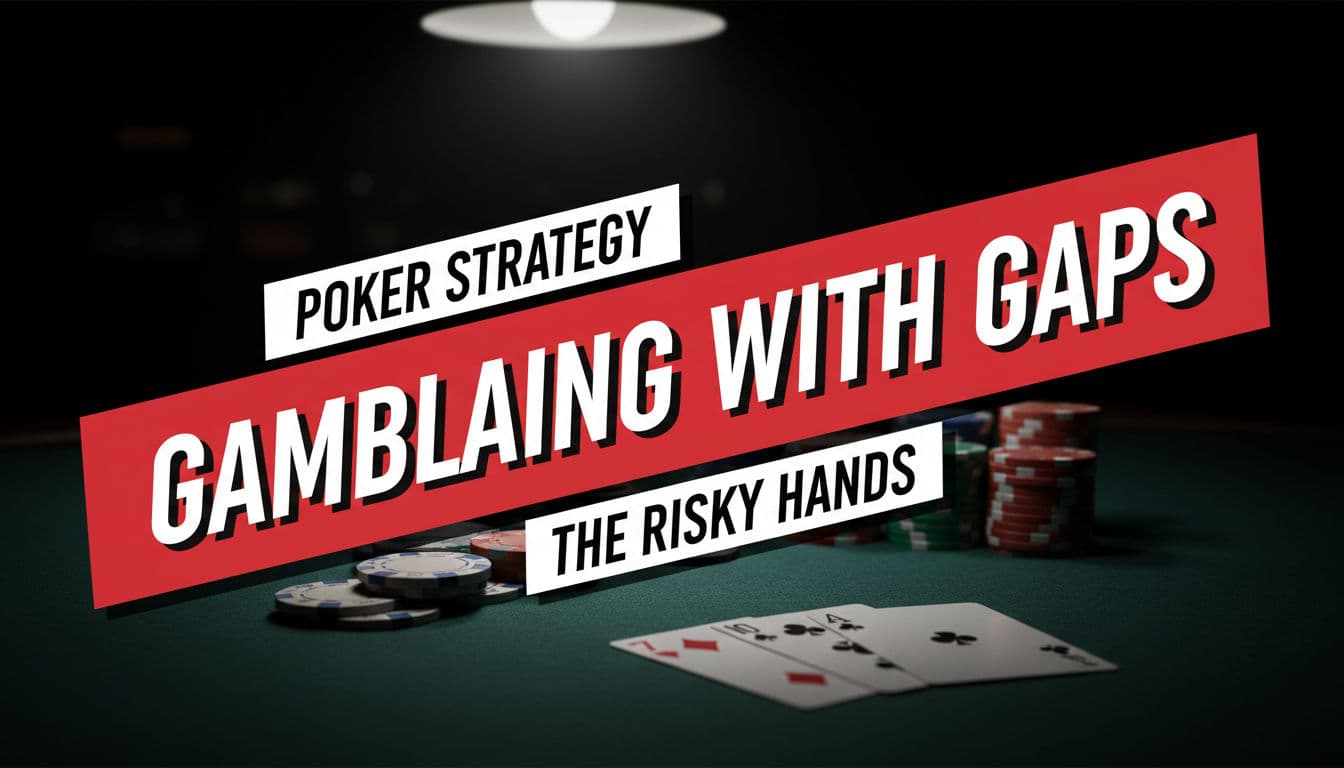
In the intricate world of Texas Hold'em, understanding the nuances of starting hands is paramount to long-term success. Among the myriad hand combinations, 'two-gappers' represent a class of holdings that often provoke debate and require careful strategic consideration. While frequently dismissed as inherently weak, a deeper, analytical perspective reveals specific scenarios where these hands can hold surprising value, particularly for seasoned players capable of exploiting implied odds and navigating complex post-flop situations.
This expert guide delves into the definition, strategic comparisons, and optimal play of two-gappers. We will dissect their playability based on factors like suit, rank, and table dynamics, offering a refined understanding that moves beyond simplistic categorization. By the end, you will possess a more sophisticated framework for evaluating and executing plays with these enigmatic poker hands.
Two Gapper Definition: What Exactly Are Two Gappers in Poker?
A two-gapper, in the context of poker, specifically refers to two cards in a player's starting hand that are separated by precisely two ranks. This term is predominantly applied to starting hands in Texas Hold'em, where players receive two private cards.
Consider the example of holding a 7 and a 10. These cards are a two-gapper because the ranks 8 and 9 would perfectly fill the numerical gap between them. Other common examples include J-8, K-10, A-J, and even lower-ranked variations like 6-3. The defining characteristic is the presence of two missing intermediate ranks that would complete a consecutive sequence.
Contrasting Two Gappers in Poker with Other Holdings
To fully appreciate the strategic position of two-gappers, it's essential to contrast them with other common starting hand types:
Connected Cards: Hands like 7-8 or J-Q are 'connectors' because their ranks are consecutive, offering immediate and numerous straight-making possibilities.
One-Gappers: Hands such as 7-9 or J-K have only a single rank separating them, providing a slightly better chance of hitting a straight compared to two gappers in poker.
Two-gappers are generally perceived as less desirable than both connected cards and one-gappers. The primary reason for this diminished desirability lies in their reduced straight potential. For a two-gapper to form a straight, two specific intermediate cards must appear on the board, or one specific intermediate card must combine with one of your hole cards and three board cards. This double dependency significantly lowers the probability of making a strong five-card straight, requiring a very precise board texture.
The Critical Distinction: Suited vs. Unsuited Two-Gappers
The strategic value of a two-gapper dramatically shifts depending on whether the two cards are suited or unsuited. This distinction is paramount in evaluating their playability:
Suited Two-Gappers: Leveraging Additional Equity
When the two cards forming the gap share the same suit (e.g., 7♠ 10♠), their playability significantly increases. Suited two-gappers offer:
Flush Potential: The most obvious advantage is the possibility of hitting a flush, which is a strong hand. This provides a valuable backdoor draw option even if the straight draws don't materialize.
Backdoor Straight Draws: While direct straight draws are less common, suited two-gappers can often develop backdoor straight draws, adding another layer of equity.
Implied Odds: The potential for a large payout when hitting a strong, disguised hand (like a flush or a high straight) can make suited two-gappers attractive in deep-stacked games. Players are often less likely to put you on a flush or a specific straight with these hands.
These hands are often considered speculative and are best played from late position where you can observe opponent action, or in limped pots where the cost to see a flop is minimal. Understanding these probabilities is essential for long-term success in online poker, where recognizing and pricing your draws correctly can be the difference between a losing session and a massive win.
Unsuited Two-Gappers in Poker: A Cautionary Tale
Conversely, unsuited two-gappers (e.g., 7♠ 10♦) are generally considered weak holdings and should be approached with extreme caution, if played at all. Their lack of flush potential removes a significant source of equity, leaving them with very limited ways to develop into strong hands. The only way an unsuited two-gapper can win a large pot is by hitting a strong pair or a highly improbable straight, neither of which occurs frequently enough to justify playing them liberally.
Rank Dependency: Not All Gaps Are Equal
Beyond the suit, the absolute rank of the cards within the two-gapper profoundly impacts its strength. For instance, a K-10 suited two-gapper is significantly stronger and more playable than a 7-4 suited two-gapper. The reasons are multifold:
Higher Card Strength: K-10 offers two overcards to many flops, providing top-pair potential with a strong kicker. 7-4 offers limited high card value.
Better Straight Possibilities: High two-gappers like K-10 can potentially make Broadway straights (T-J-Q-K-A), which are the highest possible straights. Lower two-gappers are restricted to lower-value straights.
Domination Factor: Low two-gappers are more susceptible to being dominated by higher pairs or even higher two-gappers, leading to situations with poor reverse implied odds.
Strategic Considerations for Playing Two Gappers in Poker
Mastering two-gappers demands a nuanced strategic approach, focusing on specific table conditions:
Positional Advantage: Playing two-gappers, especially suited ones, is almost exclusively advisable from late positions (cutoff, button). This allows you to gather more information about your opponents' actions before making a decision, enabling you to better assess pot odds and implied odds.
Effective Stack Sizes: Suited two-gappers thrive in deep-stacked environments where the potential payout for hitting a big hand (flush or a disguised straight) justifies the speculative investment. In short-stack scenarios, their playability diminishes significantly due to poor immediate equity.
Opponent Tendencies: Against overly tight or straightforward opponents, suited two-gappers can be valuable for their disguised potential. However, against aggressive players, these hands can be difficult to play out of position due to their vulnerability to raises and re-raises.
Pot Dynamics: Limped pots or multi-way pots can occasionally present opportunities for suited two-gappers, as the lower cost to see a flop and higher potential payout can align favorably. Avoid raising pre-flop with unsuited two-gappers unless you have a highly specific read or are in a very unusual game dynamic.
In conclusion, while two-gappers carry inherent weaknesses, particularly their unsuited counterparts, a sophisticated understanding of suit, rank, and strategic context can unlock surprising value. Approach them with an analytical mindset, prioritize position, and always be aware of the implied odds to turn these seemingly humble holdings into profitable ventures.
| Pros | Cons |
|---|---|
Suited two-gappers can win large pots when they hit a flush or a well-disguised straight, making them profitable in deep-stacked games due to high implied odds. | Two-gappers require two specific cards to complete a straight, making them significantly less likely to hit compared to connectors or one-gappers. |
The primary strength of suited two-gappers is their ability to make strong flushes, providing significant equity that unsuited hands lack. | Without positional advantage, playing two-gappers becomes very challenging due to limited information and vulnerability to aggression, leading to more difficult decisions post-flop. |
When a suited two-gapper hits a straight or flush, it's often unexpected by opponents, leading to bigger payouts as your hand is less obvious. | Unsuited two-gappers are often dominated by stronger hands, leading to situations where hitting a pair can still result in a losing hand (e.g., holding J-8 and hitting an 8 when an opponent has K-8). |
With unsuited two-gappers, if you hit a weak pair, you might end up paying off a stronger hand, losing more money in the long run. |
Related Poker Terms
6-Max
9-Max (Full Ring)
A-Game
ABC Poker
Backdoor Draw
Bankroll
Belly Buster
Bet Size
Bet Sizing
Blocker
Bluff
Bluff Catcher
Board
Bubble Factor
Button
Call
Check-Call
Check-fold
Check-Raise
Click-Back
Donkament
Double Barrel
First in
Flush Draw
Gap Concept
GTO
Gutshot
Hot Streak
HUD
Image
In a Row
Insta-Call
Isolation
Kicker
Leak
Limp
Limp-Fold
Limp-Raise
Middle Pair
Min-raise
Miss
Monotone
Monster
Multi-Way Pot
Nit
Nuts
One-Gapper
One-Way Straight
Online Poker
Online Poker Strategies
Open Ended Straight Draw (OESD)
Open Limp
Out of Line
Outdraw
Over the top
Over-Limp
Overblind
Overcall
Overcard
Overpair
Pat
Peel
Play Behind
Polarized
Pot Control
Potting Out
Preflop
Premium Hands
Probe Bet
Proposing Bets
Push or Fold
Put Down
Quads
Quart
Quartered
Quitting Time
Range
Royal Flush
Sit and Go (SNG)
Slow Play
Smooth Call
Snap Call
Snapped Off
Soft Seat
Solid
Steal
Suited
Suited Gappers
Tank
Total air
Trap
Two-Gapper
Under the Gun (UTG)
Underpair
Value
Value Bet
Villain
Weak Ace
Window Card
Wrap
Best Online Poker Bonus Codes


About the Editor

Bence Mitykó is a Somuchpoker poker writer, covering poker news and strategy. He spent four years playing poker professionally, primarily focusing on Heads-Up Sit & Go games, experience that continues to shape his understanding of poker strategy, online poker dynamics, and the wider poker industry.


