

Donkament

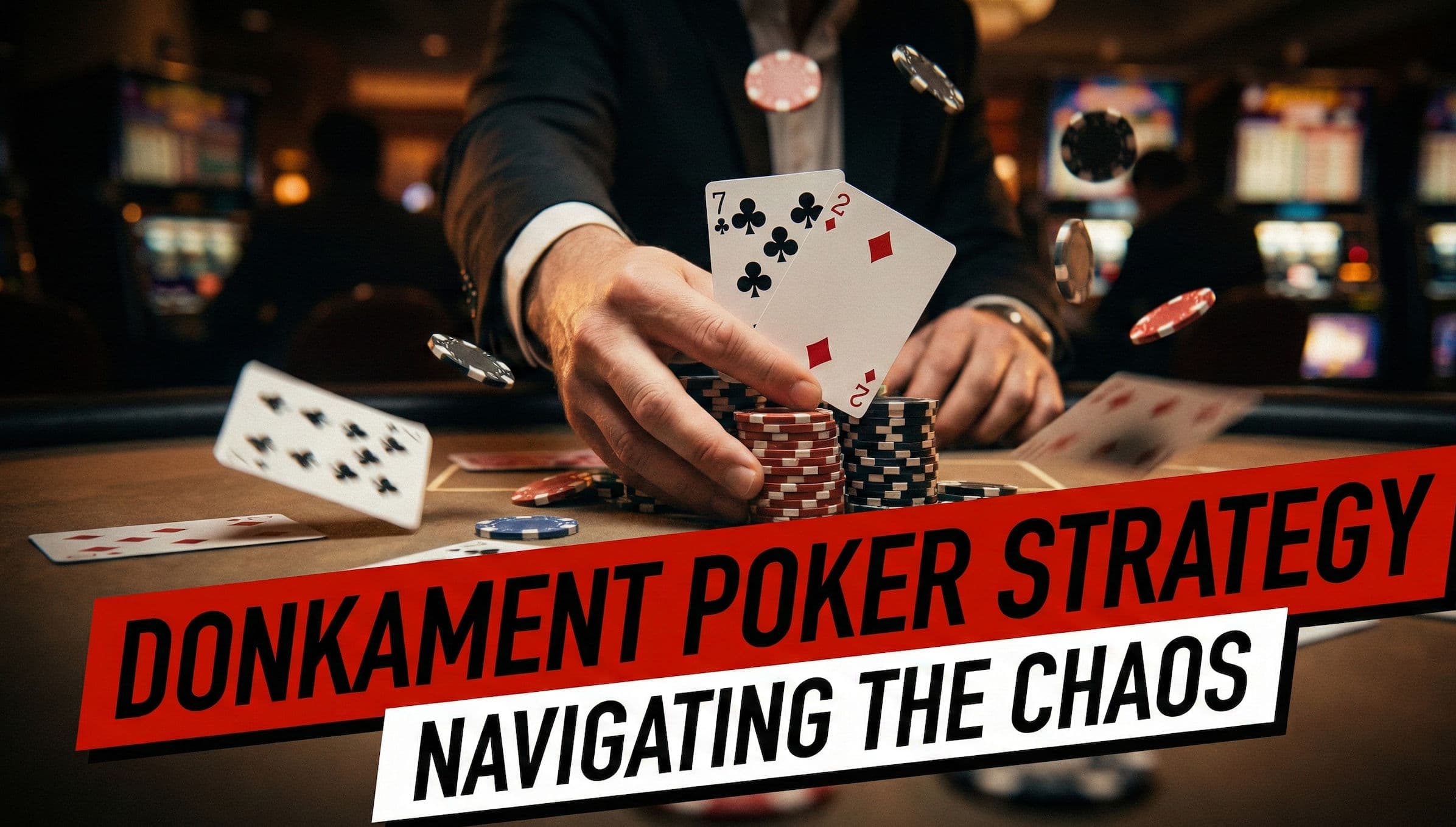
In the dynamic world of poker, understanding different tournament ecosystems is crucial for sustained success. The term 'donkament' has emerged from the poker community to describe a specific type of tournament that skilled players often view with both frustration and opportunity. Derived from 'donk' – a colloquial term for a weak poker players – and 'tournament', a donkament is characterized by a high concentration of recreational players whose play deviates significantly from established strategic norms. This unique environment presents distinct challenges and lucrative prospects for those who can adapt their game.
This guide delves into the essence of donkaments, exploring their structural triggers, typical player profiles, historical origins, and, most importantly, the strategic adjustments necessary to navigate and exploit them effectively. For serious players, mastering the donkament landscape is not just about identifying 'bad' play, but about developing a robust, exploitative strategy that capitalizes on less sophisticated opponents while mitigating increased variance.
Unpacking the Meaning of Donkament
The concept of Donkament is central to discussions among professional and aspiring poker players about tournament selection and strategy. It denotes a poker tournament whose design, entry requirements, or promotional aspects inadvertently attract a disproportionate number of novice or unskilled participants. These events become fertile ground for both high frustration and high profitability, making them a unique facet of the poker ecosystem that demands specific tactical considerations.
Donkament Meaning
At its core, the donkament meaning refers to a tournament where the average skill level of the player pool is notably low. The term itself, a portmanteau of 'donk' (a derogatory but commonly used term for a player making poor decisions) and 'tournament,' aptly captures the essence of these events. Unlike more competitive arenas, donkaments are often perceived as less about intricate strategy and more about navigating erratic play and the heightened role of luck.
Identifying Key Characteristics
Donkaments frequently exhibit several distinguishing features that contribute to their unique player dynamics:
Rapidly Escalating Blind Levels: Many donkaments, particularly turbo or hyper-turbo formats, feature blinds that increase at an accelerated pace. This structure forces action, often leading to pre-flop all-ins with marginal holdings as players feel pressured to accumulate chips quickly.
High Number of Irrational Players: The defining characteristic is the prevalence of participants who do not adhere to standard poker strategy. They might call too wide, bet erratically, chase long-shot draws with incorrect odds, or go all-in with incredibly weak hands, often with little regard for stack sizes or opponent ranges.
Reduced Strategic Depth: The unpredictable nature of play can make it challenging or even impossible to apply advanced poker concepts like deep-stacked play, intricate bluffing, or detailed opponent reads. The sheer randomness can overshadow traditional strategic advantages.
Why Donkaments Attract "Donks"
Understanding the structural elements that cultivate a donkament environment is key to both identifying and preparing for these tournaments.
How to Play Freerolls?
Freeroll tournaments, which require no monetary buy-in, are perhaps the most quintessential example of donkaments. Because participants have no financial investment, the psychological barrier to making risky or irrational plays is virtually non-existent. Players are often seen going multi-way all-in in early stages with hands like 7-2 offsuit, simply because 'it's free money, what's there to lose?' This 'nothing to lose' mentality fosters incredibly loose and unpredictable action.
However, if you can navigate this chaos with a disciplined strategy, these events are an excellent way to build a bankroll from scratch. For instance, WPT Global hosts a variety of daily freerolls that allow players to gain tournament experience and win real prizes without any initial investment, making it a premier destination for those looking to master the unpredictable world of freeroll poker.
Low Buy-in Poker Strategy and Turbo Dynamics
Tournaments with very low buy-ins ($1-$5) similarly attract a broader range of recreational players who are less concerned with the monetary risk. The perception of a small loss allows for more experimental and often ill-advised plays. Coupled with turbo or hyper-turbo structures, where blind levels increase every few minutes, these tournaments actively encourage high-variance play. Players are forced into coin-flip situations more frequently, reducing the edge of skilled players who prefer deeper strategic play and rewarding short-term luck.
The Origin and Cultural Impact of "Donkament"
The term 'donkament' didn't just appear; it evolved within the vibrant online poker community. It reportedly originated on Two Plus Two Publishing's poker forums, a hub for serious discussions and poker strategy. Skilled players coined the term as a somewhat disparaging, yet often humorous, way to refer to tournaments and players who deviated from what was considered 'proper' poker strategy. It encapsulated the frustration of encountering seemingly illogical play but also acknowledged the potential for a 'donkey' to get lucky and win, hence the full implication of 'donkament'.
The phrase 'LOL Donkaments' further amplified its cultural reach, often used to express a mix of amusement and exasperation at the comical outcomes or questionable decisions witnessed. Its notoriety was solidified when poker legend Barry Greenstein famously uttered it on GSN's 'High Stakes Poker,' a moment orchestrated by a forum member's charity challenge. This event cemented 'donkament' as a recognized, albeit informal, term within the broader poker lexicon.
Strategic Imperatives for Navigating Donkaments
While frustrating, donkaments offer immense profit potential for skilled players willing to adapt. The key is to shift from a balanced, unexploitable strategy to a highly exploitative one.
Adapting Your Play
Play Tighter Pre-flop Early On: Resist the urge to join the multi-way all-in circus with marginal hands. Focus on playing strong, premium hands to avoid tricky spots and maximize value.
Value Bet Relentlessly: When you have a strong hand, bet big and consistently. Weak poker players are more likely to call with a wider range of hands, hoping to get lucky. Don't be afraid to size up your bets significantly.
Avoid Fancy Play Syndrome: Complex bluffs and intricate lines are often wasted on players who aren't thinking on multiple levels. Simplify your game and focus on solid fundamentals.
Isolate Weak Poker Players: Identify the biggest 'donks' at your table and try to get into pots with them, especially in position. You want to be able to dictate the action and extract maximum value.
Be Prepared for Variance: Understand that even with optimal play, you will experience brutal bad beats. Donkaments increase variance significantly. Maintain emotional control and don't let bad beats tilt you.
Managing Variance and Mindset
The heightened variance in donkaments means that even the best players will experience swings. A crucial aspect of playing these poker tournaments successfully is robust bankroll management and a resilient mindset. Focus on making mathematically sound decisions over the long run, rather than individual results. Accept that luck plays a larger role in the short term and trust your process.
The Paradox of Donkaments: High Risk, High Reward
Donkaments present a unique paradox: they are frustrating due to unpredictable play, yet highly profitable for those who can navigate them. The risk of an early, unlucky exit is higher, but so is the potential reward due to the abundance of strategic mistakes made by opponents. For the discerning player, donkaments represent an opportunity to capitalize on significant skill disparities.
Exploiting Recreational Tendencies
The fundamental approach to exploiting donkaments lies in recognizing and counteracting the common tendencies of recreational players. They often play too many hands, chase draws excessively, call too often with weak pairs, and are less likely to fold once invested. This provides ample opportunity for skilled players to bet for value aggressively, bluff less, and capitalize on their opponents' willingness to pay.
When to Avoid
While generally profitable, there are times when even a skilled player might consider avoiding donkaments. If your mental game is not strong, if you are prone to tilt after bad beats, or if you prefer a more strategic and less variance-laden game, these poker tournaments might not be suitable. Understanding your own psychological limits is as important as understanding the game's mechanics.
Conclusion
Donkaments are an indelible part of the online poker landscape, offering a double-edged sword of high variance and substantial profit potential. For the analytical and adaptable poker player, they represent a prime opportunity to hone exploitative strategies, manage mental fortitude, and ultimately, build a bankroll. By understanding their characteristics, acknowledging their origins, and meticulously adjusting one's game plan, skilled individuals can transform these seemingly chaotic events into a consistent source of value, proving that even in the most unpredictable environments, an expert approach can prevail.
| Pros | Cons |
|---|---|
The abundance of weak play means opponents make more mistakes, increasing the long-term profitability for skilled players who can capitalize on these errors. | The erratic play of 'donks' leads to more unpredictable outcomes and a higher likelihood of frustrating bad beats, even when playing correctly. |
Recreational players exhibit clearer and more frequent strategic flaws, making it simpler to identify and exploit their tendencies compared to tougher fields. | It can be mentally challenging to constantly witness and be subject to irrational decisions, potentially leading to tilt or emotional fatigue for disciplined players. |
If variance runs in your favor, the high number of bad players can lead to quicker chip accumulation and a greater chance of reaching final tables and winning big prizes. | Sophisticated bluffs, detailed reads, and complex post-flop play can be ineffective or even detrimental against opponents who are not thinking on the same strategic level. |
Related Poker Terms
6-Max
9-Max (Full Ring)
A-Game
ABC Poker
Bankroll
Bet Size
Bet Sizing
Blocker
Bluff
Bluff Catcher
Board
Bubble Factor
Button
Call
Check-Call
Check-fold
Check-Raise
Click-Back
Donkament
Double Barrel
First in
Gap Concept
GTO
Gutshot
Hot Streak
HUD
Image
Insta-Call
Isolation
Kicker
Leak
Limp
Limp-Fold
Limp-Raise
Middle Pair
Min-raise
Monotone
Monster
Multi-Way Pot
Nit
Nuts
One-Way Straight
Online Poker
Online Poker Strategies
Open Limp
Out of Line
Over the top
Over-Limp
Overblind
Overcall
Overcard
Overpair
Pat
Peel
Play Behind
Polarized
Pot Control
Potting Out
Preflop
Premium Hands
Probe Bet
Proposing Bets
Push or Fold
Put Down
Quads
Quartered
Quitting Time
Quorum
Ragged
Range
Range Advantage
Razz
Reverse Implied Odds
Rolled Up
Royal Flush
Runner Runner
Running Good
Sandbagging
Satellite
Sit and Go (SNG)
Slow Play
Smooth Call
Snap Call
Snapped Off
Soft Seat
Solid
Steal
Suited
Suited Gappers
Tank
Total air
Trap
Two-Gapper
Under the Gun (UTG)
Underpair
Value
Value Bet
Villain
Weak Ace
Window Card
Best Online Poker Bonus Codes


About the Editor

Bence Mitykó is a Somuchpoker poker writer, covering poker news and strategy. He spent four years playing poker professionally, primarily focusing on Heads-Up Sit & Go games, experience that continues to shape his understanding of poker strategy, online poker dynamics, and the wider poker industry.


