Spread Limit

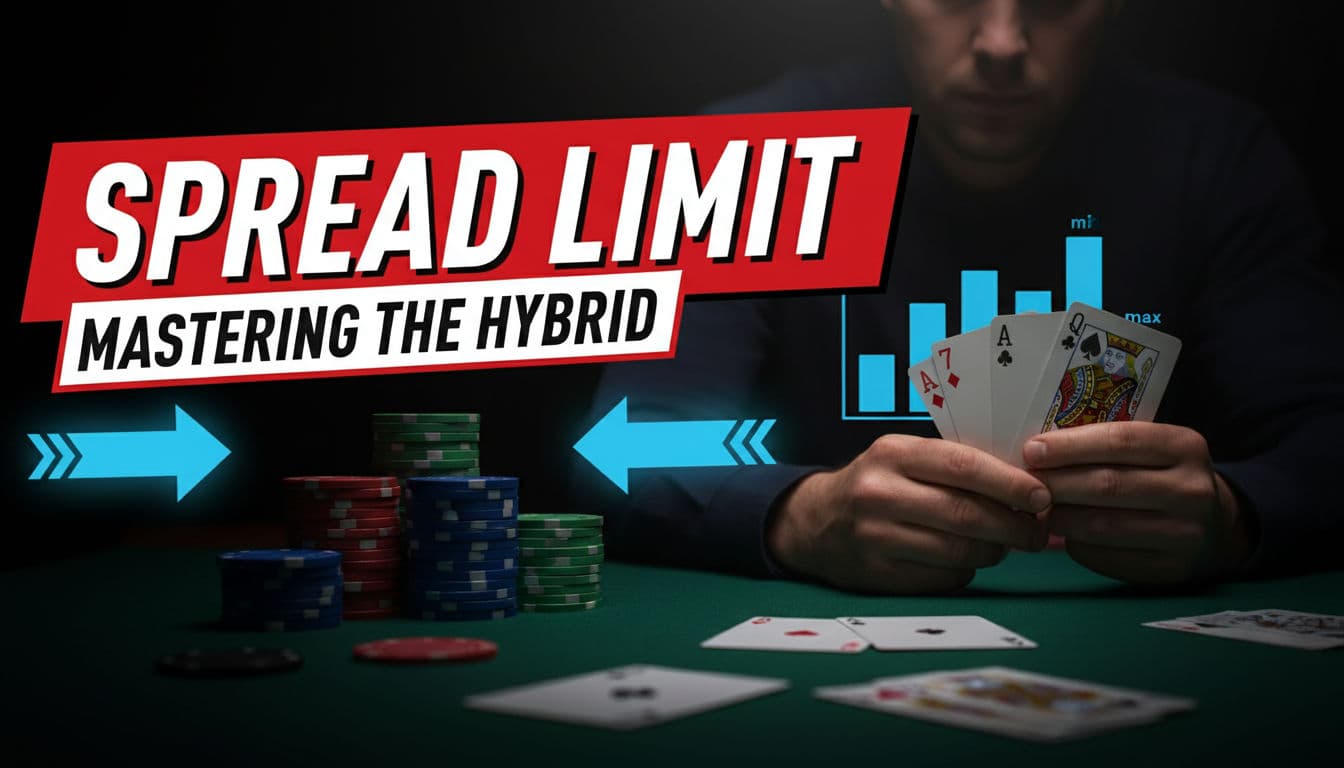
The world of poker presents a diverse landscape of betting structures, each profoundly influencing strategy and game dynamics. Among these, the spread-limit format stands out as a sophisticated hybrid, offering a compelling middle ground between the rigid predictability of fixed-limit and the unbridled aggression of no-limit poker. This unique structure empowers players to wager any amount within a defined range during a betting round, fostering a blend of tactical flexibility and controlled risk that appeals to astute players seeking nuanced gameplay.
Understanding Spread-Limit Poker: A Hybrid Approach
At its core, spread-limit poker differentiates itself from its counterparts by allowing players to bet any amount within a pre-established "spread" during a betting interval. Unlike no-limit games where a player can push all their chips into the pot at any given moment, or fixed-limit games where bet sizes are strictly predetermined, spread-limit is one of the more unique poker game types .
For instance, in a common $1/$5 spread-limit game, a participant has the liberty to bet anywhere within the specified betting range in poker, which in this case is $1 to $5 on any street- be it pre-flop, flop, turn, or river. This capacity to modulate bet size based on hand strength, opponent tendencies, or perceived pot odds is a cornerstone of its strategic appeal.
How Betting and Raising Operate
The mechanics of betting and raising in spread-limit deserve closer examination. If a player initiates a bet of, say, $3 in a $1/$5 game, the subsequent player faces several options:
Call: Match the $3 bet.
Raise: Increase the bet by any amount within the specified spread, from $1 to $5.
Fold: Withdraw from the hand.
Note: A common misconception is that the total bet must remain within the spread. However, a raise adds to the existing bet. If the initial bet was $3, and a player raises by the maximum of $5, the total wager for that player becomes $8.
This dynamic allows pots to grow substantially while still maintaining a maximum per-action "raise" cap, thereby managing the volatility inherent in pure no-limit structures.
Core Characteristics Defining Spread-Limit Play
The unique framework of spread-limit poker imbues games with distinct characteristics that balance freedom with structure.
Enhanced Strategic Flexibility
A primary draw of spread-limit is the freedom it grants players. Unlike fixed-limit, where players are often forced into passive play, spread-limit enables a more nuanced approach. Players can craft bet sizes to represent specific hand values, ranging from small "information bets" to substantial "value bets" or "bluffs" without the all-in pressure of no-limit.
Calculated Poker Risk Management
For players who find no-limit poker financially daunting, this format offers a welcome reprieve. The cap on the maximum bet per street significantly curtails the potential for catastrophic losses in a single hand. This controlled environment is a key aspect of poker risk management, reducing variance and making the game more accessible for a broader range of players.
Practical Application: A $2/$10 Spread-Limit Scenario
To fully grasp the practical implications, let's consider a hypothetical $2/$10 spread-limit game across the different streets:
Street | Typical Action | Potential Total Bet |
Pre-flop | First player initiates a bet. | $2 to $10 |
Flop | If the previous bet was $7, a player can raise. | $9 to $17 (adding $2-$10) |
Turn | Players continue tactical sizing. | Varies based on previous action |
River | Final sizing as equities become clear. | Varies based on previous action |
Mastering Spread-Limit Strategy: Key Considerations
Success in spread-limit poker demands an adapted strategic mindset, often considered a vital part of an intermediate poker strategy. Players must respect the following poker betting limits and tactical concepts:
Leverage the Full Spread: With strong hands, utilize the maximum allowable bet to extract value. Conversely, employing larger bets can serve as powerful bluffs or semi-bluffs to apply pressure.
Information Gathering: With weaker or speculative hands, smaller bets within the spread can be used to gauge opponent strength without committing significant chips.
Understand Betting Patterns: Observing how opponents utilize the spread is paramount. Do they always bet the maximum with strong hands? Adapting to these tells provides a significant edge.
Pot Control: The ability to control pot size is vital. Sometimes, a smaller bet might be strategic to keep the pot manageable for future streets, especially when out of position.
Implied Odds: While not a no-limit game, understanding implied odds remains crucial. The capacity to build larger pots with big bets on later streets influences these calculations.
Where Spread-Limit Continues to Thrive
While not dominating the mainstream scene like No-Limit Hold'em, spread-limit maintains a dedicated presence in certain poker ecosystems. It is frequently encountered in private home games where players seek a more structured yet flexible experience. Its prevalence is particularly noted in Seven Card Stud, where an understanding of seven card stud strategy complements the multi-street betting beautifully.
Furthermore, it occasionally surfaces in variants of pot-limit omaha betting, offering an intriguing dynamic without the full pot-limit complexity. This format remains a strategic bridge, appealing to those who appreciate a tactical betting game without the extreme financial exposure inherent in uncapped betting structures.
| Pros | Cons |
|---|---|
Players gain more freedom to vary bet sizes based on hand strength and strategic goals, unlike the rigidness of fixed-limit poker. | Spread-limit games are not as common as No-Limit Hold'em or Fixed-Limit variants, potentially making them harder to find. |
The maximum bet per street limits potential losses in a single hand, making it less financially daunting than no-limit games. | Players accustomed to other betting structures must adapt their strategies to effectively utilize the spread, which can present a learning curve. |
More opportunities to build pots and engage in tactical betting compared to fixed-limit, creating a lively game without extreme aggression. | While dynamic, the game's pace can feel slower and less explosive than no-limit poker for players who prefer rapid, high-stakes action. |
Related Poker Terms
3-Bet
4-Bet
5-Bet
6-Max
9-Max (Full Ring)
A-Game
ABC Poker
All-In
Bankroll
Barrel
Bet Size
Bet Sizing
Blocker
Bluff
Bluff Catcher
Board
Bubble Factor
Button
C-Bet
Call
Calling
Check-Call
Check-fold
Check-Raise
Click-Back
Donk Bet
Donkament
Double Barrel
First in
Gap Concept
GTO
Gutshot
Hot Streak
HUD
Image
Insta-Call
Isolation
Kicker
Lead
Leak
Limp
Limp-Fold
Limp-Raise
Middle Pair
Min-raise
Monotone
Monster
Multi-Way Pot
Nit
Nuts
One-Way Straight
Online Poker
Online Poker Strategies
Open Limp
Out of Line
Over the top
Over-Limp
Overbet
Overblind
Overcall
Overcard
Overpair
Pat
Payoff
Peel
Play Back
Play Behind
Polarized
Pot Control
Potting Out
Preflop
Premium Hands
Push or Fold
Race (Coin Flip)
Range
Re-raise
Reraise
Royal Flush
Sit and Go (SNG)
Slow Play
Smooth Call
Snap Call
Snapped Off
Soft Seat
Solid
Steal
Suited
Suited Gappers
Tank
Total air
Trap
Triple Barrel
Two-Gapper
Under the Gun (UTG)
Underpair
Value
Value Bet
Villain
Weak Ace
Window Card