Squeeze

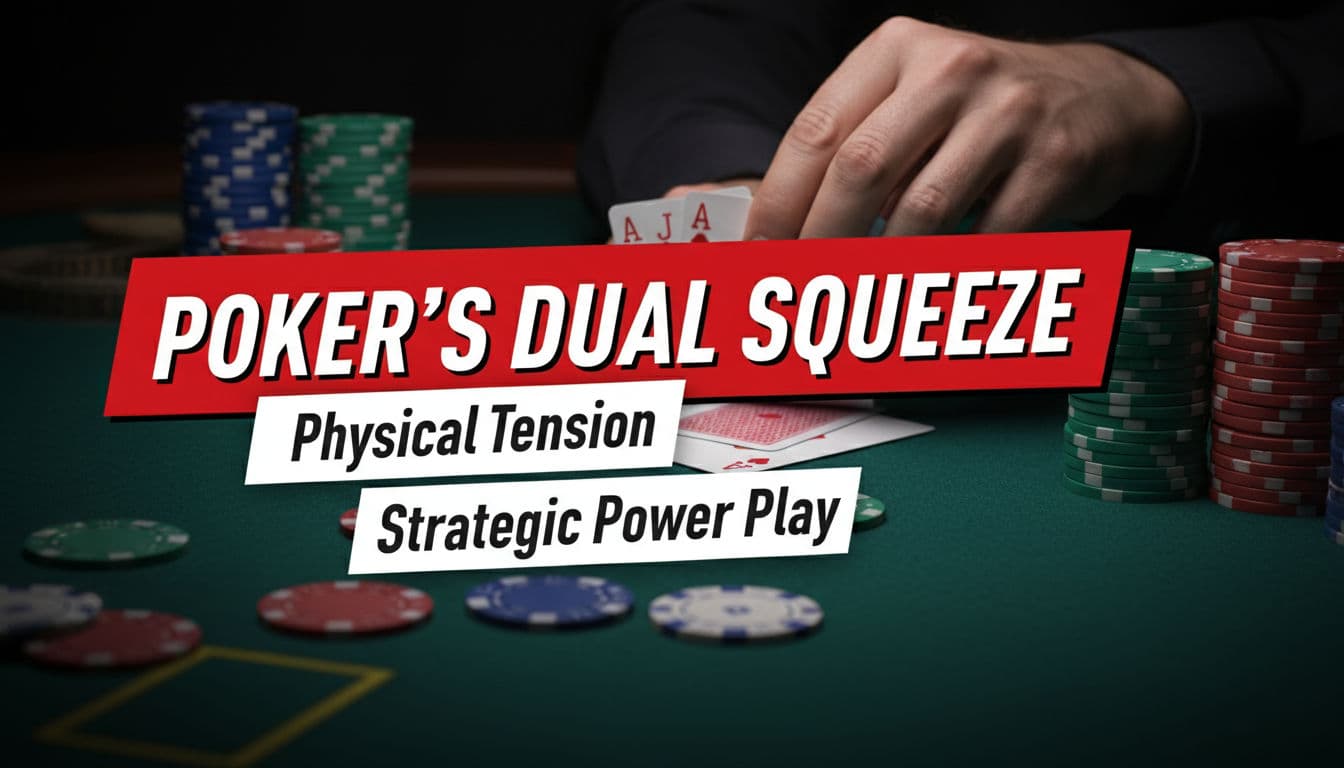
In the dynamic world of poker, terminology often carries nuanced meanings, and few terms encapsulate this duality quite like squeeze. While novice players might associate it with a tangible action at the felt, seasoned veterans recognize its profound strategic implications. This comprehensive guide unravels the two distinct interpretations of squeeze, offering an expert analysis of both the ritualistic card peek and the sophisticated preflop maneuver that can significantly impact your win rate.
Understanding Poker Squeeze meanings: A Dual Interpretation
The term poker squeeze boasts a fascinating dual identity, referring to both a physical act steeped in tradition and a complex strategic play. Grasping both meanings is crucial for any player aiming to elevate their understanding and performance at the tables . Let's dissect these two distinct, yet equally important, facets of the poker lexicon.
The Physical Squeeze: The Dramatic Card Reveal
The first and arguably more visceral meaning of this term pertains to the slow, deliberate bending back of cards to reveal their identity. This action, often referred to as a card squeeze, is a cherished ritual in certain poker variants and specific high-stakes scenarios. It’s a moment designed to build tension and heighten anticipation, not just for the player but often for the entire table.
Where and Why the Card Squeeze Occurs:
Draw Games: In games like Five-Card Draw or Triple Draw, where players exchange cards to improve their hands, this technique is a common practice when receiving new cards. Players might slowly peel back a corner, savoring the reveal of each new card.
All-In Situations: In community card games such as Texas Hold'em or Omaha, an all-in player might perform this ritual on their final community card (the river) if they are drawing to a specific out. This adds a layer of drama, allowing the player to witness the fate of their hand unfold agonizingly slowly.
High-Stakes Tradition: Historically, and particularly in live high-stakes cash games, players might use this method on their hole cards preflop, even without being all-in, simply to prolong the moment of discovery and inject a psychological element into their play.
This physical act is less about strategy and more about the psychological drama of the game. It’s a nod to poker's roots, a way to experience the ebb and flow of fortune in its most raw form.
The Strategic Squeeze Play: A Preflop Power Move
Beyond the felt's dramatic reveal lies the squeeze poker play - a potent preflop poker strategy that can be a formidable weapon in a skilled player's arsenal. This maneuver involves a player executing a re-raise after an initial raise and one or more calls, typically from opponents situated between the initial raiser and the player acting.
Anatomy of a Squeeze Play:
The essence of this maneuver lies in exploiting perceived weakness and leveraging positional advantage. Consider a scenario where an early or middle position player opens with a raise, and one or two players flat-call behind them. When it comes to a player in a later position (e.g., cutoff, button, small blind), implementing a 3-bet strategy in this spot is a classic power move.
Why the Squeeze Play is Effective:
Exploiting Weak Ranges: The initial raiser, facing multiple callers, often has a wider, more speculative opening range than if they had been re-raised immediately. Their hand might not be strong enough to withstand a substantial raise when they still have callers behind them who also have to act.
Pressuring Callers: The flat-callers in the middle are put in a difficult spot. They have already committed chips to the pot with what are likely marginal or speculative hands. Facing a significant raise, these players are forced out of the pot as their implied odds diminish.
Leveraging Position: The player executing the move is often in a later position, giving them valuable information about their opponents' actions before they make their own decision. This positional advantage enhances the play's effectiveness.
Pot Building (for Value Hands): When holding a premium hand, this tactic can inflate the pot significantly, maximizing value against players who might reluctantly call with weaker holdings.
Bluffing Potential: Crucially, this can be a highly effective form of poker bluffing. The perceived weakness of the initial raiser's range, combined with the pressure on the callers, often leads to multiple folds, allowing the aggressor to win the pot uncontested.
Key Considerations for Executing a Squeeze:
Opponent Tendencies: Understand who your opponents are. This works best against tight-aggressive (TAG) openers who will fold marginal hands and loose-passive (LPO) callers who flat too often.
Stack Sizes: Ensure adequate stack depth to make the re-raise impactful.
Image: A player with a tight image might find their aggressive plays getting more respect.
Hand Selection: While it can be a bluff, it's safer to use hands that have some equity, even if it's a bluff. Suited connectors, small pairs, or Axs can be good candidates as they have playability if called.
This tactic is a sophisticated maneuver that demands a keen understanding of opponent psychology, positional dynamics, and pot equity. Sometimes, players even watch for poker tells to decide if the initial raiser is weak enough to be forced out. It's a testament to poker's depth, where a single term can describe both a dramatic visual and a strategic masterpiece.
| Pros | Cons |
|---|---|
The strategic squeeze play often generates significant fold equity, as initial raisers and callers frequently relinquish their hands due to perceived weakness and unfavorable pot odds. | Squeeze plays, especially as bluffs, involve a higher degree of risk and can lead to significant swings in stack size if called or re-raised. |
When holding strong hands, a squeeze efficiently builds a larger pot preflop, maximizing the potential returns against opponents who may reluctantly call. | Aggressive opponents might 4-bet (re-raise again) a squeeze, forcing you to fold or commit a large portion of your stack with a potentially weaker hand. |
Executing a squeeze from a late position allows you to act after multiple opponents, leveraging information about their initial actions. | If your squeeze is called, you may find yourself playing a large pot out of position with a marginal hand, making subsequent decisions difficult. |
Related Poker Terms
3-Bet
4-Bet
5-Bet
All-In
Bad Beat
Barrel
Belly Buster
C-Bet
Calling
Click-Back
Donk Bet
Fish
GG
Hero
Insta-Call
Lead
Overbet
Overblind
Paints
Payoff
Play Back
Polarized
Potting Out
Probe Bet
Puppy Feet/Pups
Race (Coin Flip)
Rack
Railbird
Rainbow
Raise
Re-raise
Reraise
River Rat
Rounders
See
Setup
Shills
Shove
Spread Limit
Squeeze
Steal The Blinds
Straddle
Strategic Bluff
String Bet
Suited Connectors
Throwing a Party
Ticket
Triple Barrel
Underdog
Uphill
Vaca
Valle Card
Verbal Declaration
Victory Rip
Villain
Walk
Walk the Table
Wash
Whale
Wild Card
Zip
Zombie