Paints

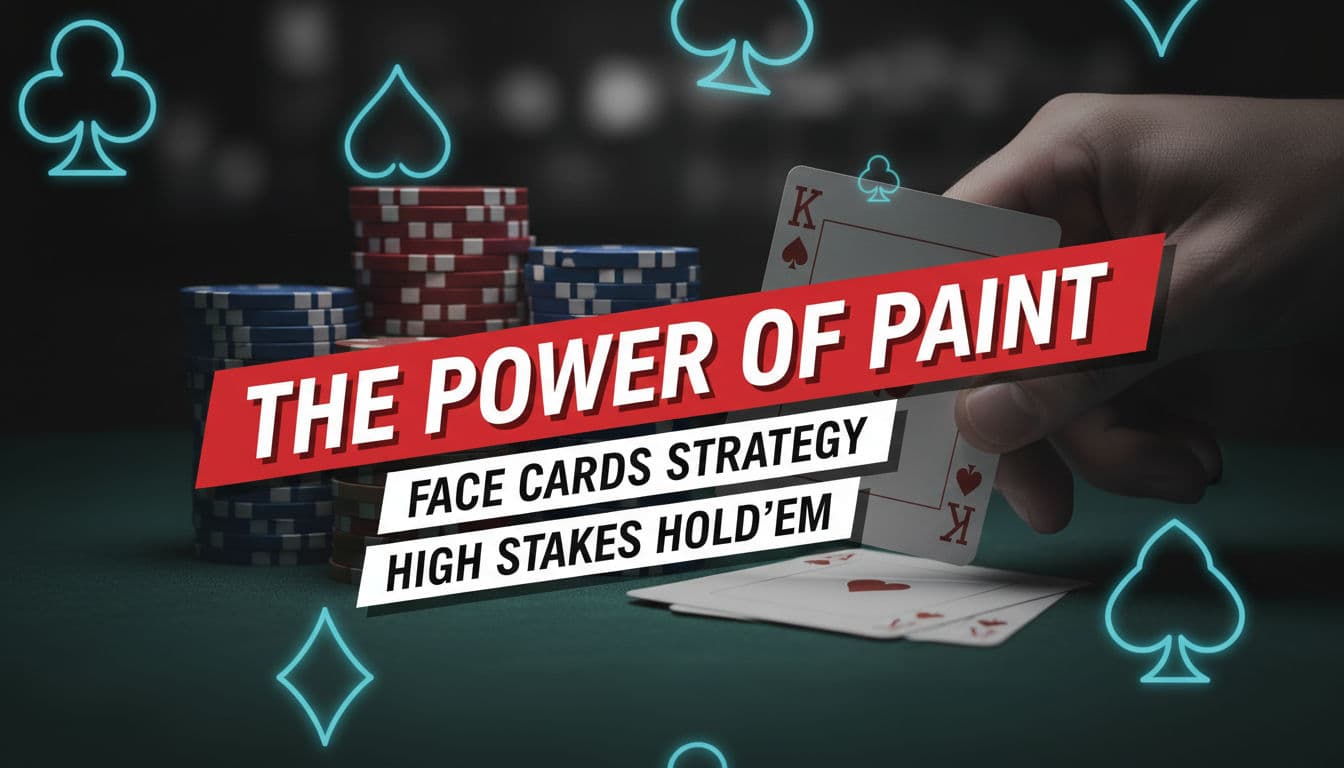
In the intricate lexicon of poker, certain terms carry immense weight, not just for their descriptive accuracy but also for their profound strategic implications. Among these, the term "paint cards" stands out, referring specifically to the Jacks, Queens, and Kings of a standard 52-card deck. These cards, visually distinguished by their elaborate imagery and royal depictions, hold a unique place in the hierarchy of poker hands. Beyond their aesthetic appeal, understanding the role and impact of paint cards is fundamental for any serious player, as they frequently dictate hand strength, board texture analysis, and ultimately, a player's strategic decisions across various poker formats.
This comprehensive guide delves into the essence of paint cards, exploring their definition, numerical representation, and, crucially, their pervasive strategic significance in popular poker variants. We will dissect how these powerful cards influence everything from pre-flop hand selection to critical river decisions, shedding light on why they are often the cornerstone of winning hands and pivotal moments at the felt.
What Constitutes Paint Cards in Poker? (what are paint cards)
At its core, the term "paint" in poker is a colloquialism for face cards: Jacks, Queens, and Kings. The nomenclature derives from the distinctive artwork or "pictures" adorning these cards, setting them apart from the numerically represented pip cards (Aces often fall into a special category due to their dual high/low utility but are not considered "paint").
To answer what are paint cards in a standard 52-card deck: there are four suits-Clubs, Diamonds, Hearts, and Spades. Each suit contains one Jack, one Queen, and one King, leading to a total of twelve paint cards in play. Poker enthusiasts and professionals alike frequently use "paint" "face cards" or "picture cards" interchangeably to denote these high-value denominations.
This visual recognition is further streamlined in online poker through customizable deck skins that use high-contrast graphics to ensure these high-value 'pictures' stand out even when playing on multiple small screens.
The Strategic Significance of Paint Cards
The importance of paint cards in poker extends far beyond their mere definition; it permeates every facet of strategy. Their inherent high rank means they are pivotal in forming strong hands. A pair of Kings, for instance, is one of the strongest starting hands in Texas Hold'em, dwarfed only by Aces. The presence of these cards in your hand or on the community board dramatically alters hand probabilities and equities, making a sound face cards poker strategy essential.
Impact on Hand Strength
High Pairs: These cards are the foundation for the highest pairs in poker, which are often showdown winners. Holding KK, QQ, or JJ pre-flop immediately places a player in a strong position.
Straights: Many common straight combinations involve these high-value cards (e.g., T-J-Q-K-A or 9-T-J-Q-K). Their presence facilitates the completion of these robust sequences.
Flushes: While any suit can form a flush, a flush made with a King or Queen as the highest card is generally stronger and more likely to win against lower flushes.
Full Houses: When a board features multiple high cards, the potential for powerful full houses increases significantly, requiring a refined face cards strategy.
Paint Cards in Popular Poker Variants
The strategic value of face cards is universally acknowledged across most poker variants, though their specific impact can differ based on the game's structure.
Texas Hold'em
In texas hold'em paint cards are paramount. High-pair starting hands (JJ, QQ, KK) are premium holdings. When they appear on the flop, turn, or river, they can drastically change the board's texture, creating strong draws or completing high-value hands. A board with K-Q-J, for example, is flush with straight and two-pair possibilities, making it a classic example of hold'em paint cards in action.
Pot-Limit Omaha (PLO)
In pot-limit omaha paint cards play a slightly different role. Players receive four hole cards, and while connecting cards are crucial, having multiple high cards (especially suited ones) dramatically increases the potential for strong draws. For instance, A-K-Q-J double-suited is an extremely powerful starting hand. The strategic value of face cards in PLO is amplified by the ability to make the nut straight or high flushes.
Seven Card Stud
In Seven Card Stud, visible cards on opponents' up-cards provide critical information about their hand strength. Holding high pairs or strong combinations involving these cards from the start is a significant advantage, often dictated by the face cards strategy of the players involved.
Advanced Strategic Considerations: Implied Odds and Board Texture
Beyond basic hand strength, understanding what are paint cards and how they block certain combinations plays a role in advanced concepts:
Implied Odds: When holding a hand like KQ suited, the potential for a large payoff is greater because if you hit, you're likely to have a very strong hand that opponents will pay off.
Board Texture: A "paint-heavy" board (e.g., K-Q-T or J-J-9) signals a higher likelihood of strong made hands and draws. Recognizing these textures is critical for informed decisions.
Blockers: The strategic value of face cards also includes their function as blockers. Holding the King of spades makes it less likely an opponent has a King-high flush or a pair of Kings.
Beyond the Felt: The Terminology's Reach
While predominantly a poker term, "paint" has, to a lesser extent, permeated other casino games. Blackjack players might refer to a King or Queen as "paint" when calculating their hand value, particularly when trying to hit 21. However, its most frequent and strategically significant application remains firmly rooted in the competitive world of paint cards in poker.
| Pros | Cons |
|---|---|
Paint cards inherently represent higher numerical values in poker, making them crucial components of premium starting hands and strong made hands like top pairs, high straights, and flushes. | Players can sometimes overvalue paint cards, especially unpaired ones, leading them to play marginal hands in unfavorable situations or chase draws with poor odds, resulting in costly mistakes. |
Hands containing paint cards often have excellent drawing potential, enabling players to complete nut straights or high flushes that are likely to be the best hand at showdown, particularly in multi-way pots. | While high, a single paint card or a pair of paint cards can still be dominated by even higher paint cards (e.g., a pair of Jacks is dominated by Queens or Kings), leading to significant losses if not played cautiously. |
Holding specific paint cards can reduce the probability of opponents holding certain strong hands or draws, providing a strategic advantage by limiting their potential combinations and improving your relative hand strength. | A flop heavy with paint cards can create many strong hands or draws for opponents, making it difficult to discern your true equity and potentially leading to highly contested and risky pots. |