Tight Aggressive

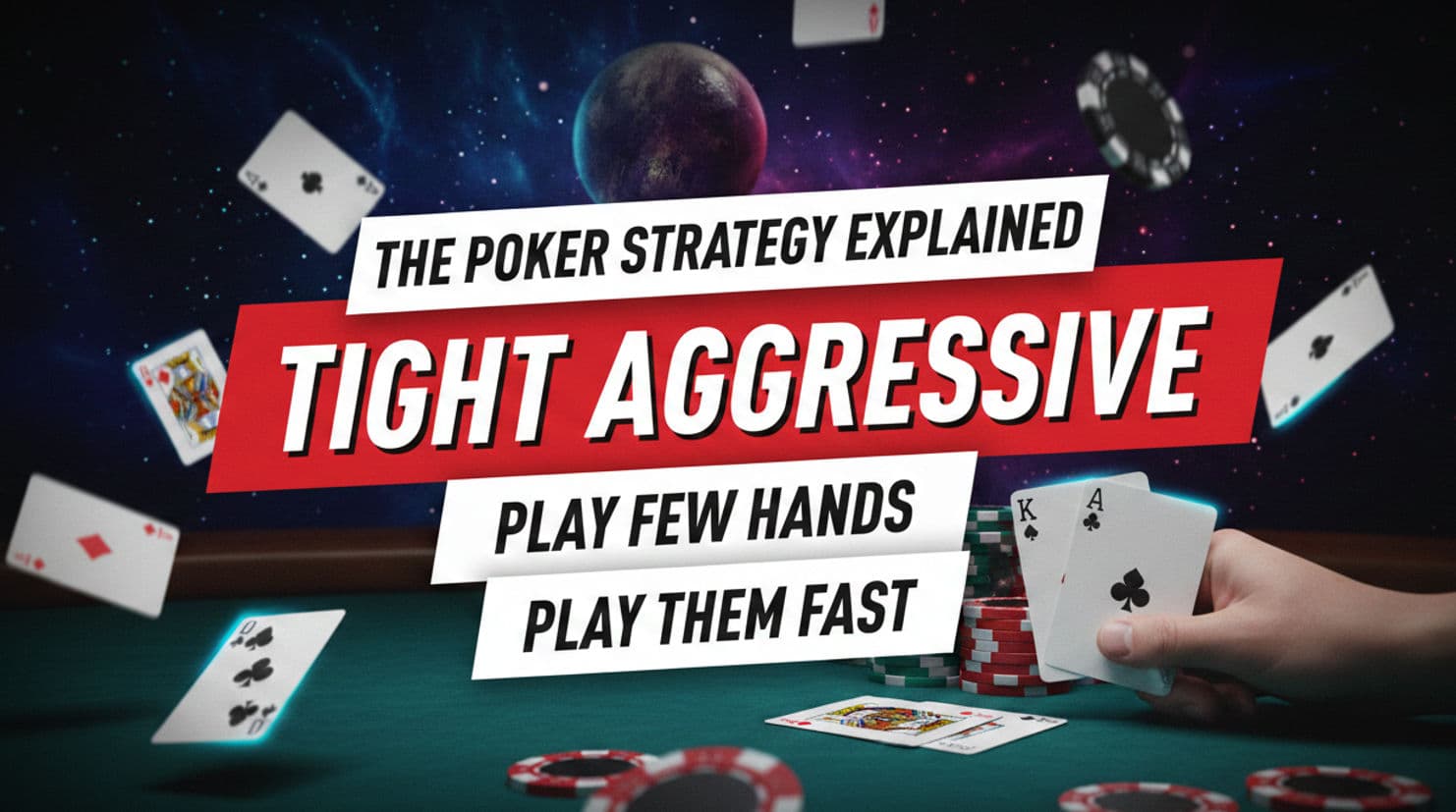
In the vast landscape of poker strategies, few approaches stand the test of time and consistently deliver profitable results quite like the Tight Aggressive (TAG) style. Far from being a mere buzzword, TAG play represents a sophisticated balance between disciplined hand selection and assertive, calculated aggression. It's a fundamental pillar upon which many advanced poker theories are built, and understanding its nuances is crucial for any player aspiring to elevate their game from recreational to consistently winning.
This comprehensive guide delves into the core tenets of TAG poker, dissecting its strategic advantages, practical implementation, and how it can be adapted to various game dynamics. Whether you're looking to solidify your foundational strategy or refine your understanding of exploitative play, mastering the TAG approach is an indispensable step towards sustained success at the tables.
The Tight Aggressive Poker (TAG) Strategy Explained
The tight aggressive poker (TAG) strategy is characterized by playing a relatively small number of strong starting hands, but playing those hands very aggressively. This TAG strategy explained below represents a highly effective and adaptable poker style, particularly in no-limit Texas Hold'em cash games and tournaments .
What Defines a Tight Aggressive Player?
At its heart, a TAG player embodies two primary traits:
Tight hand selection poker: TAGs are highly selective pre-flop. They typically open or call with a narrow range of strong hands, such as premium pairs, strong suited connectors, and big aces. This discipline minimizes playing marginal hands that often lead to difficult decisions post-flop and can drain one's stack.
Poker aggression: Once a TAG player decides to enter a pot, they do so with conviction, preferring to bet and raise rather than call. This aggression builds pots when they have strong hands, folds out weaker hands, and often gives them more ways to win, either by having the best hand or by forcing opponents to fold.
The combination of these traits allows a TAG player to minimize their variance, maintain a strong table image, and consistently put pressure on opponents.
The Strategic Pillars of TAG Poker
Implementing a Texas Hold'em advanced strategy like TAG goes beyond just playing fewer hands and betting big. It involves a nuanced understanding of several key strategic components:
1. Positional Awareness
Position is paramount for a TAG player. They significantly tighten their opening ranges from early positions (UTG, UTG+1) where they have to act first on subsequent streets. Conversely, they widen their ranges considerably from late positions (Cutoff, Button) where they gain the advantage of acting last, allowing them to gather more information and apply pressure more effectively through a solid poker position strategy.
2. Calculated Aggression
TAGs don't just bet; they bet with purpose. Their aggression is not reckless but calculated to achieve specific goals: extracting maximum value from strong hands, semi-bluffing with draws, and applying pressure to weaker opponents or those on marginal hands. This includes frequent continuation bets (c-bets) on the flop, even when they miss, leveraging their pre-flop strength.
3. Exploiting Opponents
While often seen as a solid, fundamental strategy, TAG play is also inherently exploitative. A good player who knows how to play TAG poker effectively identifies and adapts to opponent tendencies. They can steal blinds from tight players, value bet relentlessly against calling stations, and re-raise (3-bet) light against players who open too wide. This adaptability prevents them from becoming predictable.
4. Managing Pot Size
By playing strong hands aggressively, TAGs naturally build larger pots when they have an edge. Conversely, by folding weak hands early, they avoid small, unprofitable pots that chip away at their stack. This selective pot engagement is a hallmark of their poker winning strategy.
Advantages of Adopting a TAG Style
Reduced Variance: Playing fewer marginal hands means fewer tough decisions and less exposure to costly mistakes, leading to more stable results over time.
Strong Table Image: Opponents often perceive TAG players as having strong hands when they enter a pot. This image can lead to more folds when a TAG bluffs or semi-bluffs, and more calls when they have a monster.
Information Advantage: Acting in position more often allows TAGs to observe opponents' actions before making their own decisions, providing crucial information.
Scalability: The principles of TAG are applicable across various stakes and formats, providing a solid foundation for growth as a player.
Evolving Beyond Basic TAG
While highly effective, a purely static TAG approach can become exploitable by observant, aggressive opponents. Advanced TAG players understand when and how to deviate from their standard strategy:
Balancing Ranges: Occasionally opening with slightly weaker hands or incorporating bluffs into their 3-betting range prevents them from being easily read.
Adjusting to Dynamics: In a very loose game, a TAG might become even tighter. In a very tight game, they might loosen up slightly to steal more blinds and pots.
Moving Towards GTO Concepts: Understanding game theory optimal (GTO) play helps TAGs refine their frequencies and bet sizing to be less exploitable, especially against strong opponents.
The Tight Aggressive strategy is more than just a set of rules; it's a disciplined mindset that prioritizes long-term profitability through selective engagement and assertive execution. By mastering its core principles, players can establish a robust foundation for consistent success in the competitive world of poker.
| Pros | Cons |
|---|---|
By playing fewer, stronger hands, TAG players minimize their exposure to marginal situations, leading to more stable financial results and less emotional swings over time. | If a TAG player adheres too rigidly to their strategy, observant opponents can exploit their tight ranges and predictable aggressive patterns. |
Opponents typically perceive a TAG player as having powerful hands, which means bluffs receive more folds and value bets get more calls, enhancing profitability. | The focus on strong starting hands means TAGs often fold promising speculative hands (like small suited connectors or gappers) that could potentially hit big on the flop. |
TAGs strategically leverage late position to gain information on opponents' actions before making their own decisions, allowing for more precise and effective play. | Maintaining a tight strategy demands significant discipline and patience, which can be less appealing or 'boring' for players who prefer more action or gambling. |
Related Poker Terms
6-Max
9-Max (Full Ring)
A-Game
ABC Poker
Any Two Cards (ATC)
Bankroll
Bet Size
Bet Sizing
Blocker
Bluff
Bluff Catcher
Board
Bubble Factor
Bumhunter
Button
Call
Calling Station
Check-Call
Check-fold
Check-Raise
Click-Back
Donkament
Double Barrel
First in
Gap Concept
GTO
Gutshot
Hot Streak
HUD
Image
Insta-Call
Isolation
Kicker
LAG (Loose-Aggressive)
Leak
Limp
Limp-Fold
Limp-Raise
Maniac
Middle Pair
Min-raise
Monotone
Monster
Multi-Way Pot
Nit
Nuts
One-Way Straight
Online Poker
Online Poker Strategies
Open Limp
Out of Line
Over the top
Over-Limp
Overblind
Overcall
Overcard
Overpair
Pat
Peel
Play Behind
Polarized
Pot Control
Potting Out
Preflop
Premium Hands
Probe Bet
Prop
Proposing Bets
Push or Fold
Put Down
Quads
Quartered
Quitting Time
Quorum
Range
Regular
Royal Flush
Sit and Go (SNG)
Slow Play
Smooth Call
Snap Call
Snapped Off
Soft Seat
Solid
Steal
Suited
Suited Gappers
TAG (Tight aggressive)
Tank
Total air
Trap
Two-Gapper
Under the Gun (UTG)
Underpair
Value
Value Bet
Villain
Weak Ace
Whale
Window Card