Any Two Cards (ATC)

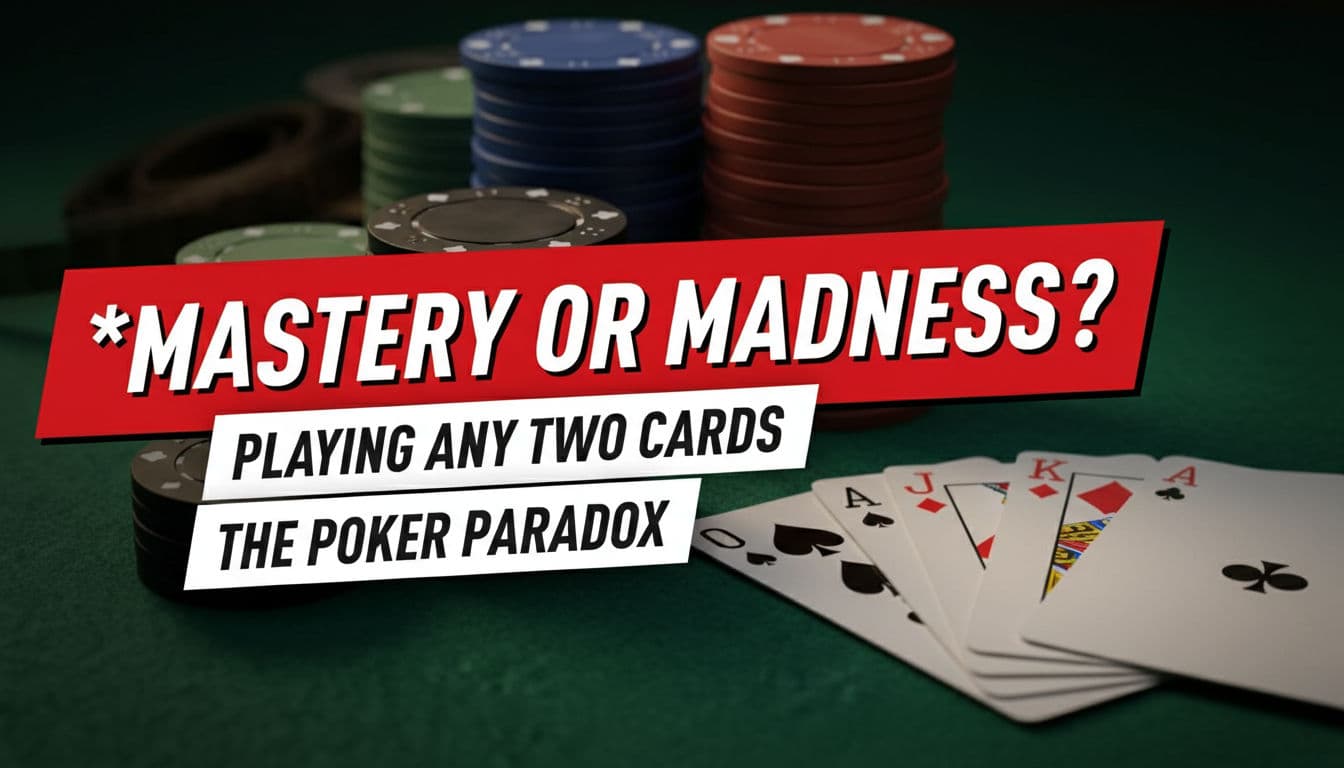
In the intricate world of poker, where every decision is weighed against odds and opponent psychology, few terms are as misunderstood and dualistic as Any Two Cards (ATC). Often abbreviated, ATC typically conjures images of a reckless player, impulsively throwing chips into the pot with disregard for conventional hand strength or positional advantage. This perception, while valid in many contexts, only tells half the story.
An expert analysis reveals that Any Two Cards transcends mere impulsiveness, evolving into a sophisticated, mathematically informed strategy under specific circumstances and in the hands of a truly skilled player. This article dissects the concept, moving beyond the stereotype to illuminate when playing ATC can transform from a costly blunder into a calculated, profitable maneuver, while critically examining the significant risks involved.
Deconstructing Any Two Cards in Poker Terminology
At its most fundamental level, Any Two Cards in poker refers to the willingness of a player to participate in a hand with any two hole cards dealt, irrespective of their intrinsic value or suit combination. This descriptor primarily characterizes a particularly loose playing style and aggressive playing style. When a seasoned player remarks, "Mark plays any two cards" they're conveying that Mark largely disregards the established wisdom of preflop hand selection charts, opening ranges, or the critical influence of table position. His primary objective is often to engage, to see flops, and to create action, sometimes appearing oblivious to the potential pitfalls of entering pots with marginal holdings.
This archetypal any two cards player often embodies a preference for confrontation over conservation, valuing the thrill of the gamble or the opportunity to bluster post-flop more than the fundamental strength of their starting hand. Such a style, while exciting, usually leads to significant losses against more disciplined opponents, especially those adept at exploiting weak preflop ranges.
The Strategic Paradox: When ATC Becomes a Calculated Edge
Despite its common association with unbridled recklessness, the concept of Any Two Cards possesses a profound strategic dimension. For elite players, ATC isn't a license for anarchy, but rather a sophisticated tool applied under highly specific conditions, where its mathematical and psychological utility outweighs the inherent weakness of the cards themselves. In these instances, the player's own hole cards become secondary to a deeper understanding of the game state, opponent tendencies, and the intricate dynamics of pot equity.
Exploiting Positional Advantage and Opponent Dynamics
One of the most potent applications of Any Two Cards poker strategy lies in leveraging positional advantage. Consider a player in the cutoff position holding a seemingly unplayable hand like 7♦ 2♣. In a conventional scenario, this hand is an automatic fold. However, against tight players in the blinds who are prone to folding to raises, an expert might strategically raise with 7♦ 2♣ to steal the blinds and antes. This move is not about the cards; it's a calculated gamble on opponent behavior and the expected fold equity. If the blinds consistently fold, the play becomes profitable over time, regardless of the hand's intrinsic strength.
Similarly, in heads-up poker, where information is paramount, a player who has meticulously deciphered their opponent's tells – their betting patterns, facial cues, or timing tells – might find their own cards almost irrelevant. By exploiting these highly specific tells, they can manipulate the opponent into making mistakes, effectively winning hands "with any two cards" simply by knowing when their opponent is strong or weak, irrespective of their own hand's composition.
Leveraging Pot Odds and Tournament Pressure
Another crucial strategic application emerges in situations dictated by pot odds and tournament pressure. For instance, a player with a critically short stack in a tournament often faces a binary choice: fold into oblivion or shove all-in with any two cards in an attempt to double up. Here, the decision to play any two cards is less about choice and more about mathematical necessity, where the marginal value of even the weakest hand is enough to warrant a push, given the rapidly diminishing stack and the increasing blinds.
Furthermore, consider a player in the big blind facing a minimal raise from a late position opponent. Due to the pot odds already invested (the blind payment) and the small amount required to call, the player might find themselves mathematically compelled to call with any two cards. The fractional cost to see a flop, combined with the potential to hit a favorable board or outmaneuver the opponent post-flop, can make calling with a wide range of hands a profitable long-term strategy in such situations.
Navigating the Perils of Playing Any Two Cards in Poker
While the strategic applications are compelling, playing any two cards in poker is fraught with significant risks that demand careful consideration and unparalleled skill to mitigate. The overwhelming majority of two-card combinations are inherently weaker than premium starting hands like pocket aces or kings, making them exceedingly difficult to play profitably after the flop, particularly if they fail to connect with the community cards.
The aggressive poker tactics are wide-range approached, inevitably leads to increased variance in a player's game. Variance refers to the short-term fluctuations in a player's chip stack or bankroll, often resulting in more frequent and dramatic swings - both up and down. Playing marginal hands means you'll often be drawing thin, or making bluffs that, while sometimes successful, will also often fail. Without a sophisticated understanding of opponent ranges, positional play, implied odds, and advanced post-flop strategy, the any two cards approach quickly devolves into a highly unprofitable endeavor, suitable only for those with a complete mastery of the game's psychological and mathematical intricacies.
Mastering ATC poker Strategy: A Skill, Not a Habit
Ultimately, 'Any Two Cards' represents one of poker's greatest paradoxes. It is simultaneously a hallmark of novice recklessness and an emblem of expert manipulation. True mastery of ATC poker strategy is not about playing every hand; it's about understanding precisely when the intrinsic value of your hole cards becomes secondary to a deeper, more profound strategic calculus. It demands an unparalleled ability to read opponents, exploit positional advantages, understand complex pot dynamics, and absorb high variance. For the aspiring poker player, the journey to mastering Any Two Cards is less about defying the odds and more about understanding how to bend them to one's will through superior skill and strategic acumen.
| Pros | Cons |
|---|---|
Allows skilled players to leverage opponent folding frequencies or specific tells, making their own hand strength less critical. | Leads to significant short-term swings in chip stack or bankroll due to playing weaker hands and frequent bluffs. |
Opening a wider range of hands, especially from late position, can frequently steal blinds and antes without needing strong cards. | Most 'any two cards' hands will miss the flop or hit weakly, making subsequent betting decisions complex and prone to errors. |
Playing a wide range makes it harder for opponents to put you on a specific hand, making your strong hands more disguised and profitable. | Not suitable for beginners; demands deep understanding of poker theory, opponent psychology, and advanced post-flop strategy. |
Essential in short-stack tournament play or when forced by excellent pot odds, allowing survival or opportunistic aggression. | Easily exploited by disciplined opponents who can identify the loose style and trap with premium hands. |