

Tank

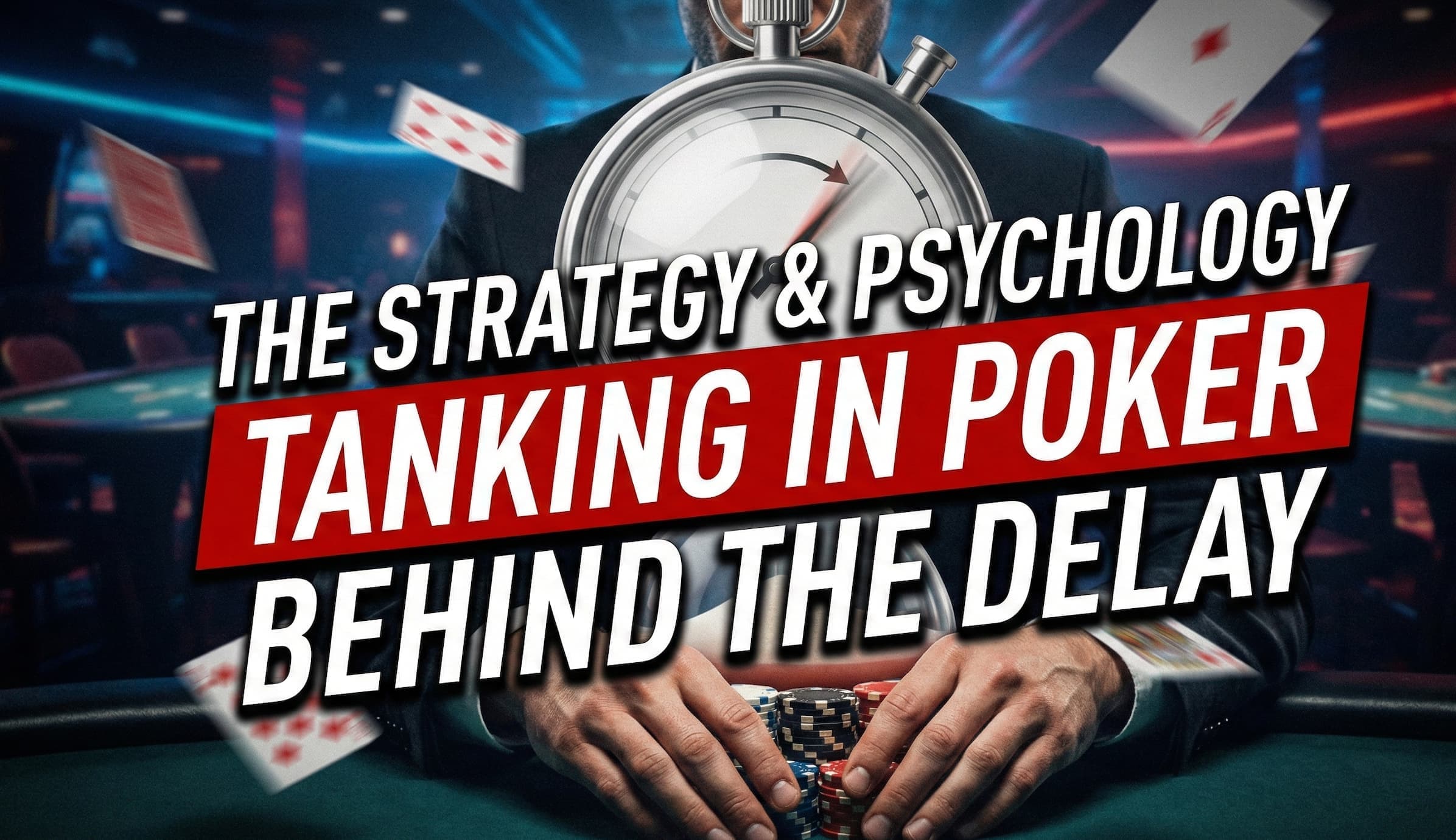
In the high-stakes world of poker, every action, or inaction, communicates something. Among the most potent and often misunderstood non-verbal cues is the "tank" – a deliberate, extended pause a player takes before making a decision. Far from mere indecision, tanking is a nuanced strategic tool, a psychological weapon, and a tell all rolled into one. Understanding its multifaceted nature is crucial for both employing it effectively and deciphering its meaning from your opponents.
What Does "Tanking" Mean in Poker?
In poker parlance, and within broader poker tanking strategy discussions, to "tank" (used as both a verb and a noun) refers to a player taking a prolonged period of time to consider their next action in a hand. For players new to the concept and wondering what is tanking poker, it simply describes this extended pause before acting.
This extended deliberation typically occurs after an opponent has made a significant bet or an impactful move, forcing the player to weigh complex variables before committing to a fold, call, or raise. For instance, a common scenario might be, "His opponent's all-in shove on the river caused him to tank for over two minutes before reluctantly folding a strong hand". Or, one might observe, "When the action reached her, she went into a deep tank, analyzing all possible outcomes before making her crucial decision".
Poker Tanking Strategy: Why Players Deliberately Take More Time
While some tanks are undoubtedly born from genuine uncertainty or difficult calculations, a truly effective tank is often a calculated strategic maneuver. Players don't just tank because they're confused; they tank because they're employing specific psychological and game theory tactics. Here are the primary reasons:
Genuine Complex Decision-Making
At its core, tanking is closely tied to high-level poker decision making under pressure.
Board Texture Analysis: Evaluating complex board runouts, possible hand combinations, and intricate equity calculations.
Opponent Range Assessment: Deep consideration of an opponent's possible hand ranges based on their pre-flop and post-flop actions.
Pot Odds and Implied Odds: Calculating precise odds to determine the profitability of a call.
Feigning Strength or Weakness
Projecting Strength (Slow Play Poker Dynamics): A player holding a monster hand might tank to make it appear they are struggling with a tough decision, hoping to induce a call from a weaker hand or even provoke a bluff.
Projecting Weakness (Inducing a Bluff): Conversely, a player with a marginal hand or a pure bluff might tank to suggest uncertainty or weakness, hoping to encourage an opponent to fold a stronger hand, or to call a value bet that wouldn't otherwise be called.
Information Gathering and Opponent Exploitation
Observing Opponent Reactions: Effective tanking often complements the broader skill of reading poker opponents in live settings. A prolonged tank provides an opportunity to meticulously observe an opponent's body language, breathing patterns, eye movements, and general demeanor. Even subtle tells can be revealing.
Time Manipulation: In live poker, tanking can disrupt an opponent's rhythm, making them impatient or causing them to overthink their own decisions. In online poker, utilizing the full poker time bank can apply pressure or signal a tough decision.
Strong poker decision making requires knowing when to act quickly and when to deliberately slow the game down.
Pot Size and Contextual Importance
The magnitude of the pot and the stage of the tournament or cash game significantly influence tanking behavior. In large pots, particularly late in tournaments, the stakes are higher, warranting more extensive deliberation. A two-minute tank over a minimum bet in a small pot would seem absurd, but over a tournament-altering all-in for 100 big blinds, it's completely understandable.
When to Employ the Tank: A Masterclass in Timing
Mastering the tank involves understanding when it's most effective. It's not a universal tool; its impact varies greatly based on context and opponent. Consider tanking when:
Facing a Large Bet on a Crucial Street: Especially on the turn or river, where decisions are often binary and pot commitments are significant.
You're Unsure of Your Opponent's Range: If you're genuinely torn between two or more lines of action and need more time to refine your read.
You Want to Induce a Tell: Use the tank as a psychological trap, giving your opponent ample opportunity to reveal information.
You're Playing Against an Observant or Impatient Opponent: These players are more likely to react to your tanking, either by getting agitated or by trying to decipher a non-existent tell.
Reading Your Opponent's Tank: Deciphering the Silence
Just as you can use the tank, you must also be able to interpret it. A tank is often a tell in itself. Ask yourself:
Is it a "Hollywood Tank"? If a player tanks for an unusually long time before making an obvious or straightforward decision (e.g., folding a weak hand to a massive bet), it might be an attempt to disguise strength or weakness for future hands.
Sudden Tank After a Bet: A rapid bet followed by an immediate, deep tank from the opponent often suggests a genuine tough decision, rather than a clear-cut fold or call.
Tanking and Physical Tells: Combine the tank with other tells. Does their breathing change? Do they look at you, or away?
Players looking to sharpen their poker decision making under real pressure often explore structured online poker platforms , where higher hand volume accelerates pattern recognition and timing control.
Countering Opponent Tanks: Maintaining Your Edge
When an opponent tanks, don't just sit idly. Use the time to your advantage:
Review the Hand: Re-evaluate their pre-flop and post-flop actions. What story do their bets tell?
Refine Your Read: Observe them closely. Are they comfortable, uncomfortable, trying to look comfortable?
Prepare for Their Action: Mentally walk through the possible outcomes of their decision (fold, call, raise) and how you would respond to each.
Ultimately, the tank is a double-edged sword. Used judiciously, it can be a powerful strategic asset, allowing for deeper thought and psychological manipulation. Used haphazardly, it can mark you as weak, slow, or inconsiderate. The key is to employ it with purpose, always considering its impact on the table dynamics and your overall image.
| Pros | Cons |
|---|---|
Tanking can effectively mask the true strength of your hand, making opponents misinterpret your intentions. | Excessive or unnecessary tanking can frustrate other players and disrupt the flow of the game, especially in live settings. |
Allows for thorough analysis of complex game states, leading to more optimal choices and reduced costly errors. | If not executed convincingly, a tank can signal genuine weakness or indecision, giving savvy opponents valuable information. |
Can induce impatience or anxiety in opponents, potentially leading them to make rash decisions or reveal tells. | Frequent tanking can create an image of a slow or indecisive player, which can be exploited by faster, more aggressive opponents. |
Related Poker Terms
6-Max
9-Max (Full Ring)
A-Game
ABC Poker
Bankroll
Bet Size
Bet Sizing
Blocker
Bluff
Bluff Catcher
Board
Bubble Factor
Button
Call
Check-Call
Check-fold
Check-Raise
Click-Back
Donkament
Double Barrel
First in
Gap Concept
GTO
Gutshot
Hot Streak
HUD
Image
Insta-Call
Isolation
Kicker
Leak
Limp
Limp-Fold
Limp-Raise
Middle Pair
Min-raise
Monotone
Monster
Multi-Way Pot
Nit
Nuts
One-Way Straight
Online Poker
Online Poker Strategies
Open Limp
Out of Line
Over the top
Over-Limp
Overblind
Overcall
Overcard
Overpair
Pat
Peel
Play Behind
Polarized
Pot Control
Potting Out
Preflop
Premium Hands
Probe Bet
Proposing Bets
Push or Fold
Put Down
Quads
Quartered
Quitting Time
Quorum
Ragged
Range
Range Advantage
Razz
Reverse Implied Odds
Rolled Up
Royal Flush
Runner Runner
Running Good
Sandbagging
Satellite
Sit and Go (SNG)
Slow Play
Smooth Call
Snap Call
Snapped Off
Soft Seat
Solid
Steal
Suited
Suited Gappers
Tank
Total air
Trap
Two-Gapper
Under the Gun (UTG)
Underpair
Value
Value Bet
Villain
Weak Ace
Window Card
Best Online Poker Bonus Codes


About the Editor

Bence Mitykó is a Somuchpoker poker writer, covering poker news and strategy. He spent four years playing poker professionally, primarily focusing on Heads-Up Sit & Go games, experience that continues to shape his understanding of poker strategy, online poker dynamics, and the wider poker industry.


