

Double Barrel

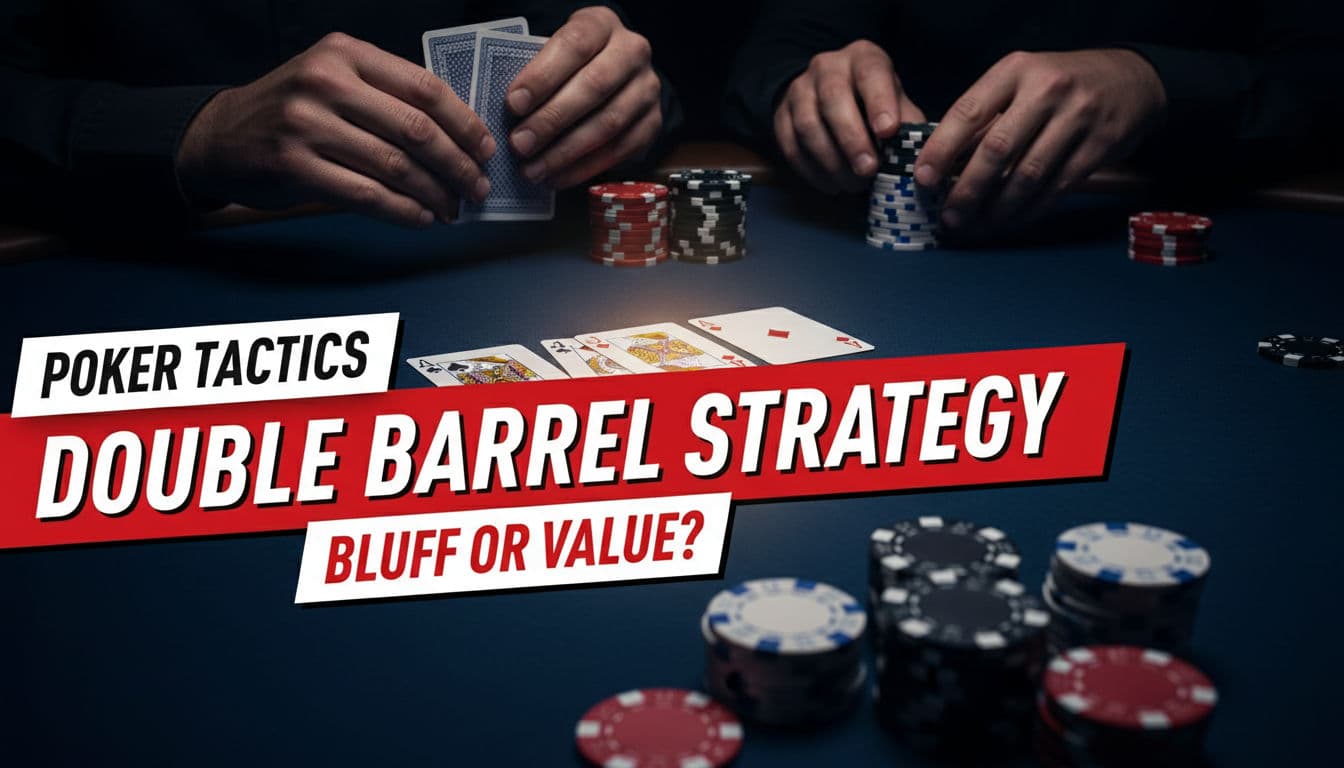
A double barrel in poker is a second consecutive bet made on the turn after you, as the pre-flop aggressor, already made a continuation bet on the flop. It's a powerful and aggressive tactic designed to put immense pressure on your opponent, often forcing them to fold a mediocre hand. Understanding when to fire this second shot is a critical skill that separates intermediate players from advanced ones.
Understanding the Double Barrel in Poker
In the world of Texas Hold'em tactics, few moves signal aggression and intent quite like the double barrel. Simply put, it's your follow-up act. After you raised before the flop and bet again on the flop (a move known as a continuation bet or c-bet), your opponent called. Now the turn card is dealt, and you bet again. That second bet is the core of this tactic. Its primary purpose is to continue the story you started pre-flop: that you hold a very strong hand.
The Mechanics of the Play
Let's break down the sequence of a classic multi-street poker play:
Pre-Flop: You are the aggressor, meaning you made the last raise before the flop was dealt.
The Flop: The first three community cards are dealt. You make a continuation bet to maintain pressure. One opponent calls your bet.
The Turn: The fourth community card is dealt. You make another bet. This is the double barrel.
This move can be used for two main reasons: to get more money in the pot when you have a strong hand (for value) or to make your opponent fold a better hand when you are bluffing.
When Should You Fire a Second Bet?
Executing this move successfully isn't about blindly betting on the turn. It's a calculated decision based on several factors. The most effective players know how to choose their spots perfectly.
Betting on the Turn for Value
This is the most straightforward reason to double barrel. You have a strong hand like top pair with a good kicker, two pair, or a set, and you believe your opponent will call with a worse hand. The goal is simple: build the pot and extract the maximum value from your holdings. Against players who are reluctant to fold any pair, a value-oriented turn bet is a cornerstone of a winning poker strategy.
Firing Again as a Bluff or Semi-Bluff
This is where the true art of this tactic lies. Firing a second bet as a bluff is most effective when:
A Scare Card Appears: An Ace or King on the turn can be a great card to bluff, as it's likely to scare opponents holding medium pairs.
You Have Equity (Semi-Bluff): If you have a drawing hand, like a flush draw or an open-ended straight draw, a turn bet acts as a semi-bluff. It gives you two ways to win: your opponent might fold immediately, or you might hit your hand on the river.
The Turn Card Changes the Board Dynamics: While dry boards are great for a flop c-bet, they are terrible for turn bluffs because an opponent who calls on a dry flop usually has a made hand. The best bluffing spots occur when the turn card changes the board texture, bringing an overcard that connects with your perceived pre-flop raising range and scares their middle pairs.
To be a successful poker player, you must be willing to put your chips at risk. Aggression, when used correctly, is your greatest weapon. A well-timed second bullet exemplifies this principle.
Key Factors to Consider Before Betting the Turn
Before you commit more chips to the pot, take a moment to assess the situation. Your decision should be based on more than just your own cards.
Opponent Tendencies and Board Texture
The success of a follow-up bet heavily depends on your opponent. Is your opponent a 'calling station' who never folds? If so, bluffing is a losing proposition. Conversely, against a tight player who folds easily to pressure, firing again is highly effective. The board texture is equally important. A wet board with many possible draws (e.g., 10-9-8 with two suits) is dangerous to bluff, as opponents are more likely to have connected with it.
Factor | Good for Double Barrel Bluff | Bad for Double Barrel Bluff |
|---|---|---|
Opponent Type | Tight, thinking player | Loose, calling station |
Board Texture | Evolving boards (e.g., a scare card hits the turn) | Completely dry, static boards (e.g., Flop A-9-2, Turn 4) |
Your Image | Tight, conservative | Aggressive, maniac |
Turn Card | Scare card (Ace, King) | Blank card (3, 4) |
How to Counter the Strategy
Facing multiple bets can be intimidating, but it's not an unbeatable move. If you suspect a player is using this strategy too frequently as part of their bluffing in poker, you can start to 'float' their flop bets. This means calling their c-bet with the intention of taking the pot away on a later street. By calling the flop, you can see how they react on the turn. If they check, you can bet and often win the pot. If they fire the double barrel, you can re-evaluate based on your hand strength and your read of the player.
Mastering advanced tactics like the double barrel takes practice, volume, and the right environment. Online poker is the perfect place to refine your turn betting strategy, as you can play significantly more hands per hour and test how different opponents react to your aggression.
Check out the bestonline poker sites to find the softest games. When creating your account, don't forget to use the exclusive promo code SMPBONUS to claim a generous welcome package and boost your starting bankroll!
| Pros | Cons |
|---|---|
A double barrel forces opponents to make a difficult decision for a significant portion of their stack, often causing them to fold weaker but potentially better hands. | Bluffing with a double barrel is expensive. If your opponent calls or raises, you risk losing a substantial amount of chips. |
It allows you to win pots where you miss the flop and turn, which would otherwise be lost if you checked. | This strategy does not work well against 'calling stations' who are unwilling to fold any piece of the board, regardless of the pressure. |
When you have a strong hand, double barreling ensures you extract more value and build a larger pot to win at showdown. | Observant opponents can recognize if you double barrel too frequently and can begin to 'float' or re-raise you as a counter-strategy. |
Related Poker Terms
6-Max
9-Max (Full Ring)
A-Game
ABC Poker
Bankroll
Bet Size
Bet Sizing
Blocker
Bluff
Bluff Catcher
Board
Bubble Factor
Button
Call
Check-Call
Check-fold
Check-Raise
Click-Back
Donkament
Double Barrel
First in
Gap Concept
GTO
Gutshot
Hot Streak
HUD
Image
Insta-Call
Isolation
Kicker
Leak
Limp
Limp-Fold
Limp-Raise
Middle Pair
Min-raise
Monotone
Monster
Multi-Way Pot
Nit
Nuts
One-Way Straight
Online Poker
Online Poker Strategies
Open Limp
Out of Line
Over the top
Over-Limp
Overblind
Overcall
Overcard
Overpair
Pat
Peel
Play Behind
Polarized
Pot Control
Potting Out
Preflop
Premium Hands
Probe Bet
Proposing Bets
Push or Fold
Put Down
Quads
Quartered
Quitting Time
Quorum
Ragged
Range
Range Advantage
Razz
Reverse Implied Odds
Rolled Up
Royal Flush
Runner Runner
Running Good
Sandbagging
Satellite
Sit and Go (SNG)
Slow Play
Smooth Call
Snap Call
Snapped Off
Soft Seat
Solid
Steal
Suited
Suited Gappers
Tank
Total air
Trap
Two-Gapper
Under the Gun (UTG)
Underpair
Value
Value Bet
Villain
Weak Ace
Window Card
Best Online Poker Bonus Codes


About the Editor

Bence Mitykó is a Somuchpoker poker writer, covering poker news and strategy. He spent four years playing poker professionally, primarily focusing on Heads-Up Sit & Go games, experience that continues to shape his understanding of poker strategy, online poker dynamics, and the wider poker industry.


