

Scare Card

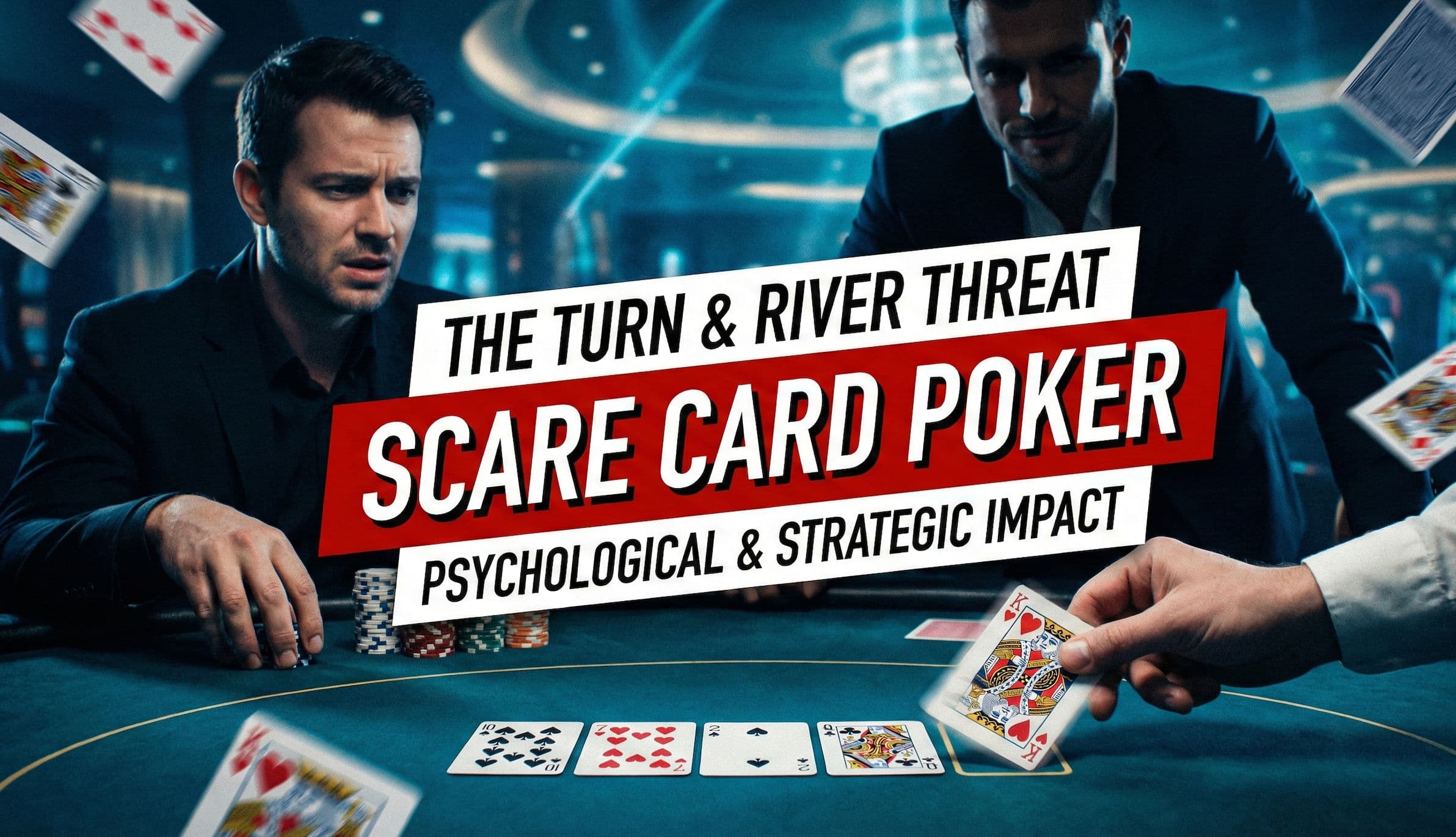
In the dynamic landscape of Texas Hold'em, certain cards dealt on the turn or river possess the power to instantly reshape a hand's narrative. These are known as scare cards – board developments that are highly likely to have significantly improved an opponent's hand, or at least appear to have done so. Far from being mere coincidences, these cards present critical strategic junctures, demanding acute observation, probabilistic thinking, and decisive action from every serious player. Understanding and skillfully navigating the appearance of a scare card is not just about reacting; it's about anticipating, exploiting, and ultimately, mastering a fundamental aspect of advanced poker strategy.
Defining the Poker Scare Card
The "poker scare card", fundamentally, is any community card appearing on the turn or river that carries a high probability of having strengthened an opponent's range. This threat can manifest in several ways: it might be an overcard (like an Ace or King when lower pairs are prevalent), a card that completes obvious straight or flush draws, or even a card that pairs the board, potentially giving an opponent two pair or a full house. The key element is the perceived danger – the card doesn't necessarily mean your opponent has improved, but it creates a credible threat that alters the perceived equity of all hands at the table.
Illustrative Scenarios: Recognizing Scare Cards in Action
Example 1: Overpair Under Threat
Consider a common Texas Hold'em scenario: You hold pocket Queens (Qc Qd). The flop comes 10h 7s 2c, giving you a strong overpair. At this point, you're likely ahead of most of your opponent's range. However, if the turn card is the Kh, this immediately transforms the board. The King is a quintessential scare card. Any opponent holding Ace-King (AK) or King-X with two pairs now surpasses your Queens. Furthermore, draws like Jack-Queen (JQ) or Jack-Nine (J9) now complete a straight. Your hand's strength, while still good in a vacuum, has diminished significantly relative to potential monster hands.
Example 2: Flush vs. Higher Flush
Another classic situation involves draws. You have Ace-Clubs and Five-Clubs (Ac 5c) on a board of 9c 8d 2c, giving you an ace-high flush draw with backdoor straight possibilities. The turn card is the 10c. While this card completes your flush, it simultaneously creates a scare. Why? Because an opponent holding, for instance, King-Clubs Jack-Clubs (Kc Jc) or Queen-Clubs Jack-Clubs (Qc Jc) would now have a superior flush. This turn card transforms a strong draw for you into a potential 'cooler' situation, where your completed hand is likely beaten by a better version.
The Psychological and Strategic Impact on Gameplay
Altered Betting Dynamics
The arrival of a scare card often serves as a catalyst for dramatic shifts in betting patterns. Players who were previously passive, opting for checks or minimal bets, might suddenly launch aggressive raises, signaling that they've connected strongly with the board. Conversely, players who were demonstrating aggression might abruptly slow down, indicating caution or a missed draw. Recognizing these shifts is paramount; they are crucial tells that reveal insight into your opponent's perceived hand strength.
Many of these dynamics become clearer through volume and repetition, which is why players often refine skills like reading poker opponents in online poker sites , where tendencies and betting patterns are easier to observe over time.
Mastering Poker Bluffing Techniques: Leveraging Scare Cards
One of the greatest strategic values of a poker scare card lies in its ability to support a credible story. When a turn or river card logically connects with the range you are perceived to have, it creates an opportunity to apply pressure by representing strength. A third suited card, a straight-completing card, or a high overcard can all serve as powerful scare cards that force opponents to re-evaluate medium-strength hands that were previously comfortable calling.
However, bluffing with a scare card is only effective when your prior actions support the narrative. If you played passively on a draw-heavy flop and suddenly fire a large bet when a scare card appears, the line often looks inconsistent and unconvincing. Successful scare card bluffs are built on coherent betting lines across multiple streets, not isolated aggression.
When a Scare Card Loses Its Power
Not every card that looks dangerous functions as a true scare card. If the turn or river card improves your opponent’s range more than your own, aggressive play can easily backfire. For example, on low, connected boards, certain overcards may be far less intimidating to opponents who frequently hold draws or middle pairs.
Opponent type is equally critical. Against calling stations, low-thinking players, or opponents unwilling to fold one-pair hands, the psychological leverage of a scare card is significantly reduced. In these situations, attempting to bluff simply because a scare card appears often leads to negative expected value (EV) outcomes.
Common Mistakes When Playing Scare Cards
A frequent error is treating scare cards as an automatic signal to barrel. Many players bet every perceived scare card without considering:
how well it fits their own range,
whether the betting line is consistent,
stack-to-pot ratios,
or whether the card truly threatens the opponent’s holding.
Another common mistake is excessive bet sizing. A scare card does not justify irrationally large bets when the underlying story is weak. The goal is not to appear aggressive, but to apply credible pressure that forces difficult decisions.
Conclusion: Poker Scare Cards Are Strategic Tools, Not Autopilot Plays
A poker scare card is not a “bluff button” - it is a situational strategic tool that becomes powerful only when used with intent and discipline. Within a solid Texas Hold'em strategy, Players who use scare cards effectively think in ranges, understand opponent psychology, and construct their betting lines deliberately across streets.
When applied correctly, these cards refine your poker decision making, allowing you to win pots without a showdown and apply sustained pressure over time. The key principles remain constant: context, consistency, and restraint. Master those, and scare cards become a genuine weapon rather than a costly habit.
| Pros | Cons |
|---|---|
Understanding scare cards forces a more rigorous re-evaluation of hand strength and opponent ranges, leading to more informed and accurate decisions. | Incorrectly reading an opponent's reaction or overestimating the impact of a scare card can lead to costly folds or ill-advised calls. |
Observing how opponents react to scare cards (betting patterns, timing tells) provides invaluable information about their holdings and tendencies. | Fear of a scare card can sometimes lead players to fold the best hand, especially if they are overly cautious or lack confidence in their reads. |
Skilled players can effectively represent a scare card even when they haven't hit it, applying pressure and forcing folds from weaker hands. | Repeatedly facing scare cards that seem to improve opponents' hands can be frustrating, potentially leading to emotional play and poor decisions. |
Related Poker Terms
Best Online Poker Bonus Codes


About the Editor

Bence Mitykó is a Somuchpoker poker writer, covering poker news and strategy. He spent four years playing poker professionally, primarily focusing on Heads-Up Sit & Go games, experience that continues to shape his understanding of poker strategy, online poker dynamics, and the wider poker industry.


