

Dry Board

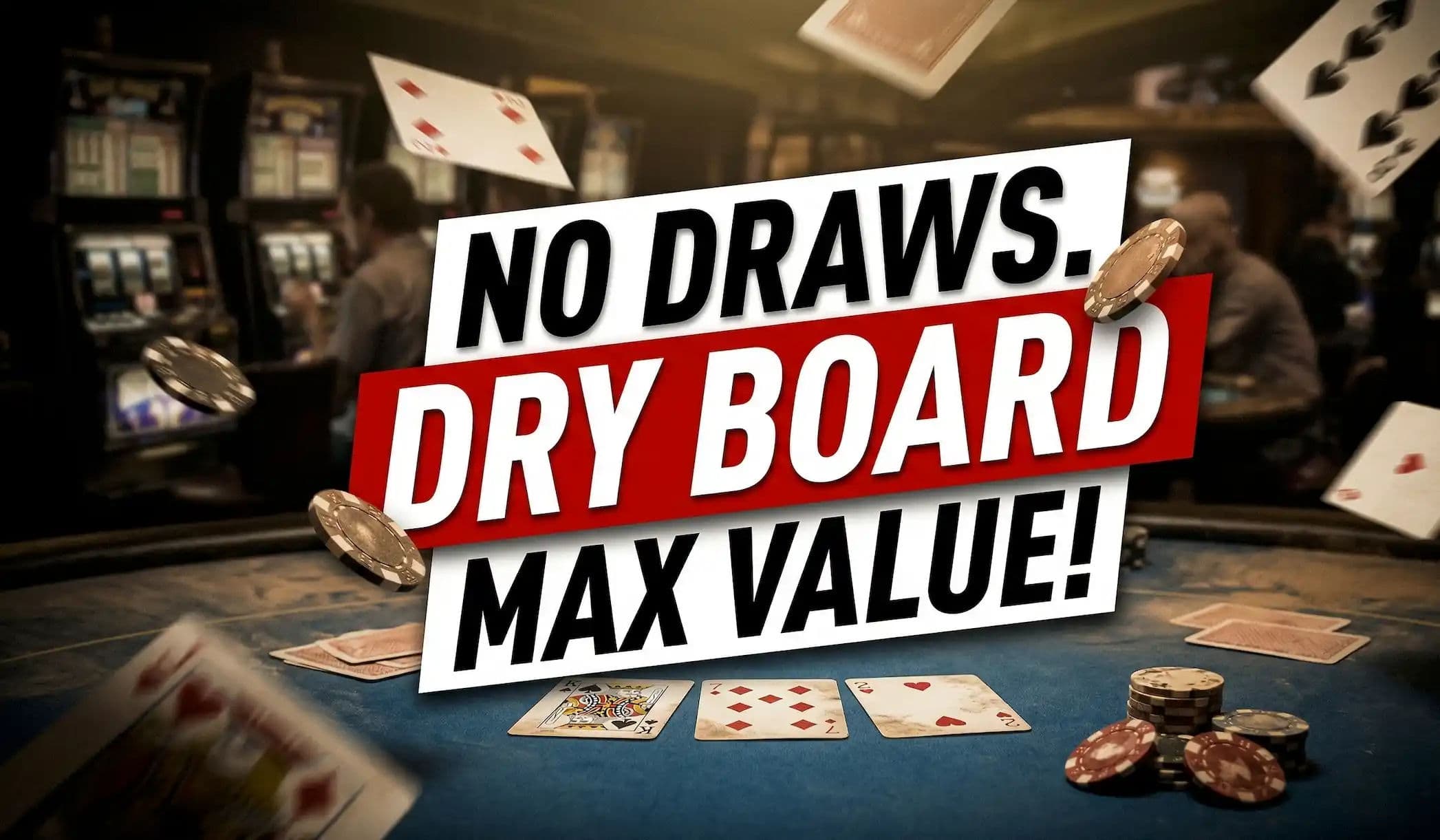
Have you ever stared at a completely disconnected, rainbow flop like K♠ 7♥ 2♦ and wondered what your exact next move should be? Welcome to the world of the dry board.
Mastering board texture is the secret weapon that separates average poker players from consistent winners. In this complete guide, we will break down exactly what a dry board is, why it completely changes the dynamic of a hand, and the optimal betting strategies you need to extract maximum value from your opponents on these uncoordinated textures.
Understanding the Dry Board in Poker
In the complex world of poker, understanding board texture is fundamental to making good decisions. One of the most common and important textures you'll encounter is the dry board. Simply put, a dry board is one where the community cards offer very few, if any, strong drawing possibilities for straights or flushes. Recognizing this texture is the first step toward crafting a winning strategy.
A classic example of a dry flop is something like K♠ 7♥ 2♦. Notice the key characteristics:
Rainbow: The flop contains three different suits (spades, hearts, diamonds), making an immediate flush impossible and a flush draw highly unlikely.
Disconnected: The ranks of the cards are far apart (King, Seven, Two), meaning there are no open-ended straight draws or even many gutshot straight draws available.
On a board like this, hands are relatively static. The best hand pre-flop or on the flop is very likely to remain the best hand by the river. This contrasts sharply with a 'wet board', such as Q♥ J♥ 9♠, which is loaded with flush draws, straight draws, and combo draws.
Strategic Adjustments for a Dry Flop
Your strategy should change dramatically based on the board texture. A dry board simplifies many situations and opens up specific strategic lines of play, whether you're bluffing or betting for value.
When You Are the Aggressor
If you raised before the flop, a dry board is often an excellent opportunity to make a c-bet. Since it's unlikely your opponent connected with such an uncoordinated flop, a bet will often take down the pot immediately. Your opponents will have a hard time continuing without a pair or a very specific backdoor draw.
A key concept in board texture is that on dry boards, hand ranges are polarized. Opponents either have a made hand like a pair, or they have complete air. There is very little in between.
Bet sizing can also be adjusted. Because opponents are less likely to be drawing, you don't need to bet large to protect your hand. A smaller c-bet, perhaps one-third of the pot, can achieve the same goal of forcing folds while risking fewer chips.
When You Have a Strong Hand
If you flop a monster on a dry board (like a set of sevens on K-7-2), your primary goal is to extract value. Slow-playing can be a mistake here. There are very few 'scare cards' that can come on the turn or river to kill your action. It's often best to start building the pot immediately. Your opponent is more likely to call with a top pair (like K-Q) on this board, and you want to get as many chips in as possible before they get suspicious.
Ready to put your new post-flop skills to the test? Whether you are c-betting a dry board or extracting value with a monster, you need a reliable place to play. Check out our top online poker recommendations to play on trusted, independently audited poker rooms where your bankroll is completely safe.
Playing Against Aggression on a Dry Board
When you're facing a bet on a dry board, you can often narrow your opponent's range of hands. Since there are few credible semi-bluffs (draws), a large bet often signifies a strong made hand. If you have a marginal hand, like a weak pair, it's often wise to proceed with caution or fold to significant aggression.
However, because aggressive players know that dry boards are good for c-betting, they might be bluffing with a high frequency. If you have a decent hand, like middle pair, you may need to call at least one bet to see what develops and to prevent being run over.
How Turns and Rivers Change the Texture
A board that starts dry doesn't always stay that way. A seemingly innocent K-7-2 rainbow flop can become much more coordinated if the turn is a 6 or a 5, creating new straight possibilities. Always reassess the board texture on every street. Conversely, a blank turn card, like a 3 on a K-7-2 flop, keeps the board dry and reinforces the existing power structure of the hands in play.
Board Type | Example | Key Characteristic | Optimal Strategy |
|---|---|---|---|
Dry Board | A♠ 8♣ 3♥ | Uncoordinated, rainbow | High-frequency c-betting, value-bet strong hands |
Wet Board | K♥ Q♥ 9♠ | Coordinated, two-tone | Bet larger for protection, be cautious of draws |
Paired Board | J♦ J♣ 4♠ | Reduces combinations of top pairs | Be wary of trips, good for bluffing |
Mastering the nuances of the boards is a critical skill in No-Limit Hold'em. It allows you to apply pressure effectively, protect your strong hands, and make more accurate reads about the strength of your opponent's holdings.
| Pros | Cons |
|---|---|
On a dry board, it's easier to determine your relative hand strength. You are less likely to be outdrawn, making post-flop play more straightforward. | Since there are no draws, opponents who miss the board will fold easily. This makes it hard to get paid off with your strong hands. |
Continuation bets are highly effective on dry boards because it's so unlikely your opponents have a hand they can continue with. | A set is incredibly well-hidden on a dry board. An opponent could have a monster, and you'd have no indication from the board texture itself. |
Related Poker Terms
Best Online Poker Bonus Codes


About the Editor

Bence Mitykó is a Somuchpoker poker writer, covering poker news and strategy. He spent four years playing poker professionally, primarily focusing on Heads-Up Sit & Go games, experience that continues to shape his understanding of poker strategy, online poker dynamics, and the wider poker industry.


