Ragged

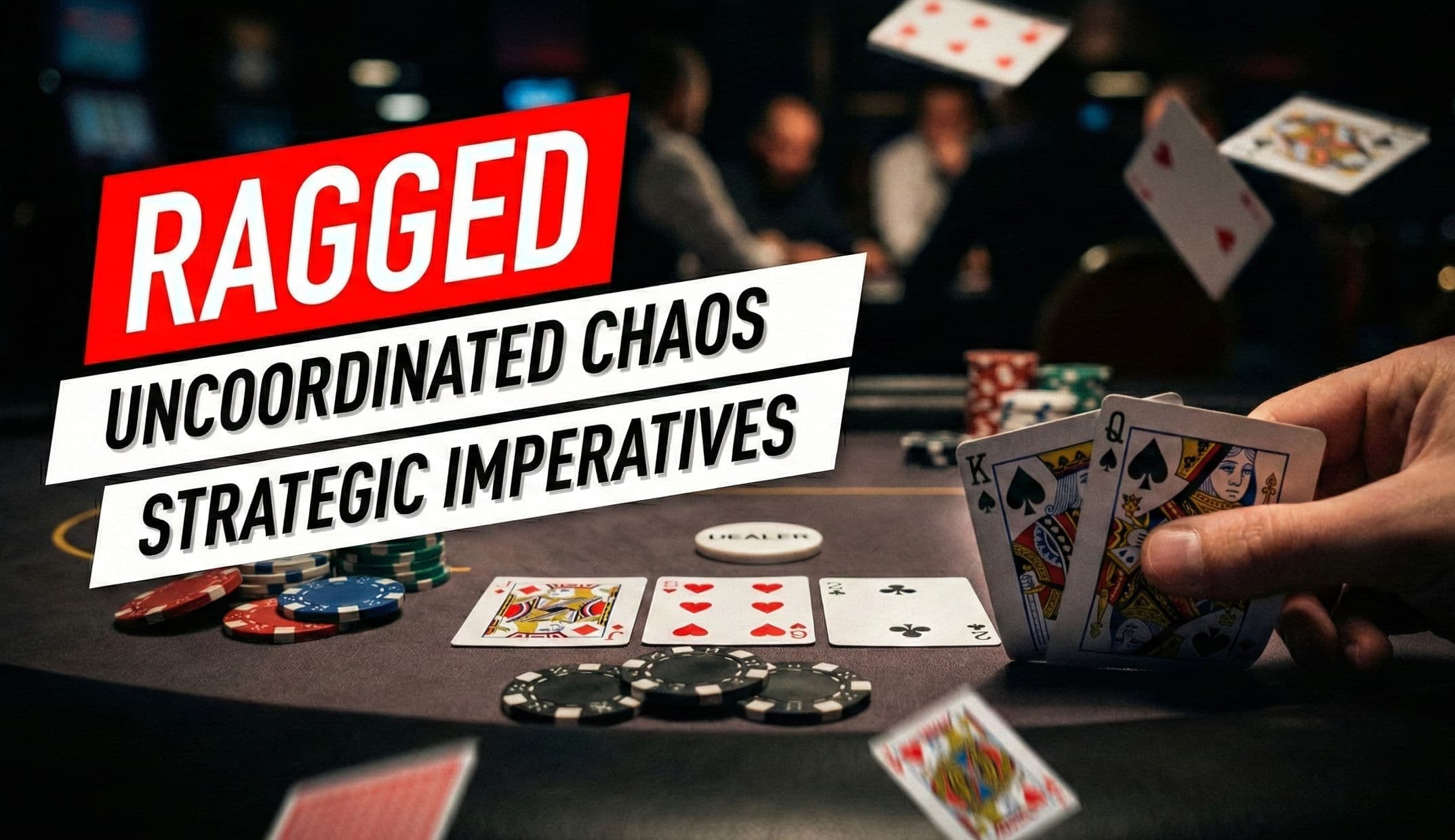
In the intricate world of Texas Hold'em, every community card dealt carries significant weight, shaping the trajectory of a hand and demanding constant adaptation from players. Among the various board textures, the ragged board stands out as a critical concept, often misunderstood yet ripe with strategic potential. Far from being merely insignificant, these uncoordinated flops present a unique landscape where astute players can exploit their opponents' tendencies and capitalize on perceived weakness. Understanding and mastering the dynamics of ragged boards is not just about recognizing a lack of connectivity; it's about developing a sophisticated approach to post-flop play that can dramatically enhance your profitability.
Defining the Ragged Board Poker Strategy: Uncoordinated Chaos
At its core, a ragged board poker strategy refers to a flop or, by extension, a full board, that exhibits a distinct lack of coordination among its community cards. Unlike connected or draw-heavy boards that boast numerous straight or flush possibilities, a poker ragged flop is characterized by low-value, non-sequential cards that offer minimal direct equity for most hands. Imagine a flop like Jd-6h-2c or T-6-3 rainbow; these are classic examples. The key indicators are:
Low Card Ranks: Cards typically range from deuce to nine or ten.
Disparate Suits: Often rainbow (three different suits) or 'two-tone' with widely separated suits, reducing flush potential.
Non-Sequential Values: Gaps between card ranks are large, making straights highly improbable.
The term rag itself can also denote a single low, uncoordinated card. Players frequently employ the term ragged when recalling a board where the precise card values aren't critical to the narrative, much like using brick to describe an irrelevant card. For example, a player might lament, "I flopped bottom set with deuces on a ragged board but didn't get paid off" implying a 2-x-x board where 'x' represents insignificant, disconnected cards.
In online poker , the uncoordinated nature of a ragged board is even more apparent when using a four-color deck setting, where the distinct clash of green, blue, red, and black suits instantly highlights just how little connectivity the flop offers for potential flushes.
Strategic Imperatives: Playing Uncoordinated Boards
The strategic implications of a ragged board are profound and multifaceted, dictating optimal play for both the pre-flop aggressor and the defender when playing uncoordinated boards.
As the Pre-flop Aggressor: Capitalizing on Range Advantage
If you were the pre-flop raiser, ragged boards are often fertile ground for continuation betting (c-betting). Your pre-flop raising range typically contains stronger, higher-card hands than your opponent's calling range. When the board comes ragged, it's far less likely to have connected with your opponent's weaker, more speculative hands. This dynamic gives you a significant range advantage. Your c-bet serves multiple purposes when c-betting ragged flops:
Value: With your strong overpairs (e.g., KK on a 8-3-2 flop) or top pairs, you extract value from weaker holdings that may call once.
Bluffing & Fold Equity: Even with air, a c-bet leverages your perceived strength. Opponents are statistically less likely to have hit the board strongly, increasing your fold equity.
Pot Control: Sometimes, a small c-bet can gather information or protect your equity without overcommitting.
Optimal c-bet sizing on a ragged board is often smaller than on wetter boards, typically between 25-50% of the pot. This size is often sufficient to elicit folds from unhit hands while risking less. However, it's crucial not to overcommit with marginal hands, assuming opponents haven't connected either. While your opponents may not have hit, neither have you always, and continued aggression without a plan can be costly.
Facing Aggression: Navigating Ragged Flops
When facing a c-bet on a ragged board, your decision-making process shifts. You need to assess your hand's equity, implied odds, and your opponent's range and tendencies. If you called pre-flop with hands like small-to-medium pairs or suited connectors, a ragged board might present a good opportunity to:
Float: If you believe your opponent is c-betting broadly, a float (calling with air or a weak draw) can be effective, planning to take the pot on a later street if they check.
Raise as a Bluff: Against overly aggressive c-bettors, a well-timed raise can represent a strong hand that connected, forcing them to fold their air.
Fold: Sometimes, the best play is simply to fold if you have no equity and your opponent is unlikely to fold.
Ragged Boards vs. Dry Boards: A Critical Distinction
While often used interchangeably, there's a nuanced difference between a ragged board and a dry board. A poker board texture analysis helps distinguish them: a dry board truly offers very few draws and usually consists of low cards with no straight or flush possibilities (e.g., 7-2-2 rainbow). A ragged board is uncoordinated but might still contain a high card, such as a Jack or a Ten (e.g., J-6-2 rainbow).
This distinction is important because bluffing dry boards differs from attacking ragged ones. Hands with overcards (e.g., AK on a J-6-2 board) still have a "draw" to make top pair, potentially leading to more action than on a truly dry board where high cards are absent. Mislabeling a ragged board as completely dry can lead to missed value or over-bluffing.
Advanced Considerations: Player Tendencies and Multi-way Pots
The effectiveness of any advanced poker strategy on a ragged board is amplified by understanding your opponents. Against tight, passive players, c-betting becomes even more potent. Against loose, aggressive players, you might need to be more selective with your bluffs and more willing to call with marginal strength.
In multi-way pots, ragged boards generally reduce the effectiveness of c-betting as multiple opponents increase the likelihood that at least one player has connected, even marginally. Some essential post-flop poker tips suggest tightening your range for c-betting in multi-way scenarios.
Ultimately, ragged boards are a staple of poker. Recognizing them, understanding their implications, and applying the correct strategic adjustments are vital skills for any serious player seeking to elevate their game and exploit situations where others see only chaos.
| Pros | Cons |
|---|---|
As the pre-flop aggressor, ragged boards offer excellent chances to continuation bet with a high success rate, leveraging your range advantage. | Some ragged boards, especially those with high cards, can be deceptively 'wet' for overcards, leading to more action than anticipated if misread. |
With fewer draws and connections possible, it's often easier to gauge the relative strength of hands, both yours and your opponents'. | Over-aggressive c-betting without a plan or against calling stations can lead to costly mistakes, as even weak hands might call. |
Opponents are less likely to have connected, making well-timed bluffs more effective, especially against weak checks. | If you hold a speculative drawing hand, a ragged flop significantly reduces your chances of improving, limiting your ability to continue. |
Related Poker Terms
6-Max
9-Max (Full Ring)
A-Game
ABC Poker
Bankroll
Bet Size
Bet Sizing
Blocker
Bluff
Bluff Catcher
Board
Board Texture
Bubble Factor
Button
Call
Check-Call
Check-fold
Check-Raise
Click-Back
Donkament
Double Barrel
Dry Board
First in
Gap Concept
GTO
Gutshot
Hot Streak
HUD
Image
Insta-Call
Isolation
Kicker
Leak
Limp
Limp-Fold
Limp-Raise
Middle Pair
Min-raise
Monotone
Monster
Multi-Way Pot
Nit
Nuts
One-Way Straight
Online Poker
Online Poker Strategies
Open Ended
Open Limp
Out of Line
Over the top
Over-Limp
Overblind
Overcall
Overcard
Overpair
Pat
Peel
Play Behind
Polarized
Pot Control
Potting Out
Preflop
Premium Hands
Probe Bet
Proposing Bets
Push or Fold
Put Down
Quads
Quartered
Quitting Time
Quorum
Ragged
Rainbow
Range
Range Advantage
Razz
Royal Flush
Scare Card
Sit and Go (SNG)
Slow Play
Smooth Call
Snap Call
Snapped Off
Soft Seat
Solid
Steal
Suited
Suited Gappers
Tank
Total air
Trap
Two-Gapper
Under the Gun (UTG)
Underpair
Value
Value Bet
Villain
Weak Ace
Wet Board
Window Card