

Semi-Bluff

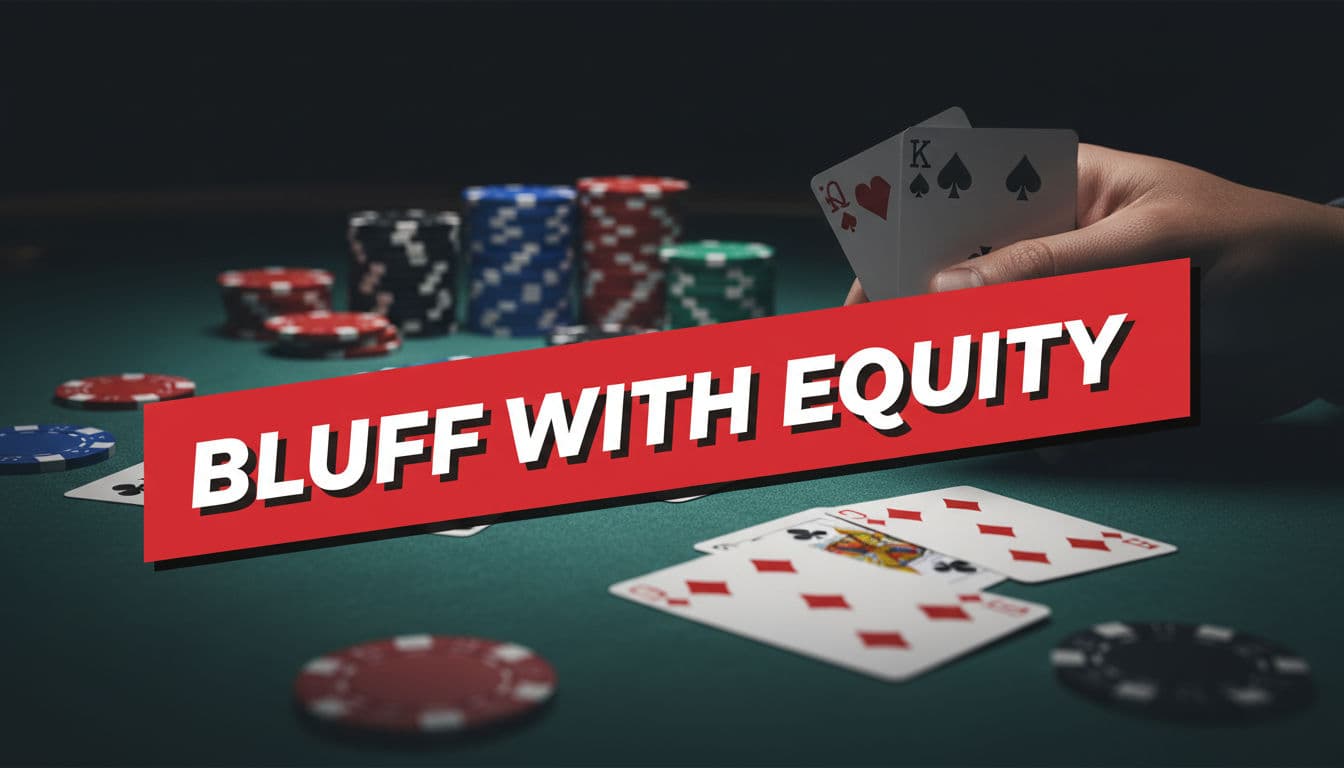
The strategic landscape of poker is rich with subtle plays and calculated risks, and among the most potent is the semi-bluff. Far more sophisticated than a simple bet with nothing, a semi-bluff represents a powerful hybrid maneuver. It's executed when a player holds a hand that isn't currently the strongest but possesses a significant statistical probability of improving to a winning hand on a subsequent street. This unique characteristic grants the semi-bluffer two distinct pathways to claim the pot: either by compelling opponents to fold immediately through a display of strength, or by materializing a favorable card on the turn or river to forge a truly dominant hand. Understanding and effectively deploying the semi-bluff is a hallmark of an expert poker player, transforming marginal draws into profitable ventures.
In the intricate world of poker, mastering the art of deception and calculated aggression is paramount. The semi-bluff stands as a cornerstone of advanced poker strategy, and understanding semi-bluff poker offers a nuanced approach that transcends the binary choice between a pure bluff and a value bet. Unlike a pure bluff, which relies solely on intimidating opponents into folding with a weak holding, a semi-bluff is predicated on a hand with tangible "equity" – a measurable probability of improving. This fundamental difference is what elevates the semi-bluff from a mere gamble to a highly profitable long-term strategy, granting players an invaluable "equity cushion" against unfavorable calls.
The Dual Pathways to Victory: Fold Equity & Raw Equity
The inherent power of a semi-bluff stems from its dualistic nature, allowing a player to win the pot in one of two distinct ways:
Fold Equity: This is the immediate gratification of a semi-bluff. By making a bet or raise, the semi-bluffer applies pressure to opponents, who must then weigh the cost of calling against the perceived strength of the bettor. If opponents judge the bet to be genuine and decide to fold, the semi-bluffer wins the pot without needing to improve their hand. This psychological pressure is a critical component, especially against players prone to folding.
Raw Equity (Showdown Value): Should the semi-bluff be called, the player still retains a significant chance of winning due to their hand's inherent potential. Hands like flush draws, straight draws, or even strong overcards carry "outs" – cards that, if dealt on future streets, will complete a powerful hand. For instance, holding an open-ended straight draw with eight outs on the flop provides a substantial probability of hitting the straight, turning a speculative hand into a strong winner. This equity mitigates the risk associated with being called, differentiating it sharply from a pure bluff that would have minimal to no raw equity.
Identifying Prime Semi-Bluff Poker Opportunities
Successful semi-bluffing hinges on recognizing the right hands and board textures. Common examples include:
Flush Draws: Holding four cards to a flush on the flop (e.g., two hearts in hand, two on the board) gives nine outs to complete the flush, a strong candidate for a semi-bluff. Backdoor flush draws can also be considered in multi-way pots or against very tight opponents, though with lower immediate equity.
Straight Draws: Open-ended straight draws (OESD) provide eight outs (e.g., holding 7-8 on a 5-6-9 flop), making them excellent semi-bluffing candidates. Gutshot straight draws (four outs) are riskier but can still be semi-bluffed, particularly if combined with overcards or against weak opponents.
Overcards & Backdoor Equity: Hands like A-K on a 7-8-9 flop, while currently just two overcards, have six outs to hit a pair of Aces or Kings. If these also carry a backdoor flush or straight draw, their combined equity can make them suitable for a semi-bluff, particularly on coordinated boards.
The board texture plays a crucial role. Semi-bluffs are often more effective on "wet" or coordinated boards (e.g., 9h-Th-Jc) where many draws are possible, making an opponent more wary of your potential monster hand. Conversely, on dry boards (e.g., 2s-7d-Kd), semi-bluffs are less credible as there are fewer plausible drawing hands you could represent.
The Critical Timing: Flop and Turn Dynamics
A fundamental rule of semi-bluffing is its temporal constraint: it can only occur on the flop or the turn. These are the only streets where future community cards (the turn and river, respectively) can still improve a drawing hand. By the time the action reaches the river, no more cards are coming. Therefore, any bet on the river is definitively either a value bet (you believe you have the best hand) or a pure bluff (you have nothing and are trying to fold your opponent). Understanding this distinction is vital for accurate strategic application.
Developing the intuition for these high-pressure spots is best achieved through consistent practice on the best online poker platforms , where you can encounter diverse opponent styles and refine your semi-bluffing frequency.
Advanced Strategic Advantages and Key Considerations
Beyond the direct pot winning potential, semi-bluffing offers deeper poker strategy benefits:
Enhanced Long-Term Profitability: By integrating fold equity with raw equity, semi-bluffs statistically outperform pure bluffs. This "double-barreled" approach ensures that even when your bluff is called, you still have a significant chance of turning your hand into a winner, thereby preserving your bankroll and increasing your Expected Value (EV) over thousands of hands.
Pressure Application and Image Building: Consistent, well-timed semi-bluffs force opponents to make difficult decisions. It keeps them guessing about the true strength of your hand, preventing them from comfortably check-folding or making easy calls. This aggression can cultivate an image as a formidable player, earning you more folds in future pots.
Opponent Profiling is Key: The efficacy of a semi-bluff is heavily influenced by your opponent's tendencies. It's generally ill-advised to semi-bluff "calling stations" – players who rarely fold. Instead, target tighter, more cautious opponents who are likely to fold marginal holdings when facing aggression. Conversely, against very aggressive opponents, a semi-bluff can be used to set up a later re-raise.
Perceived Range and Stack-to-Pot Ratio (SPR): Consider what hands your opponent is likely to hold (their range) and how your bet fits into a plausible narrative for your range. Additionally, carefully manage your bet sizing in relation to the pot size (SPR). Appropriate bet sizing is crucial for achieving optimal fold equity while minimizing your risk if called. A larger bet often generates more fold equity but costs more if unsuccessful.
Table Dynamics and Storytelling: A successful semi-bluff often fits into a larger narrative you're telling at the table. Your actions on previous streets, your position, and your prior betting patterns all contribute to the credibility of your semi-bluff.
In conclusion, the semi-bluff is an indispensable tool in the arsenal of a proficient poker player. It embodies a sophisticated blend of aggression, deception, and mathematical probability. By understanding its mechanics, identifying optimal spots, and considering crucial table dynamics, players can significantly elevate their game, transforming seemingly weak hands into formidable weapons and unlocking new levels of profitability.
| Pros | Cons |
|---|---|
Combines fold equity with raw equity, making it statistically more profitable than pure bluffs by giving two ways to win the pot. | Despite having equity, there's still a significant chance of being called and failing to improve, resulting in a lost bet. |
Forces opponents into difficult decisions, leading them to potentially fold stronger hands and building an aggressive, unpredictable table image. | Effective semi-bluffing demands a deep understanding of opponent tendencies and accurate estimation of their hand ranges. |
Transforms speculative drawing hands (like flush or straight draws) into proactive, aggressive plays, maximizing their inherent potential. | A well-timed re-raise from an opponent can put the semi-bluffer in a very difficult spot, forcing them to fold their equity. |
Related Poker Terms
6-Max
9-Max (Full Ring)
A-Game
ABC Poker
Bankroll
Bet Size
Bet Sizing
Blocker
Bluff
Bluff Catcher
Board
Bubble Factor
Button
Call
Check-Call
Check-fold
Check-Raise
Click-Back
Donkament
Double Barrel
First in
Gap Concept
GTO
Gutshot
Hot Streak
HUD
Image
Insta-Call
Isolation
Kicker
Leak
Limp
Limp-Fold
Limp-Raise
Middle Pair
Min-raise
Monotone
Monster
Multi-Way Pot
Nit
Nuts
One-Way Straight
Online Poker
Online Poker Strategies
Open Limp
Out of Line
Over the top
Over-Limp
Overblind
Overcall
Overcard
Overpair
Pat
Peel
Play Behind
Polarized
Pot Control
Potting Out
Preflop
Premium Hands
Probe Bet
Proposing Bets
Push or Fold
Put Down
Quads
Quartered
Quitting Time
Quorum
Ragged
Range
Range Advantage
Razz
Reverse Implied Odds
Rolled Up
Royal Flush
Runner Runner
Running Good
Sandbagging
Satellite
Sit and Go (SNG)
Slow Play
Smooth Call
Snap Call
Snapped Off
Soft Seat
Solid
Steal
Suited
Suited Gappers
Tank
Total air
Trap
Two-Gapper
Under the Gun (UTG)
Underpair
Value
Value Bet
Villain
Weak Ace
Window Card
Best Online Poker Bonus Codes


About the Editor

Bence Mitykó is a Somuchpoker poker writer, covering poker news and strategy. He spent four years playing poker professionally, primarily focusing on Heads-Up Sit & Go games, experience that continues to shape his understanding of poker strategy, online poker dynamics, and the wider poker industry.


