

Put Down

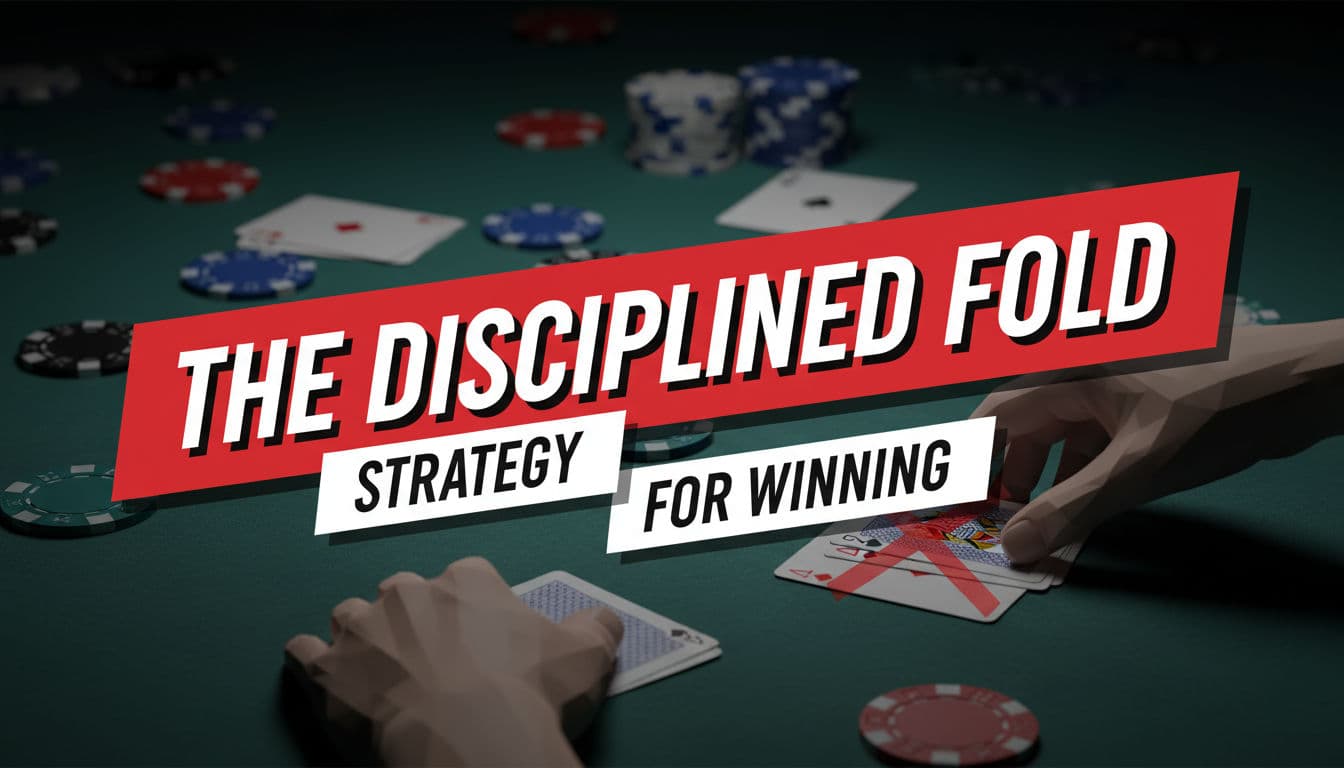
In the complex tapestry of poker, where every decision can profoundly impact your stack, the seemingly simple act of a 'put down'-more commonly known as folding-stands as a cornerstone of sound strategy. Far from being merely an act of concession, adeptly knowing when to fold, when to relinquish a hand is a vital skill that differentiates novice players from seasoned professionals. It’s a calculated retreat, a strategic sacrifice designed to preserve capital and optimize future opportunities rather than chasing long-shot wins or incurring unnecessary losses. This analytical deep dive explores the multifaceted nature of folding, transforming it from a perceived weakness into a powerful instrument of control at the poker table.
The Fundamental Meaning of 'Putting Down' a Hand as a Poker Folding Strategy
Developing a solid poker folding strategy is essential for long-term success, as knowing when to put down a hand in poker, when to fold just as important as knowing when to bet. This action immediately forfeits any claim to the pot for that specific hand, meaning the player will not be eligible to win regardless of subsequent community cards or opponent actions. While straightforward in definition, the underlying rationale and strategic implications of this move are anything but simplistic.
Strategic Imperatives Behind the 'Put Down'
The decision to fold is rarely arbitrary; instead, it's typically driven by a confluence of factors, each demanding careful consideration:
Hand Strength Evaluation: The most obvious reason is possessing a hand deemed insufficient to compete. This involves comparing one's own hand against the probable holdings of opponents, factoring in board texture and betting patterns.
Pot Odds and Implied Odds: Players must assess whether the potential reward in the pot justifies the risk of continuing, especially when chasing draws. If the pot odds are unfavorable, or the implied odds (money you expect to win if you hit your hand) are too low, a fold is often the correct play.
Opponent's Actions and Strength: Aggressive betting or raising from opponents often signals significant hand strength. Interpreting these signals is crucial for determining if your hand can reasonably stand up to the pressure.
Position at the Table: Playing out of position (acting first) makes decisions more difficult and expensive. Folding marginal hands becomes more prudent when out of position, especially against strong players.
Stack Preservation: A fundamental objective in poker is to stay in the game. Folding weak or marginal hands saves chips, preserving your stack for more favorable situations where you have a statistical edge. This is paramount in tournaments where chip life is finite.
Avoiding Tilt: Sometimes, folding is a psychological defense mechanism. Recognizing when you're emotionally compromised or on 'tilt' and stepping away from a hand, even if it might have marginal equity, can prevent catastrophic losses.
Folding as a Form of Poker Risk Management
Viewing the 'put down' through the lens of poker risk management reveals its true strategic value. Every chip invested carries a risk, and folding is the primary tool to mitigate unwarranted exposure. Instead of stubbornly clinging to a weak hand and hoping for a miracle, a disciplined player understands that cutting losses early is a profitable long-term strategy. This disciplined approach ensures that capital is deployed only when the expected value is positive, maximizing returns over many hands.
The Long-Term Benefits of Strategic Retreat
Preserving Future Equity: By not bleeding chips in unprofitable spots, you maintain a healthy stack, which translates into more leverage and flexibility in later streets and future hands.
Maintaining Table Image: While excessive folding can sometimes make you appear weak, judicious folding allows you to pick your spots. When you do enter a pot, your action carries more weight, as opponents won't dismiss you as someone who plays every hand.
Mental Fortitude: The ability to fold difficult hands, particularly when facing significant pressure, is a hallmark of emotional control and mental toughness. It prevents costly errors driven by ego or frustration.
Common Pitfalls to Avoid When Folding
Even seasoned players can stumble when it comes to their poker folding strategy. One major mistake is "folding too late" after already investing heavily in a pot where the math no longer makes sense. Another is the "ego fold," where a player refuses to put down a hand simply because they dislike the opponent. Avoiding these emotional traps ensures your strategy remains purely mathematical and profit-oriented.
Conclusion: The Strategic Imperative of Quitting (or Mastering the Put Down)
In conclusion, the 'put down' is far more than a simple act of surrender; it's a sophisticated strategic maneuver. Mastering when and why to fold involves a deep understanding of probabilities, opponent psychology, position, and stack dynamics. By embracing disciplined folding as an integral part of your poker arsenal, you transform a seemingly negative action into a powerful tool for long-term success and profitability.
| Pros | Cons |
|---|---|
By folding weak or marginal hands, players avoid unnecessary investments, effectively saving their chips for more opportune moments and maintaining a healthier stack size. | The most immediate consequence of folding is giving up any chance to win the current pot, regardless of how the board runs out or what opponents ultimately held. |
Strategic folding prevents players from chasing unlikely draws or continuing in hands where they are clearly behind, thereby mitigating larger losses against stronger opponents. | While often the correct play, folding means you might occasionally miss out on winning a pot with a long-shot draw or if all opponents also fold later in the hand. |
Playing fewer marginal hands through disciplined folding means less exposure to the unpredictable swings of poker, leading to a more stable bankroll over time. | Folding too frequently can make a player exploitable by overly aggressive opponents who will bluff more often, knowing they can push you off many hands. |
A player who folds judiciously is perceived as tight and selective, making their future bets and raises carry more weight when they decide to play a hand. |
Related Poker Terms
6-Max
9-Max (Full Ring)
A-Game
ABC Poker
Bankroll
Bet Size
Bet Sizing
Blocker
Bluff
Bluff Catcher
Board
Bubble Factor
Button
Call
Check-Call
Check-fold
Check-Raise
Click-Back
Donkament
Double Barrel
First in
Gap Concept
GTO
Gutshot
Hot Streak
HUD
Image
Insta-Call
Isolation
Kicker
Leak
Limp
Limp-Fold
Limp-Raise
Middle Pair
Min-raise
Monotone
Monster
Multi-Way Pot
Nit
Nuts
One-Way Straight
Online Poker
Online Poker Strategies
Open Limp
Out of Line
Over the top
Over-Limp
Overblind
Overcall
Overcard
Overpair
Pat
Peel
Play Behind
Polarized
Pot Control
Potting Out
Preflop
Premium Hands
Probe Bet
Proposing Bets
Push or Fold
Put Down
Quads
Quartered
Quitting Time
Quorum
Ragged
Range
Range Advantage
Razz
Reverse Implied Odds
Rolled Up
Royal Flush
Runner Runner
Running Good
Sandbagging
Satellite
Sit and Go (SNG)
Slow Play
Smooth Call
Snap Call
Snapped Off
Soft Seat
Solid
Steal
Suited
Suited Gappers
Tank
Total air
Trap
Two-Gapper
Under the Gun (UTG)
Underpair
Value
Value Bet
Villain
Weak Ace
Window Card
Best Online Poker Bonus Codes


About the Editor

Bence Mitykó is a Somuchpoker poker writer, covering poker news and strategy. He spent four years playing poker professionally, primarily focusing on Heads-Up Sit & Go games, experience that continues to shape his understanding of poker strategy, online poker dynamics, and the wider poker industry.


