Pot Control

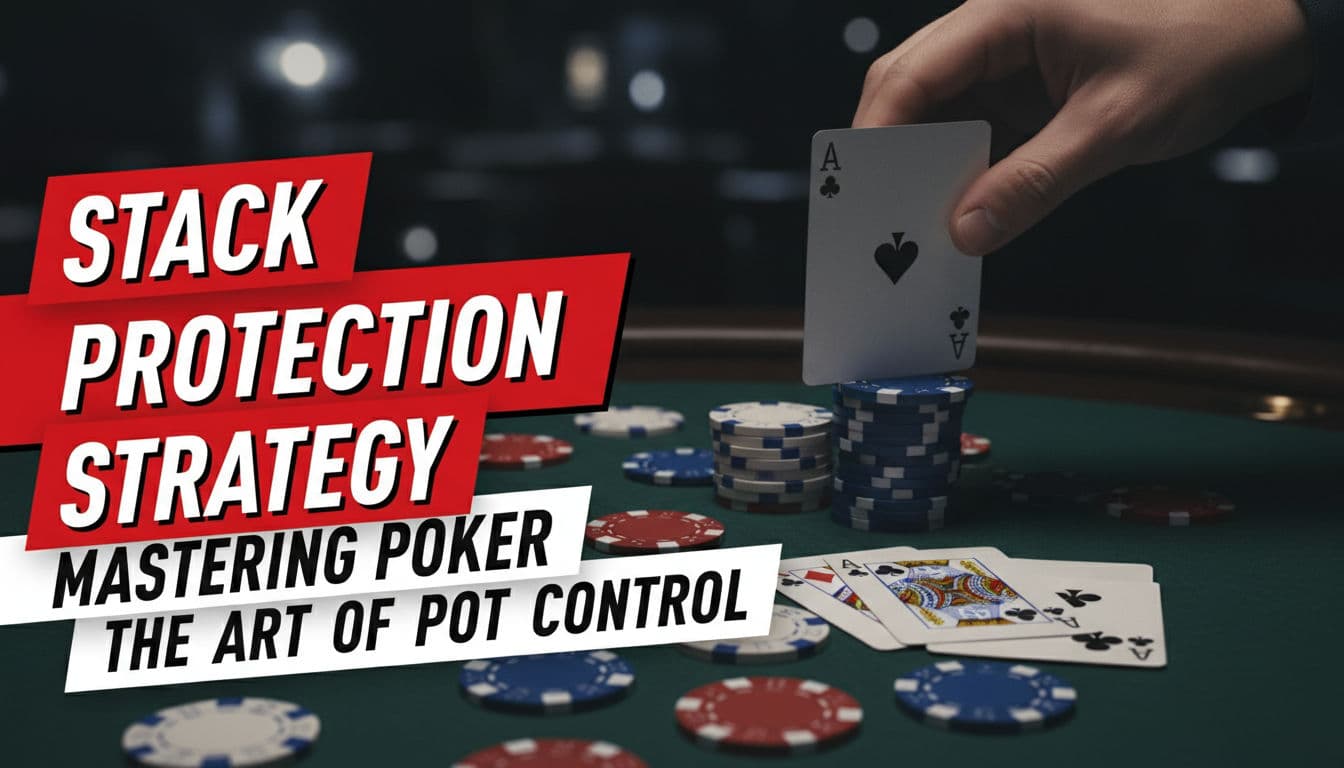
In the intricate world of poker, where every decision can dramatically impact your chip stack, pot control emerges as a fundamental yet often misunderstood strategic pillar. Far beyond merely checking to see a free card, true pot control is a sophisticated discipline that involves meticulously managing the size of the pot in direct correlation with the perceived strength of your hand and, critically, your overarching objective to preserve your stack.
This analytical approach moves beyond reactive play, demanding a proactive mindset where you anticipate future streets and your opponent's potential actions. It's particularly invaluable for players at all stakes, especially those who frequently find themselves overcommitting to marginal hands or losing more than necessary in unfavorable spots. By mastering pot control, you gain a powerful tool to dictate the pace of the game, mitigate losses, and maximize value with greater precision.
Understanding the Essence of Pot Control in Poker
Pot control is the art of manipulating the growth of the pot to match the equity and playability of your hand. At its core, it often entails actions like checking behind on various streets, not solely to get a free card but as a calculated maneuver to prevent the pot from ballooning to a size that your hand cannot comfortably contest. This strategy is an indispensable asset, especially for lower-stakes players who are prone to making costly mistakes by misjudging pot dynamics, as well as seasoned pros looking to fine-tune their game and minimize variance.
The strategic imperative behind pot control isn't just about protecting a specific hand from draws; it's primarily about protecting your stack. This distinction is crucial. While protecting a vulnerable hand is a byproduct, the main goal is to avoid situations where a medium-strength hand becomes a costly investment against a stronger range or an escalating bluff. In online poker environment , mastering this discipline is even more vital because the absence of physical tells means players must rely on precise pot-control lines to keep the pot manageable against aggressive opponents who use large bet sizes to test your commitment.
Consider a scenario where you hold top pair with a mediocre kicker on a board that allows for many draws. Without pot control, betting aggressively could lead to an opponent raising, forcing you into a difficult decision with a hand that likely won't improve significantly. By exercising control, you maintain flexibility and prevent unnecessary stack depletion.
The Strategic Imperative: Proactive Planning Over Reactive Play
A hallmark of expert-level pot control is the emphasis on proactive planning rather than reactive decision-making. Elite poker players don't just respond to bets; they construct a multi-street strategy from the moment the flop hits, or even pre-flop. This involves:
Anticipating Opponent Ranges: Projecting what hands your opponent might hold based on their pre-flop actions and tendencies.
Evaluating Board Texture: Assessing how 'wet' or 'dry' the board is, and how it might connect with various hands, including potential draws.
Forecasting Future Streets: Envisioning potential turn and river cards and how they might affect hand equities and betting patterns.
Understanding Positional Advantage: Recognizing how being in position allows you to gather more information before making your decisions, which is vital for effective pot control.
Without a clear strategy for the turn and river, you risk making ad-hoc decisions that can lead to mismanaging the pot size. This strategic foresight allows you to deliberately guide the pot's trajectory, ensuring it never becomes too large for the strength of your hand to handle profitably.
When to Deploy Pot Control: Situational Mastery
Effective pot control is highly situational. Knowing when and where to apply it is key to maximizing its benefits:
With Medium-Strength Hands: This is perhaps the most common application. When you hold a hand like top pair with a medium kicker, a second pair, or a strong draw that has excellent implied odds but isn't a lock, pot control helps you keep the pot manageable. These hands have showdown value but might struggle against significant aggression.
When You Cannot Withstand a Raise: If your hand's equity is insufficient to call a raise, but you still believe it might be the best hand, controlling the pot allows you to see more cards cheaply or get to showdown without over-investing.
On Draw-Heavy Boards: When the board texture offers many potential straight or flush draws (e.g., JT9 or two-tone boards), opponents are more likely to bluff-raise or semi-bluff. Pot control helps you navigate these minefields without escalating the pot unnecessarily against speculative hands.
Against Aggressive Opponents: Playing against opponents who frequently bluff or bet with a wide range can be frustrating. Controlling your pot allows you to trap them or get to showdown without inflating the pot on speculative bluffs.
Out of Position: While challenging, pot control is vital out of position. Checking with the intention of calling or check-raising selectively can manage pot growth when you lack the benefit of seeing your opponent's action first.
Executing Pot Control: Practical Applications and Examples
Implementing pot control typically involves checking behind, calling rather than raising, or betting smaller. Let's revisit and expand on a classic example:
Checking Behind on Flop or Turn
A common method for controlling pot size is to check behind on the flop, and potentially on the turn or river as well. This tactic can slow down the action, keep the pot small, and allow you to realize your equity more cheaply. For instance, if you're the pre-flop aggressor and the board is somewhat coordinated but doesn't hit your range hard, a check can deter your opponent from bluffing while also allowing you to see the next card for free.
Strategic Calling with Positional Advantage
Imagine you call a pre-flop raise in position with a mid-pocket pair, such as 88. The flop comes A♠6♣4♥. Your opponent, the pre-flop raiser, continuation bets. Instead of raising (which could inflate the pot and put you in a tough spot if they have an Ace), simply calling their bet can be a highly effective pot control measure. This action often communicates a moderate-strength hand and can encourage your opponent to check on the turn if they don't hold an Ace or strong draw. By calling, you maintain the pot at a manageable size, gather more information, and retain the option to bet if they check, thereby dictating the pot's trajectory.
If your stack size is relatively deep, calling becomes even more appealing as it gives you more flexibility to navigate later streets without risking a significant portion of your stack on a marginal holding. Conversely, if stacks are shallow, a strategic call might be the only way to avoid committing your entire stack prematurely.
Balancing Aggression and Control
Pot control is not synonymous with passivity. It's a deliberate choice within a broader aggressive strategy. There will be times when checking or calling is the optimal path, and other times when a well-timed raise or bet is necessary to extract value or apply pressure. The key is to understand the implications of each action on the pot's size and your ability to navigate future streets profitably.
Advanced Considerations for Pot Control
As you refine your pot control skills, consider these nuances:
Opponent's Tendencies: Does your opponent react to checks by betting aggressively? Or do they check behind with marginal hands? Tailor your strategy to their specific playstyle.
Effective Stack Size: The amount of chips you and your opponent have influences the maximum pot size. Pot control is more critical with deeper stacks, as mistakes become more expensive.
Multi-Way Pots: Controlling the pot becomes more complex in multi-way pots due to the increased number of variables. Often, playing tighter and focusing on hands with higher equity or strong draws is advisable, while using pot control to keep marginal hands from becoming overly expensive.
| Pros | Cons |
|---|---|
Pot control helps prevent over-investing in hands that have showdown value but are not strong enough to withstand significant aggression, thereby protecting your stack from unnecessary depletion. | A conservative approach to pot control can sometimes lead to missing out on value bets against weaker hands that would have called, thereby leaving chips on the table. |
By keeping pots smaller, you reduce the overall variance in your game, making your results more consistent and mitigating the impact of unlucky run-outs or coolers. | Over-reliance on pot control can make you appear overly passive to observant opponents, who might then exploit this by bluffing more frequently or betting thinly against you. |
Checking behind or calling often allows you to see more cards for free or cheaply, gathering crucial information about your opponent's hand strength and controlling the rhythm of the game. | While primarily for stack protection, keeping the pot small can give opponents better odds to complete their draws, potentially leading to you being outdrawn more often. |
Related Poker Terms
6-Max
9-Max (Full Ring)
A-Game
ABC Poker
Bankroll
Bet Size
Bet Sizing
Blocker
Bluff
Bluff Catcher
Board
Bubble Factor
Button
Call
Check-Call
Check-fold
Check-Raise
Click-Back
Donkament
Double Barrel
First in
Gap Concept
GTO
Gutshot
Hot Streak
HUD
Image
Insta-Call
Isolation
Kicker
Leak
Limp
Limp-Fold
Limp-Raise
Middle Pair
Min-raise
Monotone
Monster
Multi-Way Pot
Nit
Nuts
One-Way Straight
Online Poker
Online Poker Strategies
Open Limp
Out of Line
Over the top
Over-Limp
Overblind
Overcall
Overcard
Overpair
Pat
Peel
Play Behind
Polarized
Pot Control
Potting Out
Preflop
Premium Hands
Probe Bet
Proposing Bets
Push or Fold
Put Down
Quads
Quartered
Quitting Time
Quorum
Ragged
Range
Range Advantage
Razz
Reverse Implied Odds
Rolled Up
Royal Flush
Runner Runner
Running Good
Sandbagging
Satellite
Sit and Go (SNG)
Slow Play
Smooth Call
Snap Call
Snapped Off
Soft Seat
Solid
Steal
Suited
Suited Gappers
Tank
Total air
Trap
Two-Gapper
Under the Gun (UTG)
Underpair
Value
Value Bet
Villain
Weak Ace
Window Card