Rolled Up

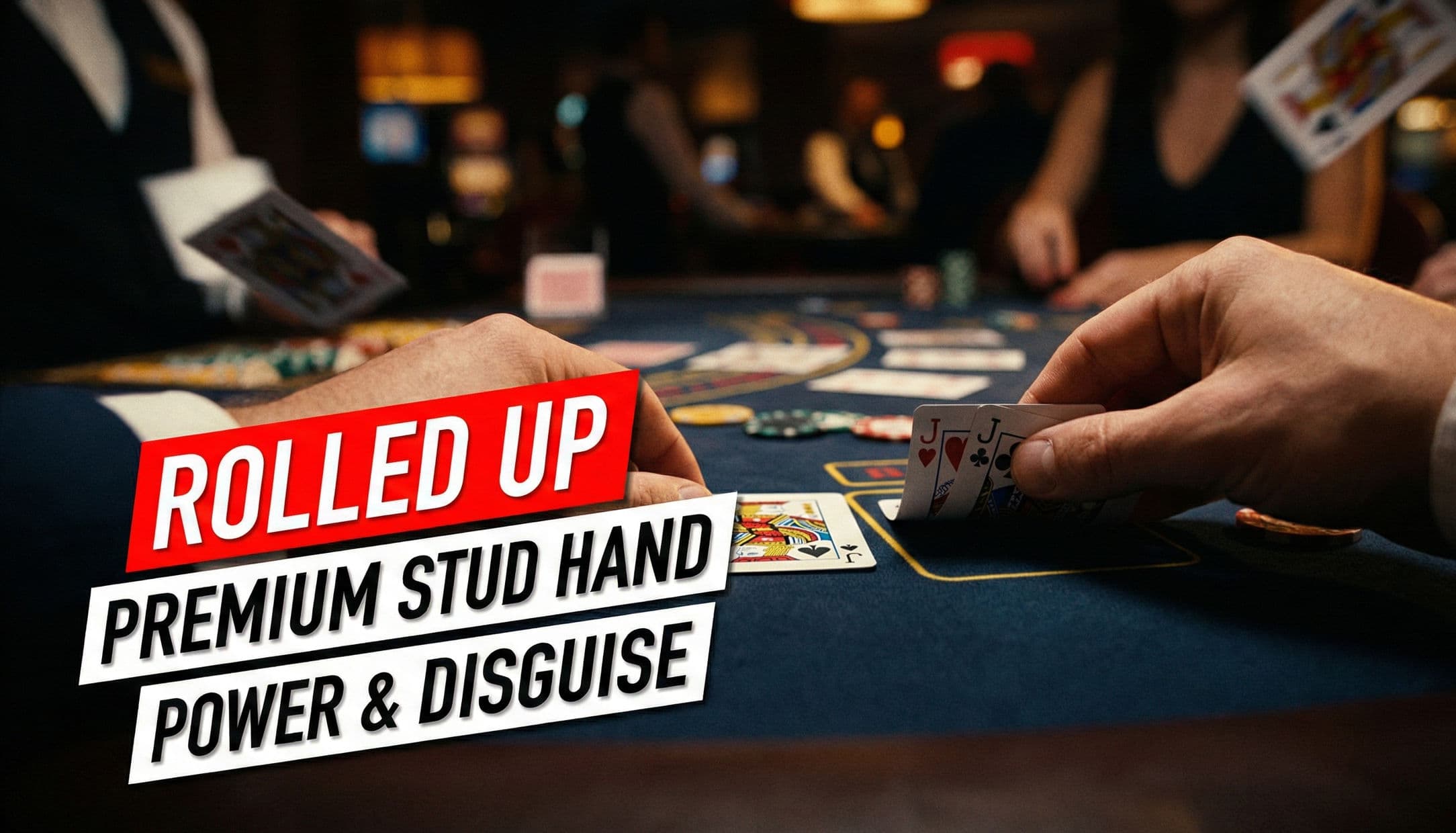
In the complex and often deceptive world of Seven-Card Stud, a truly exceptional starting hand can provide an unparalleled advantage. Among these coveted initial holdings, the "Rolled Up" trips stand out as a genuine powerhouse, offering a potent blend of raw strength and strategic disguise. Understanding the precise nuances of this rare occurrence - being dealt three-of-a-kind on Third Street - is absolutely crucial for any serious Stud player looking to maximize their equity and navigate the subsequent betting rounds with confidence and an expert edge.
Unpacking Rolled Up in Stud Poker: The Mechanics of a Premium Stud Hand
The term "Rolled Up" is a cornerstone of Seven-Card Stud vernacular, signifying the highly rare event of being dealt three of a kind third street, which marks the critical initial betting round. In the structured play of Stud, players are initially dealt three cards: two "downcards" (or hole cards, which remain concealed from opponents) and one "upcard" (the door card, which is visible to everyone at the table). For a hand to qualify as one of these elite Seven Card Stud Hands, all three of these foundational cards - your two hidden cards and your single visible card - must be of the exact same rank.
Consider a practical example to illustrate this concept: if your exposed "door card" is the Jack of Hearts, and your two carefully concealed hole cards happen to be the Jack of Spades and the Jack of Clubs, you have successfully been dealt "Rolled Up Jacks." This immediate formation of trips (three-of-a-kind) represents an exceptionally strong and commanding foundation in a game where full houses and four-of-a-kind are the ultimate, sought-after objectives. The statistical rarity of this event further underscores its immense power: the odds of being dealt rolled-up trips are approximately 424 to 1, making it a genuinely infrequent yet profoundly game-altering occurrence that demands precise strategic execution.
While Seven-Card Stud has become a niche format compared to Hold'em, hitting a rolled up hand remains one of the most electric moments in online poker , especially within Mixed Game lobbies where enthusiasts gather specifically to hunt for these rare, high-equity scenarios.
The Strategic Superiority of Disguise: Implied Odds and Deception
One of the most compelling and advantageous aspects of holding a Rolled Up hand lies in its inherent poker disguise. Unlike situations where a player's upcards openly display a pair of Aces or Kings, which immediately broadcast significant strength to opponents, a Rolled Up hand frequently presents a deliberately misleading facade. This is particularly true when the visible door card is of a lower or unremarkable rank. This deceptive quality is instrumental in generating substantial "implied odds," as less perceptive opponents are far more likely to commit valuable chips to the pot, often underestimating the true, formidable strength of your hidden holdings.
Imagine the scenario: you are dealt Rolled Up Deuces with a 2 showing as your upcard. Most opponents at the table will likely perceive your hand as relatively weak, perhaps just a lone pair of deuces or even less. This deliberate misperception often encourages them to call bets or even raise, genuinely believing they either hold the best hand currently or are drawing to it at a seemingly cheap price. As the hand progresses through subsequent streets and more cards are dealt, you consistently maintain this critical informational advantage, systematically extracting maximum value from unsuspecting rivals who are unaware of the monster lurking beneath the surface.
Aggression as the Default: Maximizing Value with Rolled Up Trips
The expert consensus and core Stud Poker Strategy regarding Rolled Up trips is unequivocally clear: they should be approached with an aggressive poker play from Third Street onwards. The primary rationale behind this strategy is twofold: first, to meticulously build a substantial pot, thereby increasing the potential payout; and second, to effectively deny opponents "equity" (their chance to improve their hand to beat yours) by making their draws prohibitively expensive. Your overarching objective with such a premium hand should be to systematically maximize its value by consistently charging other players to see subsequent streets, often forcing weaker hands with marginal equity to fold prematurely.
Third Street Strategy
On Third Street, armed with your Rolled Up hand, your standard play should typically involve following these stud poker tips: bringing in the bet or raising if another player initiates the action. This proactive approach immediately sets an aggressive tone, unequivocally demonstrates a high degree of strength, and critically begins the process of accumulating chips into the pot. If your upcard happens to be a low-ranking card with Rolled Up trips, you might strategically find more callers due to the potent disguise, which, in essence, is an absolutely fantastic outcome as it inflates the pot for your dominant hand.
Fourth Street and Beyond
As Fourth Street arrives and additional cards are exposed, the imperative is to continue betting aggressively. Unless an opponent's visible board becomes incredibly threatening (e.g., they are openly showing three cards to a potential straight flush, or a higher pair than your upcard with clearly strong drawing potential), it is crucial to maintain the relentless pressure. Your primary concern should predominantly be the development of dangerous boards for your opponents, rather than any perceived failure of your own hand to improve further, as three-of-a-kind is already a profoundly formidable holding.
Identifying Threats: Maintain sharp focus and pay close attention to your opponents' evolving upcards. If someone reveals two cards to a strong flush or straight draw, or presents a higher exposed pair, take a moment to re-evaluate the situation. However, do not be overly quick to retreat from your aggressive stance.
Scare Cards: High-ranking cards appearing on your opponents' boards (Aces, Kings, Queens) can often serve as "scare cards," potentially slowing down their action or even inducing them to fold. Astutely use these developments to your advantage by skillfully continuing your aggression.
Pot Control vs. Value: With Rolled Up trips, your strategy is almost always unequivocally aimed at extracting maximum value. Pot control is rarely the objective unless the board develops into an exceptionally dangerous, multi-way pot where a fold might be the only sensible option.
Common Pitfalls and Advanced Considerations
While Rolled Up hands are undeniably incredibly powerful, it is imperative to remember that they are not infallible. Any stud poker expert understands that the specific context of the game and the table dynamics are king. One common and costly mistake is to play Rolled Up trips passively, thereby allowing opponents to draw out cheaply against your superior hand. Another significant pitfall is to become overly fixated on the initial strength of the hand and consequently ignore critical board developments that could indicate an opponent is catching up or has already surpassed you.
For instance, if you hold Rolled Up 8s, and an opponent's board visibly shows A-K-Q, they might potentially hold a higher pair, two pair, or be drawing to a superior straight or flush. In such nuanced situations, while a degree of aggression might still be warranted, a heightened level of caution and observation becomes absolutely necessary, especially if multiple opponents are displaying strong potential. Furthermore, always consider the stack sizes at the table; deeper stacks often allow for more elaborate deception and prolonged value extraction, whereas shallower stacks might necessitate a more straightforward, decisive all-in approach to maximize your equity.
The ability to accurately read and interpret opponents' visible cards, and to extrapolate their potential holdings based on their betting patterns, is absolutely paramount. Does a particular player consistently fold to aggression? Do they notoriously chase draws relentlessly, regardless of the odds? Adapting your aggressive strategy to the individual tendencies and playing styles of your opponents will significantly enhance your profitability and overall success rate when wielding the formidable power of Rolled Up hands.
| Pros | Cons |
|---|---|
Being dealt three-of-a-kind on Third Street provides an immediate, highly dominant hand, significantly increasing winning probabilities from the outset. | While strong, Rolled Up trips can be outdrawn or beaten if opponents hit higher trips, straights, flushes, or full houses as the hand progresses, requiring careful observation. |
Especially with a low-ranking upcard, the true strength of a Rolled Up hand is concealed, encouraging opponents to contribute more chips to the pot, leading to excellent implied odds. | Playing too aggressively without paying attention to evolving opponent boards or scare cards can lead to costly mistakes if an opponent makes a stronger hand. |
The inherent power allows for aggressive betting from early streets, building large pots and effectively denying opponents opportunities to draw out cheaply. | If the upcard is high (e.g., Rolled Up Aces), opponents might quickly fold, limiting the potential for extracting maximum value through multiple betting rounds. |
Related Poker Terms
6-Max
9-Max (Full Ring)
A-Game
AAAKKK
ABC Poker
AKQJT
Bankroll
Bet Size
Bet Sizing
Blocker
Bluff
Bluff Catcher
Board
Broadway
Bubble Factor
Button
Call
Check-Call
Check-fold
Check-Raise
Click-Back
Donkament
Double Barrel
First in
Flush
Full House
Gap Concept
GTO
Gutshot
Hand Rankings
Hot Streak
HUD
Image
Insta-Call
Isolation
Kicker
Leak
Limp
Limp-Fold
Limp-Raise
Middle Pair
Min-raise
Monotone
Monster
Multi-Way Pot
Nit
Nuts
One-Way Straight
Online Poker
Online Poker Strategies
Open Limp
Out of Line
Over the top
Over-Limp
Overblind
Overcall
Overcard
Overpair
Pair
Pat
Peel
Play Behind
Pocket Pair
Polarized
Pot Control
Potting Out
Preflop
Premium Hands
Probe Bet
Proposing Bets
Push or Fold
Put Down
Range
Royal Flush
Second Pair
Sit and Go (SNG)
Slow Play
Smooth Call
Snap Call
Snapped Off
Soft Seat
Solid
Split Two Pair
Steal
Straight Flush
Suited
Suited Gappers
Tank
Total air
Trap
Trips
Two-Gapper
Under the Gun (UTG)
Underpair
Value
Value Bet
Villain
Weak Ace
Wheel
Window Card