

Third Street

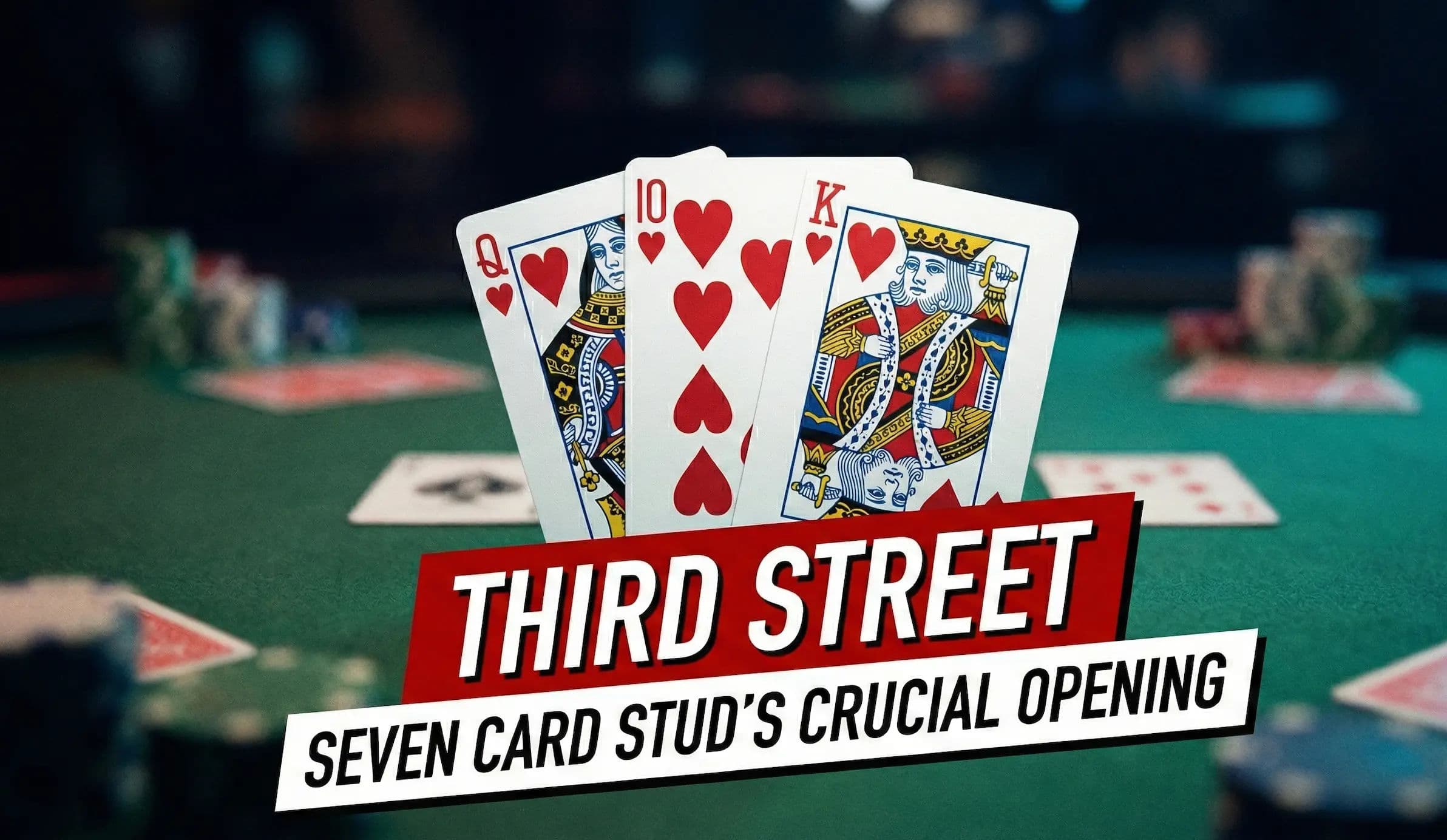
In the intricate world of Seven Card Stud, every street presents unique strategic challenges. However, none are arguably as foundational and defining as Third Street. This initial betting round, occurring after each player receives their first three cards (two face-down, one face-up), is where the critical early assessments are made, initial commitments are established, and the strategic direction of a hand is irrevocably set. Far from being a mere formality, mastering Third Street is paramount for any player aiming for consistent success in this classic poker variant.
Understanding the Genesis of a Hand: What Is Third Street Poker?
Third Street poker marks the very beginning of the action in Seven Card Stud and defines the structure of the first betting round Stud. This phase is commonly referred to as Seven Card Stud Third Street, highlighting its importance as the structural foundation of the hand.
After the ante is posted, each player is dealt three cards: two cards face down, known as 'hole cards,' and one card face up, referred to as the 'door card' or 'upcard'. This visible upcard is crucial, as it determines who initiates the first betting round – a mandatory bet known as the 'bring-in.' Unlike community card games where blinds pre-determine action, Stud poker places an immediate emphasis on interpreting visible information from the very first street, as outlined in standard Seven Card Stud rules.
The Mechanism of the Bring-In Bet
The player with the lowest-ranking upcard is obligated to make the 'bring-in' bet - a mandatory wager often summarized as the bring-in bet explained in basic Stud poker introductions.
If two or more players share the same lowest rank, suit precedence determines who brings it in (typically alphabetical order: Clubs, Diamonds, Hearts, Spades). The bring-in player has two options: make a nominal 'small bet' (e.g., half the small betting increment) or 'complete the bet' to the full small bet increment. This action signals the start of the first formal betting round, proceeding clockwise around the table. Subsequent players can then fold, call the bring-in, or raise (complete to the full small bet if not already completed, or make a full small bet raise).
Strategic Imperatives: Navigating Third Street Decisions
The decisions made on Third Street are far-reaching, influencing the remainder of the hand and forming the backbone of effective Stud poker strategy. An expert player leverages this initial information and betting structure to gain an early advantage.
1. Starting Hand Selection: The Cornerstone
Your two downcards combined with your one upcard form your starting hand - making poker starting hands Stud selection, the single most important factor on Third Street. This is the single most important factor on Third Street. Ideal starting hands often fall into these categories:
Premium Pairs: Aces, Kings, Queens, Jacks, and even Tens often hold significant value, especially if hidden as hole cards.
Three-Flushes: Three cards of the same suit (e.g., A♥ K♥ 7♥) offer strong drawing potential for a flush.
Three-Straights: Three consecutive or near-consecutive cards (e.g., T-J-Q, 8-9-T) provide straight draw potential.
High Cards with Kicker: While less powerful, high cards (like an Ace or King upcard) can be deceptively strong, especially with good kickers in the hole.
Conversely, weak, disconnected, or low hands with little draw potential should typically be folded, especially when facing aggression.
2. Reading Opponents' Upcards and Actions
Beyond your own hand, analyzing your opponents' visible upcards is critical. Which players have high cards? Which show potential pairs or flush draws? How do their actions (folding, calling, raising) align with their exposed cards? For example, an opponent with a high upcard who completes the bet might hold a strong pair in the hole, or they might be attempting to steal the pot.
3. The Power of Position and Aggression
While Seven Card Stud lacks the dynamic position of community card games, acting later in the round still offers an informational advantage. If several players have already folded to a bring-in, a strong hand has a better chance of winning the pot uncontested. Similarly, being the first to raise with a strong hand can often narrow the field and build a larger pot for your premium holdings.
4. Pot Odds and Implied Odds
Even on Third Street, an understanding of pot odds (the ratio of the current pot size to the cost of a call) and implied odds (the potential future winnings if your draw hits) is vital. Don't chase long-shot draws for too high a price, but be willing to invest in hands with significant future potential, especially if the pot is multi-way.
Common Third Street Scenarios and Misconceptions
The 'Steal' Bring-in: A player with a low upcard might complete the bet, hoping to scare off other weak hands, even with a mediocre hole. Recognizing this can allow you to re-raise with a stronger hand.
Overplaying Marginal Hands: A common mistake is to play too many marginal hands (e.g., small pairs without support, weak three-flushes) hoping to 'get lucky.' This often leads to unnecessary losses as the hand progresses.
Ignoring Opponent's 'Dead' Cards: Pay attention to cards folded by opponents or those that are out there. If your key cards for a flush or straight are already showing in other players' upcards or folded hands, your draw significantly diminishes in value.
Third Street poker is more than just the opening bet; it's the strategic blueprint for the entire hand.
Players interested in exploring classic poker formats beyond Texas Hold’em often compare leading online poker platforms to find rooms that support traditional variants and structured betting formats. Choosing the right environment can make a significant difference when applying disciplined Stud poker strategy in real-money games.
By combining strong starting hand selection with astute observation of opponents and intelligent betting, players can lay a solid foundation for success in Seven Card Stud.
| Pros | Cons |
|---|---|
The face-up card on Third Street provides immediate, valuable information about opponents' potential hands and allows for early strategic adjustments. | Being forced to make the 'bring-in' bet with a weak upcard can put a player in a disadvantageous position, requiring a difficult decision with limited information. |
Strong play on Third Street, particularly in starting hand selection and initial betting, sets a positive tone for the entire hand, maximizing equity and minimizing losses. | It's easy to overcommit chips to a marginal hand on Third Street, especially if chasing draws or playing out of position, leading to deeper losses later. |
Aggressive and well-timed raises on Third Street can quickly build a pot for premium holdings, while simultaneously narrowing the field. | Despite the upcard, only three cards have been dealt, leaving much uncertainty about opponents' hole cards and future card distribution. |
Related Poker Terms
Ante
Bet
Big Blind
Big Blind Ante
Buy-In
Check
Chips
Floor Manager
Flop
Fold
Gambling
Hand Rankings
No Limit
Omaha
Open Game
Open Seat
Out Button
Overlay
Peel
Peg
Pips
Poker network
Poker Room
Poker Rules
Position
Postflop
Pot
Pot-Limit
Protect
Qualifier
Quorum
Rack
Rake
Razz
Rebuy
Redeal
River
Round of Play
Running It Twice
Seat Position
Seating List
Seven-card Stud
Seven-Deuce Game
Seventh Street
Short Buying
Short Handed
Shot Clock
Showdown
Shuffle
Side Bet
Side Pot
Sit Out
Sixth Street
Small Blind
Split
Stack
Structure
Stub
Stud Games
Suit
Table Stakes
Texas Hold'em
Third Street
Tie
Time Bank
Turn
Uncle Doc
Upcard
Verbal Declaration
Visible Cards
Winning Hand
Best Online Poker Bonus Codes


About the Editor

Bence Mitykó is a Somuchpoker poker writer, covering poker news and strategy. He spent four years playing poker professionally, primarily focusing on Heads-Up Sit & Go games, experience that continues to shape his understanding of poker strategy, online poker dynamics, and the wider poker industry.


