

Turn

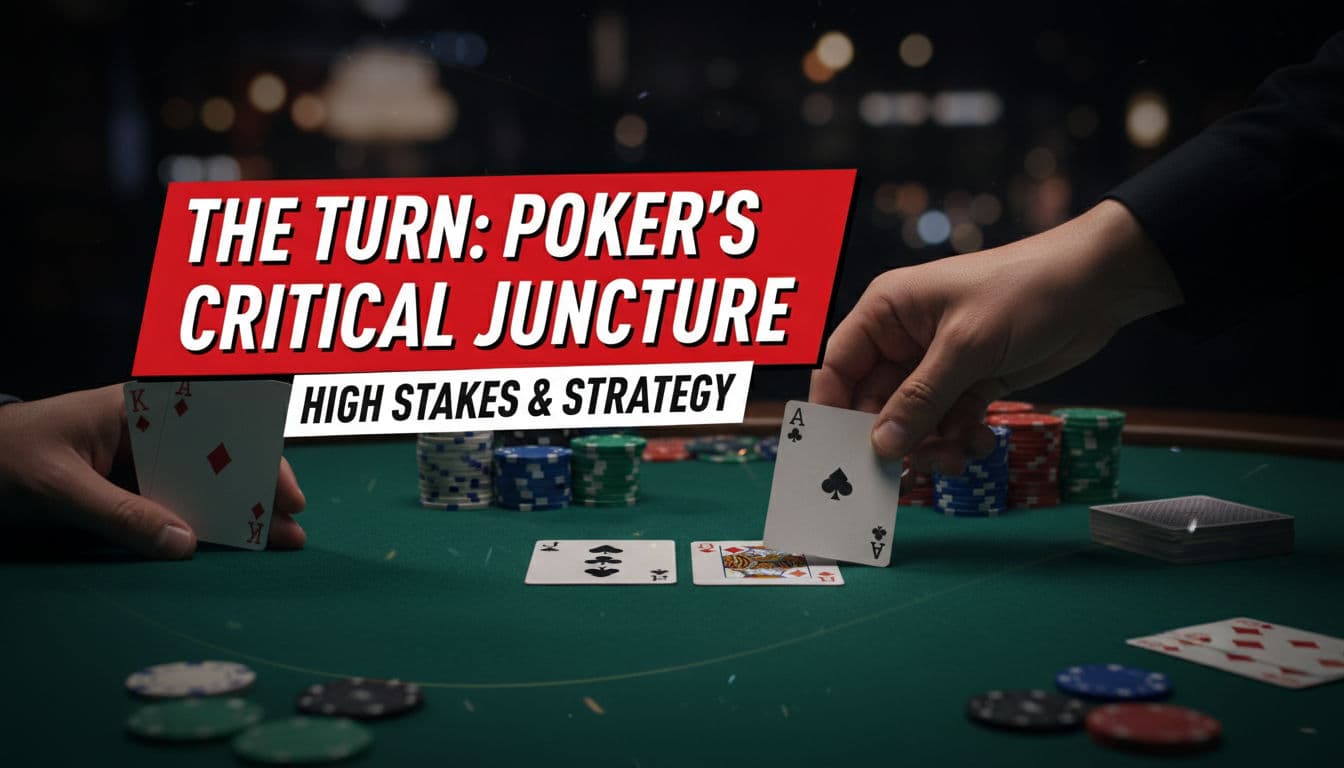
In the intricate dance of poker, few moments hold as much strategic weight and suspense as the dealing of the turn card. Known colloquially as "fourth street," this singular card transforms the board, reshapes hand equities, and ushers in a new, intensified round of betting. Far from being a mere intermediary, the turn is a pivotal stage where subtle shifts can lead to monumental wins or devastating losses. Understanding its profound impact is not just an advantage; it's a prerequisite for serious players aiming to master the complexities of games like Texas Hold'em and Omaha.
This comprehensive analysis delves into the multifaceted role of the turn card, dissecting its influence on hand strength, betting dynamics, and the psychological warfare that defines high-level poker. Prepare to uncover why the turn is where theoretical understanding truly meets practical application, demanding acute observation, calculated risk-taking, and an unwavering grasp of game theory.
Understanding the Turn Card Poker: Definition and Mechanics
In turn card poker, the turn marks the fourth community card to be dealt face-up on the board, following the initial three cards of the flop. In poker variants such as Texas Hold'em and Omaha, this phase is often referred to as "fourth street." After the flop, a round of betting concludes, and then the single turn card is revealed.
This action immediately triggers a third round within the structured poker betting rounds, significantly escalating the stakes and strategic considerations. At this juncture, players have access to their two hole cards (or four in Omaha) combined with the three flop cards and the newly dealt turn card, making a total of four community cards visible to all active players, from which they must construct the best possible five-card hand using their hole cards.
The dealing of the turn card is a watershed moment, as it introduces a critical piece of information that can dramatically alter the landscape of the hand, forcing players to re-evaluate their holdings and potential outcomes with heightened precision.
The Strategic Gravitas of Fourth Street
The turn card's significance cannot be overstated. It's the point in the hand where many draws either complete or become significantly stronger, and where made hands face new threats or solidify their dominance. The strategic implications are vast and multi-layered. Mastering fourth street strategy is essential for players aiming to control pot growth and anticipate equity shifts at this critical stage.
Shifting Hand Equities
One of the most immediate impacts of the turn card is its ability to radically shift hand equities. A seemingly innocuous card can suddenly transform a marginal holding into a monster, or conversely, render a strong hand vulnerable. Accurate hand evaluation poker principles become increasingly important as ranges narrow and equities polarize on the turn. Consider the following scenarios:
Completing Draws: A blank flop could see a flush or straight draw connect on the turn, instantly converting a speculative hand into a powerful one.
Killing Draws: Conversely, a turn card that pairs the board might eliminate straight draws, or a card of a different suit might kill a flush draw, making a player's previous plan obsolete.
Creating New Value: The turn can create two-pair hands or even trips for players who hit one of their hole cards, elevating their hand strength considerably.
Deteriorating Value: A player with top pair on the flop might suddenly find their hand beaten by a new two-pair or a stronger draw that completed on the turn.
Intensifying Betting Dynamics
The introduction of the turn card also intensifies the betting dynamics. The pot size typically grows substantially after the flop and turn, making each subsequent bet more impactful. This round of betting is crucial for:
Value Betting: Strong hands can extract more value by making larger bets, capitalizing on improved odds.
Bluffing Potential: The turn offers increased opportunities for strategic bluffs and semi-bluffs, especially when the card appears to complete a drawing hand, putting pressure on opponents.
Pot Control: Players with marginal hands might opt for check-calls or even check-folds to control the pot size and avoid over-committing.
Critical Decision Points
The turn often presents the most complex poker turn decisions in an entire hand. With more information available and the pot growing, players must weigh pot odds, implied odds, opponent tendencies, and board texture with extreme care. The cost of a mistake on the turn is significantly higher than on earlier streets.
Navigating the Turn: Player Strategies
Successful turn play hinges on a player's ability to adapt and make informed decisions based on the new information.
For Drawing Hands
Players holding flush or straight draws must re-evaluate their pot odds and implied odds against the increased bet sizes. If a draw completes, they must decide how to maximize value. If it misses, they face the tough choice of bluffing, folding, or calling in hopes of hitting on the river.
For Made Hands
Players with strong made hands on the flop must assess if the turn card improves their hand, makes it vulnerable, or presents opportunities for value bets. They need to consider if an opponent's range could have improved more dramatically than their own.
Reading Opponents on the Turn
The turn is an excellent street for gathering more information about an opponent's hand range. A bet or check from an opponent after the turn card is dealt can provide crucial tells, helping to narrow down their possible holdings and inform your subsequent actions.
Advanced Turn Play Concepts
Expert players leverage several advanced strategies on the turn to gain an edge. Many of these concepts are rooted in poker game theory, where balanced aggression and range construction determine long-term profitability.
Continuation Betting and Double Barreling
A player who bet on the flop (a continuation bet) might decide to "double barrel" on the turn, betting again to represent a strong hand, even if they haven't improved. This puts immense pressure on opponents.
Check-Raising and Floating
Check-raising on the turn can be a powerful move to build the pot or bluff, while "floating" (calling a bet with a weak hand to bluff on a later street) becomes more viable as more board cards are revealed.
Board Texture Transformation
The turn card dramatically changes the "board texture." A dry board can become dangerous with the addition of a connecting card or a third card of the same suit, creating new draws or completing existing ones. Understanding how the turn changes the perceived strength of various hands is crucial.
Psychological Impact
The turn card in turn card poker is often a moment of high psychological pressure. Many poker turn decisions are influenced not only by equity shifts but also by emotional reactions to the evolving board. It can induce fear in players with strong but now vulnerable hands, or give a surge of confidence to those whose draws have hit.
Effective fourth street strategy requires disciplined hand evaluation poker analysis and emotional control. Mastering this stage of poker betting rounds involves not only technical skill but also the ability to manage emotions and exploit opponents' reactions.
Players who want to apply these concepts in real-game environments often explore well-regulated online poker rooms to gain consistent experience against a variety of opponents and playing styles.
| Pros | Cons |
|---|---|
The turn provides a critical fourth community card, offering more information to refine hand strength calculations, assess opponent ranges, and execute complex strategies like double barreling or check-raising. | The turn card introduces higher stakes and more intricate scenarios, making decisions more complex and increasing the cost of errors. Misjudging hand equity or opponent intentions can be very costly. |
For players on flush or straight draws, the turn card offers a direct chance to complete their hand, transforming a speculative holding into a powerful one with strong betting potential. | A strong hand from the flop can suddenly become vulnerable or even beaten on the turn if the new card completes an opponent's draw or creates a stronger hand on the board. |
With more cards out and higher stakes, the turn round of betting allows strong hands to extract significant value, substantially increasing the pot size for greater wins. | The turn can be a psychologically taxing street, forcing quick, high-stakes decisions under pressure, potentially leading to emotional plays or exploitable tells. |
Related Poker Terms
Ante
Bet
Big Blind
Big Blind Ante
Buy-In
Check
Chips
Floor Manager
Flop
Fold
Gambling
Hand Rankings
No Limit
Omaha
Open Game
Open Seat
Out Button
Overlay
Peel
Peg
Pips
Poker network
Poker Room
Poker Rules
Position
Postflop
Pot
Pot-Limit
Protect
Qualifier
Quorum
Rack
Rake
Razz
Rebuy
Redeal
River
Round of Play
Running It Twice
Seat Position
Seating List
Seven-card Stud
Seven-Deuce Game
Seventh Street
Short Buying
Short Handed
Shot Clock
Showdown
Shuffle
Side Bet
Side Pot
Sit Out
Sixth Street
Small Blind
Split
Stack
Structure
Stub
Stud Games
Suit
Table Stakes
Texas Hold'em
Third Street
Tie
Time Bank
Turn
Uncle Doc
Upcard
Verbal Declaration
Visible Cards
Winning Hand
Best Online Poker Bonus Codes


About the Editor

Bence Mitykó is a Somuchpoker poker writer, covering poker news and strategy. He spent four years playing poker professionally, primarily focusing on Heads-Up Sit & Go games, experience that continues to shape his understanding of poker strategy, online poker dynamics, and the wider poker industry.


