Peg

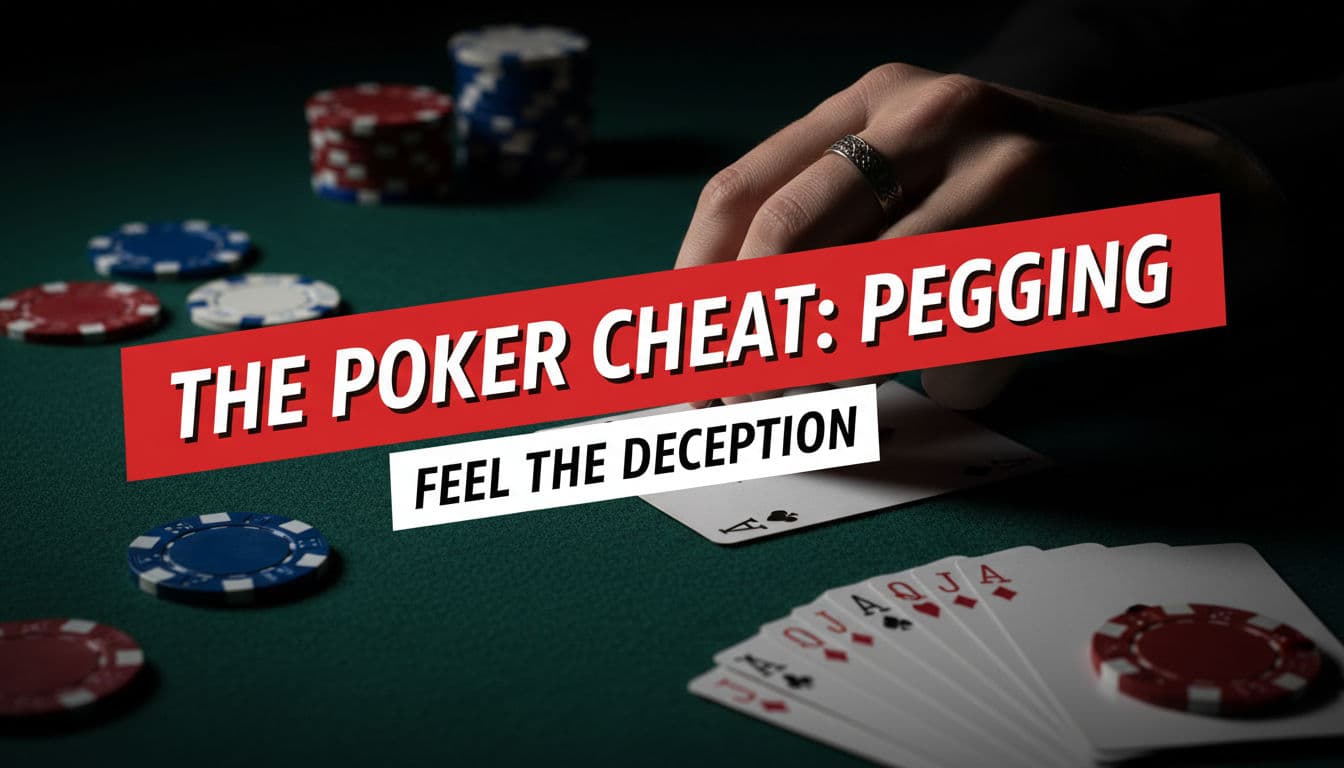
In the intricate world of poker, where skill, strategy, and luck converge, the specter of cheating constantly looms. Among the myriad illicit methods employed to gain an unfair advantage, 'Pegging' stands out as a particularly subtle and insidious form of card marking. Far from the overt acts of deception often portrayed in fiction, 'Pegging' relies on precision and a deep understanding of tactile perception to manipulate the game. This technique transforms seemingly pristine cards into compromised tools, allowing a cheat to identify card ranks by touch rather than sight. Understanding 'Peg' is not merely an academic exercise; it is crucial for anyone involved in poker, from casual players to professional dealers and casino security, to safeguard the integrity of the game.
Understanding Peg in Poker: A Deceptive Tactic
Peg refers to a surreptitious method of marking the fronts of playing cards by creating minute, almost invisible indentations on their surface. These marks are not visible tears or blatant scuffs but rather subtle impressions designed to be felt, not seen.
The primary objective of peg in poker is to enable a cheater to ascertain the rank of a card by tactile sensation from the reverse side, even when the card is face down. This grants an unparalleled advantage, transforming an unknown card into a known quantity, fundamentally altering strategic decisions and odds. Of course, this type of cheating cannot happen in the world of online poker , as everything takes place within a framework regulated and monitored by software.
What is Pegging Cards?
The creation of a 'peg' mark typically involves using a small, sharp, yet blunt instrument to press against the face of a card. Common tools include a discreetly modified ring, a pin, or a thumbtack. This is one of the more physical card marking techniques where the pressure applied is carefully calibrated to create a tiny depression that slightly alters the card's surface texture without breaking the paper fibers or creating an obvious visual anomaly.
The precise location of these marks often correlates to the card's rank, with different positions or patterns indicating various values (e.g., an indentation near the top-left pip for an Ace, a slightly different position for a King, and so forth).
The Mechanics of Deception: How 'Peg' Marks Work
The genius of card manipulation explained through pegging lies in its reliance on the sense of touch. While visually almost imperceptible, an experienced cheater can subtly run their thumb or finger across the back of a card and detect the minute ridge or depression created by the 'peg' mark.
This allows them to identify a crucial card's value while it's still in the deck, in an opponent's hand (if they've handled it), or during the dealing process. In games like Texas Hold'em or Omaha, knowing even a single hole card or forthcoming community card can provide an overwhelming edge, leading to informed decisions that appear to be based on intuition or exceptional skill.
The Evolution of Card Marking: Peg in Context
Card marking is an ancient practice, evolving alongside card games themselves. 'Peg' represents one facet of a diverse array of card marking techniques, each with its own methodology and level of subtlety. Understanding 'Peg' requires distinguishing it from other common types of card cheats:
Nailing: Unlike 'Pegging,' which targets the card face, 'Nailing' involves marking the edges or sides of the cards. This is often done by subtly bending or crimping the edge, creating a minute irregularity.
Pricking: This typically involves creating a raised bump or small hole on the back of the card. While also tactile, 'pricks' are usually more pronounced than 'pegs.'
Daubing: This technique involves applying a substance, often a clear or tinted liquid, to the back of a card. It is primarily a visual method, contrasting with the tactile nature of 'Peg.'
Shading/Tinting: More sophisticated than daubing, shading involves chemically altering parts of the card's back design to lighten or darken specific areas.
'Peg' distinguishes itself by being an indentation on the card's front, felt from the back, making it a unique challenge for detecting cheating poker due to its subtle physical alteration.
Detecting 'Pegged' Cards: Safeguarding Game Integrity
Given the subtlety of 'Pegging,' detection requires vigilance, experience, and sometimes specialized conditions. Both visual and tactile inspections are paramount to maintain poker integrity.
Visual and Tactile Inspection
Detecting 'pegged' cards typically involves a multi-sensory approach. Visually, a very close inspection under strong, angled lighting can sometimes reveal the minute depressions. Running fingers deliberately and slowly over the backs of the cards, paying close attention to any unusual ridges or dips, is the primary tactile method. Professional dealers often develop a heightened sensitivity to such anomalies.
Environmental Factors and Prevention
Optimal lighting conditions can sometimes reveal surface imperfections. Casinos and organized poker games employ several preventative measures to combat casino fraud:
Frequent deck changes.
Thorough inspection of new decks.
Constant surveillance.
The Broader Implications of Card Marking on Poker
The existence of methods like 'Pegging' poses a significant threat to the poker integrity and enjoyment of the game. When players suspect that cards might be marked, it erodes trust and can lead to the overall decline of a venue.
Maintaining Fair Play and Trust
Fair play is the bedrock of poker. Any form of cheating, especially one as difficult to detect as 'Pegging,' undermines the fundamental premise that all players operate under the same conditions. For legitimate players, the knowledge that such types of card cheats exist reinforces the need for constant awareness and well-regulated environments.
Preventative Measures and Casino Security
Modern casinos invest heavily in security to combat casino fraud. This includes high-definition surveillance, trained pit bosses, and strict protocols. Understanding card manipulation explained through advanced marking techniques like 'Pegging' allows security personnel to develop more targeted detection strategies, protecting both the house and its patrons.
| Pros | Cons |
|---|---|
Peg marks are extremely difficult to detect visually, making them highly effective for deception. They require specific lighting or very close inspection to be noticed. | While visually subtle, experienced dealers and observant players may detect the tactile irregularity upon handling the cards, leading to discovery. |
Allows identification of card ranks by touch from the back, providing critical information to the cheater even when cards are face down, greatly influencing strategic decisions. | The technique involves physically altering the card, leaving permanent forensic evidence that can be scrutinized upon suspicion, leading to irrefutable proof. |
Knowing a card's rank before it's revealed offers an overwhelming advantage, particularly in community card games, leading to highly profitable plays. | Being caught pegging cards can result in immediate expulsion from casinos, permanent bans, and potential legal charges, severely damaging one's reputation and freedom. |
Creating effective peg marks without making them overtly obvious requires significant skill and practice, as sloppy marks are easily detected and defeat the purpose. |
Related Poker Terms
Angle Shooting
Ante
Bet
Big Blind
Big Blind Ante
Buy-In
Check
Chips
Floor Manager
Flop
Fold
Gambling
Hand Rankings
Hit And Run
Marked Cards
Misdeal
Muck
Neocheating
No Limit
Omaha
One Chip Rule
Open Game
Open Seat
Out Button
Overlay
Peel
Peg
Pips
Played Card
Poker network
Poker Room
Poker Rules
Position
Postflop
Pot
Pot-Limit
Pricking
Prop
Protect
Pushing Bets
Qualifier
Quorum
Rack
Railbird
Rake
Ratholing
Razz
Rebuy
Redeal
River
Round of Play
Running It Twice
Seat Position
Seating List
Seven-card Stud
Seven-Deuce Game
Seventh Street
Short Buying
Short Handed
Shot Clock
Showdown
Shuffle
Side Bet
Side Pot
Sit Out
Sixth Street
Small Blind
Soft Play
Splash Around
Split
Splitting Blinds
Stack
Stacked Deck
Structure
Stub
Stud Games
Suit
Table Stakes
Texas Hold'em
Third Street
Tie
Time
Time Bank
Toke
Turn
Uncle Doc
Undercut
Upcard
Verbal Declaration
Vest Holdout
Visible Cards
Winning Hand