Open Game

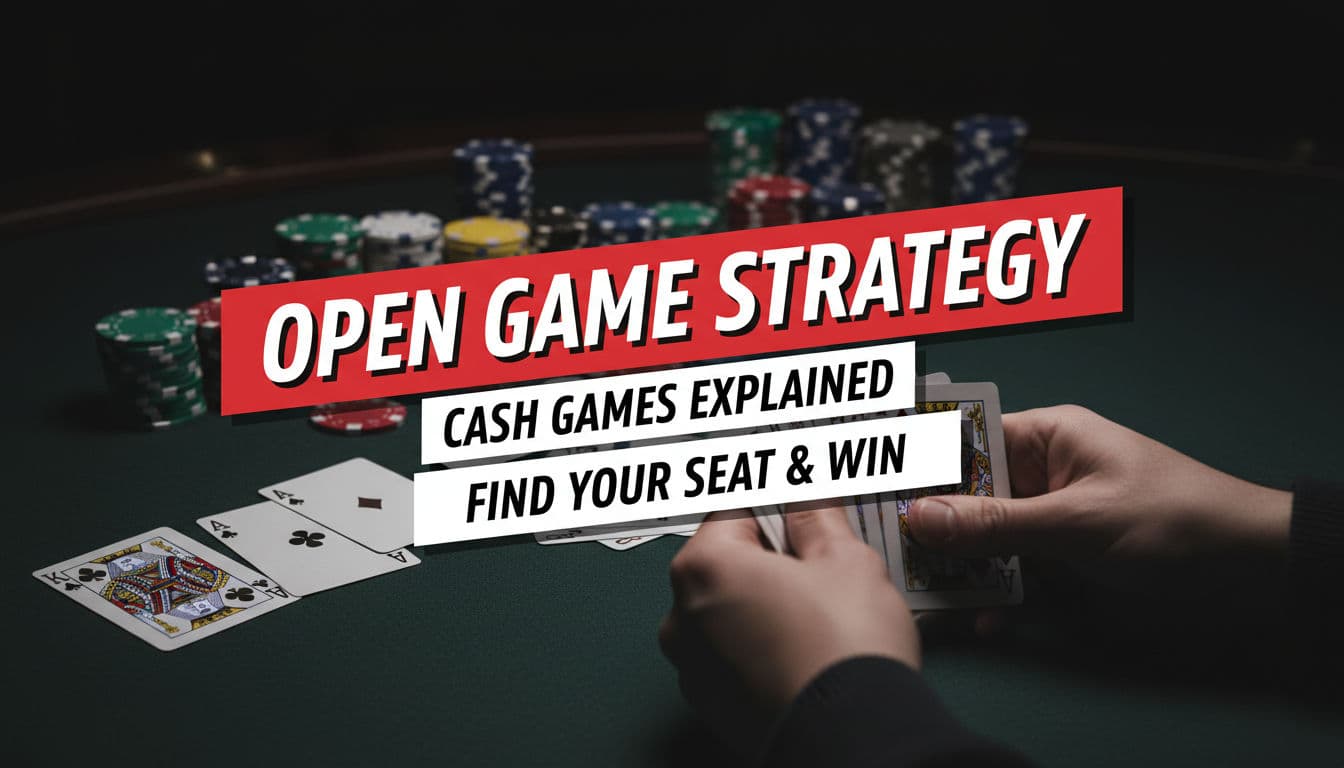
In the dynamic world of poker, understanding the nuanced terminology is crucial for both casual players and serious enthusiasts. One such term, frequently encountered but sometimes misunderstood, is the “open game.” Far from being a mere colloquialism, an open game in poker signifies a specific and highly practical status: the immediate availability of seats at a poker table, signaling readiness for new players to join the action. This concept is most profoundly relevant within the realm of cash games, where the fluid nature of player participation stands in stark contrast to the structured, time-bound format of tournaments.
This comprehensive guide delves into the intricate mechanics of what constitutes an open game, its operational implications for poker establishments, and the strategic considerations for players looking to enter the fray. By elucidating this core principle, we aim to provide a clearer perspective on the accessibility and continuous flow that defines much of the modern poker landscape.
The Core Concept: What Defines an Open Game in Poker?
At its most fundamental, an open game in poker is a game where one or more seats are currently unoccupied and available for a new player to take. This status is a clear invitation for individuals to sit down, buy in, and begin playing without delay. It's an indicator of capacity, signifying that the table has not reached its maximum player limit or that a player has recently departed, creating a vacancy.
The prevalence of the open game status is intrinsically tied to the type of poker being played. While the term technically could apply to any game with an available seat, its practical usage and significance are almost exclusively associated with cash games.
Cash Games: The Epitome of Open Play
Cash games, also known as ring games, are the quintessential environment for open play. Unlike tournaments, which have a scheduled start time and a fixed number of participants, cash games are defined by their cash game availability. Players can join or leave a cash game table at virtually any time, provided there is an available seat and they meet the minimum buy-in requirements. This inherent poker player flexibility is what makes the open game status so pivotal:
Player Flexibility: Players have the freedom to decide when to start, when to take a break, and when to cash out.
Continuous Action: As players depart, their seats become open, allowing new players to immediately fill the void and keep the game running without interruption.
No Fixed End: A cash game typically runs as long as there are enough players to keep it going.
Contrasting with Tournaments and Closed Tables
To fully appreciate this specific poker terminology, it's beneficial to contrast it with other poker scenarios:
Tournaments: Once seated, players remain until they are eliminated or win. Therefore, the concept of an open game for immediate entry doesn't apply after late registration closes.
Closed Tables/Full Tables: A table that is closed or full signifies that all available seats are occupied. In this scenario, new players cannot join immediately and must typically add their name to a waiting list.
Navigating Open Games: For Players and Operators
For Players: Finding Your Seat
Identifying and learning how to join poker games is usually straightforward:
Live Poker Rooms: Look for signage indicating live poker seats or inquire with the floor supervisor or brush. Many casinos use digital displays to show which tables have available spots.
Online Poker Platforms: Lobbies are meticulously designed to display table status. Filters allow for a quick online poker entry based on stakes, game type, and number of players.
The ability to find an open game offers significant advantages, including immediate access to play and the opportunity for table selection – choosing a game that appears to have favorable dynamics.
For Operators: Managing Flow and Liquidity
For poker room management, maintaining a healthy number of open games is crucial for several reasons: player retention, revenue generation (rake), and optimizing staffing. Operators actively monitor table occupancy to ensure a steady flow and prevent long waiting lists.
Strategic Considerations When Joining an Open Game
While the allure of immediate play is strong, seasoned players often employ strategic considerations before occupying the first available seat:
Table Dynamics: Before sitting, observing the table dynamics is key. Are players generally tight or loose? Aggressive or passive?
Player Assessment: Identifying potentially weaker or stronger players can influence seat choice.
Stack Sizes: Are there players with very deep stacks or very short stacks? This can influence play style and potential pot sizes.
Seat Selection: Sometimes, waiting for a specific seat, even at a table that is technically open can offer a strategic edge.
The Evolution of "Open Game" in the Digital Age
The advent of online poker has profoundly influenced the concept, making it more accessible than ever before. Online lobbies, with their real-time updates, allow for instant online poker entry across various stakes. Furthermore, innovations like fast-fold poker (e.g., Zoom, Rush & Cash) epitomize the "always open" nature, where players are instantly dealt a new hand at a new table immediately after folding.
Conclusion
The "open game" is more than just a phrase; it's a foundational element that underpins the fluidity of cash games. For players, it represents immediate opportunity and choice, while for operators, it signifies efficient poker room management. Understanding this simple yet critical concept allows players to navigate poker rooms – both brick-and-mortar and virtual - with greater confidence and strategic insight.
| Pros | Cons |
|---|---|
Players can join the game without delay, avoiding waiting lists and getting straight into the action. | Entering a game already in progress means adapting to existing table dynamics and player tendencies that have already been established. |
Offers the freedom to start playing and leave the table whenever desired, suiting varied schedules. | Sometimes the only open seat might not be strategically ideal, potentially placing you in a disadvantageous position relative to stronger players. |
Allows players to observe current table dynamics and choose a game that appears most favorable or suits their playing style. | While less common, some players might inadvertently sit at a table with higher stakes or a different game variant than intended if not paying close attention. |
Ensures a steady flow of games and potential opponents, contributing to a vibrant poker ecosystem. |
Related Poker Terms
Ante
Bet
Big Blind
Big Blind Ante
Buy-In
Check
Chips
Floor Manager
Flop
Fold
Gambling
Hand Rankings
No Limit
Omaha
Open Game
Open Seat
Out Button
Overlay
Peel
Peg
Pips
Poker network
Poker Room
Poker Rules
Position
Postflop
Pot
Pot-Limit
Protect
Qualifier
Quorum
Rack
Rake
Razz
Rebuy
Redeal
River
Round of Play
Running It Twice
Seat Position
Seating List
Seven-card Stud
Seven-Deuce Game
Seventh Street
Short Buying
Short Handed
Shot Clock
Showdown
Shuffle
Side Bet
Side Pot
Sit Out
Sixth Street
Small Blind
Split
Stack
Structure
Stub
Stud Games
Suit
Table Stakes
Texas Hold'em
Third Street
Tie
Time Bank
Turn
Uncle Doc
Upcard
Verbal Declaration
Visible Cards
Winning Hand