

Seven-Deuce Game

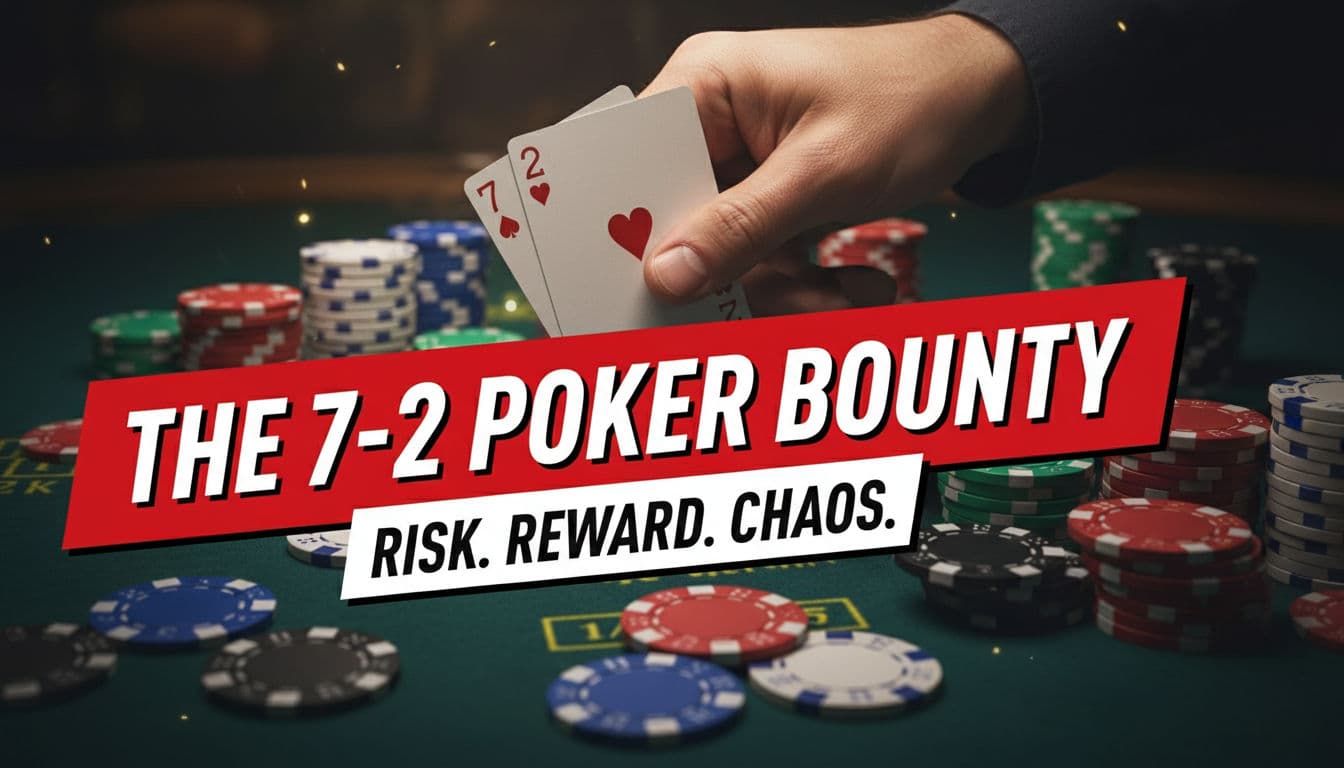
The world of poker is constantly evolving, with new twists and variants emerging to keep the game fresh and exciting. Among these, the Seven-Deuce Game, often known as the Seven-Deuce Bounty Rule, stands out as a particularly intriguing innovation. This popular addition to traditional poker formats, especially Texas Hold'em, is specifically designed to inject a surge of action and unpredictability into the game. It takes what is statistically considered the weakest starting hand – the 7-2 offsuit – and transforms it into a coveted bounty opportunity, fundamentally altering player incentives and fostering a more dynamic table environment. By embracing this variant, players are challenged to rethink conventional strategy, leading to audacious bluffs, unexpected showdowns, and an overall heightened sense of engagement.
Understanding the Seven-Deuce Game Bounty Rule
At its core, the Seven-Deuce Game is a side wager or "bounty" placed on a specific, seemingly innocuous hand: the 7-2 offsuit. When a player, holding this notorious hand, manages to win a pot as the sole victor, all other participants who have not folded their hand preflop are obligated to pay a pre-agreed bounty to the winner. This rule acts as a powerful catalyst, incentivizing players to engage with a hand they would otherwise discard without a second thought. In essence, this is the 7-2 bounty rule explained in its simplest and most widely adopted form.
The Rationale Behind the Rule
The primary objective of the Seven-Deuce Bounty Rule is to amplify the excitement and pace of a poker game. In standard Texas Hold'em, the 7-2 offsuit is universally recognized as the worst possible starting hand, possessing minimal drawing potential and poor showdown value. Consequently, it's almost always folded preflop. By attaching a bounty to winning with this hand, the rule cleverly encourages players to:
Increase Action: Players are more likely to enter pots with a weak hand, leading to more active participation.
Promote Bluffing: The allure of the bounty drives players to attempt bluffs with the 7-2, creating dramatic moments.
Introduce Unpredictability: When any hand can become a bounty target, the game becomes less predictable and more thrilling.
This unique dynamic not only spices up casual home games but has also found its way into various casino and tournament settings, proving its enduring appeal. This transformation often turns an otherwise standard session into a true poker action game.
Identifying the Infamous 7-2 Offsuit
The specific hand in question is any combination of a seven and a two of different suits. For instance, a 7 of hearts and a 2 of spades, or a 7 of clubs and a 2 of diamonds. The "offsuit" distinction is crucial; if the cards were suited (e.g., 7 of hearts and 2 of hearts), the hand would have slightly more equity due to flush possibilities, albeit still remaining very weak. The bounty specifically targets the 'offsuit' variant to truly challenge players to win with the absolute bottom of the barrel.
Mechanics of the Seven-Deuce Game
Implementing the Seven-Deuce Bounty Rule requires a clear understanding of its conditions and exceptions to ensure fair play and avoid disputes.
The Specific Winning Condition
To claim the bounty, a player must fulfill two critical criteria:
Hold a 7-2 Offsuit: This is non-negotiable and must be confirmed, usually by showing the hand.
Win the Pot as the Sole Winner: The player must be the only one to collect chips from the main pot. This can occur in one of two ways:
Showdown Victory: The player reaches the river, and their 7-2 offsuit (or the board playing their hand) is demonstrably the best hand.
Successful Bluff: The player's aggressive betting forces all other opponents to fold before the river, leaving them as the last player standing in the hand. This is often the more challenging yet more rewarding path to the bounty, as it showcases true poker prowess.
It is imperative that the winning player explicitly reveals their 7-2 offsuit hand to the table to confirm the bounty claim, even if they won by bluffing and would otherwise be able to muck their hand.
Calculating and Collecting the Bounty
The bounty amount is determined and agreed upon by all players before the game commences. It can be a fixed amount of chips, a percentage of the pot, or even a pre-arranged cash sum. Once the winning condition is met and verified, every player who received hole cards and did not fold preflop must contribute their share of the bounty to the winner. Players who folded before the flop are exempt from paying, adding a minor incentive for early folds in some marginal situations.
Important Variations and Exceptions
Like many poker variants , the Seven-Deuce Game can have specific nuances depending on house rules:
"Run It Twice" Exception: In some games where "Run It Twice" is enabled (dealing remaining board cards multiple times), the 7-2 bounty rule might be suspended. This is because running it twice can dilute the 'sole winner' aspect.
Multiple 7-2 Holders: If two or more players are dealt 7-2 offsuit in the same hand, typically no one is eligible for the bounty, regardless of who wins the pot. This prevents situations where the bounty becomes easily achievable.
Side Pot Wins: If a player wins a side pot alone with 7-2 offsuit, they can still collect the bounty from those who didn't fold preflop, even if another player wins the main pot. The key is being the sole winner of a pot.
Clarifying all poker rules before play begins prevents disputes and preserves the integrity of the game.
Strategic Implications and Table Dynamics
The introduction of the Seven-Deuce Bounty Rule profoundly impacts advanced poker strategy, forcing players to adapt and exploit new dynamics.
Encouraging Aggression and Bluffing
The most immediate effect is the increased incentive for aggression. Players are now motivated to play the 7-2 offsuit, not necessarily for its inherent card strength, but for the external reward. This leads to more preflop raises, post-flop continuation bets, and audacious bluffs, even on unfavorable boards. A player holding 7-2 might be more inclined to fire multiple barrels, knowing that a successful bluff secures both the pot and the bounty.
Psychological Warfare at the Felt
Beyond the direct action, the 7-2 bounty adds a layer of psychological complexity. Opponents become wary, knowing that any player could be chasing the bounty. This awareness can cause players to overthink situations, potentially leading them to fold better hands against a perceived 7-2 bounty hunter. Conversely, a cunning player might deliberately feign chasing the bounty with a strong hand to extract more value.
Risk vs. Reward Assessment
Playing 7-2 offsuit is inherently high-risk. The probability of hitting a strong hand with 7-2 is extremely low. Therefore, players must carefully weigh the size of the bounty against the cost of playing such a weak hand, particularly if they anticipate having to make multiple bets. The bounty needs to be significant enough to justify the venture, transforming a fundamentally poor mathematical decision into a strategically viable, albeit risky, play.
Mastering the 7-2 Bounty Strategy
While the 7-2 offsuit remains a statistically poor hand, playing it strategically within the bounty rule requires nuanced decision-making.
When to Chase the Bounty
Consider chasing the bounty primarily from late positions or the button, where you have more information about your opponents' actions. If the pot is small and your opponents seem passive, a well-timed bluff with 7-2 can be highly effective. The bounty also makes it more appealing to play against fewer opponents, increasing your chances of successfully bluffing everyone out.
Exploiting Opponents' Bounty Fever
A smart player won't just chase bounties; they'll also exploit others who do. If an opponent is known for aggressively playing 7-2, you can use this tendency against them. With a strong hand, you might slow-play, allowing them to build a larger pot before springing your trap. Alternatively, if you suspect a bluff with 7-2, a well-timed re-raise or check-raise can put immense pressure on them, potentially forcing a fold and denying them the bounty.
Players interested in exploring creative poker variations often compare leading online poker platforms and casino game variants to find table formats and house rules that suit their preferred playing style.
The Enduring Appeal of the Seven-Deuce Game
The Seven-Deuce Game, with its unique blend of risk, reward, and psychological intrigue, remains one of the most entertaining structural twists among casino game variants and home game modifications alike. It exemplifies how simple rule modifications can profoundly transform the poker experience.
Reward and psychological intrigue exemplify how simple rule modifications can profoundly transform the poker experience. It elevates the lowest-ranked hand into a strategic centerpiece, ensuring that even the most seasoned players must remain vigilant and adaptable. This variant isn't just about winning a pot; it's about mastering the art of the audacious bluff, understanding table dynamics, and ultimately, embracing the unpredictable thrill that defines the game of poker.
| Pros | Cons |
|---|---|
The Seven-Deuce Bounty Rule inherently encourages players to engage with a hand they would typically fold, leading to more preflop action, larger pots, and dynamic post-flop play. | Playing a statistically weak hand like 7-2 offsuit, even for a bounty, significantly increases a player's variance and the risk of losing chips if the bluff fails or they are outdrawn. |
This variant adds a layer of psychological warfare, as players are incentivized to bluff with the worst hand, requiring opponents to constantly adjust their reads and decisions, fostering advanced strategic thinking. | The allure of the bounty might tempt less disciplined players to chase it too frequently or in poor spots, leading to costly mistakes and a deviation from fundamental poker strategy. |
Winning a significant pot with the 7-2 offsuit, especially through a well-executed bluff, is a noteworthy achievement that generates excitement and memorable stories at the poker table. | Without clear pre-game rules regarding exceptions (e.g., 'run it twice,' multiple 7-2 holders, side pots), the bounty rule can lead to misunderstandings or arguments at the table. |
Related Poker Terms
Ante
Bet
Big Blind
Big Blind Ante
Buy-In
Check
Chips
Floor Manager
Flop
Fold
Gambling
Hand Rankings
No Limit
Omaha
Open Game
Open Seat
Out Button
Overlay
Peel
Peg
Pips
Poker network
Poker Room
Poker Rules
Position
Postflop
Pot
Pot-Limit
Protect
Qualifier
Quorum
Rack
Rake
Razz
Rebuy
Redeal
River
Round of Play
Running It Twice
Seat Position
Seating List
Seven-card Stud
Seven-Deuce Game
Seventh Street
Short Buying
Short Handed
Shot Clock
Showdown
Shuffle
Side Bet
Side Pot
Sit Out
Sixth Street
Small Blind
Split
Stack
Structure
Stub
Stud Games
Suit
Table Stakes
Texas Hold'em
Third Street
Tie
Time Bank
Turn
Uncle Doc
Upcard
Verbal Declaration
Visible Cards
Winning Hand
Best Online Poker Bonus Codes


About the Editor

Bence Mitykó is a Somuchpoker poker writer, covering poker news and strategy. He spent four years playing poker professionally, primarily focusing on Heads-Up Sit & Go games, experience that continues to shape his understanding of poker strategy, online poker dynamics, and the wider poker industry.


