

Splitting Blinds

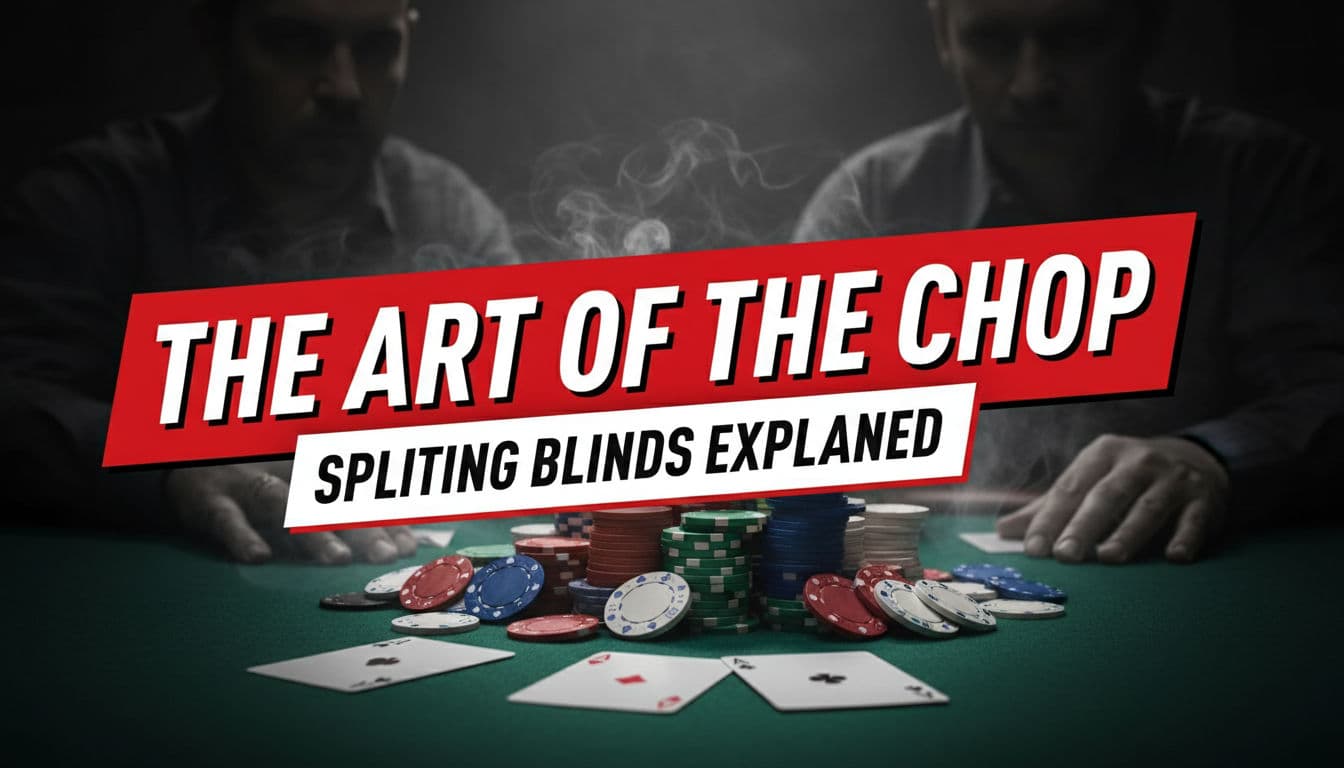
In the dynamic world of poker, where strategy and psychology constantly intertwine, certain informal practices emerge that deviate from the standard rulebook. One such practice is splitting blinds, often referred to as chopping blinds. This agreement, typically occurring in specific game contexts, allows the small blind and big blind players to reclaim their forced bets without contesting the hand. While seemingly minor, understanding this concept provides valuable insight into the social dynamics, strategic considerations, and rule enforcement variations across different poker environments.
Understanding Blind Chopping: An Expert Analysis of Splitting Blinds Poker
The act of splitting blinds poker players refer to as “blind chopping”, represents a fascinating deviation from standard poker protocol, primarily observed in less formal settings. It is a pre-flop agreement between the two players in the blind positions (small blind and big blind) to simply take their respective blind bets back when no other players have entered the pot. Essentially, if all players fold before the action reaches the blinds, instead of proceeding with a mandatory blind-versus-blind confrontation, the hand is prematurely concluded, and the blinds are returned to their original owners.
What Exactly is Splitting Blinds?
At its core, splitting blinds is a mutual understanding to bypass playing a hand that would otherwise involve only the small and big blinds. In a typical poker hand, blinds are forced bets that initiate action. If every player before the small blind folds, the action would then pass to the small blind, who would have the option to call, raise, or fold. If the small blind folds, the big blind wins the pot (their own bet). If the small blind calls or raises, a heads-up pot ensues. Chopping blinds circumvents this entire sequence; both players effectively 'opt out' of the hand and reclaim their chips, and a new hand immediately begins.
The Rationale Behind Blind Chopping: Why Players Opt for It
Players and groups that adopt blind chopping usually do so for several distinct reasons, often rooted in game psychology and social dynamics rather than strict strategy.
Avoiding Blind Play: One primary motivation is to simply avoid playing a hand that might be perceived as trivial or high-variance, especially when both players have weak hands. It saves time and prevents minor chip movements that don't contribute significantly to the overall game narrative.
Fostering a Friendly Atmosphere: Particularly in casual home games, chopping blinds can be seen as a gesture of camaraderie. It removes the potential for a 'punitive' blind steal or a contentious small pot, helping to maintain a relaxed and amicable environment among friends.
Managing Short Stacks: For players who are short-stacked, even small blind-versus-blind confrontations can represent a significant portion of their remaining chips. Chopping blinds allows them to conserve their stack and wait for more favorable situations, potentially prolonging their play at the table.
Perceived Lack of Edge: Some players might feel they don't have a significant skill advantage in blind-vs-blind situations, especially with marginal hands. By chopping, they avoid making potentially negative EV decisions.
Where Blind Chopping is Permitted (and Where It's Not)
The legality and acceptance of blind chopping vary dramatically across different poker environments, underscoring the distinction between informal play and regulated competition.
Casual Home Games: The Primary Arena
This practice finds its natural home in friendly cash games, typically hosted in private residences. Here, the rules are often flexible, agreed upon by the players, and designed to maximize enjoyment and social interaction. In such settings, players can collectively decide to implement blind chopping as a house rule, either on a hand-by-hand basis (though this is often frowned upon) or as a standing agreement for the entire session.
Formal Environments: Tournaments, Online Poker, and Casinos
Conversely, blind chopping is almost universally prohibited in formal poker settings. This includes:
Online Poker: Software platforms are programmed to enforce strict rules, and there's no mechanism for players to mutually agree to chop blinds. Hands always play out according to standard protocol.
Live Tournaments: Tournament play is governed by stringent rules to ensure fair play, prevent collusion, and maintain the integrity of the competition. Any deviation, such as chopping blinds, would be considered rule-breaking.
Regulated Casino Games: Brick-and-mortar casinos adhere to strict house rules that prevent any form of player agreement that alters the fundamental mechanics of the game. Dealers are trained to ensure all hands proceed according to established procedures, and attempts to chop blinds would be disallowed.
Etiquette and Agreement: The "Always Chop" or "Never Chop" Rule
Even in casual games where chopping blinds is permitted, there's an unwritten rule of etiquette regarding its implementation. It is generally considered poor form to decide whether to chop on a hand-by-hand basis. This can lead to awkward situations, delays, and disagreements if one player wants to chop and the other sees an opportunity to play or steal. To avoid this, players typically agree at the outset of the game to either:
Always Chop: A default agreement that blinds will be chopped every time the situation arises.
Never Chop: A default agreement that blinds will always play out, no matter the circumstances.
Consistency is key to maintaining game flow and avoiding friction.
Strategic Implications and Missed Opportunities
From a purely strategic standpoint, consistently chopping blinds, while perhaps socially beneficial, can represent a missed opportunity for the more skilled player. Blind-versus-blind situations are often profitable for those who understand how to exploit positional advantages and range disparities. By chopping, players forgo the chance to:
Steal the blinds: Aggressive players might miss chances to pick up uncontested blinds.
Exploit weaker opponents: A skilled player might have an edge in heads-up play that is lost when the hand is chopped.
Build their stack: Even small pots add up over time, and consistently chopping can hinder overall chip accumulation.
While the chips saved might seem negligible in any single instance, over the long run, these micro-gains or avoided losses can significantly impact a player's profitability. An expert player will typically prefer to play out every hand where they believe they hold an edge, regardless of its perceived smallness.
Conclusion: A Niche Practice with Defined Boundaries
Splitting blinds is a peculiar and highly contextual phenomenon in poker. It highlights the vast differences between casual, socially-driven home games and the rigid, competitive environments of professional and online poker . While it offers benefits like fostering goodwill and avoiding minor confrontations in informal settings, it stands in stark contrast to the strategic imperative of maximizing every edge in serious play. Understanding when and where this practice occurs, along with its underlying motivations, provides a richer appreciation of poker's diverse landscape and its unwritten rules of engagement.
| Pros | Cons |
|---|---|
Chopping blinds can reduce tension and minor confrontations, contributing to a more relaxed and enjoyable social poker game among friends. | Skilled players lose the opportunity to gain expected value by exploiting weaker opponents or stealing blinds in blind-vs-blind situations. |
By avoiding playing out low-value, blind-vs-blind hands, players can speed up the game and focus on more significant pots. | Chopping blinds is strictly prohibited in online poker, tournaments, and most casino cash games, making it a practice limited to informal settings. |
For players with limited chips, chopping blinds prevents them from risking a portion of their stack on a marginal hand, allowing them to wait for better opportunities. | Deciding on a hand-by-hand basis whether to chop can lead to confusion, delays, and potential disputes, disrupting the game's rhythm. |
Related Poker Terms
Best Online Poker Bonus Codes


About the Editor

Bence Mitykó is a Somuchpoker poker writer, covering poker news and strategy. He spent four years playing poker professionally, primarily focusing on Heads-Up Sit & Go games, experience that continues to shape his understanding of poker strategy, online poker dynamics, and the wider poker industry.


