

Bluff

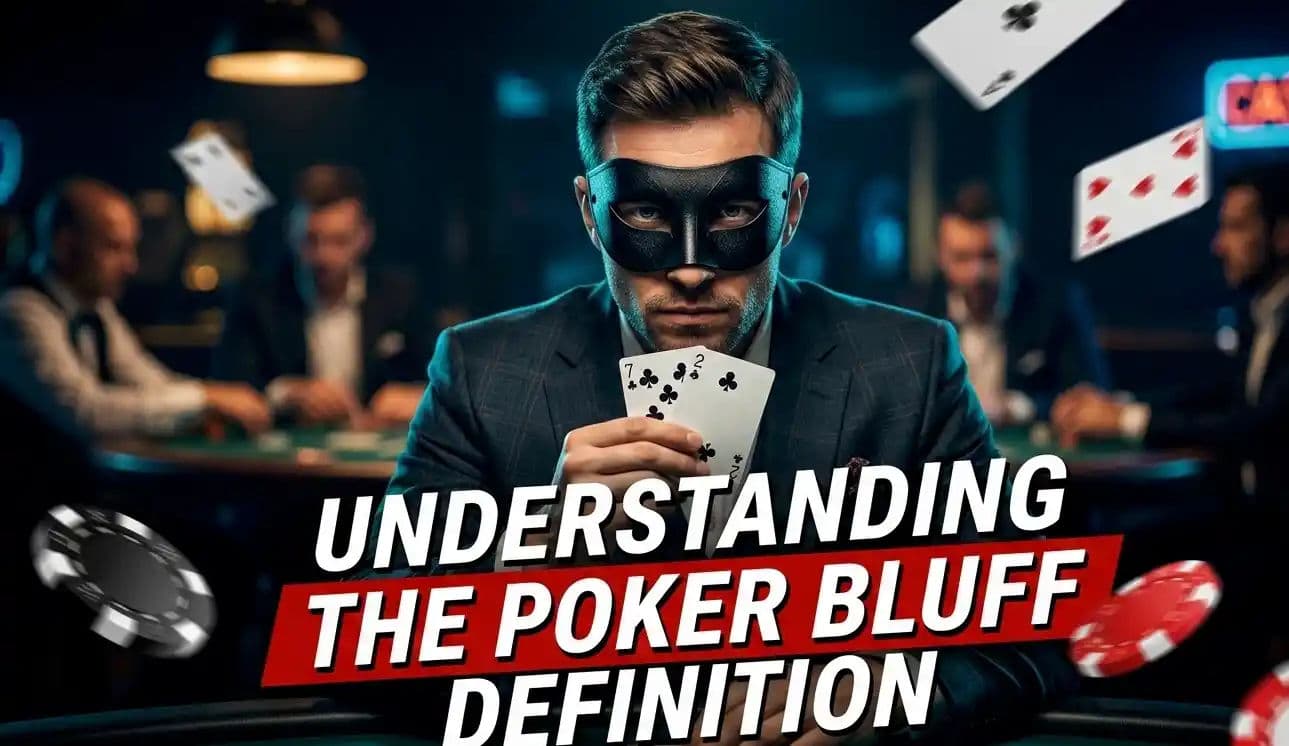
In the intricate theater of poker, where skill, probability, and psychology converge, the bluff stands as one of the most potent and often misunderstood weapons in a player's arsenal. Far from being a mere act of reckless deception, a well-executed bluff represents a sophisticated strategic maneuver, allowing a player to claim a pot not through the strength of their cards, but through the astute manipulation of their opponents' perceptions and fear. This in-depth analysis delves into the multifaceted nature of bluffing, dissecting its core principles, strategic applications across various poker variants, and its indispensable role in the journey towards becoming a truly formidable poker player.
The Art of Deception: Understanding the Poker Bluff Definition
At its core, understanding the poker bluff definition is simple: a bluff in poker is a strategic bet or raise made with a hand that is objectively inferior or not believed to be the best at that moment. The fundamental objective is deceptively simple: to compel one or more opponents to relinquish their hands, ideally superior ones, thereby allowing the bluffer to secure the pot unchallenged.
This tactical gambit is not confined to a single variant but is universally applicable across the entire spectrum of poker games, from the popular Texas Hold'em and Omaha to less common forms, and is a constant feature in both high-stakes cash games and competitive tournament play.
Elements of a Masterful Bluff
Executing a successful bluff transcends the mere act of betting with weak cards. It demands a confluence of critical factors, each playing a pivotal role in swaying an opponent's decision. Anyone learning how to bluff in poker must master these elements:
Reading Opponents: The Psychological Edge. A deep understanding of opponent tendencies and poker psychology is paramount. This involves observing their betting patterns, body language (live poker), timing tells (online and live), specific poker tells, stack sizes, and overall demeanor. Identifying players prone to folding under pressure, or those who consistently call down with marginal hands, provides crucial insight into the viability of a bluff.
Cultivating a Table Image: The Narrative You Control Your table image – how opponents perceive your playing style – is a powerful tool. A player known for tight, aggressive play might find their bluffs taken more seriously than a loose, wild player. Conversely, an occasional bluff from a typically conservative player can be devastatingly effective due to its unexpected nature. Strategic image management involves consciously varying your play to keep opponents guessing.
Timing and Position: The Opportune Moment. The timing of a bluff is critical. Acting in a late position often provides more information about opponents' actions, making bluffs more potent. Bluffing against multiple opponents or against an opponent who has shown strength significantly reduces success probability. The ideal scenario involves a limited number of opponents, preferably those who have shown weakness or disinterest in the pot.
Board Texture and Storytelling: Crafting a Convincing Narrative. The cards on the board must support the narrative your bet is trying to convey. For instance, betting heavily on a board with multiple high cards (like A K 9) suggests you hold one of those high cards or a strong draw. Conversely, bluffing into a very wet, connected board (e.g., 7 8 9 with two suits) where many players could have draws or completed straights is generally ill-advised.
Stack Sizes and Pot Odds: The Mathematical Underpinning. Effective bluffing also considers stack sizes and pot odds. A bluff needs to represent a significant threat to an opponent's stack, but not so much that it's unprofitable if they call. Understanding the implied odds for opponents to call or the pot odds for you to bluff profitably (i.e., how often they need to fold) is crucial. This is exactly where calculating your fold equity becomes an essential mathematical tool.
Bluffing in Practice: Illustrative Examples
Consider a Texas Hold'em scenario: you hold a seemingly worthless 7 of Hearts and 2 of Clubs. The flop reveals Ace of Spades, King of Hearts, 8 of Diamonds. While your hand has no immediate value, you are in late position and the pre-flop aggressor checks. This suggests weakness. A substantial bet from you could convincingly portray a strong hand – perhaps an Ace-King, a pair of Aces, or a strong draw – prompting an opponent to fold their middling pair or even an underpair to the King, fearing a superior holding.
In Omaha, with its four-card starting hands, bluffing often hinges on reading perceived strength. A player might hold 4-5-9-10 with no real draws on an Ace-King-Queen flop. If opponents show hesitation, a large bet can represent a strong Broadway straight or a set, again aiming to induce folds from hands that might actually be ahead but fear a stronger hand.
The Indispensable Role of Bluffing in Elite Poker Strategy
The assertion that bluffing is a vital skill for truly winning poker players is not hyperbole; it is a fundamental truth. Long-term success at the higher echelons of poker is virtually unattainable without a well-honed bluffing game and dynamic bluffing strategies. As one of the most important advanced poker tips you can learn, without the capacity to bluff, a player becomes predictable, only betting when they possess a strong hand.
Opponents quickly learn to fold to their bets and call their checks, rendering their strong hands far less profitable. Bluffing introduces an element of unpredictability and forces opponents to make tough decisions, maximizing your expected value (EV) over time. However, this strategic imperative comes with a crucial caveat: excessive or ill-timed bluffing can be disastrous, leading to significant losses and undermining your table image.
Dissecting Bluff Types: Pure Bluffs vs. Semi-Bluffs
The Pure Bluff (Stone-Cold Bluff) A classic pure bluff poker move involves betting with a hand that has zero or near-zero chance of improving to the winning hand by the river. Your only path to victory in this scenario is applying enough pressure to force your opponent to fold.
The Semi-Bluff In contrast, semi-bluff poker situations occur when you bet or raise with a hand that isn't currently the best, but has a realistic mathematical chance (many "outs") to improve to the winning hand on later streets – such as a flush draw or an open-ended straight draw. This is a highly profitable play because it gives you two ways to win the pot: your opponent folds immediately, or you hit your draw and win at showdown.
Now that you understand the mechanics of a perfect bluff, it's time to put your skills to the test. Head over to our list of the best online poker sites to find the perfect tables and start outplaying your opponents today.
| Pros | Cons |
|---|---|
Bluffing allows players to win pots they would otherwise lose, securing chips without needing the strongest hand. | When a bluff is called, the bluffer almost invariably loses a significant portion of their chips, directly impacting their stack. |
Effective bluffs create an unpredictable image, making opponents hesitant to call your genuine value bets and keeping them guessing. | Frequent failed bluffs or being caught bluffing too often can make a player seem reckless, causing opponents to call more frequently against them. |
Bluffing capitalizes on opponents who are overly cautious, prone to folding, or showing signs of weakness, forcing them off potentially better hands. | Successful bluffing demands a deep understanding of opponent psychology, hand ranges, and board textures, making it a challenging play for inexperienced players. |
Related Poker Terms
6-Max
9-Max (Full Ring)
A-Game
ABC Poker
Bankroll
Bet Size
Bet Sizing
Blocker
Bluff
Bluff Catcher
Board
Bubble Factor
Button
Call
Check-Call
Check-fold
Check-Raise
Click-Back
Donkament
Double Barrel
First in
Gap Concept
GTO
Gutshot
Hot Streak
HUD
Image
Insta-Call
Isolation
Kicker
Leak
Limp
Limp-Fold
Limp-Raise
Middle Pair
Min-raise
Monotone
Monster
Multi-Way Pot
Nit
Nuts
One-Way Straight
Online Poker
Online Poker Strategies
Open Limp
Out of Line
Over the top
Over-Limp
Overblind
Overcall
Overcard
Overpair
Pat
Peel
Play Behind
Polarized
Pot Control
Potting Out
Preflop
Premium Hands
Probe Bet
Proposing Bets
Push or Fold
Put Down
Quads
Quartered
Quitting Time
Quorum
Ragged
Range
Range Advantage
Razz
Reverse Implied Odds
Rolled Up
Royal Flush
Runner Runner
Running Good
Sandbagging
Satellite
Sit and Go (SNG)
Slow Play
Smooth Call
Snap Call
Snapped Off
Soft Seat
Solid
Steal
Suited
Suited Gappers
Tank
Total air
Trap
Two-Gapper
Under the Gun (UTG)
Underpair
Value
Value Bet
Villain
Weak Ace
Window Card
Best Online Poker Bonus Codes


About the Editor

Bence Mitykó is a Somuchpoker poker writer, covering poker news and strategy. He spent four years playing poker professionally, primarily focusing on Heads-Up Sit & Go games, experience that continues to shape his understanding of poker strategy, online poker dynamics, and the wider poker industry.


