

Weak Ace

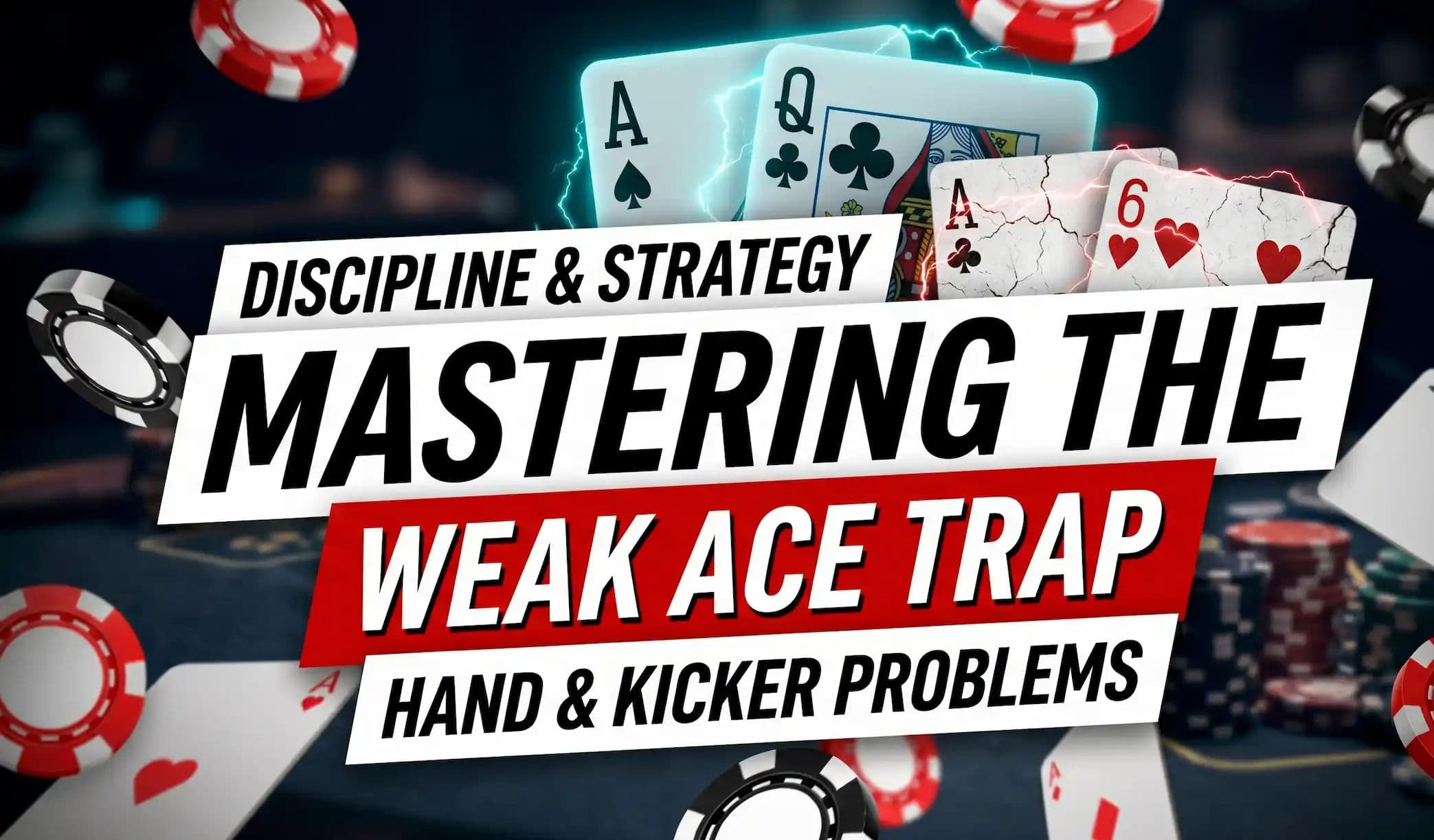
In the intricate world of Texas Hold'em, some starting hands present a unique blend of potential and peril. Among these are the so-called "weak aces" or "ace-rag" hands-combinations featuring an ace paired with a low-value kicker. While the allure of an ace, the highest card in the deck, is undeniable, the accompanying weak kicker often transforms these hands into strategic minefields. This expert guide will dissect the nuances of weak aces, revealing why they are often considered "trouble hands" and equipping you with the analytical framework to navigate them with confidence, discipline, and ultimately, greater profitability.
Deconstructing Weak Ace Poker Hands
A fundamental concept in mastering weak ace poker is understanding that a weak ace refers to any starting hand where a player holds an ace alongside a low-ranking card, typically a 2 through an 8. Classic examples include A♣6♥, A♢3♣, or A♠2♦. These hands are colloquially known as "ace-rag" due to the perceived insignificance of the non-ace card. The strength of the kicker is relative; an ace-eight might be strong in a heads-up scenario but considerably weaker in a full ring game.
The primary challenge with these hands lies in their deceptive nature: while an ace provides excellent showdown value and the potential for top pair, the weak kicker frequently leads to being dominated by an opponent also holding an ace but with a superior kicker.
The Peril of Domination: Understanding Kicker Hand Poker Problems
The inherent danger of playing a weak ace stems directly from the concept of poker dominated hands. Imagine holding A♢4♣ and the flop brings an ace. You've hit the top pair! However, if an opponent holds A♠Q♣, you are severely outkicked. Unless you spike a four or catch a very specific board run-out, your hand is a significant underdog, destined to lose a larger pot.
This scenario highlights the core dilemma: weak aces rarely offer the nut hand potential (unless suited for a nut flush or for a specific wheel straight draw), and when they do hit a pair on the flop, they often remain vulnerable to better-kicked aces. This vulnerability makes post-flop decisions particularly complex, as you might be forced to fold a strong-looking top pair when facing aggression, or worse, commit too many chips to a losing cause.
Strategic Navigating: General Principles for the Ace-Rag Strategy
Approaching weak aces demands a conservative and disciplined mindset. Due to their inherent propensity for kicker problems, these hands are best played cautiously, often favoring late positions where you benefit from more information about your opponents' actions. While generally viewed with suspicion, an effective ace-rag strategy recognizes that these hands do possess some hidden utility, particularly when suited, offering a backdoor route to a nut flush or a disguised wheel straight (A-2-3-4-5). This potential for drawing to the nuts can justify playing them in specific circumstances, especially when implied odds are favorable.
Playing Weak Aces Preflop: Nuance and Positioning
Decision-making is critical when evaluating a preflop weak ace. In early positions, opening the action with a hand like A-8 offsuit is generally ill-advised. Raising from under the gun only to face calls from players in later positions, who will then have positional advantage post-flop, creates an incredibly awkward and often unprofitable situation. The standard advice is to fold these hands early. Similarly, when facing an opening raise, weak aces are often candidates for a preflop fold, as you risk entering a pot dominated and out of position.
However, exceptions exist. Weak suited aces (e.g., A♠4♠ or A♥7♥) can become more playable from the cutoff or button, particularly in deep-stacked games. Here, the implied odds of hitting a nut flush or a wheel straight become more attractive, justifying a call or even a speculative raise, akin to the strategy of "set mining" with small pocket pairs. Calling preflop raises from the blinds with weak aces, even when suited, is less favorable due to the lack of post-flop position.
Furthermore, the dynamics shift significantly in short-handed or heads-up. With fewer opponents, the probability of another player holding a stronger ace decreases, making your ace-rag marginally more viable. In blind-versus-blind scenarios, a weak ace like A-5 can often be the superior hand, encouraging an open-raise or even a shove, particularly when short-stacked in a tournament.
Postflop Challenges: Mastering Discipline with a Postflop Ace-Rag
The true test of a player's poker hand analysis and discipline often comes postflop when holding a weak ace. A common pitfall is overvaluing a top pair with a weak kicker. For instance, if you call a raise with A♣3♥ from the small blind and the flop comes A♥J♠8♦, you hold top pair. Yet, any significant action from an opponent – a bet, a raise, or even a call of your continuation bet – should immediately raise red flags. It's challenging but crucial to recognize when your top pair is likely second-best and be prepared to fold.
The same caution applies if you pair your kicker, such as holding A♠7♦ on a K♥J♣7♠ board. While you have a pair, it's a medium-strength hand at best, rarely warranting significant investment unless you have strong reads on a passive opponent or are playing a very small pot.
The key takeaway for navigating a postflop ace-rag situation is to proceed with extreme caution. Avoid situations where you can lose a large portion of your stack. These hands are rarely vehicles for massive pots unless you hit a very well-disguised monster (like a nut flush). Instead, focus on minimizing losses and extracting small value when your hand holds up. True mastery requires an understanding of advanced poker strategy, teaching you that success lies not in winning big with weak aces, but in avoiding disastrous confrontations and knowing precisely when to let them go.
Understanding the rules is just the first step. To truly turn this knowledge into profit, you need to practice avoiding domination, utilizing position with suited aces, and making tough post-flop folds in real games. Head over to the best online poker sites, claim your exclusive SMPBONUS welcome bonus code, and start using your newfound hand discipline to crush the competition today!
| Pros | Cons |
|---|---|
Suited weak aces can hit a nut flush or a wheel straight, which are often well-disguised and can lead to winning large pots. | The most significant drawback is often being outkicked when hitting an ace, leading to dominated hands and costly losses. |
In tournament situations with a short stack, a weak ace can be a strong shoving hand, often having decent equity against many calling ranges. | Players often find it hard to fold top pair with a weak ace, even when signs suggest they are beaten, leading to overcommitment. |
In games with fewer players (6-max or heads-up), the probability of facing a better ace decreases, making weak aces more playable. | Unless hitting a strong draw, weak aces rarely make the best hand and are difficult to play for large pots, especially against aggressive opponents. |
Playing weak aces from early position or out of position postflop is often unprofitable due to lack of information and control. |
Related Poker Terms
6-Max
9-Max (Full Ring)
A-Game
ABC Poker
Bankroll
Bet Size
Bet Sizing
Blocker
Bluff
Bluff Catcher
Board
Bubble Factor
Button
Call
Check-Call
Check-fold
Check-Raise
Click-Back
Donkament
Double Barrel
First in
Gap Concept
GTO
Gutshot
Hot Streak
HUD
Image
Insta-Call
Isolation
Kicker
Leak
Limp
Limp-Fold
Limp-Raise
Middle Pair
Min-raise
Monotone
Monster
Multi-Way Pot
Nit
Nuts
One-Way Straight
Online Poker
Online Poker Strategies
Open Limp
Out of Line
Over the top
Over-Limp
Overblind
Overcall
Overcard
Overpair
Pat
Peel
Play Behind
Polarized
Pot Control
Potting Out
Preflop
Premium Hands
Probe Bet
Proposing Bets
Push or Fold
Put Down
Quads
Quartered
Quitting Time
Quorum
Ragged
Range
Range Advantage
Razz
Reverse Implied Odds
Rolled Up
Royal Flush
Runner Runner
Running Good
Sandbagging
Satellite
Sit and Go (SNG)
Slow Play
Smooth Call
Snap Call
Snapped Off
Soft Seat
Solid
Steal
Suited
Suited Gappers
Tank
Total air
Trap
Two-Gapper
Under the Gun (UTG)
Underpair
Value
Value Bet
Villain
Weak Ace
Window Card
Best Online Poker Bonus Codes


About the Editor

Bence Mitykó is a Somuchpoker poker writer, covering poker news and strategy. He spent four years playing poker professionally, primarily focusing on Heads-Up Sit & Go games, experience that continues to shape his understanding of poker strategy, online poker dynamics, and the wider poker industry.


