

A8: Ace-Eight

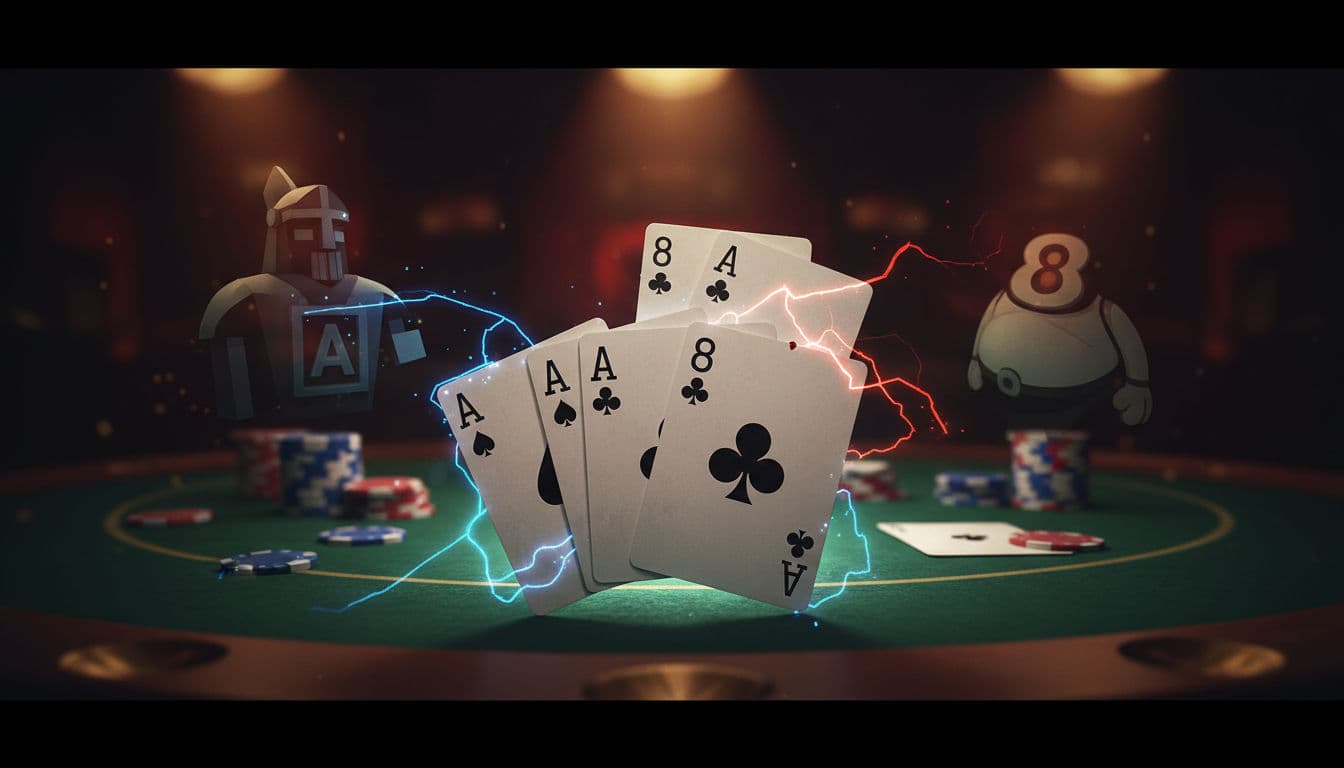
In the intricate landscape of Texas Hold'em, every starting hand possesses a unique identity, often amplified by captivating nicknames that blend historical intrigue with playful imagery. The Ace-Eight (A8) is a prime example, carrying the dual burden of an ominous legend and a whimsical cartoon reference. From the chilling 'Dead Man's Hand' to the lighter 'Asterix and Obelix', A8 is a hand steeped in lore that extends far beyond its statistical equity at the table. Understanding these monikers not only enriches a player's appreciation for poker culture but also offers insight into the psychological dimensions of the game.
This expert analysis delves into the compelling stories behind A8's most famous aliases, unraveling their origins and cultural impact. Beyond the folklore, we will also explore the strategic considerations for playing Ace-Eight, distinguishing between its suited and offsuit variants, and providing actionable advice for navigating pre-flop and post-flop scenarios. Prepare to uncover the multi-faceted nature of A8, a hand that commands attention both for its dramatic backstory and its nuanced strategic challenges.
The Legend of the Dead Man's Hand: The History of the A8 Poker Hand
Perhaps the most famous and chilling nickname in poker history, the 'Dead Man's Hand' is inextricably linked to the A8 poker hand. This ominous moniker stems from the tragic assassination of Wild Bill Hickok, a legendary Old West lawman and gunfighter. On August 2, 1876, Hickok was playing poker in Nuttal & Mann's Saloon in Deadwood, Dakota Territory. Due to an open seat, he reluctantly sat with his back to the door, a fatal decision.
During a game of five-card stud, Hickok was shot from behind by Jack McCall. The cards he reportedly held at the moment of his death were two black Aces and two black Eights. The identity of the fifth card remains a subject of historical debate and folklore, with some accounts suggesting it was the Queen of Clubs, others a Jack of Diamonds, or even unrevealed. Regardless of the fifth card, the four-card combination of Aces and Eights, particularly the black suits, became immortalized as the 'Dead Man's Hand'. This legend imbues the A8 starting hand with a somber gravity, reminding players of its dark historical significance every time it's dealt.
While the legend of Wild Bill adds a layer of mystery to the game, modern players can safely test the luck of the A8 poker hand at any of the best online poker sites available today.
The Whimsical Alias: Asterix and Obelix
In stark contrast to the grim 'Dead Man's Hand', the A8 poker hand also boasts a lighter, more whimsical nickname: 'Asterix and Obelix'. This playful moniker draws its inspiration from René Goscinny and Albert Uderzo's beloved French comic book series, 'The Adventures of Asterix'. The connection is purely symbolic, derived from a clever visual and phonetic association.
The Ace (A) is said to represent Asterix due to the matching initial, a straightforward and easily recognizable link. The Eight (8), on the other hand, is associated with Obelix, not by initial, but by its distinctive shape. Obelix, known for his rotund physique and large build, is humorously likened to the figure '8'. This imaginative connection provides a cheerful counterpoint to the more foreboding 'Dead Man's Hand', showcasing the diverse and often creative ways the poker community assigns character to its card combinations. The 'Asterix and Obelix' nickname offers a moment of levity, allowing players to briefly escape the intense strategic demands of the game and appreciate the cultural tapestry woven around poker.
Strategic Playability of A8
Beyond its colorful Texas Hold'em nicknames, the Ace-Eight hand presents a unique set of strategic considerations in poker. Its playability varies significantly depending on whether it's suited or offsuit, and a skilled player understands these nuances.
Suited vs. Offsuit A8 Poker Hand
A8 Suited (A8s): Holding the A8 poker hand of the same suit (e.g., A♠8♠) significantly enhances its value. The potential for a nut flush draw dramatically increases its implied odds, making it a viable speculative hand, especially in multi-way pots or when deep-stacked. While still vulnerable to higher flushes if the board runs out poorly, the flush potential alone can justify playing it from middle to late position, particularly against passive opponents who might pay off a completed flush.
A8 Offsuit (A8o): The offsuit version (e.g., A♠8♥) is a far weaker hand. Without the flush potential, its primary value lies in hitting an Ace or an Eight. However, if an Ace hits the board, your 8-kicker is often easily dominated by opponents holding A9, AT, AJ, AQ, or AK. Similarly, hitting an Eight often leaves you with a very weak pair. A8o should be played very cautiously, typically only from late position in unraised pots, or as a folding hand in most early or middle position situations, especially against aggressive players.
Pre-Flop Considerations
Playing A8 pre-flop requires careful evaluation of position, stack sizes, and opponent tendencies.
Early Position: A8o is almost always a fold here. A8s might be a marginal call in very loose, multi-way games, but generally, it's safer to fold or open raise with stronger hands.
Middle Position: A8s can be opened for a raise if the table is tight, or called if there are several callers and you anticipate good implied odds. A8o remains a strong candidate for folding unless you're short-stacked and looking for a desperate shove.
Late Position: This is where A8s shines, as you have more information. You can often call a raise to see a cheap flop, or even open for a raise if the blinds are tight. A8o can be considered for a small raise to steal blinds or called in an unraised pot, but vigilance for kicker problems is paramount.
Post-Flop Play
The post-flop Ace-Eight strategy revolves around cautious play and recognizing your hand's true strength.
Hitting an Ace: If an Ace hits the flop (A-X-X), you have top pair. However, your 8-kicker is a significant vulnerability. Be wary of continued aggression, as you could be dominated. Consider betting for value on dry boards but be prepared to fold to strong raises.
Hitting an Eight: A pair of Eights on the flop (X-8-X) is usually a weak hand. It rarely warrants significant investment unless the board is incredibly dry and your opponent shows no interest.
Flush Draws (with A8s): If you hit a flush draw, you have strong equity. You can semi-bluff with a continuation bet or call a bet, hoping to hit your flush. The Ace provides additional backdoor straight potential and overcard value.
Ultimately, Ace-Eight is a hand that demands discipline. While various Texas Hold'em nicknames add character and historical charm to the game, a successful Ace-Eight strategy depends on a nuanced understanding of its equity, position, and opponent dynamics. Mastering this hand means knowing when to respect its legendary status and when to simply fold to preserve your stack.
| Pros | Cons |
|---|---|
When A8 is suited, it offers excellent implied odds for hitting a nut flush, especially valuable in multi-way pots or against deep-stacked opponents. | When an Ace hits the board, your 8-kicker is often inferior to other Ace hands (A9, AT, AJ, AQ, AK), leading to dominated situations and losing big pots. |
Hitting an Ace on the flop gives you top pair, which can be a strong hand against weaker holdings or on dry boards. | A8 offsuit lacks strong equity and rarely connects well with the board to form a premium hand, making it difficult to play profitably in most scenarios. |
The weakness of A8 offsuit often makes it an easy hand to fold in early positions or facing aggression, preventing costly mistakes. | Playing A8o can lead to situations where you hit a mediocre hand (like a pair of 8s or top pair with a weak kicker) and end up losing a large pot, paying off a better hand. |
Related Poker Terms
22233
33: Treys
3322
36TJK
4444
5432A
555
666
76: Seven-Six
77: Pocket Sevens
84: Eight-Four
85: Eight-Five
86: Eight-Six
87: Eight-Seven
88: Pocket Eights
93: Nine-Three
95: Nine-Five
96: Nine-Six
98: Nine-Eight
99: Pocket Nines
A2: Ace-Deuce
A3: Ace-Three
A3A6
A4: Ace-Four
A5: Ace-Five
A6: Ace-Six
A7: Ace-Seven
A8: Ace-Eight
A9: Ace-Nine
AA: Pocket Aces
AA88: Dead Man's Hand
AAA
AAAA
AAAAK
AAJJ
AJ: Ace-Jack
AK47
AKo (Ace-King Offsuit)
AKs: Ace-King Suited
AQ: Ace-Queen
AT: Ace-Ten
J8: Jack-Eight
J9: Jack-Nine
JA55
JJ: Pocket Jacks
JT: Jack-Ten
K3: King-Three
K4: King-Four
K5: King-Five
K6: King-Six
K7: King-Seven
K8: King-Eight
K9: King-Nine
KJ: King-Jack
KK: Pocket Kings
KKKAA
KKKK
KKKQQ
KKQQ
KQ: King-Queen
KQJT9
KT: King-Ten
Offsuit
Q7: Queen-Seven
Q9: Queen-Nine
QJ: Queen-Jack
QQ: Pocket Queens
QQQQ
QT: Queen-Ten
Starting Hand
Steel Wheel
Suited Connectors
T2: Ten-Deuce
T8: Ten-Eight
T9: Ten-Nine
TT: Pocket Tens
TTT: Trip Tens
Best Online Poker Bonus Codes


About the Editor

Bence Mitykó is a Somuchpoker poker writer, covering poker news and strategy. He spent four years playing poker professionally, primarily focusing on Heads-Up Sit & Go games, experience that continues to shape his understanding of poker strategy, online poker dynamics, and the wider poker industry.


