

QJ: Queen-Jack

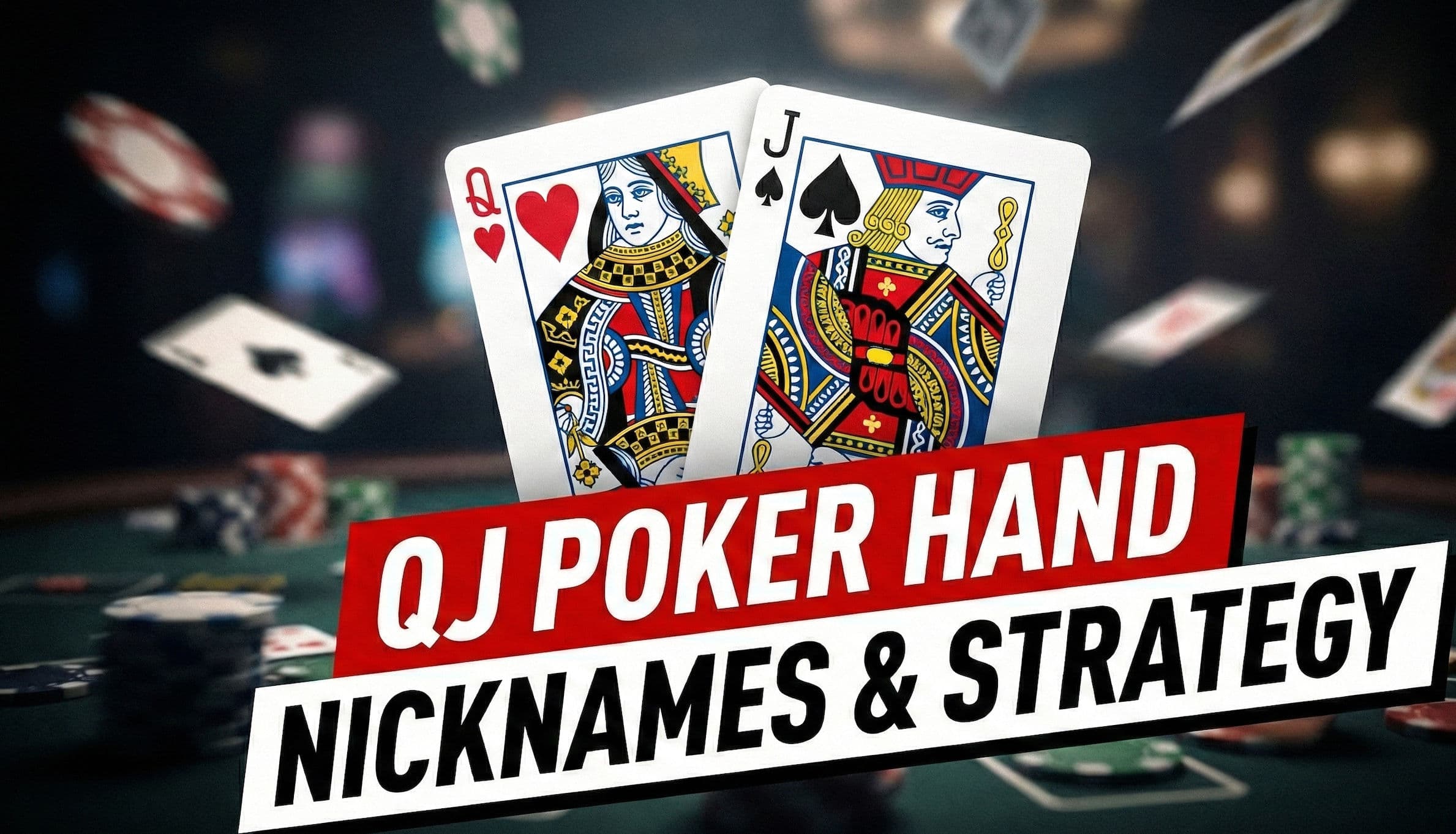
In the intricate tapestry of Texas Hold'em, certain starting hands carry not just statistical weight but also a rich tapestry of folklore and colorful monikers. Among these, the Queen-Jack (QJ) stands out as a fascinating enigma, a Broadway hand with significant potential yet fraught with nuanced strategic considerations. Often overlooked in favor of premium pairs or suited connectors, QJ boasts a collection of unique nicknames that hint at its personality – from the straightforward to the profoundly symbolic. Understanding these terms not only adds a layer of enjoyment to the game but can also subtly inform a player's perspective on this complex holding.
This expert guide delves deep into the world of QJ, dissecting its most popular nicknames and unraveling the strategic implications of playing this hand. We'll explore the origins behind 'Quack,' 'Maverick,' and the infamous 'Oedipus,' providing a comprehensive look at why these terms resonate with poker players. Beyond the anecdotes, we'll equip you with actionable insights to master Queen-Jack, transforming it from a potentially problematic hand into a formidable weapon in your poker arsenal.
Mastering the QJ Poker Hand: A Broadway Contender
The QJ Poker hand, while technically a 'Broadway' hand due to its high card ranks, occupies a curious space in poker strategy. It's strong enough to be played in many scenarios but often falls short against premium holdings, making it a challenging hand to master. Its array of nicknames reflects this duality, offering a blend of playful associations and profound warnings.
For players who want to experiment with hands like QJ without unnecessary bankroll pressure, freeroll environments can be a useful testing ground. Daily freeroll tournaments - such as those offered on platforms like WPT Global - allow players to explore marginal Broadway hands, positional aggression, and post-flop decision-making against a diverse, global player pool, all without financial risk. This makes them an ideal setting for refining strategy and understanding how hands like Queen-Jack perform across different scenarios.
"Quack": The Simple Allure of Queen-Jack
The nickname "Quack" for Queen-Jack is perhaps the most straightforward, a phonetic association that rolls off the tongue. This simple moniker captures the basic essence of the hand: a pair of high-ranking, connected cards. While lacking the gravitas of other nicknames, "Quack" serves as a quick, memorable identifier for a hand that, at its core, represents solid potential for both straights and high pairs. It's the kind of name you might hear at a casual home game, reflecting an unpretentious appreciation for a strong, yet not dominating, starting hand.
"Maverick": Living on Jacks and Queens
Inspired by the iconic theme song of the classic TV show Maverick, which famously includes the lyric "Livin' on jacks and queens", this nickname evokes a sense of daring independence and a willingness to take risks. For many poker players, the term "Maverick" perfectly encapsulates the spirit of playing QJ: it's a hand that can deliver big rewards if played boldly and skillfully, much like the show's protagonist.
However, like any maverick, a player relying solely on QJ without proper poker strategy can find themselves in precarious situations. It highlights the hand's capacity for aggressive play, potentially leading to significant pot wins, but also demands a fearless yet calculated approach.
"Oedipus": The Tragic Allusion of Queen-Jack
Perhaps the most intriguing and darkly humorous nickname for QJ is "Oedipus". This direct allusion to Sophocles' ancient Greek tragedy, Oedipus the King, paints a vivid picture of potential disaster. In the play, Oedipus (the 'J') unwittingly kills his father and marries his mother, Jocasta (the 'Q'). In poker terms, this nickname often suggests a hand that can lead to complicated, regrettable, or even disastrous outcomes if misplayed.
It might refer to boards where QJ makes a seemingly strong hand (like a top pair with the Queen) only to run into an unexpectedly superior hand (like a King-Queen or Ace-Queen), metaphorically 'marrying' a problem. The 'Oedipus' tag serves as a cautionary tale, reminding players that QJ, while strong, can lead to complex and emotionally taxing decisions.
"JQuery": The Unyielding Myth of QJ
The nickname "JQuery" with the playful assertion "JQuery never loses" is a more modern, likely ironic, and humorous take on the Queen-Jack hand. Drawing from the popular JavaScript library known for its robust functionality, this moniker implies an almost infallible, always-winning quality to QJ.
Of course, this is far from the truth in poker, where no hand guarantees victory. Instead, "JQuery" probably reflects a player's overconfidence, a hopeful belief, or even a self-aware jest about their affection for this hand despite its inherent vulnerabilities. It's a testament to the emotional attachment players can develop for certain starting hands, imbuing them with exaggerated power.
Strategic Implications of Playing The QJ Poker Hand
Playing Queen-Jack effectively requires a deep understanding of its position-dependent strength and its capacity to create both valuable and precarious situations. Pre-flop, QJ can be a powerful opening raise from late position, applying pressure and potentially stealing blinds. From middle position, it's often a solid call or a 3-bet against loose openers. However, from early position, it demands more caution, often serving as a folding candidate against strong raises unless suited.
Post-flop QJ thrives on boards that bring straights (e.g., T-K-A, 9-T-K) or high pairs, especially if suited to hit a flush. The danger lies in hitting a single pair on the board (e.g., Q-7-2) and facing aggression from hands that dominate it (AK, AQ, KQ). Recognizing when QJ is the best hand versus when it's second-best is paramount. Mastery of QJ involves judicious aggression, careful pot control, and the ability to fold when facing strong opposition, preventing the "Oedipus" scenario from unfolding.
| Pros | Cons |
|---|---|
QJ is a high-ranking hand that can easily hit top pair, particularly with the Queen, and has strong straight potential (T-J-Q-K-A). | QJ frequently runs into superior Broadway hands like AK, AQ, or KQ, putting it in a dominated position and risking significant losses. |
When suited, QJ significantly increases its equity, providing excellent flush draw opportunities that can lead to large pots. | When QJ hits a single pair, especially with the Jack, it often leads to tough decisions against potential stronger kicker hands or two-pair holdings. |
With both overcards and straight/flush draws, QJ is an excellent candidate for semi-bluffs, allowing you to win pots in multiple ways. | Hitting a strong draw but still losing to a better hand can lead to significant losses, especially when QJ makes a second-best hand. |
Related Poker Terms
22233
33: Treys
3322
36TJK
4444
5432A
555
666
76: Seven-Six
77: Pocket Sevens
84: Eight-Four
85: Eight-Five
86: Eight-Six
87: Eight-Seven
88: Pocket Eights
93: Nine-Three
95: Nine-Five
96: Nine-Six
98: Nine-Eight
99: Pocket Nines
A2: Ace-Deuce
A3: Ace-Three
A3A6
A4: Ace-Four
A5: Ace-Five
A6: Ace-Six
A7: Ace-Seven
A8: Ace-Eight
A9: Ace-Nine
AA: Pocket Aces
AA88: Dead Man's Hand
AAA
AAAA
AAAAK
AAJJ
AJ: Ace-Jack
AK47
AKo (Ace-King Offsuit)
AKs: Ace-King Suited
AQ: Ace-Queen
AT: Ace-Ten
J8: Jack-Eight
J9: Jack-Nine
JA55
JJ: Pocket Jacks
JT: Jack-Ten
K3: King-Three
K4: King-Four
K5: King-Five
K6: King-Six
K7: King-Seven
K8: King-Eight
K9: King-Nine
KJ: King-Jack
KK: Pocket Kings
KKKAA
KKKK
KKKQQ
KKQQ
KQ: King-Queen
KQJT9
KT: King-Ten
Offsuit
Q7: Queen-Seven
Q9: Queen-Nine
QJ: Queen-Jack
QQ: Pocket Queens
QQQQ
QT: Queen-Ten
Starting Hand
Steel Wheel
Suited Connectors
T2: Ten-Deuce
T8: Ten-Eight
T9: Ten-Nine
TT: Pocket Tens
TTT: Trip Tens
Best Online Poker Bonus Codes


About the Editor

Bence Mitykó is a Somuchpoker poker writer, covering poker news and strategy. He spent four years playing poker professionally, primarily focusing on Heads-Up Sit & Go games, experience that continues to shape his understanding of poker strategy, online poker dynamics, and the wider poker industry.


