77: Pocket Sevens

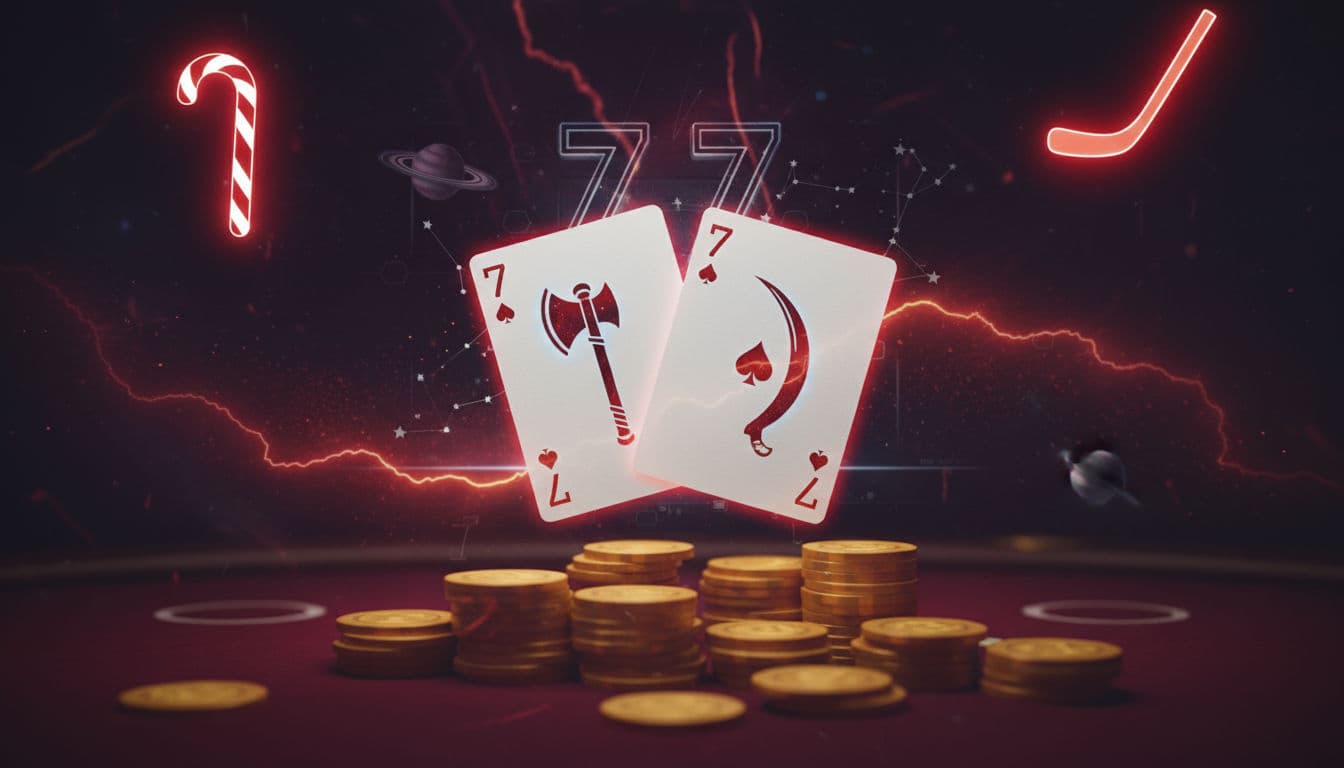
In the vast lexicon of poker, certain starting hands carry more than just numerical value; they possess a rich tapestry of nicknames, folklore, and strategic considerations. Among these, the pair of sevens, affectionately known as "Pocket Sevens" or simply "77," stands out. This hand is often the subject of debate among players, teetering on the edge of premium status while simultaneously being notorious for creating tricky spots. But beyond its on-table performance, what truly makes Pocket Sevens unique is the vibrant collection of monikers it has accumulated over the years, each telling a story or painting a vivid picture.
This comprehensive guide explores both the history and the practical side of the hand, including how to approach a solid pocket sevens strategy in modern Texas Hold'em. We'll unravel the origins behind its most iconic nicknames, from the visually descriptive to the culturally referenced. More importantly, we'll equip you with expert analytical strategies to navigate the complexities of playing Pocket Sevens in various Texas Hold'em scenarios, ensuring you're not just familiar with its aliases but also proficient in maximizing its potential at the felt.
The Enigma of Pocket Sevens Nicknames
Pocket Sevens (77) occupies a curious position in the hierarchy of Texas Hold'em 77 starting hands. It's strong enough to be played in most positions, yet often fragile when facing overcards on the flop. Understanding both its strategic nuances and its colorful array of pocket sevens nicknames can significantly enhance a player's insight and conversational prowess at the table. The tradition of assigning nicknames to poker hands is as old as the game itself, serving as a shorthand, a source of amusement, and sometimes even a psychological tactic.
For 77, the list is extensive and often draws from visual similarities or pop culture references in 77 nicknames.
Axes
The most straightforward and widely recognized nickname for 77, "Axes," stems from the visual resemblance of the number '7' to an axe. Imagine the sharp, angled head of an axe, mirrored twice on your hole cards. This clear visual connection makes "Axes" an intuitive and easily remembered moniker, perfectly encapsulating the sharp, potent feel of pocket sevens, even if their strategic sharpness might dull on certain board textures. This is one of the most famous pocket sevens nicknames.
Scythes
Similar to "Axes," "Scythes" also draws its origin from the distinct shape of the number seven. A scythe, with its long, curved blade and short handle, bears a striking resemblance to the numeral. This nickname evokes a sense of cutting or reaping, perhaps hinting at the hand's potential to "cut down" opponents when it hits a set, or conversely, how it can "reap" disaster if played incorrectly against stronger hands. It adds a slightly more menacing, almost Grim Reaper-esque connotation compared to the more rustic "Axes" in the world of 77 nicknames.
Len Goodman
This nickname is a delightful entry into the world of poker folklore and pocket sevens nicknames, especially for fans of British television. Len Goodman, a beloved judge from the popular dance competition "Strictly Come Dancing" (and "Dancing with the Stars" in the US), was famous for his enthusiastic catchphrase, "Seven!" often delivered with a flourish when awarding a score. The association is purely auditory and cultural, providing a touch of playful charm to an otherwise purely numerical hand.
Calling out "Len Goodman" when you hold 77 is a nod to pop culture savvy and a bit of a conversational ice-breaker at the table.
Candy Canes
The festive and sweet "Candy Canes" nickname for 77 is another visually inspired one. The distinctive red and white stripes and the curved top of a candy cane can be imagined in the shape of the numeral seven. This less common but equally charming nickname injects a touch of whimsy into the game, contrasting the often serious atmosphere of a poker table with a hint of holiday cheer. It's a reminder that even in a game of skill and strategy, there's room for lighthearted associations and 77 nicknames poker.
Hockey Sticks
For sports enthusiasts, "Hockey Sticks" is a natural fit for Texas Hold'em 77 cards. The long, slender shaft and the curved blade of a hockey stick perfectly mimic the shape of the number seven. This nickname resonates particularly with players from regions where ice hockey is popular, providing a recognizable and relatable image. It suggests precision and the potential for a powerful shot, much like a well-executed play in hockey, or a strong hit on the flop for pocket sevens.
Mullets
"Mullets" offers a more abstract, yet incredibly clever, take on 77. The mullet hairstyle, famously "business in the front, party in the back," describes the shape of the numbers. If you visualize a '7', it's somewhat "flat" or straight at the top (the "front"), then takes a sharp, angled turn downwards (the "back"). While not a direct visual match like axes or scythes, the quirky analogy to the iconic haircut makes "Mullets" a memorable and often humorous nickname, particularly appreciated by those who enjoy a bit of wordplay in their 77 nicknames poker.
Saturn
This nickname points to a specific historical reference: the "Saturn VII rocket." The Saturn family of rockets, particularly the mighty Saturn V that propelled Apollo missions, is synonymous with power and achievement. While less common among pocket sevens nicknames, associating 77 with "Saturn VII" lends an air of technological prowess and significant potential. It implies that while 77 might not be the absolute strongest hand, it carries with it the capability for a powerful launch, especially if it connects well with the board.
Sunset Strip
This elegant nickname comes from the classic American television series, "77 Sunset Strip." The show, a popular detective drama from the late 1950s and early 1960s, provides a cool, retro, and slightly mysterious aura to pocket sevens. It’s a nod to a bygone era of television and suggests a certain level of sophistication, perhaps for players who prefer to keep their intentions shrouded in mystery, much like the detectives on the show.
Walking Sticks
Similar to "Axes" and "Scythes," "Walking Sticks" is a visually driven nickname. The curved handle and straight shaft of a traditional walking stick perfectly resemble the numeral seven. This nickname might evoke a sense of stability or support, implying that pocket sevens, when played carefully, can provide a steady foundation for a winning hand, guiding the player through tricky situations in Texas Hold'em.
Lucky Linus Mealey
This is a particularly unique and localized nickname, named after a notorious London poker player, Linus Mealey. Such nicknames, often tied to specific individuals or regions, highlight the rich oral tradition of poker. "Lucky Linus Mealey" implies that holding 77 might bring good fortune, or perhaps, it was a hand that Mealey himself played with remarkable success or particular style. These personal anecdotes weave into the broader tapestry of poker lore, making the game more than just cards and chips.
Pocket Sevens Strategy: Key Considerations for Playing 77
Developing a sound poker starting hands 77 strategy requires an understanding of position, board texture, and opponent tendencies. They are often considered a "trap hand" if not played with careful consideration, but can also be immensely profitable when handled correctly. This how to play 77 poker guide is essential for mastering the hand.
Pre-flop Play: Position is Paramount
In early position, Texas Hold'em 77 is a marginal open, often best suited for a raise to thin the field and build a pot. From middle position, it becomes a stronger opening hand. However, its true power shines in late position, where you have more information about your opponents' actions. If there are several limpers, 77 is a prime candidate for an isolation raise. Against a pre-flop raise, 77 is often a call, especially if the raise is not too large and you're in position, hoping to hit a set.
Re-raising (3-betting) with 77 is generally reserved for specific situations, like against very aggressive openers from late position, but it carries higher variance. This is the best way to play pocket sevens pre-flop.
Post-flop Strategy: The Set Mining Advantage
The primary goal with Pocket Sevens on the flop is often "set mining" – hitting another 7 to make trips. This transforms your hand from a vulnerable pair into a monster. If you don't hit a set, the board texture becomes crucial. Boards with no overcards (e.g., J-T-T, K-9-2) make your pair of sevens strong.
However, boards with overcards (e.g., A-K-Q, K-J-8) immediately weaken your hand, and you must proceed with caution. Continuous betting (c-betting) without a set on an overcard board is often ill-advised unless you're confident your opponent will fold. Conversely, on a dry board with no overcards, a c-bet can be highly effective. This is a core part of how to play 77 poker hands.
Managing Overcards and Drawing Hands
Poker hand analysis 77 shows that Pocket Sevens are particularly susceptible to overcards. If the flop brings an Ace, King, Queen, Jack, Ten, Nine, or Eight, your pair is no longer the highest. This dramatically reduces its value. You must be prepared to fold if facing significant aggression on such boards. Conversely, if the board is low and connected (e.g., 6-5-4), you might have straight draws or be vulnerable to them. Understanding these dynamics is key to avoiding costly mistakes in Texas Hold'em.
Playing Multiway Pots
Pocket Sevens generally perform better in heads-up pots or pots with fewer players, as the chances of someone else holding a higher pair or hitting a stronger hand decrease. In multiway pots, the likelihood of hitting a set becomes less appealing due to increased pot odds needed, and the probability of someone else improving significantly increases. Therefore, careful consideration of pot size and opponent tendencies is paramount in these situations. This is part of a complete poker hand analysis.
The Psychological Element
The psychological aspect of how to play 77 poker is intriguing. Many players have a love-hate relationship with it, remembering both glorious set-mining successes and frustrating overcard scenarios. Recognizing this shared experience can sometimes provide tells at the table. A player who visibly sighs or hesitates after a flop with an overcard might be holding a medium pair like 77. Mastering 77 requires not just technical skill but also a strong mental game, knowing when to commit and, crucially, when to fold. This poker starting hands insight can save you many chips.
Conclusion on 77 Strategy
Pocket Sevens are a challenging yet rewarding hand in Texas Hold'em 77. Their 77 nicknames poker reflect their diverse character – sometimes sharp and effective like "Axes," sometimes quirky and memorable like "Len Goodman." By understanding their cultural footprint and applying a disciplined, position-aware strategy, you can transform this often-maligned hand into a consistent contributor to your bottom line. Always be mindful of the board texture, your opponents' tendencies, and the inherent fragility of a medium pair, and you'll be well on your way to mastering the mystique of 77 through professional poker hand analysis 77 and the best way to play pocket sevens.
| Pros | Cons |
|---|---|
When you hit a set on the flop, your hand is often very strong and can win a large pot, especially against overpairs or strong top pairs, making it highly profitable. | Pocket Sevens are extremely susceptible to overcards on the flop (A, K, Q, J, T, 9, 8), which significantly diminishes their value and makes continuing in the hand challenging. |
A set of sevens is incredibly difficult for opponents to put you on, particularly if you play passively before the flop, leading to maximum value extraction when they hold strong but inferior hands. | If you don't hit a set on the flop, 77 often becomes a mediocre hand, making post-flop decisions complex and increasing the likelihood of costly mistakes if played too aggressively. |
In late position, 77 can be an excellent hand to raise and isolate limpers, allowing you to play heads-up or with fewer opponents, increasing your chances of hitting a profitable set. | While aiming for implied odds, 77 can also lead to significant losses if you hit your set but an opponent hits a higher set or a stronger straight, leading to situations where you pay off a bigger hand. |
Related Poker Terms
22233
33: Treys
3322
36TJK
4444
5432A
555
666
76: Seven-Six
77: Pocket Sevens
84: Eight-Four
85: Eight-Five
86: Eight-Six
87: Eight-Seven
88: Pocket Eights
93: Nine-Three
95: Nine-Five
96: Nine-Six
98: Nine-Eight
99: Pocket Nines
A2: Ace-Deuce
A3: Ace-Three
A3A6
A4: Ace-Four
A5: Ace-Five
A6: Ace-Six
A7: Ace-Seven
A8: Ace-Eight
A9: Ace-Nine
AA: Pocket Aces
AA88: Dead Man's Hand
AAA
AAAA
AAAAK
AAJJ
AJ: Ace-Jack
AK47
AKo (Ace-King Offsuit)
AKs: Ace-King Suited
AQ: Ace-Queen
AT: Ace-Ten
J8: Jack-Eight
J9: Jack-Nine
JA55
JJ: Pocket Jacks
JT: Jack-Ten
K3: King-Three
K4: King-Four
K5: King-Five
K6: King-Six
K7: King-Seven
K8: King-Eight
K9: King-Nine
KJ: King-Jack
KK: Pocket Kings
KKKAA
KKKK
KKKQQ
KKQQ
KQ: King-Queen
KQJT9
KT: King-Ten
Offsuit
Q7: Queen-Seven
Q9: Queen-Nine
QJ: Queen-Jack
QQ: Pocket Queens
QQQQ
QT: Queen-Ten
Starting Hand
Steel Wheel
Suited Connectors
T2: Ten-Deuce
T8: Ten-Eight
T9: Ten-Nine
TT: Pocket Tens
TTT: Trip Tens