K6: King-Six

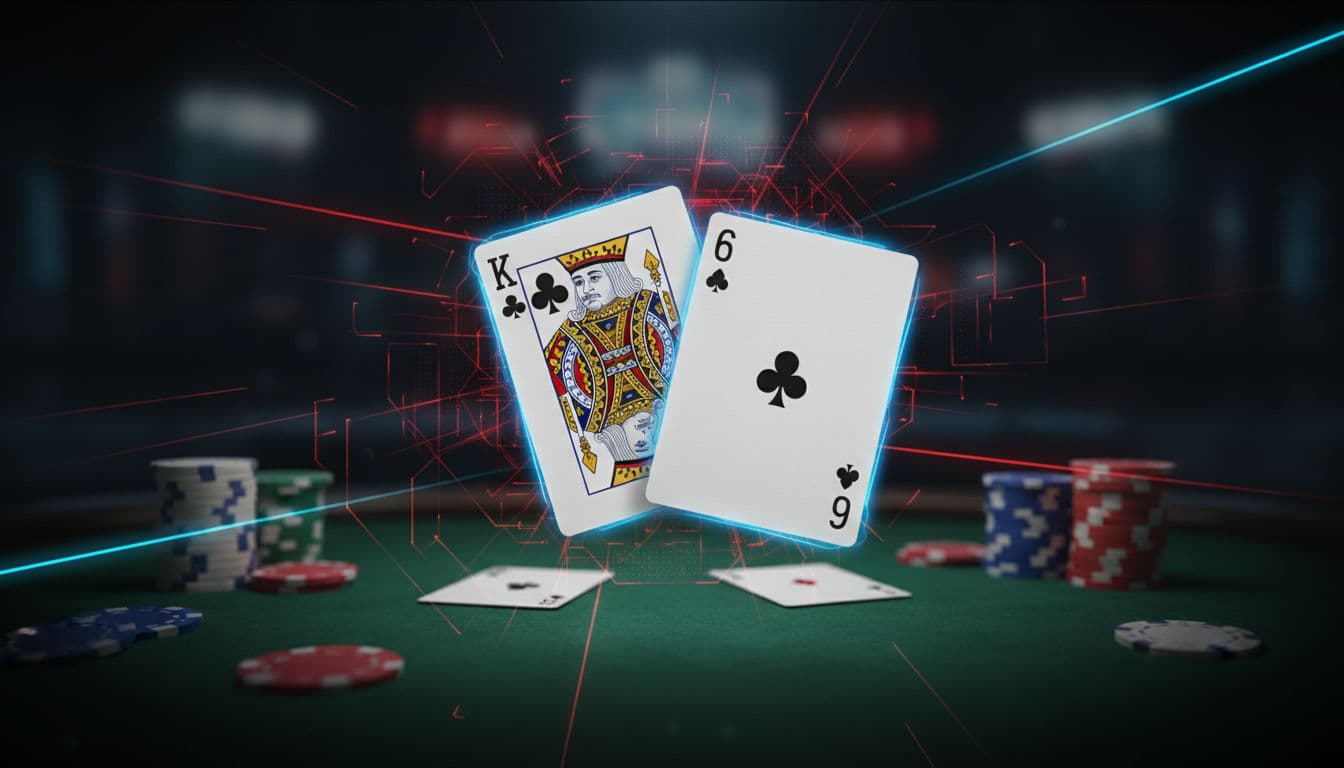
In the complex and ever-evolving landscape of Texas Hold'em, every starting hand possesses a unique identity, often shaped by its inherent equity, playability, and sometimes, a captivating nickname. Among the vast array of two-card combinations, King-Six (K6) emerges with a distinctive character. Far from being a premium hand, K6 carries a fascinating dual persona: a lighthearted moniker, "Kicks," born from a linguistic quirk, and a surprisingly profound strategic utility within the intricate frameworks of modern Game Theory Optimal (GTO) play. This comprehensive article aims to dissect the multifaceted aspects of K6, shedding light on its cultural origins and, crucially, its calculated importance as a pivotal defending hand against aggressive pre-flop raises, a recommendation frequently echoed by advanced poker solvers.
A thorough understanding of K6 transcends mere hand rankings. It necessitates an appreciation for the subtle interplay of suitability, blocker effects, and its precise placement within a meticulously balanced GTO strategy. Join us on a journey to uncover why this seemingly modest hand has secured its position both in poker's rich tapestry of nicknames and within the sophisticated algorithms that dictate optimal, unexploitable play.
The K6 Poker Hand: An Expert Introduction
The K6 poker hand (King-Six), whether comprising suited or offsuit cards, is generally categorized as a mid-to-low strength holding in the initial stages of a Texas Hold'em game . On the surface, K6 might appear unremarkable, lacking the raw power associated with premium pairs like pocket Aces or Kings, or the immediate connectivity of strong Broadway combinations such as Ace-King.
However, its true strategic value is often unveiled in specific game scenarios, particularly within advanced strategic paradigms where flexibility and nuanced play are paramount. While rarely an opening hand from early positions, K6's latent defensive capabilities and potential for robust improvement on later streets position it as a noteworthy contender in sophisticated, GTO K6 defense and GTO-oriented gameplay.
"Kicks": The Phonetic Nickname and Poker Culture
One of the most distinctive and culturally ingrained aspects of the K6 poker hand is its memorable nickname: "Kicks." In the world where poker hand nicknames explained are a staple of the game, this moniker is not rooted in a dramatic historical event or a professional player's signature moment, but rather in a playful linguistic phenomenon, specifically a colloquial adaptation of Pig Latin.
In its traditional form, Pig Latin involves moving the initial consonant sound or consonant cluster of a word to the end and appending "ay." When applied to "King Six," a phonetic approximation, sometimes incorporating local slang or rapid speech, can lead to the Kicks nickname meaning (e.g., "Ing-kay Ix-say"). While not a universally adopted term, its existence is a testament to the vibrant and informal culture that thrives within the poker community, where players craft witty and often humorous aliases for starting hands, facilitating quicker communication and imbuing the game with personality.
Such colorful nicknames, ranging from "Big Slick" (Ace-King) to "Pocket Rockets" (Pocket Aces), serve as an internal lexicon, enriching the poker experience. "Kicks" perfectly illustrates how even hands without a prominent place in classic poker lore can acquire a unique identity through the collective inventiveness of players.
K6 as a Solver Hand: Advanced GTO Strategy and Defense
Beyond its anecdotal nickname, K6, and more specifically King Six suited strategy, carries substantial strategic weight in the realm of Game Theory Optimal (GTO) poker. Modern poker solvers, which are sophisticated computational tools designed to identify theoretically unexploitable strategies, frequently advocate for the inclusion of K6s as a critical element within a balanced defending range against aggressive pre-flop actions, notably a 3-bet with K6 and even a 4-bet defense K6. This might initially seem counterintuitive for a hand not considered a powerhouse, but its strategic utility is underpinned by several crucial GTO principles:
Understanding the Solver Framework
Poker solver K6 strategy meticulously analyzes millions of possible game trees to construct strategies that are balanced and resilient against exploitation. When a solver integrates a hand like K6s into a defensive range, it's not due to its inherent strength, but because it contributes to a holistic range that maintains equilibrium. Solvers aim to distribute strong hands, medium-strength hands, and speculative holdings across all actions to prevent opponents from gaining an informational advantage.
The Strategic Value of K6s in Defensive Ranges
Suitability and Post-flop Playability: K6s inherently offers significant backdoor flush and straight equity, which can dramatically enhance its effective strength and playability on subsequent streets, even if it fails to connect directly with the flop. This crucial aspect of playability is vital for constructing balanced defensive ranges, enabling effective semi-bluffing lines and allowing for more complex post-flop decision-making, which is characteristic of optimal poker play K6.
Blocker Effects: The presence of a King in K6s serves as a powerful blocker. It reduces the statistical probability that an opponent holds premium King-high combinations such as Ace-King (AK) or pocket Kings (KK). This blocker effect is particularly valuable when facing a 3-bet with K6 or a 4-bet, as it subtly diminishes the likelihood of the aggressor holding the absolute strongest hands in their range.
Contribution to Bluff-Catching: While K6s is not a primary bluff-catching hand, its capacity to hit a pair of Kings (especially with a strong kicker from the board) or to develop into strong draws allows it to function as a crucial component within a broader range of hands designed to call down bluffs.
Range Diversification: Including K6s in a defensive range is instrumental in diversifying it, preventing it from becoming either too strong or too weak. It's a hand with sufficient equity to continue if the pot odds are favorable or if promising draws materialize, yet also one that can be folded without significant loss to further aggression if conditions are unfavorable.
K6o vs. K6s: The Decisive Suited Advantage
A critical distinction must be made between King-Six suited (K6s) and King-Six offsuit (K6o). Poker solver K6 strategy overwhelmingly prioritizes K6s for these complex defensive actions due to the substantial additional equity provided by the potential for a flush. K6o, lacking this vital suited dimension, typically falls into a folding category against significant pre-flop aggression or is played with extreme caution, usually only in multi-way pots with very passive action.
Playing K6 in Practice: Adapting Solver Insights
While the insights provided by solvers are invaluable for understanding optimal poker play K6, their practical application in live poker environments requires judicious adaptation. When evaluating K6, particularly K6s, in a pre-flop defensive scenario, consider the following:
Positional Leverage: K6s gains considerable value when played from an in-position spot. This allows you to observe your opponent's action before making your own, a critical informational advantage. Playing K6s out of position significantly reduces its playability and profitability.
Opponent Profiling: Against opponents who are known to 3-bet or 4-bet excessively wide, K6s can be a calculated call to exploit their loose ranges. Conversely, against tight, straightforward players, K6s is typically a disciplined fold.
Effective Stack Depth: Deeper effective stacks enhance the value of King Six suited strategy due to the increased implied odds associated with hitting strong draws or two-pair combinations. Shorter stacks, however, diminish its playability, as there are fewer chips available to realize its full potential.
Mastering the art of playing K6s as a solver-approved defending hand represents a sophisticated level of poker understanding, transcending basic hand rankings to embrace the intricate interplay of range construction, blocker dynamics, and post-flop equity realization. It serves as a powerful testament to the continually evolving strategic depth of modern poker.
| Pros | Cons |
|---|---|
K6s contains a King, which acts as a powerful blocker, reducing the probability of opponents holding premium King-high hands (AK, KK) when defending against 3-bets or 4-bets, making their strongest range less likely. | Without significant improvement on the board, K6 is a weak hand. It often misses the flop entirely or hits a weak pair, demanding precise post-flop play and careful decision-making. |
K6s offers significant backdoor flush and straight potential, providing additional equity and diverse semi-bluffing opportunities on later streets, which is crucial for balanced GTO ranges. | Hitting a weak pair (e.g., a pair of 6s) can lead to difficult and costly situations where an opponent has a stronger kicker or a higher pair, resulting in potential large losses. |
Frequently included in optimal GTO defensive ranges by poker solvers, signifying its calculated strategic importance in creating unexploitable pre-flop strategies. | Playing K6s profitably is heavily reliant on being in position. Out of position, its draws are harder to realize, and the informational disadvantage significantly reduces its profitability and playability. |
Related Poker Terms
22233
3322
36TJK
4444
5432A
555
666
76: Seven-Six
77: Pocket Sevens
84: Eight-Four
85: Eight-Five
86: Eight-Six
87: Eight-Seven
88: Pocket Eights
93: Nine-Three
95: Nine-Five
96: Nine-Six
98: Nine-Eight
99: Pocket Nines
A2: Ace-Deuce
A3: Ace-Three
A3A6
A4: Ace-Four
A5: Ace-Five
A6: Ace-Six
A7: Ace-Seven
A8: Ace-Eight
A9: Ace-Nine
AA: Pocket Aces
AA88: Dead Man's Hand
AAA
AAAA
AAAAK
AAJJ
AJ: Ace-Jack
AK47
AQ: Ace-Queen
AT: Ace-Ten
J8: Jack-Eight
J9: Jack-Nine
JA55
JJ: Pocket Jacks
JT: Jack-Ten
K3: King-Three
K4: King-Four
K5: King-Five
K6: King-Six
K7: King-Seven
K8: King-Eight
K9: King-Nine
KJ: King-Jack
KK: Pocket Kings
KKKAA
KKKK
KKKQQ
KKQQ
KQ: King-Queen
KQJT9
KT: King-Ten
Q7: Queen-Seven
Q9: Queen-Nine
QJ: Queen-Jack
QQ: Pocket Queens
QQQQ
QT: Queen-Ten
Steel Wheel
T2: Ten-Deuce
T8: Ten-Eight
T9: Ten-Nine
TT: Pocket Tens
TTT: Trip Tens