666

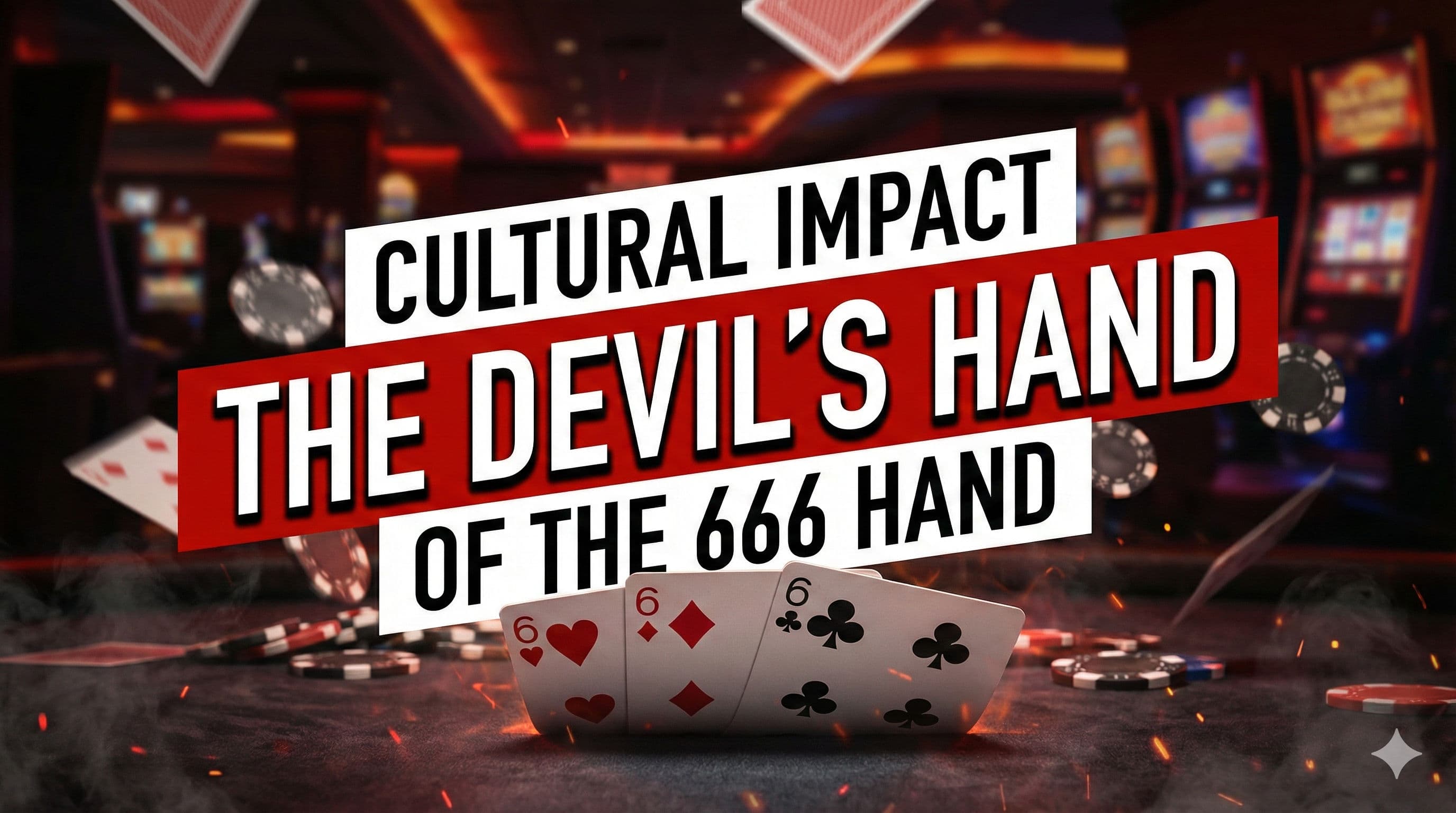
In the vast lexicon of poker hands, some combinations carry more weight than others, not just for their mathematical probability but for the stories, superstitions, and sheer cultural resonance they evoke. Among these, the 666 poker hand stands out, a trio of sixes that transcends mere card values to tap into centuries of folklore and symbolism. Often referred to as "The Devil's Number" this hand conjures images of the mysterious and the ominous, adding an unexpected layer of psychological intrigue to the poker table. While mathematically equivalent to any other set of trips, its notorious numerical identity imbues it with a unique character, making it one of the most talked-about and memorable hands in the game.
This deep dive will explore the fascinating world of the "666" poker hand, from its various chilling nicknames to its practical implications in gameplay. We'll uncover the origins behind its evocative monikers and discuss how this seemingly innocuous combination of cards can influence player perception and strategy. Whether you're a seasoned pro or a casual player, understanding the lore surrounding "666" provides a richer appreciation for the game's cultural tapestry and the subtle psychological battles fought at the felt.
The Cultural Impact of the Number 666 Poker hand
The number 666 has held a potent, often ominous, significance across various cultures and belief systems for millennia. Rooted deeply in eschatological texts, particularly the Book of Revelation, it has been widely interpreted as the "Number of the Beast" or the "Devil's Number". This ingrained cultural perception inevitably bleeds into the realm of poker, a game steeped in psychology, superstition, and player perception.
When a player holds pocket sixes (66) or when three sixes appear on the board (666), the hand transcends its statistical value and takes on a symbolic weight that can influence decisions, elicit emotional responses, and even become a talking point at the table. It’s a testament to poker's intricate blend of skill and human element that a mere numerical combination can carry such a heavy narrative.
Decoding the Nicknames of 'The Ominous Trio'
The 666 poker hand is rich with nicknames, each reflecting its cultural and psychological impact. These monikers highlight the hand's perceived dark side and its unique place in poker's lexicon.
The Devil / Lucifer / The Beast
These are perhaps the most direct and widely recognized nicknames for the 666 hand. They stem unequivocally from the biblical association of the number 666 with malevolent forces. At the poker table, being dealt or seeing three sixes can evoke a spectrum of reactions. Some players might feel a superstitious dread, interpreting it as a harbinger of bad luck or a hand that is "cursed" to lose. Others might ironically embrace its dark symbolism, attempting to project an intimidating aura.
The names "The Devil", "Lucifer" and "The Beast" are more than just labels; they are a shorthand for a cultural narrative that adds an extra layer of intrigue and psychological play to the game, often leading to memorable, if not always successful, outcomes.
Devil's Area Code
A more contemporary and slightly more tongue-in-cheek nickname, "Devil's Area Code" offers a modern twist on the traditional "Devil's Number" moniker. This term cleverly combines the archaic fear associated with 666 with the everyday familiarity of telephone area codes. It’s a playful yet still evocative name that resonates particularly with younger generations of poker players, adding a touch of contemporary humor to the hand's otherwise solemn reputation. Despite its lighter tone, it retains the core association with the infernal, making it instantly recognizable and memorable.
Kotch
The nickname "Kotch" for the 666 poker hand is considerably less common and its precise etymology in poker lore is not widely documented or standardized across all poker communities. Unlike the 'Devil'-themed aliases, which have clear cultural anchors, 'Kotch' appears to be a more esoteric or perhaps regionally specific designation. It might stem from an obscure slang term, a mispronunciation, or a localized inside joke that has gained limited traction.
Its inclusion among more universally recognized names highlights the diverse and sometimes idiosyncratic nature of poker slang, where hands can accrue nicknames through various, often untraceable, pathways. While less prominent, its existence demonstrates the creative and sometimes mysterious ways players personalize the game's elements.
Strategic Considerations When Facing or Holding 666
Beyond its colorful nicknames, the 666 hand also presents practical strategic considerations. When holding a pocket pair of sixes (66), it's generally considered a weak-to-medium strength starting hand. It's prone to being dominated by higher pairs and overcards. The primary objective with pocket sixes pre-flop is usually to set mine – to hit another 6 on the flop to make a set of trips. Without hitting a set, playing 66 aggressively against multiple opponents or strong raises can be precarious. Post-flop, if a third 6 hits the board, forming the infamous 666, it creates a very strong hand (trips).
However, this board texture (three of a kind on the board) often leads to a split pot if no one holds a higher full house or quads. The psychological aspect also plays a role: some players might find themselves making overly cautious or, conversely, overly aggressive plays due to the hand's reputation, rather than solely relying on mathematical probabilities and opponent reads. Even without believing in bad omens, starting with a poker bonus that’s just a little wicked can feel like tempting fate.
The Enduring Legacy of the Devil's Hand
The "666" poker hand holds a unique and enduring place in the tapestry of poker lore. It exemplifies how the game is not merely about cards and probabilities, but also about the human mind, cultural narratives, and the subtle psychological undercurrents that influence every decision.
Whether interpreted as a sign of ill omen, a source of dark amusement, or simply another statistical combination, the trio of sixes never fails to leave an impression. Its collection of vivid nicknames - from the overtly sinister to the playfully modern - ensures that the "Devil's Number" will continue to be a memorable part of the poker experience for generations to come, adding a dash of the mysterious to the strategic battle at the felt.
| Pros | Cons |
|---|---|
The hand's infamous numerical association makes it instantly recognizable and a memorable talking point, adding character to your game. | Holding or encountering 666 can instill superstitious fear or irrational decision-making, leading to sub-optimal play. |
For some, the hand's ominous nature can create a psychological burden for opponents, which a clever player might exploit. | As a pocket pair, 66 is susceptible to overcards and higher pairs, requiring a specific flop (hitting a set) to become strong. |
A 666 board often leads to split pots or indicates a dangerous situation where opponents might hold stronger full houses or quads. |
Related Poker Terms
22233
3322
36TJK
4444
5432A
555
666
76: Seven-Six
77: Pocket Sevens
84: Eight-Four
85: Eight-Five
86: Eight-Six
87: Eight-Seven
88: Pocket Eights
93: Nine-Three
95: Nine-Five
96: Nine-Six
98: Nine-Eight
99: Pocket Nines
A2: Ace-Deuce
A3: Ace-Three
A3A6
A4: Ace-Four
A5: Ace-Five
A6: Ace-Six
A7: Ace-Seven
A8: Ace-Eight
A9: Ace-Nine
AA: Pocket Aces
AA88: Dead Man's Hand
AAA
AAAA
AAAAK
AAJJ
AJ: Ace-Jack
AK47
AQ: Ace-Queen
AT: Ace-Ten
J8: Jack-Eight
J9: Jack-Nine
JA55
JJ: Pocket Jacks
JT: Jack-Ten
K3: King-Three
K4: King-Four
K5: King-Five
K6: King-Six
K7: King-Seven
K8: King-Eight
K9: King-Nine
KJ: King-Jack
KK: Pocket Kings
KKKAA
KKKK
KKKQQ
KKQQ
KQ: King-Queen
KQJT9
KT: King-Ten
Q7: Queen-Seven
Q9: Queen-Nine
QJ: Queen-Jack
QQ: Pocket Queens
QQQQ
QT: Queen-Ten
Steel Wheel
T2: Ten-Deuce
T8: Ten-Eight
T9: Ten-Nine
TT: Pocket Tens
TTT: Trip Tens