

T8: Ten-Eight

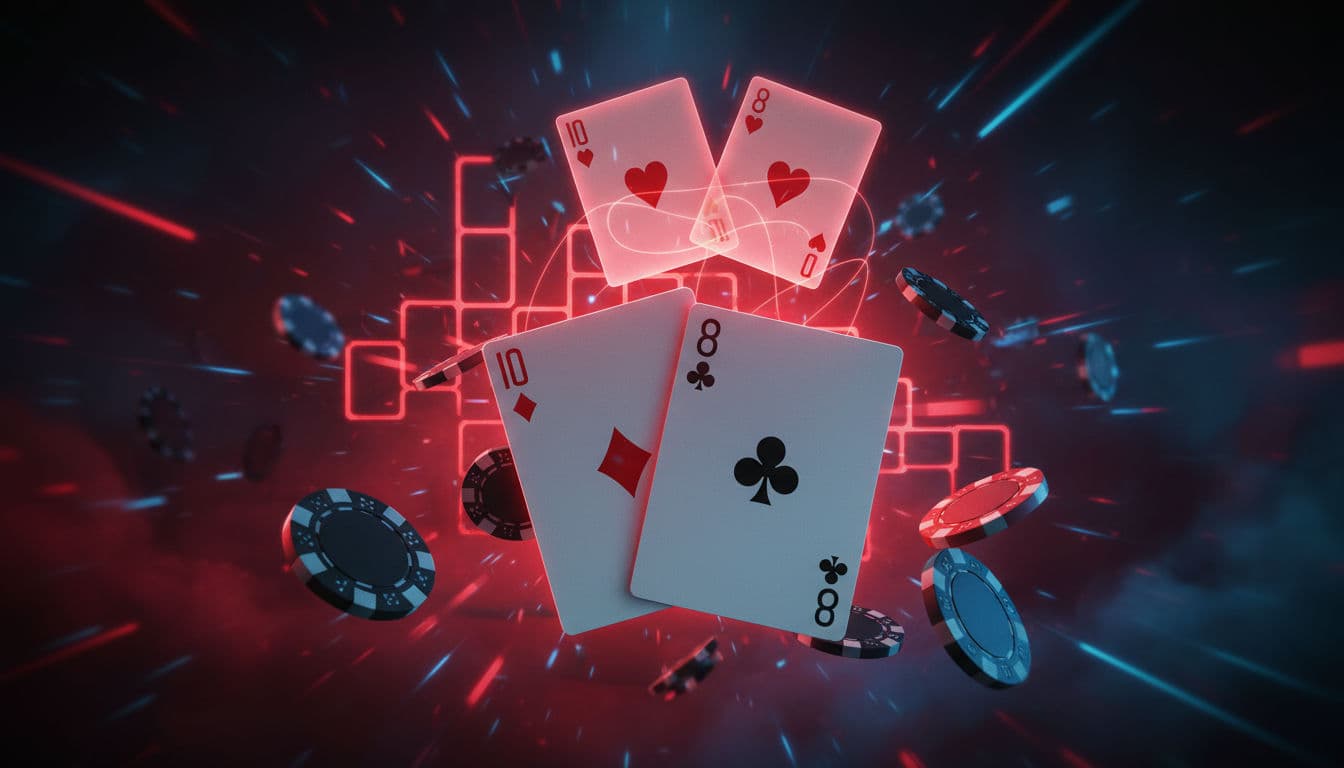
In the dynamic world of poker, understanding not just the raw strength of your starting hands, but also their unique colloquialisms and strategic nuances, can significantly elevate your game. Among the myriad of two-card combinations, the Ten-Eight (T8) stands out, not for its inherent power, but for its intriguing nickname: 'Tetris'. This moniker hints at the hand's often awkward playability, requiring players to 'fit' it into specific scenarios to extract value.
This comprehensive guide delves into the strategic landscape of playing T8 in both its suited and offsuit variations. We'll explore why this particular hand has earned its peculiar nickname, dissect its pre-flop and post-flop considerations, and provide expert insights into how to navigate 'Tetris' in various game conditions. Mastering the subtleties of hands like T8 is a hallmark of an advanced player, capable of identifying nuanced opportunities where others might simply fold.
Deciphering T8 Poker Hand: The Ten-Eight Strategy
The T8 poker hand refers to having a Ten and an Eight as your two hole cards in Texas Hold'em. Like all non-premium starting hands, its value is highly contextual, depending heavily on its suit, your position at the table, the stack sizes involved, and the playing styles of your opponents. While not as flashy as pocket aces or kings, T8 can present interesting speculative opportunities, particularly when suited.
The “Tetris” Comparison: A Visual Analogy for the T8 Poker Hand
The term “Tetris” is sometimes used as an informal comparison for the T8 poker hand, rather than a formally recognized nickname. The idea comes from the visual combination of a Ten and an Eight, which can loosely resemble the block-based shapes of the classic puzzle game. In poker discussions, this analogy is used to describe how the T8 poker hand often needs very specific conditions to become playable.
Much like fitting pieces together in Tetris, success with T8 typically depends on timing, position, and favorable board textures. The comparison highlights the hand’s awkward structure and reinforces the need for patience and discipline, rather than suggesting any established poker folklore or traditional slang.
Strategic Considerations: How to Play T8 Pre-Flop
Pre-flop play with T8 demands a nuanced understanding of its potential and limitations.
T8 Suited: Unlocking Potential
When suited (e.g., T♥8♥), T8 gains significant equity. This hand becomes a 'speculative hand' or a 'semi-connector' (due to the one-card gap), primarily aiming for:
Flush Draws: Hitting four more cards of your suit to make a flush.
Straight Draws: With a board like QJ9, it forms a straight.
Two Pair / Trips: Though less frequent, hitting two pair or trips can result in strong hands.
Suited T8 is best played for implied odds, meaning you're willing to call a small pre-flop raise in hopes of hitting a big hand on the flop and winning a large pot from your opponent.
T8 Offsuit: A More Cautious Approach
T8 offsuit (e.g., T♥8♣) is a considerably weaker hand. The absence of flush potential drastically reduces its long-term profitability. While it can still make straights or two pair, the chances of dominating opponents with a strong hand are much lower. Generally, T8 offsuit is a fold in most positions, unless you are in a very loose game or have a specific read on a very passive opponent in the blinds that allows for a low-risk steal attempt.
Position is Paramount
Position is critical when playing T8. In early position, T8 (especially offsuit) is almost always a fold due to the high likelihood of facing raises from players acting after you. In middle position, suited T8 might be an open-raise in a loose game, but still warrants caution. The optimal positions for playing T8 are the cutoff or button, where you have the advantage of acting last post-flop, allowing you to control the pot size, gather information, and make more informed decisions.
Stack Depth and Implied Odds
Playing T8, particularly suited, is heavily reliant on deep stack play. If you and your opponents have shallow stacks (e.g., 20-30 big blinds), the implied odds for hitting a strong draw or a big hand are not sufficient to justify calling pre-flop. You need significant stack depth (100+ big blinds) to make playing T8 for speculative purposes truly profitable. The goal is to make a small investment pre-flop and win a much larger amount if you hit big post-flop.
Players who want to apply these concepts in practice often prefer online poker rooms, where table selection and stack depth are easier to control. Many players choose to explore recommended online poker partners that also offer deposit bonus options.
Navigating the Flop, Turn, and River with T8
The real challenge of Tetris Poker comes post-flop.
Hitting Draws: Straights and Flushes
When you flop a strong draw (e.g., a flush draw, an open-ended straight draw, or even a gutshot with overcards), T8 gains significant equity. These are often hands you can semi-bluff with, applying pressure when your opponents show weakness, or call bets to realize your equity.
Paired Boards and Kicker Issues
If you hit a pair with T8 (e.g., a Ten on the board), you often face a 'kicker problem'. A pair of Tens with an Eight kicker is easily outkicked by hands like AT, KT, QT, JT. This means you might be making the second-best hand, leading to reverse implied odds where you invest money only to lose to a stronger Ten. Similarly, a pair of Eights often faces the same kicker issues. Always be wary of higher cards on the board that could give opponents a better pair or a better kicker.
When to Fold, When to Call, When to Raise
Fold: If you miss the flop entirely and face aggression, or if you hit a weak pair with a poor kicker and significant action.
Call: With strong draws or if you hit a medium pair and the pot odds are favorable, especially in position.
Raise: For value when you hit a strong hand (two pair, straight, flush) or as a semi-bluff with a strong draw to gain folds and build the pot.
Common Pitfalls When Playing T8
Overplaying weak pairs: Believing a pair of Tens or Eights is stronger than it often is.
Chasing draws with poor odds: Calling too much with gutshot straight draws or weak flush draws that don't offer sufficient implied odds.
Playing out of position: Making it difficult to control the pot and get information.
Not recognizing kicker problems: Leading to costly decisions against better hands.
Conclusion: Mastering the 'Tetris' Hand
The T8 hand embodies the speculative nature of many non-premium holdings in poker. It teaches patience, positional awareness, and the critical skill of evaluating implied odds. While T8 offsuit is often an easy fold, T8 suited, when played judiciously and in the right circumstances, can become a profitable and deceptive weapon in your arsenal. By understanding its strengths, weaknesses, and the crucial role of board texture, you can effectively 'fit' this hand into your strategy and enhance your overall poker game.
| Pros | Cons |
|---|---|
When T8 is suited, it offers excellent implied odds for hitting a flush or a straight, potentially winning a very large pot for a small initial investment. | When T8 makes a pair (Tens or Eights), it often has a weak kicker, making it vulnerable to higher pairs or the same pair with a better kicker. |
As a non-premium hand, hitting a big draw or a strong hand with T8 is often unexpected by opponents, leading to bigger payouts when it connects. | Playing T8, especially offsuit, from early position is highly disadvantageous, as it's hard to control the pot and assess opponent strength. |
The one-card gap allows for various straight possibilities, such as hitting a QJ9 board for a straight, or an 976 board. | With offsuit T8, there's a significant risk of hitting a mediocre hand (like a weak pair) and losing a large amount to a superior hand, especially when not suited. |
Due to its speculative nature and lack of inherent strength, T8 will often miss the board or be easily beaten, requiring frequent folds post-flop. |
Related Poker Terms
22233
3322
36TJK
4444
5432A
555
666
76: Seven-Six
77: Pocket Sevens
84: Eight-Four
85: Eight-Five
86: Eight-Six
87: Eight-Seven
88: Pocket Eights
93: Nine-Three
95: Nine-Five
96: Nine-Six
98: Nine-Eight
99: Pocket Nines
A2: Ace-Deuce
A3: Ace-Three
A3A6
A4: Ace-Four
A5: Ace-Five
A6: Ace-Six
A7: Ace-Seven
A8: Ace-Eight
A9: Ace-Nine
AA: Pocket Aces
AA88: Dead Man's Hand
AAA
AAAA
AAAAK
AAJJ
AJ: Ace-Jack
AK47
AQ: Ace-Queen
AT: Ace-Ten
J8: Jack-Eight
J9: Jack-Nine
JA55
JJ: Pocket Jacks
JT: Jack-Ten
K3: King-Three
K4: King-Four
K5: King-Five
K6: King-Six
K7: King-Seven
K8: King-Eight
K9: King-Nine
KJ: King-Jack
KK: Pocket Kings
KKKAA
KKKK
KKKQQ
KKQQ
KQ: King-Queen
KQJT9
KT: King-Ten
Q7: Queen-Seven
Q9: Queen-Nine
QJ: Queen-Jack
QQ: Pocket Queens
QQQQ
QT: Queen-Ten
Steel Wheel
T2: Ten-Deuce
T8: Ten-Eight
T9: Ten-Nine
TT: Pocket Tens
TTT: Trip Tens
Best Online Poker Bonus Codes


About the Editor

Bence Mitykó is a Somuchpoker poker writer, covering poker news and strategy. He spent four years playing poker professionally, primarily focusing on Heads-Up Sit & Go games, experience that continues to shape his understanding of poker strategy, online poker dynamics, and the wider poker industry.


