K3: King-Three

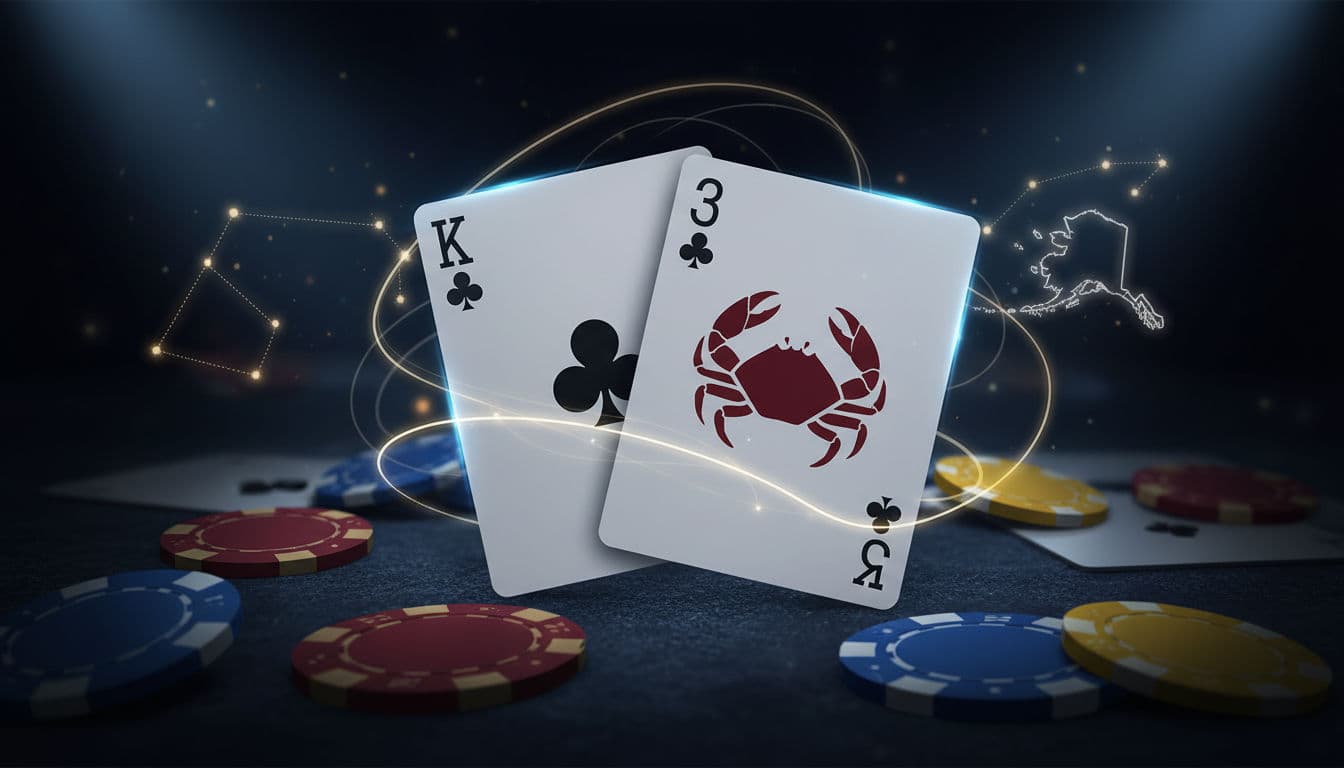
In the expansive and often idiosyncratic lexicon of poker, some starting hands gain notoriety not primarily for their statistical strength, but for the colorful and often humorous aliases they accumulate. The King-Three (K3), comprising a King and a three of any suit, is a prime example of such a hand. While rarely championed by professional strategists, K3 boasts an impressive collection of nicknames that range from the crustacean-inspired "King Crab" to the geographically evocative "Alaska Hand" and the culinary "Swedish Meatballs." These monikers reflect the rich cultural tapestry of the poker world, offering a glimpse into the collective imagination of players.
Beyond the amusing nomenclature, understanding K3's place within poker strategy is crucial for both beginners and seasoned players. While fundamentally a marginal holding, its sporadic appearance and the lore surrounding it mean that recognizing its potential, however limited, and its common pitfalls can inform better decision-making. This comprehensive guide will delve into the intriguing origins of K3's diverse nicknames, analyze the subtle strategic implications of playing this hand, and equip you with an expert perspective on navigating its unique challenges at the poker table.
The King-Three K3 Poker Hand in Context: A Marginal Starting Hand
Before diving into its fascinating nicknames, it's essential to contextualize the K3 (King-Three) as a starting hand. Comprising a King and a Three (e.g., K♠3♥), King Three poker is generally considered a weak to marginal hand in most forms of No-Limit Texas Hold'em . Its primary value lies in its high card (the King) and the potential for suitedness, which opens up backdoor flush draws.
However, the gap between the King and the Three makes straight possibilities remote, and the '3' is a very weak kicker. This inherent weakness often means marginal poker hands like K3 should be folded in early and middle positions, and played with extreme caution, if at all, from later positions or in limped pots.
Unpacking the Quirky Nicknames of K3
The true charm of K3 lies in its extensive list of memorable poker hand nicknames, each hinting at a story or a characteristic association within the poker community. These aliases transform a statistically unremarkable hand into a talking point, adding a layer of humor and tradition to the game.
King Crab: The Primary Identifier
The most pervasive and recognized nickname for K3 is "King Crab poker". The origin of this moniker is delightfully straightforward: the number '3' is visually reminiscent of a crab's claw or body. Coupled with the 'King,' the name "King Crab" perfectly encapsulates the hand. This visual association is so strong that it often forms the basis for other crab-themed nicknames, establishing "King Crab poker" as the foundational alias for the K3 hand. It’s a playful nod to the shape, making the hand instantly recognizable even if its strategic value isn't royal.
Alaska Hand: A Royal Crustacean Connection
Building upon the "King Crab" theme, "Alaska Hand poker" derives directly from the famous Alaskan King Crab. Alaska is renowned globally for its robust crab fishing industry, particularly for the large and highly prized Alaskan King Crab. By extension, associating K3 with "Alaskan King Crab" reinforces the crab imagery while adding a touch of grandeur and geographical specificity. The name evokes imagery of the vast, cold waters where these prized crustaceans are harvested, giving a rather mundane poker hand a surprisingly regal, albeit crustacean-inspired, identity.
Commander Crab: The Hierarchical Derivation
"Commander Crab poker" is a direct derivative, or perhaps an honorary rank, within the "King Crab" family of nicknames. While its exact origin isn't as visually clear as "King Crab" or geographically tied like "Alaska Hand," "Commander Crab" likely emerges as a way to vary the crab theme or perhaps to ironically elevate the hand's status within the pantheon of weak holdings.
It might suggest a perceived (or self-proclaimed) authority over other "crab" hands, or simply be a creative extension used in specific poker circles, reinforcing the playful nature of poker slang.
Swedish Meatballs: An Auditory and Culinary Link
The nickname "Swedish Meatballs" for the K3 poker hand, or sometimes K2, appears to be a playful phonetic association, primarily tied to the sound "SWEDES" (pronounced 's' 'weeds'), which could be a mishearing or phonetic play on the numbers. While "Swedish Meatballs" doesn't have an obvious visual connection like the crab nicknames, its inclusion highlights the often arbitrary and humorous nature of poker slang. It’s a distinctly culinary reference, adding a layer of comfort food to a hand that might otherwise inspire discomfort.
This particular alias often reminds players of specific, memorable moments or simply adds to the hand's memorable eccentricity.
Mortan's Hand: A Personal Anecdote in Lore
"Mortan's Hand" characterized as "the best hand he played" is a unique type of poker nickname – one that is rooted in personal history or inside jokes within a specific poker community. This moniker suggests a player named Mortan (or a similar-sounding name) had a particularly memorable, perhaps improbable, or even comically misguided success with K3. It could be an ironic reference to someone who frequently overplays weak hands, or a genuine acknowledgment of a miraculous win against the odds.
Such nicknames are often localized but become part of broader poker lore if the story is compelling enough, serving as a reminder that even the weakest hands can occasionally deliver unexpected results, for better or worse.
Sizzler: All-You-Can-Eat King Crab
Another nickname, "Sizzler," circles back to the dominant "King Crab" theme but introduces a culinary and experiential dimension. Sizzler is a well-known restaurant chain, historically famous for its "all-you-can-eat King Crab" offerings. Thus, "Sizzler" serves as a meta-nickname, referencing the place where one might indulge in the very "King Crab" that K3 represents. This alias playfully suggests a potential "feast" of chips if one manages to win with K3, or perhaps an ironic reminder of the overindulgence (and potential regret) that can come from playing marginal hands too frequently. It reinforces the deep-seated crab association while adding a layer of pop culture reference.
Strategic Considerations for Playing K3
While K3 is rich in nicknames, its strategic value on the felt requires a grounded and disciplined approach. Here’s an analytical breakdown of K3 strategy and pre-flop strategy:
Early Position (EP): A near-automatic fold. The risk of being dominated by stronger Kings (e.g., AK, KQ, KJ, KT) or overcards is simply too high, and the hand lacks sufficient raw equity to justify calling or raising.
Middle Position (MP): Generally still a fold. If the pot is unopened, a very tight player might consider an open-raise to steal blinds if the table is passive, but this is highly speculative.
Late Position (LP) / Button (BTN): Here, K3 gains a sliver of playability, especially if the pot has been limped or if you're facing a steal opportunity. With position, you can control the pot size and gain information. However, beware of domination.
Blinds: From the Big Blind, if the pot is limped around, you often get to see a flop cheaply. If facing a raise, a call might be warranted if the raise is small and you're getting good pot odds, hoping to hit a strong King or a very rare two-pair/trips.
Post-Flop Play with K3
Hitting a King: If you flop a King, you have top pair. However, your kicker (the '3') is extremely weak. Be very cautious if there's significant action, as you're likely dominated by Kx with a better kicker. Slow-playing is risky, and aggressive betting might only be good for value from weaker pairs or draws.
Hitting Two Pair or Trips: Rare but possible. These are strong hands, but the odds are against them.
Flush Draws (Suited K3): If you have a suited K3 and flop a flush draw, you have some equity. However, it's still a bottom-end flush draw if the King isn't part of the draw itself. Proceed with caution and evaluate pot odds.
Straight Draws: Extremely unlikely. K3 needs a 4-5-6 to make a straight, which is a significant gap and very hard to hit.
Mastering Marginal Hands in Poker
The K3 serves as a valuable lesson in poker: not all hands are created equal, and understanding marginal poker hands is key to long-term success. The ability to fold K3 in unfavorable situations, despite its interesting nicknames, demonstrates discipline. It's a hand that often tests patience and judgment, reinforcing the principle that position, opponent tendencies, and pot dynamics often dictate the playability of even the weakest starting hands.
| Pros | Cons |
|---|---|
Due to its perceived weakness, K3 is not a hand opponents typically put you on when you show aggression, potentially allowing for deceptive plays if a strong board hits. | If you hit a King on the flop, your '3' kicker is very weak, meaning you will often be outkicked by any other Kx hand, leading to difficult and often losing situations. |
While rare, hitting two pair (K-3-X) or trips (K-K-X, 3-3-X) with K3 can result in a very strong hand, especially if the board texture allows for it without giving opponents obvious better draws. | The gap between the King and the Three makes hitting a straight extremely improbable, limiting the hand's potential to develop into a strong drawing hand on most boards. |
K3 often leads to marginal hands post-flop, making it difficult to play profitably. You're frequently in a guessing game, making it hard to extract value or fold effectively. |
Related Poker Terms
22233
3322
36TJK
4444
5432A
555
666
76: Seven-Six
77: Pocket Sevens
84: Eight-Four
85: Eight-Five
86: Eight-Six
87: Eight-Seven
88: Pocket Eights
93: Nine-Three
95: Nine-Five
96: Nine-Six
98: Nine-Eight
99: Pocket Nines
A2: Ace-Deuce
A3: Ace-Three
A3A6
A4: Ace-Four
A5: Ace-Five
A6: Ace-Six
A7: Ace-Seven
A8: Ace-Eight
A9: Ace-Nine
AA: Pocket Aces
AA88: Dead Man's Hand
AAA
AAAA
AAAAK
AAJJ
AJ: Ace-Jack
AK47
AQ: Ace-Queen
AT: Ace-Ten
J8: Jack-Eight
J9: Jack-Nine
JA55
JJ: Pocket Jacks
JT: Jack-Ten
K3: King-Three
K4: King-Four
K5: King-Five
K6: King-Six
K7: King-Seven
K8: King-Eight
K9: King-Nine
KJ: King-Jack
KK: Pocket Kings
KKKAA
KKKK
KKKQQ
KKQQ
KQ: King-Queen
KQJT9
KT: King-Ten
Q7: Queen-Seven
Q9: Queen-Nine
QJ: Queen-Jack
QQ: Pocket Queens
QQQQ
QT: Queen-Ten
Steel Wheel
T2: Ten-Deuce
T8: Ten-Eight
T9: Ten-Nine
TT: Pocket Tens
TTT: Trip Tens