QT: Queen-Ten

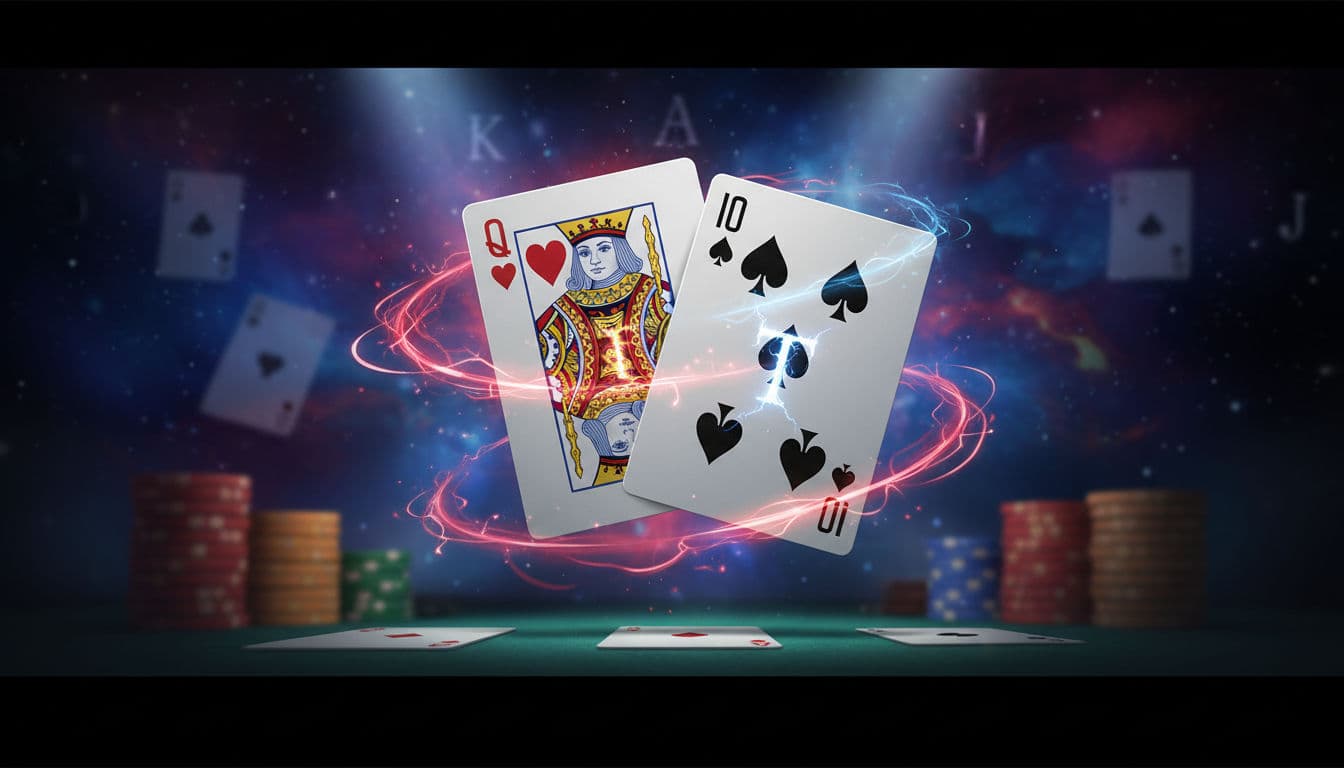
In the intricate world of poker, some starting hands carry a mystique that transcends their raw card value. Queen-Ten, often abbreviated as QT, is undeniably one such hand. It's a hand shrouded in paradox: celebrated as an "aura hand" for its uncanny ability to connect with the board for powerful straights and its inherent bluffing potential, yet simultaneously cautioned against with the ominous nickname "Tina Turner," implying it "always gets beat." This dual identity makes QT one of the most intriguing and often misunderstood hands in Texas Hold'em. From its memorable role in a World Series of Poker (WSOP) championship to its colourful array of nicknames, QT offers a rich tapestry for strategic analysis and historical reflection.
Understanding Queen-Ten isn't just about knowing its mathematical probabilities; it's about appreciating its psychological impact at the table and learning when to harness its strengths and when to respect its inherent weaknesses. This comprehensive guide delves deep into the unique characteristics of QT, exploring why some call it a magnet for nuts straights, dissecting its myriad nicknames, and recounting its legendary moment in poker history. Whether you're a seasoned pro looking for a fresh perspective or an aspiring player aiming to refine your game, unraveling the enigma of QT will undoubtedly enhance your strategic insights and table awareness.
The Allure of the QT Poker Hand: Potent Straights and Bluffing Prowess
The term aura hand is not one easily bestowed, yet QT has earned this moniker. It refers to hands that, anecdotally or through perceived experience, seem to win disproportionately often, especially when forming the nut straight, and offer robust bluffing potential. For Queen-Ten, this aura stems from its excellent connectivity. When suited, playing QT provides two overcards and strong straight draw capabilities, particularly for the nuts. A flop like A-K-J or K-J-X immediately gives QT either the nut straight or a formidable draw to it, often making it a deceptively powerful holding that players sometimes under-respect.
The ability to make the nut straight is a significant advantage, as it simplifies decision-making and often allows for aggressive play, extracting maximum value. Furthermore, the semi-connected nature of the Queen Ten strategy lends itself well to semi-bluffing on various board textures. Holding QT on a board like J-9-2 can represent a strong straight draw, enabling players to apply pressure and potentially win pots without ever showing down a made hand. This combination of strong drawing potential and perceived strength, especially when played aggressively, contributes heavily to its "aura" as a hand that "always hits" or "finds a way to win." However, this perception can also be its downfall, leading players to overvalue it in marginal spots.
A Lexicon of Lore: Nicknames for Queen-Ten
Like many distinctive poker nicknames, Queen-Ten has accumulated a rich collection of aliases, each offering a glimpse into its character or history:
Cutie: Perhaps the most straightforward, this nickname is purely phonetic, a simple and endearing play on the "Q-T" abbreviation. It belies the hand's often complex and tricky nature.
Goolsby: Named in honor of Everett Goolsby, a prominent and respected Texas gambler from a bygone era. Goolsby was known to be a crony of poker legends like Doyle Brunson, Cowboy Wolford, and Benny Binion. This moniker ties QT directly to the roots of professional poker .
Tarantino: A nod to the iconic filmmaker Quentin Tarantino. While the exact connection isn't always clear, it might evoke the high-stakes drama and unexpected twists characteristic of Tarantino's cinematic universe.
Q-Tip: A clever backronym, transforming "QT" into a common household item – the cotton swab. This playful name can sometimes imply a hand that's "clean" or simply a "starter."
Quint: A more direct, imitative nickname, derived simply from the sound and letters of "Queen-Ten," emphasizing its numerical sequence potential.
Tina Turner: This is arguably the most poignant and cautionary nickname for QT. "It always gets beat" is the accompanying phrase, capturing the hand's propensity to run into stronger holdings. This nickname offers a counter-narrative to its "aura hand" perception.
Robert Varkonyi's Unlikely Triumph: QT at the 2002 WSOP Main Event
No discussion of Queen-Ten would be complete without recounting its starring role in one of the most memorable World Series of Poker Main Event upsets. In 2002, Robert Varkonyi (a relatively unknown amateur) defied all odds to win the coveted championship bracelet and $2 million prize money. His journey to victory was highlighted by a pivotal 2002 WSOP hand where he held Queen-Ten. In a dramatic confrontation, Varkonyi famously knocked out the legendary "Poker Brat" Phil Hellmuth, with this very hand.
The significance of this moment cannot be overstated. Varkonyi's win, sealed with QT against a formidable opponent, cemented the hand's place in poker lore. It showcased that even a seemingly unremarkable starting hand, when played strategically and with a touch of luck, can lead to the ultimate triumph. This event undoubtedly contributed to the "aura" surrounding Texas Hold'em, providing an inspiring narrative for everyday players.
Strategic Considerations for Mastering Queen-Ten
Position is Paramount: Like many speculative hands, playing QT benefits immensely from late position. This allows you to observe opponent actions, control pot size, and make more informed decisions when chasing draws or extracting value.
Suited vs. Offsuit: QT suited (QTs) is significantly stronger than QT unsuited (QTo). The added equity from flush draws enhances its playability, bluffing potential, and overall profitability.
Connecting with the Board: QT excels on boards that offer straight possibilities, especially those with a Jack, King, or a nine. Flopping a gutshot or open-ended straight draw gives you strong equity. However, be wary of boards where your kicker is weak (e.g., a Queen on a Q-7-2 board).
Identifying "Tina Turner" Moments: Recognize when your QT is likely to be dominated. If you make a straight, ensure it's the nut straight. Overplaying marginal hands with QT can quickly lead to costly situations, confirming its "always gets beat" reputation.
Bluffing and Semi-Bluffing: Leverage QT's connectivity for strategic bluffs, especially when you have good equity. The hand's perceived strength can sometimes be exploited, but always be mindful of your opponents and board texture.
Conclusion: The Enduring Enigma of Queen-Ten
Queen-Ten, or QT, is far more than just two cards; it's a hand steeped in legend, strategic complexity, and a captivating duality. From its designation as an "aura poker hand" for its knack for making formidable straights to its cautionary "Tina Turner" moniker, QT demands respect and careful consideration. Its indelible mark on poker history, solidified by Robert Varkonyi's 2002 WSOP triumph, further burnishes its unique appeal.
Mastering QT involves understanding when to aggressively pursue its high potential and when to exercise prudence, recognizing its vulnerabilities. By appreciating its poker nicknames, its historical significance, and its Queen Ten strategy, players can unlock the full potential of this enigmatic hand.
| Pros | Cons |
|---|---|
QT has excellent connectivity, making it a strong contender for building nut straights on various boards, especially with A-K-J or K-J-X structures. This potential can lead to big pots. | When pairing the Queen, the Ten kicker is often insufficient against stronger Queen-X holdings (e.g., AQ, KQ), leading to dominated hands and difficult decisions post-flop. |
The semi-connected nature and high card value of Queen-Ten allow for effective semi-bluffs on many board textures, representing strong draws or made hands, thus putting opponents under pressure. | The 'aura hand' perception can lead players to overvalue QT, especially when it hits a non-nut straight or a weak pair, resulting in costly calls or aggressive plays in unfavourable situations. |
Perceived as an 'aura hand' that 'always hits,' QT can lead opponents to misjudge its strength, allowing skilled players to extract more value or successfully bluff when appropriate. | The nickname 'Tina Turner' (it always gets beat) highlights QT's tendency to run into stronger hands, particularly when making a lower straight or having its top pair outkicked, requiring careful discernment. |
Related Poker Terms
22233
33: Treys
3322
36TJK
4444
5432A
555
666
76: Seven-Six
77: Pocket Sevens
84: Eight-Four
85: Eight-Five
86: Eight-Six
87: Eight-Seven
88: Pocket Eights
93: Nine-Three
95: Nine-Five
96: Nine-Six
98: Nine-Eight
99: Pocket Nines
A2: Ace-Deuce
A3: Ace-Three
A3A6
A4: Ace-Four
A5: Ace-Five
A6: Ace-Six
A7: Ace-Seven
A8: Ace-Eight
A9: Ace-Nine
AA: Pocket Aces
AA88: Dead Man's Hand
AAA
AAAA
AAAAK
AAJJ
AJ: Ace-Jack
AK47
AKo (Ace-King Offsuit)
AKs: Ace-King Suited
AQ: Ace-Queen
AT: Ace-Ten
J8: Jack-Eight
J9: Jack-Nine
JA55
JJ: Pocket Jacks
JT: Jack-Ten
K3: King-Three
K4: King-Four
K5: King-Five
K6: King-Six
K7: King-Seven
K8: King-Eight
K9: King-Nine
KJ: King-Jack
KK: Pocket Kings
KKKAA
KKKK
KKKQQ
KKQQ
KQ: King-Queen
KQJT9
KT: King-Ten
Offsuit
Q7: Queen-Seven
Q9: Queen-Nine
QJ: Queen-Jack
QQ: Pocket Queens
QQQQ
QT: Queen-Ten
Starting Hand
Steel Wheel
Suited Connectors
T2: Ten-Deuce
T8: Ten-Eight
T9: Ten-Nine
TT: Pocket Tens
TTT: Trip Tens