

AQ: Ace-Queen

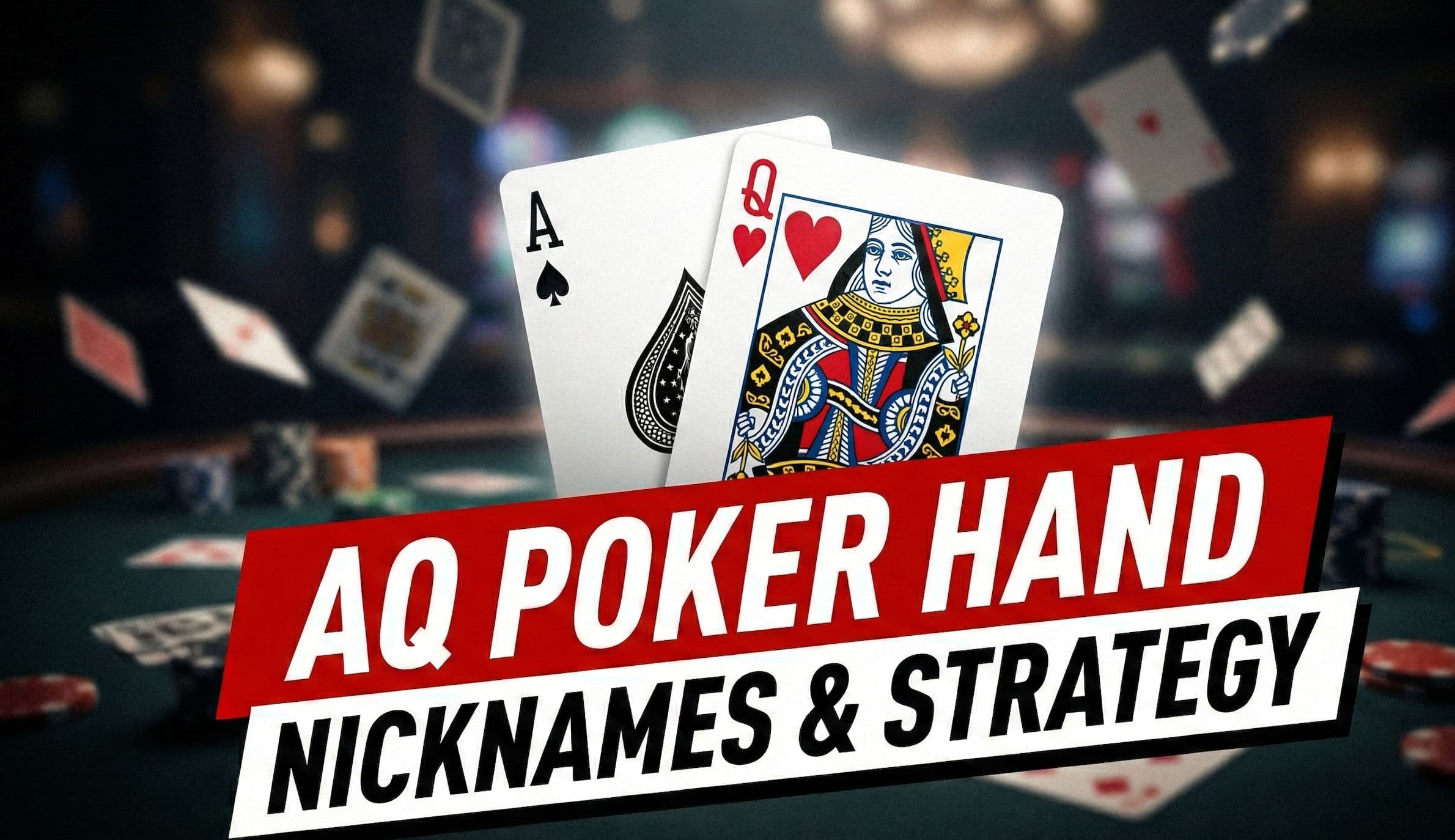
In the intricate landscape of Texas Hold'em, certain starting hands carry a mystique, not just for their mathematical equity but for the folklore and unique monikers they acquire. Ace-Queen, often abbreviated as AQ, stands as one such hand. Positioned tantalizingly close to the elite premium hands, AQ possesses both immense potential and a propensity for heartbreak, leading to a rich tapestry of nicknames that reflect its complex nature. From romantic allusions to derogatory slurs and even a legendary poker player's personal vendetta, AQ's nicknames offer a fascinating glimpse into the collective psyche of the poker community.
This comprehensive guide will delve deep into the world of Ace-Queen, exploring the origins and meanings behind its most famous nicknames. We will analyze the strategic implications of playing AQ, examining why it can be a powerhouse in some situations and a significant leak in others. Furthermore, we'll uncover the intriguing connection to poker icon Doyle Brunson, whose candid opinions and personal experiences with AQ have cemented its place in poker legend. Prepare to uncover the dual identity of AQ – a hand capable of crushing opponents or, at times, crushing the player holding it.
The Duality of Ace Queen: Strategy and Nicknames
Ace Queen (AQ) occupies a peculiar yet prominent position within the hierarchy of starting hands in Texas Hold'em. Often lauded for its high cards and potential for strong flushes and straights, it is simultaneously feared for its ability to create difficult decisions and drain chip stacks. This duality has given rise to a fascinating array of nicknames, each offering a unique lens through which to view this complex hand.
This inherent complexity is best explored in online poker, where the ability to review hand histories and analyze showdown data helps players understand how the AQ poker hand performs against various ranges over a large sample size.
"Antony & Cleopatra": The Allure and Peril of Power
One of the most evocative nicknames for Ace Queen is "Antony & Cleopatra." This moniker directly references the tragic romance between the Roman general Mark Antony and the Egyptian queen Cleopatra. The 'A' naturally stands for Antony, while the 'Q' represents Cleopatra. This comparison is far from arbitrary; it imbues the hand with a sense of grandeur, power, and high stakes, much like the historical figures themselves.
Holding AQ can feel like commanding a formidable force, full of promise and the potential for empire-building pots. However, much like the historical couple, the story of AQ often ends dramatically. The hand, while strong, can easily fall victim to superior holdings (like AK) or be outdrawn, leading to a "tragic" bust-out, echoing the Shakespearean drama it evokes.
"Big Chick", "Little Slick", and "Mrs Slick": Living in the Shadow of Greatness
A cluster of nicknames for Ace Queen directly compares it to its slightly superior cousin, Ace-King (AK), famously known as "Big Slick." Terms like "Big Chick", "Little Slick", and "Mrs Slick" all highlight AQ's status as a formidable hand that nonetheless plays second fiddle to AK. "Big Slick" refers to AK's ability to "slick" down a lot of chips. By extension, "Big Chick" suggests a similar, yet somewhat softer or less dominant, version. "Little Slick" explicitly positions it as a smaller, perhaps less dangerous, iteration of the premier "slick". "Mrs Slick" personifies the Queen as the female counterpart to the King in "Big Slick", reinforcing the idea of a slightly weaker, albeit still powerful, partner.
These comparisons are crucial for understanding AQ's strategic value. While Ace Queen dominates many other Ace-X hands (like AJ, AT), it is itself dominated by Ace-King. This concept of "domination" is critical: if your AQ is up against an opponent's AK, you have only three outs to improve (the remaining three Queens), making it a statistically disadvantaged position pre-flop. The frustration of being "dominated" by AK after committing chips is a common experience, leading to these comparative nicknames that subtly lament its secondary status.
"Doyle Brunson": The Legend's Personal Vendetta
Perhaps no nickname is more steeped in poker lore and strategic caution than " Doyle Brunson ". This moniker emerged from the legendary "Texas Dolly" himself, who famously expressed his strong aversion to playing Ace Queen. In his seminal work, "Super System", Brunson explicitly stated his dislike for AQ, particularly offsuit, due to its tendency to put players in difficult post-flop situations. The legend was further cemented during the 2008 World Series of Poker Main Event, where Brunson was famously eliminated holding AQ offsuit. This incident, publicized globally, solidified the hand's reputation as a potential trap, even for the best in the game.
Brunson's perspective, though partly anecdotal, resonates with many experienced players. AQ often looks very strong pre-flop, tempting players to invest heavily. However, if an Ace or Queen doesn't hit the flop, or if a smaller card pairs, it can be tough to navigate. If an Ace hits, there's always the fear that an opponent has AK. If a Queen hits, a player with QQ or KK, or AA is a concern.
This "reverse implied odds" scenario, where winning a small pot costs you a big one, or hitting your card still puts you behind a better hand, is what likely fueled Brunson's disdain. His name attached to the hand serves as a perpetual warning: proceed with caution, for even the strongest hands can be deceptive.
"Rocket Queen": The High-Flying, Unpredictable Thrill
On a lighter note, "Rocket Queen" is a nickname derived from the popular Guns N' Roses song. This term, while less about strategic nuance, captures the electrifying, high-octane potential of the hand. "Rockets" (AA) are the strongest starting hand, implying incredible power. While AQ isn't "rockets," the "Rocket Queen" nickname suggests a hand that can take off explosively, leading to big pots and exciting moments. It evokes a sense of wild, untamed energy and unpredictability, much like rock music itself. This nickname highlights the thrilling aspect of poker, where even hands that aren't the absolute best can still deliver a rush and significant wins when played correctly, and luck favors the bold.
Strategic Mastery of Ace Queen
Beyond its colorful nicknames, understanding the optimal strategy for playing AQ is paramount for any serious poker player. AQ, particularly suited, is a premium starting hand. However, its value fluctuates significantly based on position, stack depth, and opponent tendencies.
Pre-flop Considerations:
Early Position: In early positions, AQ should generally be played aggressively with a raise to narrow the field and potentially build a pot. Be wary of 3-bets from tight players, which might indicate AK or a pocket pair.
Middle/Late Position: AQ gains considerable strength in middle and late positions, allowing you to control the pot size and gather more information. It's an excellent hand for 3-betting against loose openers or for flatting raises if you have good implied odds.
Blind Play: Defending your blinds with AQ against a late-position raise is often advisable, but proceed with caution post-flop.
Post-flop Navigation:
The true challenge of AQ often emerges post-flop. Without hitting an Ace or Queen, or drawing to a flush/straight, the hand becomes much weaker. Even hitting a pair can be problematic:
Top Pair (Ace or Queen): While strong, always be mindful of opponents holding a better kicker (if you hit an Ace) or an overpair. If you hit an Ace, AK dominates. If you hit a Queen, QQ, KK, AA, or even a smaller set can be problematic.
Draws: AQ suited offers excellent backdoor and open-ended straight and flush draw potential, adding equity even when you don't hit a pair immediately.
Managing Bet Sizing: Careful bet sizing is crucial to avoid over-committing to a dominated hand or giving too much information.
Ultimately, Ace Queen is a powerful tool in a skilled player's arsenal. Recognizing its potential, understanding its limitations, and respecting the folklore surrounding it, particularly the lessons from legends like Doyle Brunson, will significantly enhance your strategic approach to this iconic poker hand.
| Pros | Cons |
|---|---|
Ace-Queen is inherently a strong hand due to its high-card composition, often having significant pre-flop equity against a wide range of opponent hands. | The most significant drawback is its complete domination by Ace-King, leaving AQ with only three outs to win pre-flop in a direct confrontation, leading to difficult and often expensive decisions. |
AQ dominates numerous weaker Ace-X hands (e.g., AJ, AT) and King-X hands, giving it a strong advantage in many confrontations. | Hitting an Ace or Queen on the board can still put you behind a stronger hand (e.g., AK, QQ, KK, AA), leading to situations where winning a small pot costs you a large one. |
When suited, Ace-Queen offers excellent backdoor and open-ended straight and flush draw opportunities, adding significant post-flop equity. | Without significant improvement on the flop, AQ can be a difficult hand to play, often leading to marginal decisions and potential over-commitment. |
Its strength often justifies pre-flop raises and 3-bets, allowing players to build pots, gain initiative, and narrow the field. | Even if an Ace hits, your Queen kicker can be a problem against an opponent holding AK, leading to second-best scenarios. |
Related Poker Terms
22233
33: Treys
3322
36TJK
4444
5432A
555
666
76: Seven-Six
77: Pocket Sevens
84: Eight-Four
85: Eight-Five
86: Eight-Six
87: Eight-Seven
88: Pocket Eights
93: Nine-Three
95: Nine-Five
96: Nine-Six
98: Nine-Eight
99: Pocket Nines
A2: Ace-Deuce
A3: Ace-Three
A3A6
A4: Ace-Four
A5: Ace-Five
A6: Ace-Six
A7: Ace-Seven
A8: Ace-Eight
A9: Ace-Nine
AA: Pocket Aces
AA88: Dead Man's Hand
AAA
AAAA
AAAAK
AAJJ
AJ: Ace-Jack
AK47
AKo (Ace-King Offsuit)
AKs: Ace-King Suited
AQ: Ace-Queen
AT: Ace-Ten
J8: Jack-Eight
J9: Jack-Nine
JA55
JJ: Pocket Jacks
JT: Jack-Ten
K3: King-Three
K4: King-Four
K5: King-Five
K6: King-Six
K7: King-Seven
K8: King-Eight
K9: King-Nine
KJ: King-Jack
KK: Pocket Kings
KKKAA
KKKK
KKKQQ
KKQQ
KQ: King-Queen
KQJT9
KT: King-Ten
Offsuit
Q7: Queen-Seven
Q9: Queen-Nine
QJ: Queen-Jack
QQ: Pocket Queens
QQQQ
QT: Queen-Ten
Starting Hand
Steel Wheel
Suited Connectors
T2: Ten-Deuce
T8: Ten-Eight
T9: Ten-Nine
TT: Pocket Tens
TTT: Trip Tens
Best Online Poker Bonus Codes


About the Editor

Bence Mitykó is a Somuchpoker poker writer, covering poker news and strategy. He spent four years playing poker professionally, primarily focusing on Heads-Up Sit & Go games, experience that continues to shape his understanding of poker strategy, online poker dynamics, and the wider poker industry.


