

J9: Jack-Nine

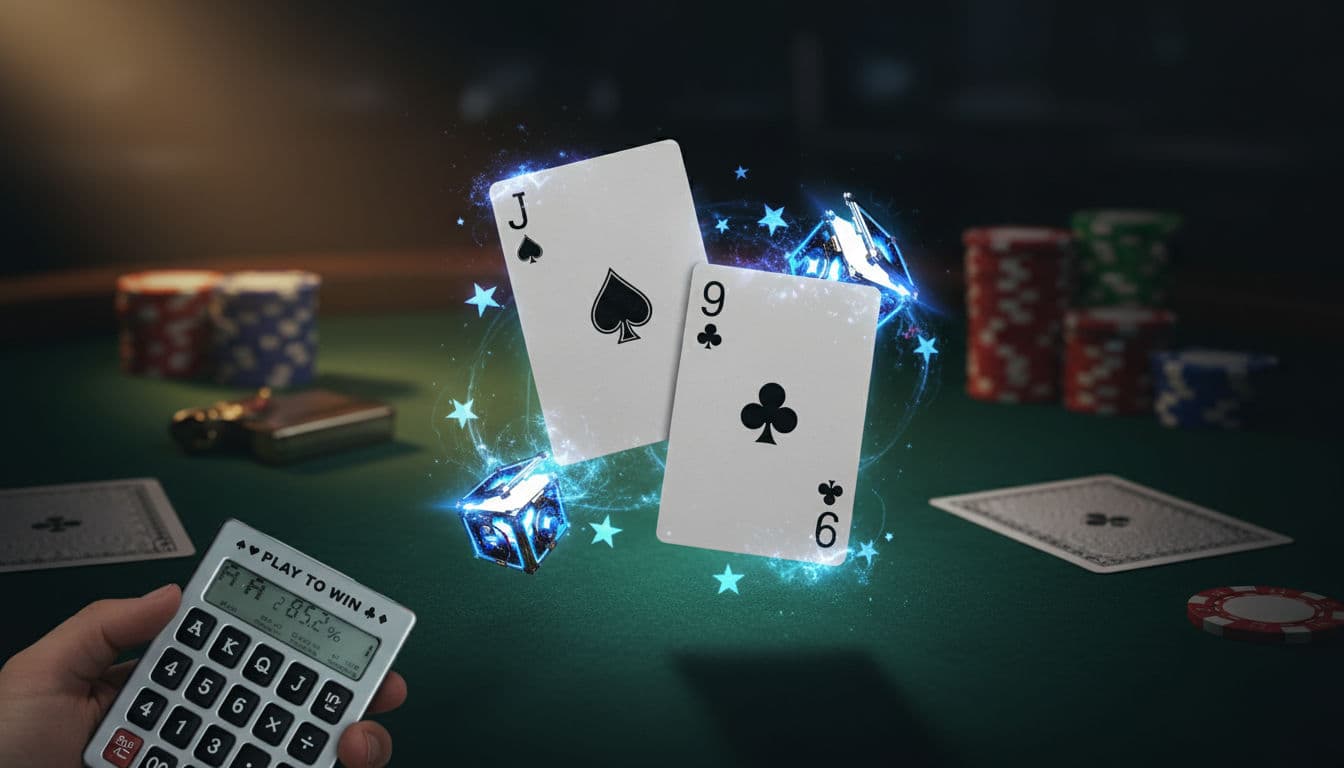
While some poker hands instantly command respect and fear at the felt, others, like J9 (Jack-Nine), often fall into the category of 'marginal' – hands played with a blend of caution and calculated aggression. Yet, J9 holds a uniquely intriguing position within the broader poker landscape, distinguishing itself not just as a playable hand in Texas Hold'em but also through its peculiar role in variant games and its unexpected place in poker folklore. This comprehensive guide delves into the specific contexts that elevate J9 beyond a mere starting hand, exploring its 'wild card' status in the game of Braggars and recounting a legendary professional's remarkable success with this seemingly unassuming combination. We will dissect the strategic considerations for playing J9 effectively, both suited and unsuited, offering expert insights into its pre-flop and post-flop potential, while also acknowledging its inherent challenges and risks.
Beyond the Surface: The Strategic Potential of the J9 Poker Hand
The J9 poker hand, whether suited or unsuited, is often overlooked by novice players who prefer premium pairs or strong broadway cards. However, experienced players understand that every hand holds potential, especially when considered within the context of game type, opponent tendencies, and table dynamics. J9's story is particularly rich, defined by its specific utility in lesser-known variants and its improbable contributions to the legacies of poker giants. This blend of strategic nuance and historical intrigue makes J9 far more than just another connector hand; it's a testament to poker's diverse and unpredictable nature.
J9 as the Wild Card: The Game of Braggars
One of the more obscure references tied to the J9 poker hand comes from historical British card games such as Brag, a predecessor to modern poker variants . In certain folk interpretations and informal variants, Jacks and Nines were occasionally treated as flexible or unusually powerful cards. While this concept does not exist in modern Texas Hold’em rules, the association survived as poker slang, reinforcing J9’s reputation as an unpredictable or “wild” holding in poker folklore rather than formal gameplay.
While J9 remains a "wild card" in poker history, you can experience the most modern evolution of the game at CoinPoker, the leading crypto platform for those looking to blend tradition with cutting-edge technology.
The Cloutier Conundrum: J♣ 9♣ and Poker Legend
Beyond its role in Braggars, the J9 hand, specifically J♣ 9♣ (Jack-Nine suited clubs), holds a storied place in the annals of poker history, largely thanks to the legendary poker professional, T.J. Cloutier. Known for his aggressive play and uncanny ability to navigate complex tournament structures, Cloutier famously recounted a year in which he flopped three straight flushes with this exact hand.
This anecdote, widely shared within poker circles, highlights the incredible variance and occasional magic that can occur in the game. While J♣ 9♣ is generally considered a speculative hand in No-Limit Hold'em, Cloutier's remarkable achievement serves as a vivid reminder that even seemingly ordinary starting hands possess tremendous potential when the cards fall just right. It underscores the allure of hitting big draws and the lasting impact of such memorable moments in a professional's career.
Navigating J9 in No-Limit Hold'em: A Strategic Blueprint
For players venturing into the strategic landscape of No-Limit Hold'em, J9 demands a nuanced approach. It is not a premium hand, nor is it a guaranteed winner, but its playability hinges heavily on situational factors.
Pre-flop Considerations with the J9 Poker Hand
Position is Paramount: Playing the J9 poker hand from early position (UTG, UTG+1) is generally ill-advised. Its speculative nature means it often plays better from late position (Cutoff, Button) where you have more information about your opponents' actions.
Suited vs. Offsuit: A suited J9 poker hand (e.g., J♠ 9♠) is significantly more valuable than an unsuited J9 (e.g., J♠ 9♥). Suitedness provides additional flush equity, enhancing its potential for big draws and increasing its implied odds.
Opponent Tendencies: Against tight, predictable players, J9 might be a fold. Against looser, more aggressive opponents, it can be used to set traps or call speculative bets in position, aiming for strong draws.
Stack Sizes: J9 thrives in deep-stacked scenarios where you can realize maximum implied odds when hitting your strong draws. In short-stacked situations, its speculative nature makes it less appealing.
Post-flop Playability and Risks with the J9 poker hand
Once the flop hits, the strategy for J9 becomes even more critical:
Hitting Straight Draws: J9 can hit various straight draws, including gutshots (e.g., Q-T-8 board for a Jack-high straight) and open-ended straights (e.g., T-8-7 board for a Jack-high straight). These draws, especially when combined with flush draws (if the J9 suited), offer significant equity.
Making Pairs: Hitting a pair of Jacks or Nines can be problematic. While it's a pair, J9 is often dominated by stronger kicker hands (e.g., KJ, QJ, A9, K9). Be wary of getting involved in large pots with just a single pair.
Flush Draws: If the J9 suited, it can flop a flush draw, providing strong equity. Combining a flush draw with a straight draw (a "combo draw") makes J9 a very powerful hand to continue with.
Reverse Implied Odds: One of the biggest dangers of playing J9 is the potential for reverse implied odds. You might hit a weak pair or a smaller straight that loses to a stronger hand, costing you chips when you thought you were ahead.
Maximizing Potential and Minimizing Risk
To effectively wield J9, discipline is key. Avoid chasing draws when pot odds are unfavorable, and be prepared to fold when facing significant aggression, especially on dry or unfavorable boards. The hand excels when played aggressively from position, or by calling in position with good implied odds to hit a strong draw. Understanding your opponents and the flow of the game will dictate whether J9 is a strategic asset or a costly liability. It is a hand that truly exemplifies the balance between skill and luck, demanding careful consideration in every street of play.
| Pros | Cons |
|---|---|
When J9 is suited, it has excellent potential to flop both straight and flush draws, providing many outs and good implied odds, especially in deep-stacked games. | If you hit a single pair (Jack or Nine), your kicker is often weak, making it vulnerable to hands like KJ, QJ, A9, or K9. |
In the game of Braggars, Jacks and Nines are wild cards, making J9 an incredibly powerful hand capable of forming any desired combination. | Playing J9 out of position makes it difficult to control the pot, gather information, and realize its equity, often leading to costly mistakes. |
J9 is often seen as a weak hand, allowing players to win bigger pots when they hit strong draws, as opponents may not expect such a hand. | Hitting a marginal pair or a smaller straight can lead to losing a large pot to a stronger hand, especially if you get carried away with betting. |
Related Poker Terms
22233
33: Treys
3322
36TJK
4444
5432A
555
666
76: Seven-Six
77: Pocket Sevens
84: Eight-Four
85: Eight-Five
86: Eight-Six
87: Eight-Seven
88: Pocket Eights
93: Nine-Three
95: Nine-Five
96: Nine-Six
98: Nine-Eight
99: Pocket Nines
A2: Ace-Deuce
A3: Ace-Three
A3A6
A4: Ace-Four
A5: Ace-Five
A6: Ace-Six
A7: Ace-Seven
A8: Ace-Eight
A9: Ace-Nine
AA: Pocket Aces
AA88: Dead Man's Hand
AAA
AAAA
AAAAK
AAJJ
AJ: Ace-Jack
AK47
AKo (Ace-King Offsuit)
AKs: Ace-King Suited
AQ: Ace-Queen
AT: Ace-Ten
J8: Jack-Eight
J9: Jack-Nine
JA55
JJ: Pocket Jacks
JT: Jack-Ten
K3: King-Three
K4: King-Four
K5: King-Five
K6: King-Six
K7: King-Seven
K8: King-Eight
K9: King-Nine
KJ: King-Jack
KK: Pocket Kings
KKKAA
KKKK
KKKQQ
KKQQ
KQ: King-Queen
KQJT9
KT: King-Ten
Offsuit
Q7: Queen-Seven
Q9: Queen-Nine
QJ: Queen-Jack
QQ: Pocket Queens
QQQQ
QT: Queen-Ten
Starting Hand
Steel Wheel
Suited Connectors
T2: Ten-Deuce
T8: Ten-Eight
T9: Ten-Nine
TT: Pocket Tens
TTT: Trip Tens
Best Online Poker Bonus Codes


About the Editor

Bence Mitykó is a Somuchpoker poker writer, covering poker news and strategy. He spent four years playing poker professionally, primarily focusing on Heads-Up Sit & Go games, experience that continues to shape his understanding of poker strategy, online poker dynamics, and the wider poker industry.


