Q7: Queen-Seven

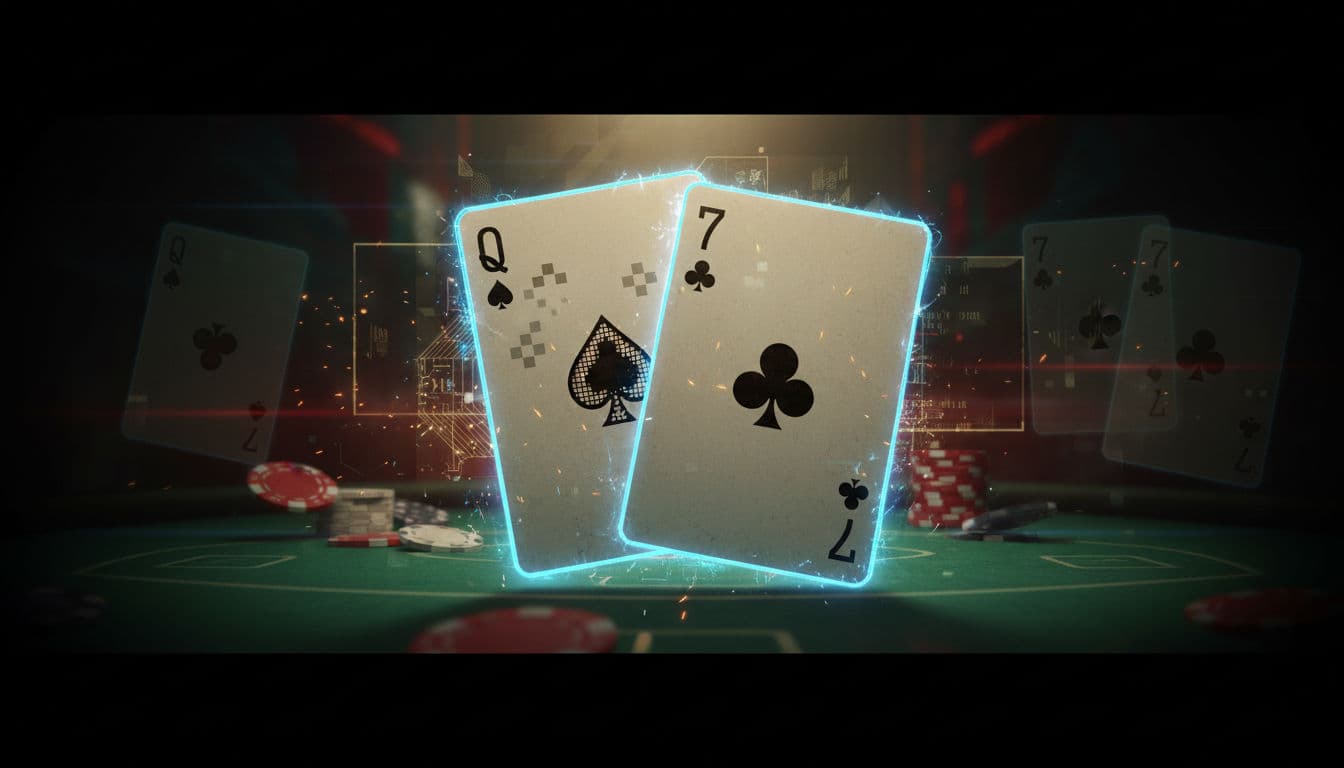
The Queen-Seven, or Q7, is a poker hand often relegated to the discard pile, largely devoid of the strategic allure associated with premium holdings. Yet, beneath its unassuming surface lies a fascinating tapestry of lore, anchored by two particularly intriguing nicknames: the "Computer Hand" and the more colloquial "Dike." These monikers elevate Q7 from a mere collection of cards into a focal point of poker's rich cultural lexicon, revealing stories that range from apocryphal technological breakthroughs to candid observations of player stereotypes. This exploration delves into the unique narratives that have cemented Q7's place in poker history, offering an analytical perspective on how even the weakest hands can carry significant historical and anecdotal weight.
The Q7 Poker Hand in Context
The Queen-Seven poker hand, particularly offsuit, is unequivocally categorized among the weak starting hands in Texas Hold'em. Lacking immediate connectivity, suited potential, or high card power in combination, it rarely inspires confidence. However, its modest on-table utility stands in stark contrast to the vivid and often perplexing nicknames it has accrued over the years, each telling a story about the game's evolution, its players, and its peculiar sense of humor. Understanding these nicknames not only enriches one's poker vocabulary but also offers a glimpse into the Texas Hold'em strategy and cultural undercurrents that shape the game.
The Enigmatic "Computer Hand": A Legacy of Misconception and Might
The most prominent and widely discussed nickname for Q7 offsuit is undoubtedly the Computer Hand nickname. This moniker is steeped in a captivating, albeit possibly apocryphal poker stories, origin story.
One popular legend asserts that an early computer simulation or analysis "proved" Q7 to be the most frequently occurring hand on the flop. While mathematically unsound – any two specific cards have an equal chance of appearing on the flop – this anecdote speaks to the nascent days of poker history, where the mystique of computing power could lend credibility to almost any claim. The sheer randomness of the flop makes such a statistical anomaly highly improbable, yet the story persists, underscoring poker folklore's enduring love affair with captivating narratives.
A related facet of the legend points to an early computer simulation where Q7 reportedly emerged as a "break-even" hand. This suggests that, over an extremely large sample size, playing Q7 in specific scenarios might result in neither profit nor loss. However, it's crucial to contextualize such simulations. Early poker programs often operated with simplified algorithms, lacking the nuanced understanding of human psychology and position that define modern Texas Hold'em strategy.
Adding another layer to this technological connection, the nickname is also directly linked to the IBM Q7 computer (AN/FSQ-7) SAGE. This monumental machine, a vacuum tube behemoth developed in the 1950s for air defense, was famously the largest computer ever built. The irony of associating a powerful piece of technology with one of poker's least powerful hands is palpable. This historical cross-pollination between computing and poker slang highlights how external influences weave their way into the game's internal language.
Strategic Implications of the "Computer Hand"
Deep Stack Play: With very deep stacks, the implied odds for hitting two pair or trips (Q7 on a Q7x board) might occasionally justify a call in late position against a passive opponent, though this is rare.
Multi-way Pots: In extremely loose, multi-way pots, Q7 might occasionally see a cheap flop, hoping to hit a concealed monster.
Exploiting Weak Opponents: Against opponents who play far too many hands, an expert player might use Q7 in a bluffing capacity, but this requires significant skill.
Generally, the Q7 hand is a strong candidate for pre-flop folding. Its high reverse implied odds mean that when it does hit a pair, it's often a weak pair that is easily outkicked or dominated.
A Controversial and Dated Anecdote
In contrast to the technologically infused nicknames, the Dike nickname for Q7 carries a very different cultural weight. This moniker is often explained as a reference to "a lady with a mullet." The origin is likely rooted in the sometimes crude humor prevalent in certain poker circles, particularly from poker history's past eras.
Such nicknames, while part of poker folklore, reflect a period when the game was less inclusive. While "Dike" might be heard in some traditional games, it is significantly less common and generally considered inappropriate in modern environments. This highlights an important aspect of poker slang: while some terms become universally accepted, others fade or are actively rejected as societal norms evolve. Understanding poker hand origins is therefore about appreciating the historical and cultural context.
The Enduring Appeal of Poker Nicknames
The Queen-Seven poker hand, through its distinct nicknames, serves as an excellent example of how poker’s informal language adds depth and personality to the game. These nicknames transform numerical and suit combinations into memorable characters, each with its own backstory, whether factual or folkloric.
While Q7 may never be a fan favorite from a strategic perspective, its place in the pantheon of poker nicknames ensures it remains a topic of conversation, a curious footnote in the grand narrative of Texas Hold'em. It reminds us that poker is as much about the stories and the human element as it is about probabilities and perfect play.
| Pros | Cons |
|---|---|
The 'Computer Hand' nickname offers a fascinating glimpse into poker's early analytical days and its connection to technological history. | Q7 offsuit is rarely a profitable hand to play, leading to frequent pre-flop folds in most scenarios. |
Knowing the unusual nicknames for Q7 can provide interesting talking points and shared humor at the poker table. | When Q7 hits a pair on the flop, it often forms a weak pair (e.g., top pair with a low kicker) that is easily outkicked or dominated by stronger hands. |
Seeing an opponent play Q7 (especially in early position) can be a strong indicator of a very loose or inexperienced table, which can be exploited. | One of its historical nicknames ('Dike') is dated and potentially offensive, reflecting less inclusive aspects of poker culture. |
Related Poker Terms
22233
3322
36TJK
4444
5432A
555
666
76: Seven-Six
77: Pocket Sevens
84: Eight-Four
85: Eight-Five
86: Eight-Six
87: Eight-Seven
88: Pocket Eights
93: Nine-Three
95: Nine-Five
96: Nine-Six
98: Nine-Eight
99: Pocket Nines
A2: Ace-Deuce
A3: Ace-Three
A3A6
A4: Ace-Four
A5: Ace-Five
A6: Ace-Six
A7: Ace-Seven
A8: Ace-Eight
A9: Ace-Nine
AA: Pocket Aces
AA88: Dead Man's Hand
AAA
AAAA
AAAAK
AAJJ
AJ: Ace-Jack
AK47
AQ: Ace-Queen
AT: Ace-Ten
J8: Jack-Eight
J9: Jack-Nine
JA55
JJ: Pocket Jacks
JT: Jack-Ten
K3: King-Three
K4: King-Four
K5: King-Five
K6: King-Six
K7: King-Seven
K8: King-Eight
K9: King-Nine
KJ: King-Jack
KK: Pocket Kings
KKKAA
KKKK
KKKQQ
KKQQ
KQ: King-Queen
KQJT9
KT: King-Ten
Q7: Queen-Seven
Q9: Queen-Nine
QJ: Queen-Jack
QQ: Pocket Queens
QQQQ
QT: Queen-Ten
Steel Wheel
T2: Ten-Deuce
T8: Ten-Eight
T9: Ten-Nine
TT: Pocket Tens
TTT: Trip Tens