

AAJJ

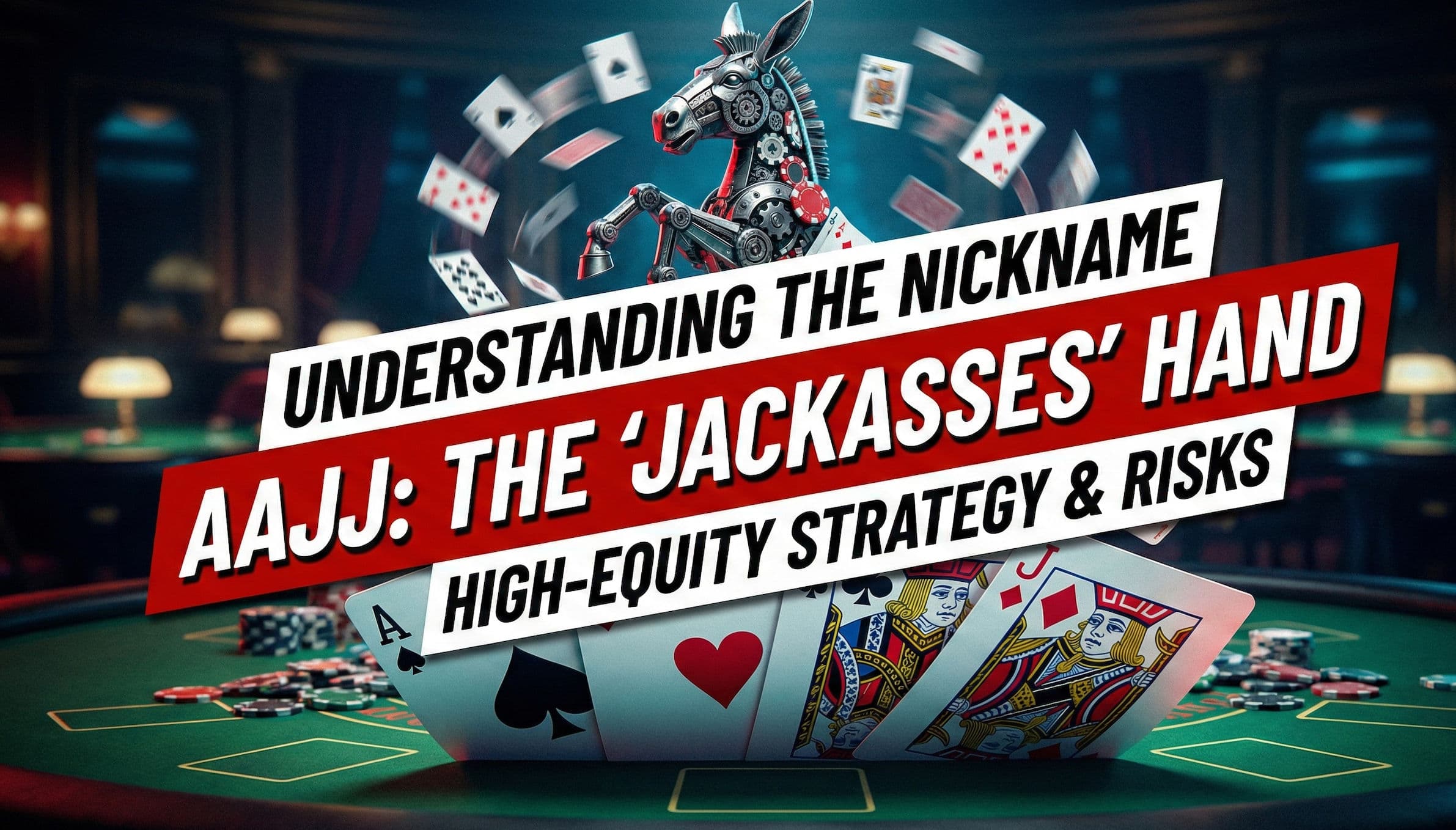
In the high-octane world of Pot-Limit Omaha (PLO), starting hands are the bedrock of strategic success. Among the myriad combinations, the hand comprising two Aces and two Jacks (AAJJ PLO) holds a unique, often misunderstood, status. Affectionately - or perhaps derisively - nicknamed 'Jackasses,' this hand embodies both immense potential and significant pitfalls, making its strategic mastery a crucial skill for any serious PLO player. This article delves into the intricate dynamics of playing AAJJ, exploring its pre-flop strength, post-flop complexities, and the psychological warfare it entails.
Unlike No-Limit Hold'em where pocket Aces (AA) reign supreme, PLO's four-card starting hands introduce a different dimension of equity and drawing potential. AAJJ, with its double-paired structure of two high cards, immediately presents a formidable presence at the table. However, its true value is highly dependent on board texture, opponent tendencies, and the nuanced decision-making demanded by the game's pot-limit betting structure. Understanding when to push the advantage and when to exercise caution is the hallmark of effectively playing 'Jackasses' and transforming its inherent strength into realized equity.
The Anatomy of AAJJ PLO Hand: Understanding the 'Jackasses' Nickname
In Pot-Limit Omaha (PLO), AAJJ is jokingly referred to as the “Jackasses”. The moniker for the AAJJ PLO hand is a playful yet apt reference to the combination of Aces and Jacks. While it clearly highlights the presence of two of the strongest high cards in poker, it also subtly hints at the hand's potential to become a 'donkey' or 'jackass' hand if played poorly. Many players, blinded by the sight of two Aces, fail to recognize the dangers inherent in a hand that, despite its apparent strength, can be easily outdrawn or reduced to a marginal holding on a coordinated board.
AAJJ represents two distinct pairs: one pair of aces and one pair of jacks. This inherently gives it high pre-flop equity against a wide range of hands. However, unlike 'rundowns' or 'wrap' hands that have numerous straight draw outs, AAJJ's drawing potential is more focused on making full houses or higher two pair. The critical aspect lies in how the board interacts with these pairs and the accompanying kickers.
Pre-Flop Pot-Limit Omaha Strategy: Dominance and Discretion
Playing AAJJ optimally pre-flop is a balance between aggression and prudence. This hand possesses significant raw equity, making it a prime candidate for raising and re-raising, especially from late position. The goal is often to build the pot against weaker holdings and, ideally, to narrow the field to fewer opponents, increasing the probability of your two pairs holding up or improving.
Early Position: While strong, flatting can be an option in passive games to see a flop cheaply, but aggressive play is generally preferred to define the strength of your hand and build the pot. A pot-sized bet is usually warranted.
Middle Position: This is a powerful spot to raise or re-raise. You gain valuable information from players acting before you and can exert pressure on those yet to act.
Late Position: From the button or cutoff, AAJJ becomes even more potent. You can raise over limpers, isolate weaker players, and control the pot size with position. Aggressive three-betting is often the best strategy here.
Deep Stacks: With deep stacks, the implied odds of hitting a full house or improving to trips become more appealing, encouraging aggressive play pre-flop. Conversely, against short stacks, AAJJ often wants to get all the money in pre-flop to realize its high equity immediately.
If you’re looking to apply these pre-flop strategies in a high-action environment, WPTGlobal offers excellent PLO tables where you can test your skills against a diverse field of players.
A common mistake is simply calling with the AAJJ PLO hand in multi-way pots. While tempting due to its perceived strength, this allows more players to see a flop cheaply, increasing the chance of someone hitting a flush, straight, or better two-pair hand that dominates yours.
Navigating the Post-Flop Landscape: When 'Jackasses' Shine or Stumble
The true test of playing AAJJ comes after the flop. The texture of the community cards dictates whether your 'Jackasses' are thoroughbreds or, well, actual jackasses.
Favorable Flops
Dry Boards (e.g., A-x-x, J-x-x, A-J-x): Boards that hit one of your pairs, especially if they are unsuited and unconnected, are ideal. Flops like A-7-2 or J-9-3 present excellent opportunities to bet for value, protect your hand, and push out draws. Hitting trips (AAA or JJJ) turns your hand into a monster, often warranting aggressive pot-sized bets.
Two Pair Boards (e.g., A-A-K, J-J-Q): While strong, you must be wary of kickers. If the board pairs your ace, you have top boat, but if the board pairs your jack, you have a strong two pair.
Tricky Flops and Danger Zones
Coordinated Boards (e.g., K-Q-T, 9-8-7 suited): These boards present significant danger. While your AAJJ might still be the strongest hand initially, numerous straight and flush draws can easily overtake you on the turn or river. Playing cautiously, checking back to control pot size, or folding to significant aggression might be necessary.
Paired Boards (e.g., 8-8-K): If the board pairs a card you don't hold, you still have two overpairs, but the threat of a full house from an opponent holding the paired board card becomes a real concern.
Rainbow Flops with Low Cards: Boards like 2-5-7 rainbow might not look immediately threatening, but they offer little improvement for your AAJJ and allow opponents to catch up with smaller pairs or hidden draws.
Remember that in PLO, drawing hands have much higher equity than in Hold'em. Your AAJJ, while powerful, often relies on pair strength. You must constantly evaluate whether your top two pair is still good or if you need to respect potential straight or flush draws that have materialized.
Common Mistakes to Avoid with AAJJ
Overplaying Without Improvement: Blindly betting all three streets simply because you started with AAJJ, even on dangerous boards where your hand hasn't improved.
Ignoring Board Texture: Failing to adjust your strategy when the board becomes coordinated or paired, leaving you vulnerable to bigger hands.
Playing Too Passively: Allowing opponents to see cheap turns and rivers, giving them free cards to outdraw your powerful starting hand.
Not Protecting Your Equity: Failing to bet for value when you have a strong hand, allowing draws to catch up.
In conclusion, playing AAJJ, often referred to within the colorful world of poker hand nicknames as "Jackasses", is a complex and fascinating endeavor in Pot-Limit Omaha. Its power lies in its high pre-flop equity, but its strategic depth demands careful post-flop navigation. Mastering such PLO starting hands involves a deep understanding of board textures and opponent tendencies. By applying advanced PLO tips - such as maintaining a disciplined approach to managing pot size and risk - players can leverage these high-potential holdings to significant advantage at the tables.
| Pros | Cons |
|---|---|
AAJJ is one of the strongest starting hands in Pot-Limit Omaha, offering high equity against a wide range of opponent holdings, making it excellent for building pots early. | On boards with straights or flushes, AAJJ often lacks the necessary drawing power and can be easily outdrawn, especially if the board doesn't hit your specific pairs. |
It's easy to flop top two pair or even trips, providing strong value betting opportunities on favorable boards. | The apparent strength of the hand can lead players to overcommit chips on dangerous boards, failing to recognize when their two pair is no longer the best hand. |
Holding two Aces and two Jacks removes these critical cards from the deck, making it less likely for opponents to have better pairs or hit sets. | Unlike suited rundowns, AAJJ primarily relies on hitting one of its pairs for significant improvement, having fewer straight or flush draw combinations. |
Related Poker Terms
22233
3322
36TJK
4444
5432A
555
666
76: Seven-Six
77: Pocket Sevens
84: Eight-Four
85: Eight-Five
86: Eight-Six
87: Eight-Seven
88: Pocket Eights
93: Nine-Three
95: Nine-Five
96: Nine-Six
98: Nine-Eight
99: Pocket Nines
A2: Ace-Deuce
A3: Ace-Three
A3A6
A4: Ace-Four
A5: Ace-Five
A6: Ace-Six
A7: Ace-Seven
A8: Ace-Eight
A9: Ace-Nine
AA: Pocket Aces
AA88: Dead Man's Hand
AAA
AAAA
AAAAK
AAJJ
AJ: Ace-Jack
AK47
AQ: Ace-Queen
AT: Ace-Ten
J8: Jack-Eight
J9: Jack-Nine
JA55
JJ: Pocket Jacks
JT: Jack-Ten
K3: King-Three
K4: King-Four
K5: King-Five
K6: King-Six
K7: King-Seven
K8: King-Eight
K9: King-Nine
KJ: King-Jack
KK: Pocket Kings
KKKAA
KKKK
KKKQQ
KKQQ
KQ: King-Queen
KQJT9
KT: King-Ten
Q7: Queen-Seven
Q9: Queen-Nine
QJ: Queen-Jack
QQ: Pocket Queens
QQQQ
QT: Queen-Ten
Steel Wheel
T2: Ten-Deuce
T8: Ten-Eight
T9: Ten-Nine
TT: Pocket Tens
TTT: Trip Tens
Best Online Poker Bonus Codes


About the Editor

Bence Mitykó is a Somuchpoker poker writer, covering poker news and strategy. He spent four years playing poker professionally, primarily focusing on Heads-Up Sit & Go games, experience that continues to shape his understanding of poker strategy, online poker dynamics, and the wider poker industry.


