K4: King-Four

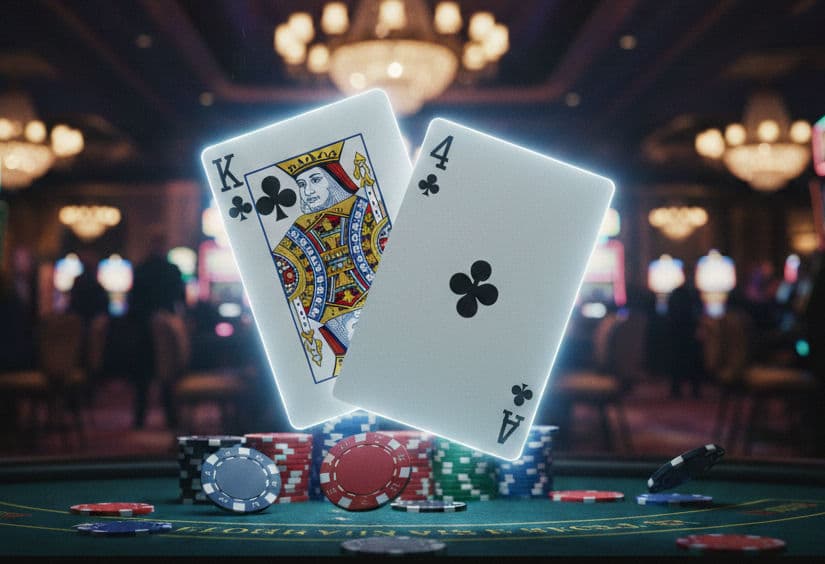
In the expansive lexicon of poker, where every hand from pocket aces to a lowly 7-2 offsuit has its own lore, some combinations stand out not for their strength, but for their notoriety and the near-universal advice to avoid them. Among these is K4, or King-Four. While a king might seem promising at first glance, the accompanying four dramatically diminishes its prospects, earning the hand a collection of colorful, and often disparaging, nicknames that reflect just how treacherous it can be. Understanding why K4 is so widely cautioned against is essential for avoiding costly mistakes and developing disciplined, winning poker instincts.
The Core of the Matter: K4 Poker Hand
At its most basic, the K4 poker hand is simply a combination of a King and a Four. This King-Four poker hand is categorized as a 'Broadway card' paired with a 'rag' - a low, unconnected card. While the King provides some top-card value, the Four offers minimal support. It's a classic example of a hand that looks marginally playable to the inexperienced eye but is riddled with pitfalls for the seasoned player.
The term 'Core' as a portmanteau of King and Four, encapsulates this direct naming convention, focusing purely on the cards themselves before their strategic implications are fully considered. It serves as a foundational reference in poker hand rankings, a simple acknowledgment of the two disparate cards forming the hand. In the data-driven world of online poker , this hand is frequently flagged by tracking software as a 'leak' for novice players, as its poor long-term equity becomes starkly apparent when analyzed over thousands of hands.
'Fork': A Phonetic Warning Sign
One of the most widely recognized poker hand nicknames for K4 is 'Fork' a phonetic play on '4K'. This term cleverly captures the essence of the hand's dilemma. To be 'forked' often implies being stuck between difficult choices or being in an unenviable position, much like a player holding K4.
When you hold K4, you're frequently faced with a 'fork in the road' post-flop – either committing chips to a weak hand or folding and regretting a potential (though unlikely) good outcome. This nickname serves as a subtle yet potent reminder of the hand's tendency to create complex and often unfavorable decision points, signaling to players that they are likely to encounter trouble.
'Fork Off' (Offsuit): Adding Insult to Injury
Building on the 'Fork' moniker, 'Fork Off' specifically refers to playing K4 offsuit. The addition of 'off' for offsuit elevates the nickname from a simple warning to a more emphatic dismissal. The distinction between suited and offsuit hands is crucial in poker; suited hands gain significant equity due to the potential for making a flush, a strong five-card combination.
When K4 is offsuit, this valuable flush potential is entirely removed, drastically reducing the hand's playability and equity against a range of opponents. 'Fork Off' underscores the sentiment that K4 offsuit is even less desirable, practically daring a player to make the ill-advised choice of playing it. It’s a verbal nudge, or perhaps a shove, towards caution.
'Forking Idiot': The Ultimate Strategic Rebuke
Perhaps the most cutting nickname for K4 is 'Forking Idiot.' This term transcends mere phonetic play; it’s a direct strategic indictment, suggesting that a player would have to be foolish to voluntarily play such a hand among weak starting hands poker. The rationale behind this harsh assessment is rooted in fundamental K4 strategy:
Domination: K4 is highly susceptible to being dominated. If an opponent holds K5, K6, or any higher king, your K4 is already in a dire position before the flop even hits.
Weak Kicker: The four kicker provides very little improvement potential and can lead to reverse implied odds, where you make a small pair but lose a large pot to a better hand.
The 'Forking Idiot' label serves as an internal or external caution against misguided aggression or overestimation of K4's strength, particularly in early positions where it is almost universally a fold.
'Oppression of the Masses': A King's Lament
The poker slang K4 nickname 'Oppression of the Masses' is perhaps the most humorous and self-deprecating of the K4 aliases. It playfully poses the question: 'What is a king for?' and implies that when paired with a four, a mighty king is rendered largely ineffective, its power 'oppressed' by its weak companion.
A king is typically a strong card, capable of forming top pairs and strong hands. However, when shackled to a low kicker like a four, its potential is severely limited. This nickname highlights the frustration and irony of holding a strong card that is effectively crippled by the weakness of another. It's a commentary on the dashed hopes and strategic disappointment that K4 frequently brings to the poker table, encapsulating the sentiment that even a 'king' can fall prey to the whims of bad company in the world of poker.
| Pros | Cons |
|---|---|
In multi-way pots, if you hit two pair (K-K-4 or 4-4-K) on the flop, your hand can be incredibly disguised, potentially leading to big payouts from opponents who don't expect such a weak hand. | K4 is easily dominated by any other King with a higher kicker (e.g., K5, K9, KQ), leading to frequent situations where you have the second-best hand and are drawing almost dead. |
Against very loose or aggressive players, a K4 suited could be used as a speculative bluffing hand on certain board textures, but this requires advanced reads and a strong understanding of opponent tendencies. | Even if you hit a King, your four kicker means you'll likely lose to a better King, making it difficult to win a big pot unless you hit two pair or trips, which is infrequent. |
The lack of connectivity and low kicker make K4 very challenging to navigate after the flop, often leading to marginal decisions and burning chips. |
Related Poker Terms
22233
3322
36TJK
4444
5432A
555
666
76: Seven-Six
77: Pocket Sevens
84: Eight-Four
85: Eight-Five
86: Eight-Six
87: Eight-Seven
88: Pocket Eights
93: Nine-Three
95: Nine-Five
96: Nine-Six
98: Nine-Eight
99: Pocket Nines
A2: Ace-Deuce
A3: Ace-Three
A3A6
A4: Ace-Four
A5: Ace-Five
A6: Ace-Six
A7: Ace-Seven
A8: Ace-Eight
A9: Ace-Nine
AA: Pocket Aces
AA88: Dead Man's Hand
AAA
AAAA
AAAAK
AAJJ
AJ: Ace-Jack
AK47
AQ: Ace-Queen
AT: Ace-Ten
J8: Jack-Eight
J9: Jack-Nine
JA55
JJ: Pocket Jacks
JT: Jack-Ten
K3: King-Three
K4: King-Four
K5: King-Five
K6: King-Six
K7: King-Seven
K8: King-Eight
K9: King-Nine
KJ: King-Jack
KK: Pocket Kings
KKKAA
KKKK
KKKQQ
KKQQ
KQ: King-Queen
KQJT9
KT: King-Ten
Q7: Queen-Seven
Q9: Queen-Nine
QJ: Queen-Jack
QQ: Pocket Queens
QQQQ
QT: Queen-Ten
Steel Wheel
T2: Ten-Deuce
T8: Ten-Eight
T9: Ten-Nine
TT: Pocket Tens
TTT: Trip Tens