

KT: King-Ten

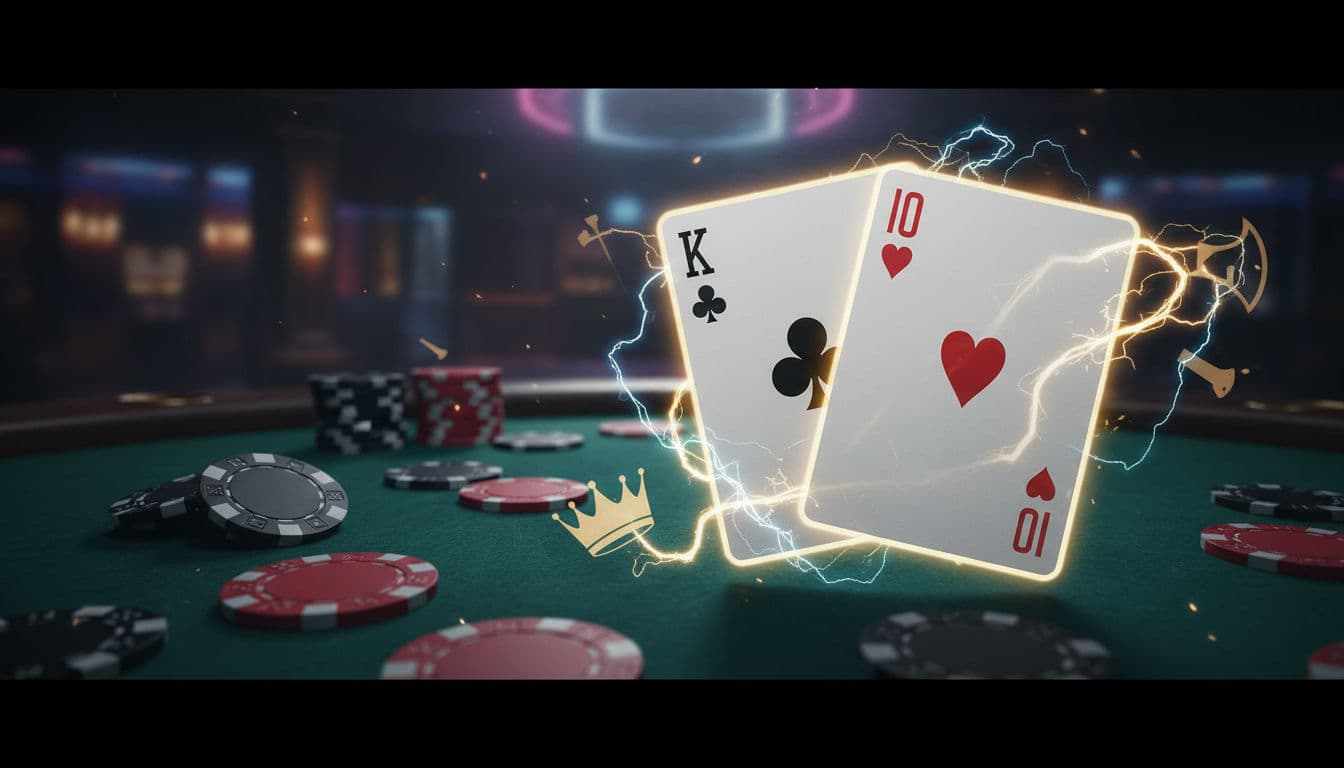
In the intricate world of poker, every starting hand possesses its own personality, strategic nuances, and often, a collection of evocative nicknames. Among these, King-Ten, or KT, stands out as a hand that frequently sparks debate and demands careful consideration. Far from being a mere combination of cards, KT has garnered a diverse array of aliases, each telling a story, hinting at its playability, or drawing connections to pop culture and historical figures. Understanding these nicknames not only enriches a player's vocabulary but also offers a deeper insight into the poker community's collective wisdom and humor surrounding this intriguing hand.
This comprehensive guide delves into the fascinating etymology and strategic implications behind King-Ten's most prominent nicknames. From legendary poker personalities to historical allegories and cultural references, we'll unmask the tales woven into 'Katie', 'Ken', 'Ike Turner'. providing an expert perspective on how these monikers reflect KT's position at the poker table. Prepare to gain a unique perspective on a hand that, while often underestimated, holds significant potential for skilled players.
Decoding the Nicknames of The King Ten Poker Hand
Whether you’re just starting to find your footing or you’re a more experienced player looking to plug some leaks, online poker is the best place to see how a tricky holding like this actually performs over thousands of hands. It’s the perfect training ground to test your instincts before diving into the deeper strategy behind the game.
King-Ten (KT) is a hand that sits in an interesting tier in No-Limit Hold'em Poker. It's strong enough to be tempting, yet often weak enough to get players into trouble. Its dual nature is perhaps best reflected in the array of nicknames it has accumulated over the years, each one offering a glimpse into its perceived strengths, weaknesses, or simply a quirky association.
Katie: A Phonetic Play on KT
The nickname "Katie" for King-Ten is one of the more straightforward and intuitive aliases. It's a simple phonetic imitation of the letters "K" and "T" when spoken together. This kind of linguistic shorthand is prevalent in poker, where speed and brevity in communication are often valued. Similar to "Anna Kournikova" for AK or "Dolly Parton" for 95, "Katie" provides a memorable and easily pronounceable way to refer to King-Ten without having to explicitly state "King-Ten."
Its simplicity belies any deep strategic meaning, yet its widespread adoption speaks to the casual and community-driven nature of poker lingo. It’s a classic example of how poker culture adapts and creates accessible terms for common hand combinations, allowing players to quickly identify and discuss hands during casual play or commentary.
Ken: The Portmanteau of Power and Potential
Another phonetic nickname, "Ken", is a clever portmanteau derived from "King" and "Ten". This combines the initial sound of the King with the sound of the Ten, rolling them into a single, concise term. Like "Katie", "Ken" serves primarily as a convenient verbal shortcut. However, the choice of "Ken" also subtly imbues the hand with a sense of approachable strength. While the King is undeniably a powerful card, the Ten adds a touch of groundedness, making "Ken" feel solid but not overpowering.
It's less about historical figures and more about the intrinsic linguistic fun players have in compressing hand names. The use of such a nickname can contribute to the rhythm of a poker game, allowing for quicker discussions and a shared shorthand among players who are well-versed in poker slang.
Ike Turner Poker: Beating Tina Turner – The Hierarchy of Hands
The nickname "Ike Turner" for King-Ten (KT) is perhaps one of the most culturally resonant and strategically insightful, especially when paired with its counterpart. This moniker gains its full meaning in direct contrast to Queen-Ten (QT), which is famously known as "Tina Turner". The implied hierarchy, where "Ike Turner" (KT) "beats" "Tina Turner" (QT), draws from the complex and often turbulent relationship between the iconic musical duo.
In poker, the KT poker hand is indeed a stronger hand than QT, holding superior equity pre-flop and often post-flop due to the higher King kicker. This nickname not only provides a memorable way to refer to the KT poker hand but also subtly educates players on the relative strength of these two similar-looking hands. It's a brilliant example of how poker nicknames can embed strategic lessons within popular culture references, making complex concepts more digestible and entertaining for players of all levels. It highlights the importance of kicker cards and relative hand strength, a crucial lesson for aspiring poker players.
From Broadway to Bust: Tips for Playing King-Ten Suited and Offsuit
Beyond its colorful nicknames, the King Ten poker hand (KT) demands a nuanced strategic approach. Whether the King-Ten suited or playing KT offsuit, this hand represents a critical juncture in many poker scenarios. Suited KT offers significant flush and straight potential, making it a powerful semi-bluffing or drawing hand, especially in multi-way pots. The ability to make the nut flush draw or a broadway straight adds considerable equity. However, KT offsuit, while still having straight potential and top pair possibilities, suffers from the lack of backdoor or direct flush draws, reducing its overall playability and requiring more caution.
Against tight ranges, KT can be a profitable open-raise from late position, but it often struggles against aggressive 3-betting or when facing multiple callers in early positions. Its primary weakness lies in its susceptibility to being out-kicked; if you hit a King, a stronger King-X hand will dominate you, and if you hit a Ten, a stronger Ten-X hand could also be an issue. Understanding these dynamics is crucial for determining when to enter a pot, how aggressively to play, and when to fold, ensuring that King-Ten doesn't turn from a tempting Broadway hand into a costly mistake.
Ultimately, the King Ten poker hand is a calculated risk. Its nicknames serve not just as catchy labels but as cultural touchstones that reflect various aspects of its strategic personality. Mastering KT involves appreciating its dual nature – powerful yet vulnerable – and adapting your play to exploit its strengths while mitigating its weaknesses. Whether you call it "Katie" or "Ike Turner", playing King-Ten effectively requires both insight and discipline, making it a true test of a poker player's skill.
| Pros | Cons |
|---|---|
King-Ten (KT) provides ample opportunities to hit a Broadway straight (A-K-Q-J-T) or other straights, especially when suited, making it a formidable drawing hand. | A major weakness of KT is its susceptibility to being out-kicked. If a King hits, hands like AK, KQ, or KJ will often dominate you. If a Ten hits, QTs or JTs can easily beat you. |
Hitting a King on the flop often gives you top pair with a strong Kicker, providing significant equity against many opponents' holdings, particularly in heads-up play. | When you hit a pair with KT but are out-kicked, you risk losing a large pot (reverse implied odds) as you're often paying off a better hand, especially when deep-stacked. |
When King-Ten is suited, it opens up nut flush draw possibilities, adding significant backdoor and direct equity to the hand and improving its semi-bluffing potential. | KT often falls into a category where it's strong enough to tempt players but not strong enough to be a clear favorite, leading to difficult and potentially costly decisions post-flop, particularly in multi-way pots. |
Related Poker Terms
22233
33: Treys
3322
36TJK
4444
5432A
555
666
76: Seven-Six
77: Pocket Sevens
84: Eight-Four
85: Eight-Five
86: Eight-Six
87: Eight-Seven
88: Pocket Eights
93: Nine-Three
95: Nine-Five
96: Nine-Six
98: Nine-Eight
99: Pocket Nines
A2: Ace-Deuce
A3: Ace-Three
A3A6
A4: Ace-Four
A5: Ace-Five
A6: Ace-Six
A7: Ace-Seven
A8: Ace-Eight
A9: Ace-Nine
AA: Pocket Aces
AA88: Dead Man's Hand
AAA
AAAA
AAAAK
AAJJ
AJ: Ace-Jack
AK47
AKo (Ace-King Offsuit)
AKs: Ace-King Suited
AQ: Ace-Queen
AT: Ace-Ten
J8: Jack-Eight
J9: Jack-Nine
JA55
JJ: Pocket Jacks
JT: Jack-Ten
K3: King-Three
K4: King-Four
K5: King-Five
K6: King-Six
K7: King-Seven
K8: King-Eight
K9: King-Nine
KJ: King-Jack
KK: Pocket Kings
KKKAA
KKKK
KKKQQ
KKQQ
KQ: King-Queen
KQJT9
KT: King-Ten
Offsuit
Q7: Queen-Seven
Q9: Queen-Nine
QJ: Queen-Jack
QQ: Pocket Queens
QQQQ
QT: Queen-Ten
Starting Hand
Steel Wheel
Suited Connectors
T2: Ten-Deuce
T8: Ten-Eight
T9: Ten-Nine
TT: Pocket Tens
TTT: Trip Tens
Best Online Poker Bonus Codes


About the Editor

Bence Mitykó is a Somuchpoker poker writer, covering poker news and strategy. He spent four years playing poker professionally, primarily focusing on Heads-Up Sit & Go games, experience that continues to shape his understanding of poker strategy, online poker dynamics, and the wider poker industry.


