JA55

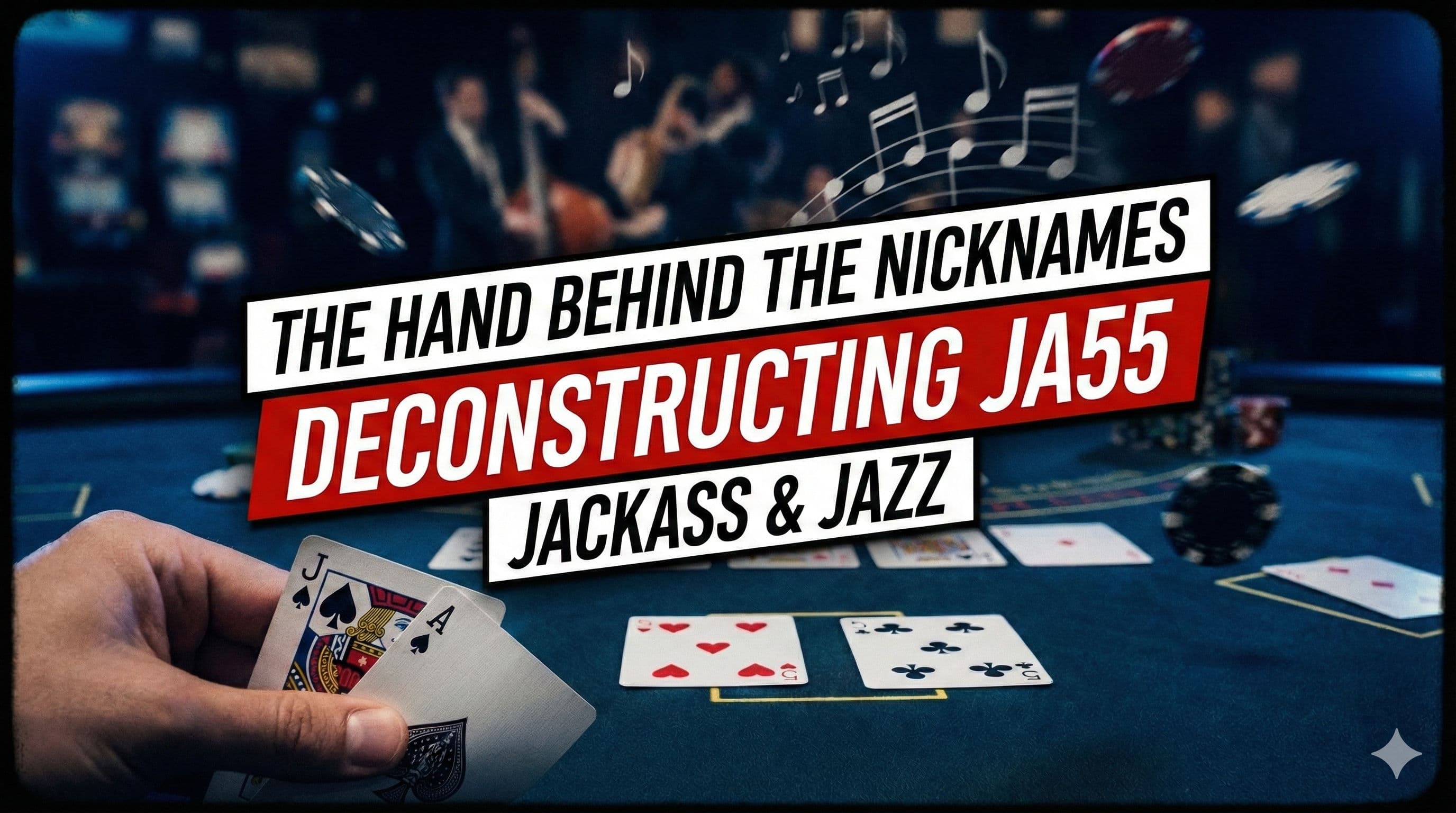
The lexicon of poker is rich with colorful terminology, often assigning peculiar nicknames to specific starting hands. Among these, the seemingly innocuous combination of a Jack and two Fives - colloquially known as JA55 - stands out not for its inherent strength, but for its intriguing and somewhat contradictory monikers: Jackass and Jazz. This article delves into the origins and implications of these nicknames, providing an analytical lens through which to view the strategic considerations of playing such a hand. While JA55 might not consistently make it into the top tier of playable hands, understanding its unique nomenclature offers a deeper appreciation for the game's cultural nuances and tactical depths.
Deconstructing JA55: The Hand Behind the Nicknames
At its core, JA55 represents a poker hand comprising a Jack, an Ace and two Fives. In community card games like Texas Hold'em poker , this would typically refer to a starting hand of JA (suited or unsuited) with two Fives appearing on the board. Alternatively, it could refer to a scenario where a player holds a J and a 5, and another 5 and A appears as one of the community cards.
The numerical designation "J-A-5-5" is a common shorthand in poker circles, with J representing the Jack and A sometimes used informally for "Ass" (referring to the numerical value of a single digit, though here more phonetically tied to "Jackass"), or simply as a placeholder for the pair of 5s when not explicitly stated as 55. This hand, on paper, rarely inspires confidence, often falling into the category of speculative or marginal holdings.
Jackass: A Candid Reflection of JA55's Perceived Weakness
The Derisive Origin
The nickname "Jackass" for the JA55 hand is arguably the most common and tellingly descriptive. It's a moniker born from a combination of phonetic association and strategic implication. The J for Jack, and the A often phonetically linked to "Ass", directly precede the 55 of the pair. More significantly, the term "jackass" itself implies foolishness, stubbornness, or a lack of good judgment. This directly mirrors the sentiment many experienced poker players hold when confronting this hand.
Playing JA55 without strong positional advantage, favorable table dynamics, or deep stack consideration is frequently seen as a "jackass" move - a poor decision that often leads to losing chips.
Strategic Frustration and Kicker Problems
The "Jackass" label highlights the inherent frustration associated with JA55. While holding a pair of fives (a "pocket pair" when applicable, though JA55 typically refers to a board interaction) offers some modest equity, the accompanying Jack acts as a problematic kicker. Should the fives pair on the board or in a player's hand, a single Jack as the highest accompanying card usually leaves the player vulnerable. Higher kickers, or even just another higher pair, will often dominate JA55, leading to situations where a player might be drawing dead or needing significant improvement, thus feeling like a 'jackass' for getting involved.
"Jazz": The Rhythmic Anomaly and Unpredictable Element
Phonetic Playfulness and Loose Association
In stark contrast to the straightforward, somewhat derogatory "Jackass," the nickname "Jazz" offers a more enigmatic and perhaps playful interpretation of the JA55 hand. The phonetic similarity between "JA55" and "Jazz" is undeniable. Beyond mere sound, however, the term "jazz" in poker can subtly allude to a style of play. Jazz music is characterized by improvisation, syncopation, and unexpected turns-qualities that can sometimes describe the way a marginal hand like JA55 might be played, or the unpredictable nature of its potential outcomes.
Improvisation and Unconventional Play
When a player decides to engage with a JA55 hand, especially from an out-of-position or early-position spot, it often requires a degree of improvisation. Standard poker wisdom would suggest folding such a hand in many scenarios. However, an aggressive, "jazzy" player might see an opportunity to bluff, semi-bluff, or exploit weak opponents who are not expecting action from such a hand. This unconventional approach, akin to a jazz musician veering from the standard melody, can sometimes yield surprising results, though it inherently carries higher risk. The "Jazz" moniker thus acknowledges the potential for unexpected dynamics and the player's willingness to "improvise" with a less-than-premium holding.
Strategic Navigator: Playing the JA55 Hand Effectively
Pre-Flop Considerations: Tightening Up
Given its general weakness, J5 is usually a hand best folded pre-flop, especially in early or middle positions. The primary exception would be when holding J5 as a suited connector (albeit a weak one) in a very late position with many limpers, aiming for multi-way pot potential to hit a flush or straight draw with strong implied odds. However, the presence of two Fives on the board usually dictates the hand's strength. When two Fives are already community cards, a Jx holding (where x is not another Five or a higher card) can be deceptively weak, highly susceptible to a better kicker or a higher pair.
Post-Flop Play: Value Betting and Control
If you find yourself playing this particular hand (either holding J5 and hitting another 5, or holding AJ and seeing two 5s on the board), careful post-flop navigation is crucial. The primary value comes from hitting a set of Fives (if you hold a 5 and there are two on the board) or having two pair with the board Fives. However, the Jack kicker is a significant vulnerability. When betting for value, consider the board texture: is it draw-heavy?
Are there higher cards that could give opponents a better two-pair or straight? Often, managing the pot size and avoiding large confrontations unless you have a strong reason to believe your two pair or trips are good is the optimal poker strategy. Avoid overplaying the hand against aggressive opponents or on boards with many overcards.
The Dual Nature of JA55 in Poker Lore
Ultimately, JA55 encapsulates a fascinating duality within poker culture. It represents a hand that is inherently marginal and often problematic, earning it the dismissive "Jackass" label. Yet, it also possesses a certain unpredictable charm, akin to the improvisational spirit of "Jazz" appealing to players who seek to explore unconventional lines or exploit specific table dynamics. Understanding these poker hand nicknames goes beyond mere trivia; it provides insight into the collective wisdom, frustrations, and occasional audacious spirit that defines the poker community.
For every seasoned player, recognizing a JA55 situation, whether in their own hand or an opponent's, is a subtle reminder of the game's intricate balance between calculated risk and the occasional plunge into the unexpected.
| Pros | Cons |
|---|---|
If holding a 5 and two 5s come on the board (or holding J-5 and hitting another 5), a player can hit a strong set that is less anticipated by opponents. | The Jack kicker makes two pair (J,5,5) highly vulnerable to higher kickers or better two-pair combinations, leading to costly losses. |
The hand can sometimes win small pots uncontested if opponents fear bigger hands or do not recognize the strength of two pair/trips on certain board textures. | The pair of Fives is a low pair, easily dominated by higher pairs on the board or in opponents' hands, making it difficult to generate significant equity. |
The 'Jazz' element encourages unpredictable, exploitative play, which can be effective against weak or predictable opponents who don't expect action from such a hand. | Without hitting a set, the hand has limited ways to improve significantly, making many flops unfavorable and forcing difficult decisions. |
Newer players may overplay a two-pair hand involving JA55, leading to significant chip losses against stronger, well-concealed hands. |
Related Poker Terms
22233
3322
36TJK
4444
5432A
555
666
76: Seven-Six
77: Pocket Sevens
84: Eight-Four
85: Eight-Five
86: Eight-Six
87: Eight-Seven
88: Pocket Eights
93: Nine-Three
95: Nine-Five
96: Nine-Six
98: Nine-Eight
99: Pocket Nines
A2: Ace-Deuce
A3: Ace-Three
A3A6
A4: Ace-Four
A5: Ace-Five
A6: Ace-Six
A7: Ace-Seven
A8: Ace-Eight
A9: Ace-Nine
AA: Pocket Aces
AA88: Dead Man's Hand
AAA
AAAA
AAAAK
AAJJ
AJ: Ace-Jack
AK47
AQ: Ace-Queen
AT: Ace-Ten
J8: Jack-Eight
J9: Jack-Nine
JA55
JJ: Pocket Jacks
JT: Jack-Ten
K3: King-Three
K4: King-Four
K5: King-Five
K6: King-Six
K7: King-Seven
K8: King-Eight
K9: King-Nine
KJ: King-Jack
KK: Pocket Kings
KKKAA
KKKK
KKKQQ
KKQQ
KQ: King-Queen
KQJT9
KT: King-Ten
Q7: Queen-Seven
Q9: Queen-Nine
QJ: Queen-Jack
QQ: Pocket Queens
QQQQ
QT: Queen-Ten
Steel Wheel
T2: Ten-Deuce
T8: Ten-Eight
T9: Ten-Nine
TT: Pocket Tens
TTT: Trip Tens