

Bet Size

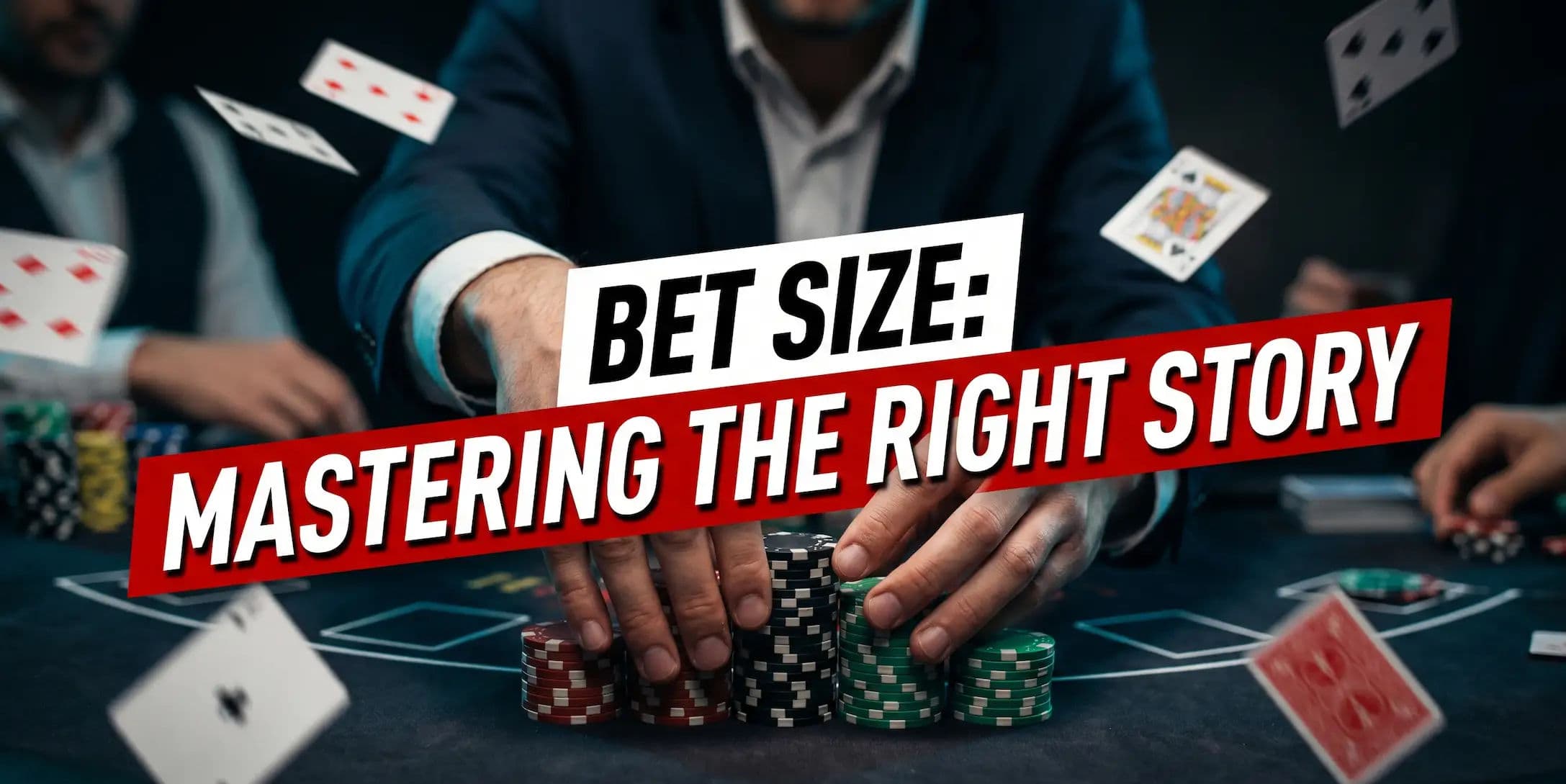
In poker, a bet-size refers to the specific amount of chips a player wagers. It's not just a random number; it's a critical strategic tool used to manipulate the pot, extract value, bluff opponents, and gain information. Understanding optimal bet sizing is essential for success, particularly in No-Limit Hold'em, where it directly influences your win rate.
What is Bet Size in Poker?
The term bet size, or bet sizing, defines the amount a player chooses to bet or raise. This decision is one of the most fundamental elements of any solid betting strategy. While new players might think only about whether to bet or check, experienced players dedicate significant thought to how much to bet. The right size can win you a big pot, while the wrong one can cost you your entire stack.
"Your bet sizing tells a story. The question is, are you telling the right one, or are you giving your hand away?"
The Goals of Strategic Bet Sizing
Every bet you make should have a clear purpose. Your choice of bet size helps achieve these goals:
For Value: When you have a strong hand, your goal is to choose a size that will be called by weaker hands, maximizing your profit. This is known as value betting.
As a Bluff: When bluffing, you want to select a size that is large enough to make your opponent fold, but small enough to minimize your loss if you get called.
To Gain Information: A specific size can help you define your opponent's range. How they react to your bet gives you valuable clues about their hand strength.
To Deny Equity: Betting forces hands with drawing potential (like flush or straight draws) to pay to continue. A proper bet-size can make it mathematically incorrect for them to call.
Common Bet Sizing Scenarios
While every situation is unique, certain standards for bet sizing have emerged as effective starting points.
Pre-Flop Bet Sizing
Before the flop, your standard opening raise size is crucial. A common mistake is limping (just calling the big blind). Instead, raising isolates opponents and builds a pot when you have a good hand.
Standard Open: A typical opening raise is between 2.5 and 3 times the big blind (bb). For example, in a $1/$2 game, this would be a raise to $5-$6.
Adjusting for Position: You might use a slightly smaller size from early position and a larger size from late position to discourage calls from the blinds.
Post-Flop Bet Sizing
After the flop, your bet-size is usually referenced in relation to the size of the pot.
Small Bet (1/4 to 1/3 Pot): This size is effective on dry, unconnected boards where opponents are unlikely to have strong draws. It's a low-risk way to bluff or get thin value.
Medium Bet (1/2 to 2/3 Pot): This is a standard continuation bet size. It puts decent pressure on drawing hands without risking a huge portion of your stack.
Large Bet (3/4 to Full Pot): A pot-sized bet is often used for value when you have a very strong hand on a draw-heavy board. It makes it very expensive for opponents to chase their draws.
Overbet (More than the Pot): An overbet is an advanced move used to polarize your range. It represents either the nuts or a total bluff, putting maximum pressure on your opponent's medium-strength hands.
Advanced Bet Size Concepts
Exploitative vs. Optimal Bet Size
A GTO (Game Theory Optimal) approach suggests using the same bet size with both your value hands and your bluffs to be unexploitable. However, an exploitative approach involves adjusting your bet size based on your opponent's specific tendencies.
For example, if you know a player hates folding and will call with any piece of the board, your value betting size should be larger. If an opponent is very timid and folds to any aggression, a smaller size will accomplish the same goal while risking less.
Mastering your bet size is a journey. It requires constant observation, adjustment, and an understanding of your opponents. By moving beyond simply asking 'should I bet?' to 'how much should I bet?', you can significantly elevate your poker game.
Now that you understand the mechanics of value bets, bluffs, and exploitative sizing, it's time to put theory into practice. Choose from our hand-picked list of the best online poker sites to find the most secure platforms with games suited for all bankrolls. make sure to use the welcome bonus code SMPBONUS to instantly boost your starting bankroll.
| Pros | Cons |
|---|---|
Allows for lower-risk bluffs and can induce calls from a wider range of weaker hands, extracting thin value. | Gives opponents excellent pot odds to continue with drawing hands, potentially allowing them to hit their hand cheaply. |
Maximizes value from strong hands and puts immense pressure on opponents with draws or marginal holdings. | Risks more chips when bluffing. It can also isolate your hand against only the strongest parts of your opponent's range. |
Related Poker Terms
6-Max
9-Max (Full Ring)
A-Game
ABC Poker
Bankroll
Bet Size
Bet Sizing
Blocker
Bluff
Bluff Catcher
Board
Bubble Factor
Button
Call
Check-Call
Check-fold
Check-Raise
Click-Back
Donkament
Double Barrel
First in
Gap Concept
GTO
Gutshot
Hot Streak
HUD
Image
Insta-Call
Isolation
Kicker
Leak
Limp
Limp-Fold
Limp-Raise
Middle Pair
Min-raise
Monotone
Monster
Multi-Way Pot
Nit
Nuts
One-Way Straight
Online Poker
Online Poker Strategies
Open Limp
Out of Line
Over the top
Over-Limp
Overblind
Overcall
Overcard
Overpair
Pat
Peel
Play Behind
Polarized
Pot Control
Potting Out
Preflop
Premium Hands
Probe Bet
Proposing Bets
Push or Fold
Put Down
Quads
Quartered
Quitting Time
Quorum
Ragged
Range
Range Advantage
Razz
Reverse Implied Odds
Rolled Up
Royal Flush
Runner Runner
Running Good
Sandbagging
Satellite
Sit and Go (SNG)
Slow Play
Smooth Call
Snap Call
Snapped Off
Soft Seat
Solid
Steal
Suited
Suited Gappers
Tank
Total air
Trap
Two-Gapper
Under the Gun (UTG)
Underpair
Value
Value Bet
Villain
Weak Ace
Window Card
Best Online Poker Bonus Codes


About the Editor

Bence Mitykó is a Somuchpoker poker writer, covering poker news and strategy. He spent four years playing poker professionally, primarily focusing on Heads-Up Sit & Go games, experience that continues to shape his understanding of poker strategy, online poker dynamics, and the wider poker industry.


