

Check-fold

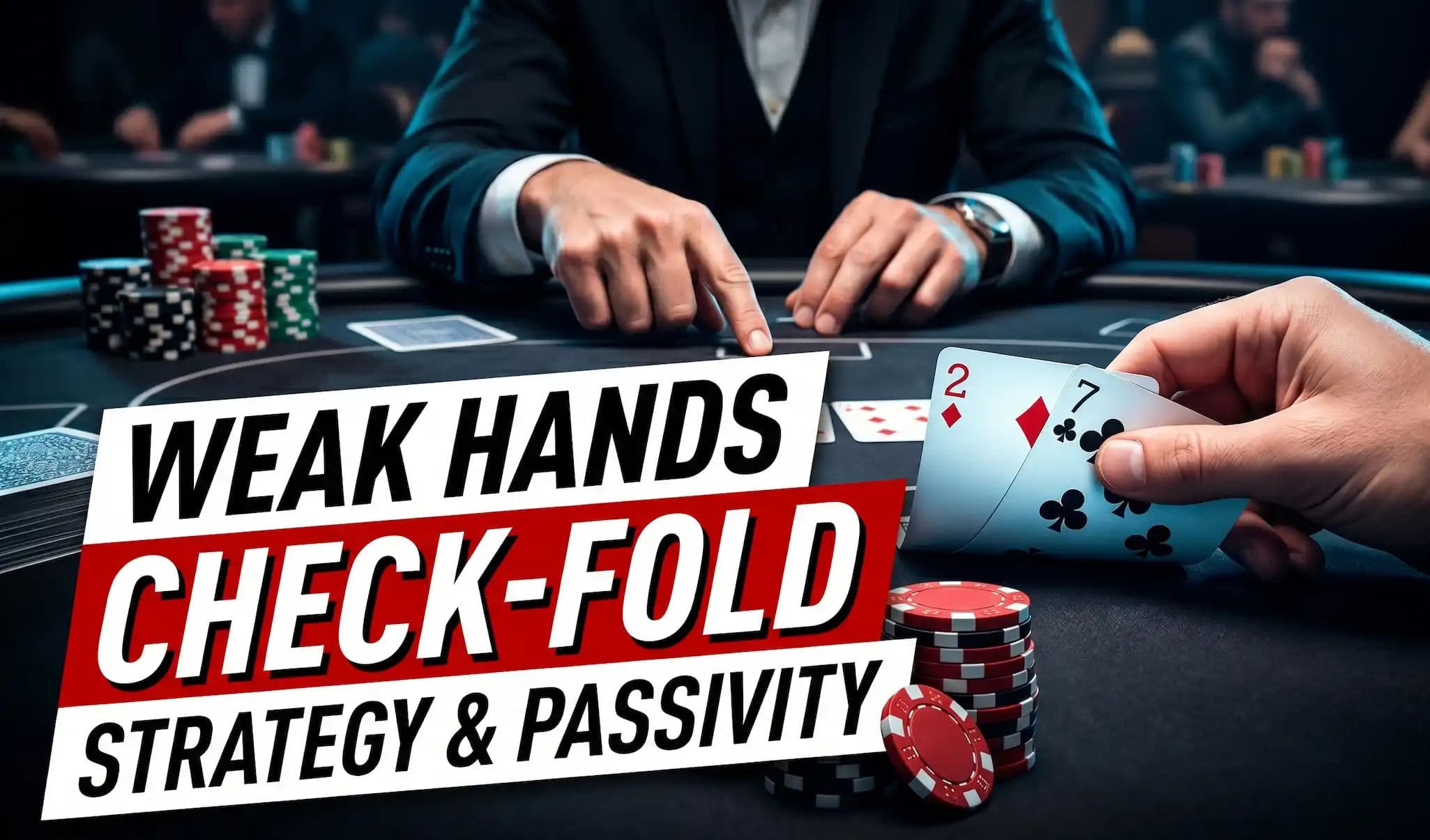
The check-fold is a straightforward yet essential defensive play in poker, particularly in games like Texas Hold'em. It involves checking when the action is on you, with the full intention of folding your hand if an opponent makes a bet after you. This tactic is primarily used with weak or marginal hands to minimize potential losses and avoid being put in a difficult, costly decision on a later street.
What Exactly is a Check-Fold in Poker?
In the world of poker, a check-fold is a two-part action that defines a specific strategic line. The first part is to 'check', which means passing the action to the next player without making a bet. The second part is to 'fold', which means surrendering your hand if any player after you in the betting round decides to bet. This move signals that you have a hand not strong enough to invest more chips in, but you wanted to see the next card for free if possible.
Understanding this concept is a cornerstone of beginner poker strategy. It is most commonly executed when you are 'out of position', meaning you have to act before your opponents. By checking, you give up the initiative, but you also gain information based on how they react. If they check behind, you get a free card. If they bet, your pre-determined decision to fold saves you from losing more chips with a subpar hand.
The Strategic Importance of This Move
While it might seem passive, taking this line is a vital tool for capital preservation. Poker isn't just about winning big pots; it's equally about losing the minimum in pots where you're behind. This specific action is your primary mechanism for achieving this.
Minimizing Losses: Its most obvious benefit. When you're fairly certain you're beaten, cutting your losses is the smart play.
Pot Control: With marginal hands, you want to keep the pot small. A check-fold prevents the pot from bloating when you're likely not ahead.
Information Gathering: Your opponents' reactions to your check provide valuable data. A bet from a tight player might indicate significant strength, confirming your decision to fold.
"The amateur worries about what they can win. The professional worries about what they can lose. The check-fold is the professional's tool for managing risk and protecting their stack".
When is the Right Time to Check-Fold?
Knowing when to check-fold separates disciplined players from those who bleed chips. The decision depends on your hand strength, position, and opponent tendencies. It is a fundamental tactic in Texas Hold'em and other flop games.
When Out of Position
Being first to act is a strategic disadvantage. If you've missed the flop completely or have a very weak hand like bottom pair with no kicker, checking and preparing to fold is often the standard, correct play. Betting out (a 'donk bet') is risky, and check-calling can be expensive if your opponent is aggressive.
With a Weak Made Hand or Drawing Hand
Imagine you have a weak pair or a gutshot straight draw. If an opponent bets, the pot odds might not justify calling to try to hit your card. In these spots, a check-fold is a disciplined way to abandon a hand that has poor prospects without investing more money.
Common Mistakes to Avoid
While the check-fold is a crucial move, overusing it can make you predictable and exploitable. Aggressive opponents will notice if you give up too frequently and will start betting every time you check, pushing you off small pots that you might have otherwise won. It's important to balance your checking range with check-calls and even the occasional check-raise to keep opponents guessing. Don't become a one-trick pony; your strategy must be adaptable.
Knowing when to let go of a hand is just as vital as knowing when to bet. Online poker provides the ultimate training ground to practice this disciplined approach without the physical pressure of a live game. By putting in more volume, you can quickly learn to identify the exact situations where a strategic retreat is your most profitable move. Visit our reviewedonline poker sites to discover the best platforms for honing your skills. Be sure to use the promo code SMPBONUS when you sign up to claim an exclusive bonus and protect your bankroll as you master the art of the professional fold!
Check-Fold vs. Other Lines
Understanding how this move compares to others is key to applying it correctly.
Action | Description | Best For |
|---|---|---|
Check-Fold | Check with the intent to fold to a bet. | Weak hands, poor draws, minimizing loss. |
Check-Call | Check with the intent to call a bet. | Medium-strength hands, decent draws with good pot odds. |
Check-Raise | Check with the intent to raise a bet. | Very strong hands (for value) or complete bluffs (as a semi-bluff). |
Bet-Fold | Bet out, but fold if you get raised. | Thin value bets or bluffs where you don't want to face aggression. |
Ultimately, mastering this fundamental poker term is about recognizing when a hand's potential doesn't justify further investment. It's a move of strategic retreat, not weakness, and a vital component of any successful poker player's toolkit.
| Pros | Cons |
|---|---|
The primary benefit of a check-fold is that it prevents you from investing more chips into a pot where you are likely beaten, effectively saving your stack for better opportunities. | If you check-fold too often, observant and aggressive players will notice. They will start betting every time you check to steal the pot, regardless of their own hand strength. |
By deciding to check-fold beforehand, you avoid being put in a tough, expensive spot if an opponent bets. It takes the guesswork out of playing a weak hand out of position. | By folding, you surrender any chance of winning the pot. Even weak hands have some equity (a percentage chance to win), which you give up completely when you fold. |
With marginal hands, your goal is often to get to a cheap showdown. Checking helps keep the pot small, and folding to a bet prevents it from getting out of control. | A check-fold is a very transparent move that clearly signals a weak hand. This gives your opponents a lot of information about your holdings and your playing style. |
Related Poker Terms
6-Max
9-Max (Full Ring)
A-Game
ABC Poker
Bankroll
Bet Size
Bet Sizing
Blocker
Bluff
Bluff Catcher
Board
Bubble Factor
Button
Call
Check-Call
Check-fold
Check-Raise
Click-Back
Donkament
Double Barrel
First in
Gap Concept
GTO
Gutshot
Hot Streak
HUD
Image
Insta-Call
Isolation
Kicker
Leak
Limp
Limp-Fold
Limp-Raise
Middle Pair
Min-raise
Monotone
Monster
Multi-Way Pot
Nit
Nuts
One-Way Straight
Online Poker
Online Poker Strategies
Open Limp
Out of Line
Over the top
Over-Limp
Overblind
Overcall
Overcard
Overpair
Pat
Peel
Play Behind
Polarized
Pot Control
Potting Out
Preflop
Premium Hands
Probe Bet
Proposing Bets
Push or Fold
Put Down
Quads
Quartered
Quitting Time
Quorum
Ragged
Range
Range Advantage
Razz
Reverse Implied Odds
Rolled Up
Royal Flush
Runner Runner
Running Good
Sandbagging
Satellite
Sit and Go (SNG)
Slow Play
Smooth Call
Snap Call
Snapped Off
Soft Seat
Solid
Steal
Suited
Suited Gappers
Tank
Total air
Trap
Two-Gapper
Under the Gun (UTG)
Underpair
Value
Value Bet
Villain
Weak Ace
Window Card
Best Online Poker Bonus Codes


About the Editor

Bence Mitykó is a Somuchpoker poker writer, covering poker news and strategy. He spent four years playing poker professionally, primarily focusing on Heads-Up Sit & Go games, experience that continues to shape his understanding of poker strategy, online poker dynamics, and the wider poker industry.


